
Online NASCAR betting 2026: where the licensed UK market actually stands
 Available in US
NASCAR sits oddly in the British betting landscape. The sport runs almost entirely in the United States, yet a UK punter with a Gambling Commission-licensed account can wager on every Cup Series race from Daytona in February to Homestead in November — the schedule, the markets and the in-play angles are all there, and ten of the bigger remote operators carry a working NASCAR book. What changes between them, once the licence and the season are set, is the depth of the market card, the shape of the welcome offer, the price of a race winner and whether the operator lets a punter cash out before the chequered flag.
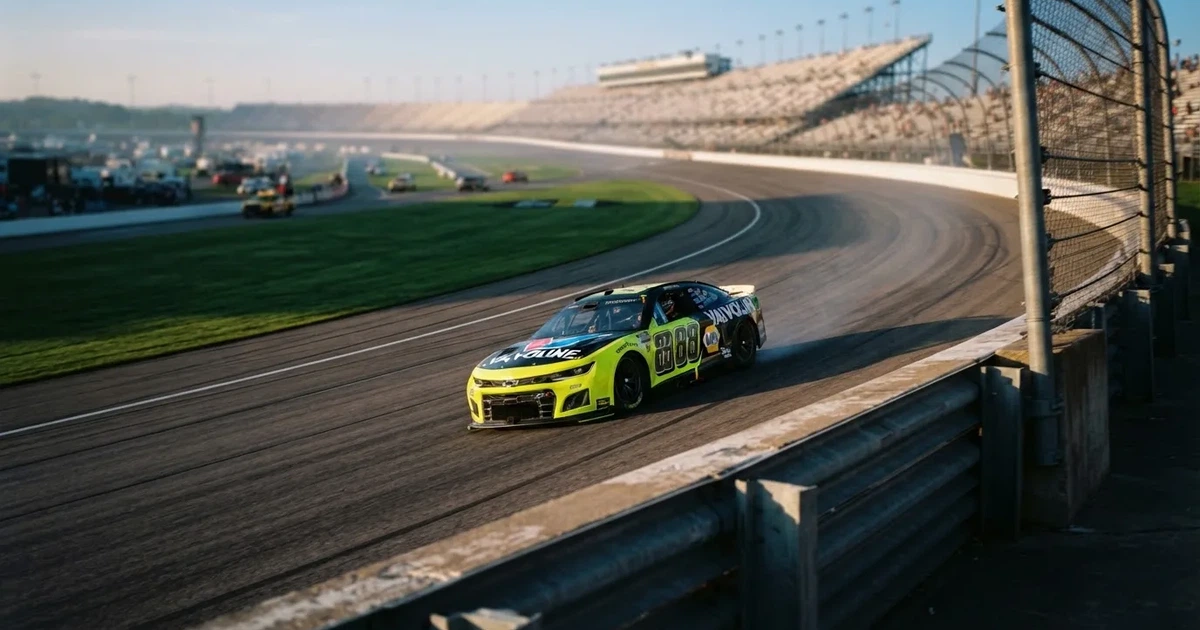
The rest of this page works through those differences. It opens with the kind of bets a licensed bookmaker takes on a stock-car race, then runs the bonus machinery — what a “free bet” or “boosted odds” actually pays back, and what the wagering clock costs — before moving to the mobile and live-betting layer, the market-by-market structure of NASCAR odds, the season itself and the comparison table that closes the front of the page. A short section on the legal frame and on the responsible-gambling tools that travel with a Commission licence, then a longer look at the unlicensed and crypto routes that turn up in search results for this subject. Each of the ten operators is reviewed in turn at the foot of the page.
The figures below reflect the state of the GB-licensed market on 26 October 2026, checked against the Gambling Commission’s public register and each operator’s own published terms.
How NASCAR betting works from a UK account
A NASCAR race looks, on a British betting slip, much like a Formula 1 or IndyCar race: a field of starters, a winner market, a podium market, sometimes a head-to-head between two named drivers, and the usual race props — fastest lap, lead changes, finishing position group, manufacturer to win. The Cup Series is the headline competition and the one every licensed book in this comparison prices; the lower-tier Xfinity Series and Craftsman Truck Series are stocked more thinly, with most operators either folding them into a generic “US motorsport” tab or leaving them out altogether.
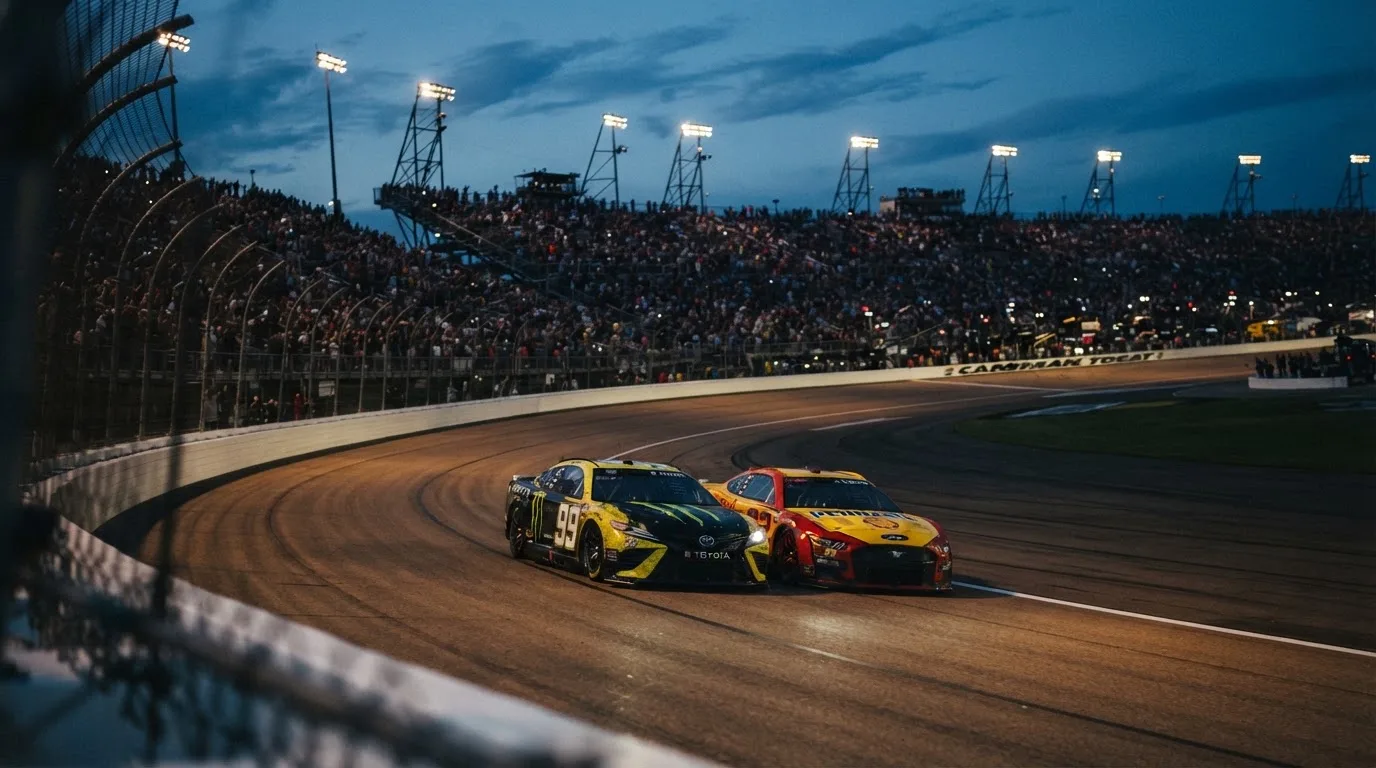
What shapes the card is the season structure rather than any quirk of the bookmaking. The 2026 Cup Series runs 36 points-paying races between February and November, plus three non-championship showpiece events — the Cook Out Clash at Bowman Gray Stadium, the Duel at Daytona qualifying races and the NASCAR All-Star Race at North Wilkesboro. The 2026 Daytona 500 opened the points season on 15 February 2026 and was won by Tyler Reddick; the finale, the Straight Talk Wireless 400 at Homestead–Miami Speedway, follows on 8 November 2026. Between those two bookends sits a 26-race regular season; the top 16 drivers in points then enter the playoff, with starting points staggered by the regular-season standings — the old win-and-you’re-in rule is gone for 2026, and the playoff bracket is seeded by accumulated points rather than by race wins.
That calendar is what a UK bookmaker’s NASCAR tab is built around. The “next race” carousel updates Monday-by-Monday through the summer, the outright Cup Series champion market sits open across the whole season, and the race-by-race winner market is replaced by stage and segment betting during the playoff rounds. A punter who treats the season as a single 36-race event — betting the points leader at Daytona and the championship outright in February — sees a very different book from one who turns up for Phoenix in March and leaves after the Bristol night race. The shape of the season is the shape of the offer.
The market vocabulary itself is straightforward. The race winner, also called the “outright” or “to win” market, is the headline price — the bookmaker’s view of every driver’s chance, summed and loaded with its margin. Each-way betting is a feature of NASCAR at some shops, with place terms typically paying a quarter of the win odds for the top three in fields under the size bookmakers set; a small number of operators push each-way to the top five or six for the Daytona 500, the Coca-Cola 600 and the season finale. Podium betting, top-six finish, top-ten finish, finishing position group (sometimes labelled “driver to finish top 5/10/20”), group betting (the “Group A vs Group B” two- or three-way match-up), head-to-head between two named drivers over a single race or the full season, fastest lap, most laps led, lead changes, and manufacturer match-ups (Chevrolet vs Ford vs Toyota) are the standard race-card menu. Stage winners — NASCAR’s mid-race mini-finishes — are priced at the deeper end of the market and tend to appear only on the more developed Cup cards.
The Cup Series playoff adds a parallel set of markets: championship outright, “to reach the final four”, “to win a round”, stage of elimination. Once a driver is eliminated, those markets settle and the bookmaker’s card collapses back to a 16-, then 12-, then eight-, then four-driver field. A punter who lays a futures bet on a driver in February is betting on a 36-race sample; a punter who lays a futures bet on a Round of 8 driver in September is betting on a three-race window. The bookmaker’s price reflects the difference, and so does the punter’s risk.
What a bet pays back
The arithmetic behind any NASCAR wager is the same as for any other fixed-odds bet on a British site. Decimal odds of 6.00 on a driver mean a £10 stake returns £60 — the £10 stake plus £50 of profit. Fractional odds of 5/1 mean the same thing: five units of profit for every one unit staked, with the stake returned on top. The two forms are interchangeable and most GB-licensed sites let the punter switch between them in the account settings.

A combination bet multiplies the legs into one price. Two drivers at 3.00 and 4.00 become a double at 12.00; a four-leg accumulator at 3.00, 4.00, 2.50 and 2.00 becomes a single at 60.00. Each additional leg adds the bookmaker’s margin on top of the others — the more legs in the accumulator, the more margin the bookmaker carries — and the punter is paid only if every leg wins. The bet is settled as a single transaction at the combined price; a leg that pushes (a dead heat, a withdrawal) reduces the bet by that leg and the rest stand at their combined price.
Cash out turns a winning or losing position into a closed one before the race ends. The bookmaker’s cash-out price is its current view of the bet’s value at that moment in the race — lower than the outright price on a winning bet because the bookmaker is taking on the risk of the remaining laps, higher than the outright price on a losing bet because the bookmaker is paying the punter to give up the chance of a late-race swing. Partial cash out, offered by some operators on this list, lets the punter bank a share of the cash-out value and leave the rest to settle at race end.
Where the bookmaker’s margin sits
Every price a bookmaker quotes carries an overround, also called a margin or a vig. It is the slice of every pound staked that the bookmaker expects to keep, on average, across the field. A two-way market at decimal odds 1.90 and 1.90 — used here as an example, not a quoted price — pays back roughly 52.6p on every pound staked across the two outcomes combined, leaving the bookmaker with an overround of about 5.3% on that race, which corresponds to a 5.0% margin. The exact figure rises and falls with the field size and the spread of the prices: a deep 38-driver Cup field with one short-priced favourite and a long tail of outsiders carries a higher margin than a two-driver head-to-head, because the long tail is where the bookmaker’s edge accumulates. A punter comparing two operators on the same race should compare the prices, not the headline favourites — the favourite is rarely where the edge is, and the difference between operators is most visible in the midfield and the long tail.
The 2026 NASCAR season at a glance
A punter stepping into NASCAR for the first time in 2026 meets a season already in motion. The 2026 Daytona 500 has been run, the regular season is roughly two-thirds complete by mid-summer, and the playoff field will be set around race 26 in late August. The full Cup Series card runs from the Daytona 500 in February to the Straight Talk Wireless 400 at Homestead–Miami in November, with the 36 points-paying races spread across ovals, road courses, street courses and the Bristol dirt race.
The calendar splits naturally into three phases. February to late May is the early season, dominated by the Daytona 500, the West Coast swing (Phoenix, Las Vegas, Fontana-style intermediates) and the first road-course rounds; the standings are still in flux, and outright prices are at their most volatile as the field settles. June through August is the regular-season grind, with the Coca-Cola 600 at Charlotte, the Brickyard 400 at Indianapolis, the southern short tracks and the first night races; the playoff picture sharpens here, and outright championship prices begin to reflect the top 16. September through November is the playoff, the 10-race knockout that ends at Homestead–Miami, and the period when outright and round-winner markets collapse to a shrinking field of contenders. The non-championship events — the Cook Out Clash in early February, the Duel at Daytona qualifying races, the All-Star Race in May — sit outside the points structure and are usually priced as standalone specials.
The schedule’s shape carries a practical warning for the punter. NASCAR’s calendar moves around year to year — tracks drop off, tracks return, dates shift by a week or two — and a 2025 market list does not match 2026‘s. The race card on a UK bookmaker’s NASCAR page is the calendar, and a futures bet on a driver in one season does not roll into the next.
The playoff picture
The 2026 Cup Series playoff takes the top 16 drivers in points after 26 races; the win-and-you’re-in shortcut used in earlier seasons is gone, and playoff starting points are staggered by the regular-season standings rather than reset to a flat bonus. The first round cuts four drivers, the second another four, and the third a further four; the final four race for the title at Homestead–Miami. Each round brings its own bookmaker markets — championship outright, “to reach the final four”, “to win a round” — and the prices change race by race as the field shrinks. A punter who lays a futures bet in February is betting through 36 races; a punter who lays a Round of 12 bet in September is betting through three. The bookmaker’s price reflects that, and so does the risk on the slip.
Bonuses, free bets and what they cost a NASCAR punter
The bonus vocabulary on a GB-licensed NASCAR page is short and well-rehearsed: a “free bet” is a token the punter stakes but does not get back if it wins, a “bet credit” works the same way, a “boosted odds” offer raises the price on a named selection for new customers, and a “money-back” or “risk-free” offer refunds a losing stake as a free bet rather than as cash. The 10x wagering cap, in force across all GB-licensed operators since 19 January 2026, applies to any offer that carries a wagering condition — a £10 bonus with a 10x requirement means the punter must place £100 of qualifying bets before the bonus and any winnings from it can be withdrawn. A free bet with no wagering condition sits outside the cap; the cap governs the requirement, not the value of the offer.
The shape of the offer, more than the headline number, is what decides whether a NASCAR punter comes out ahead. A free £30 bet on a Cup race at any price is worth, in expected terms, a fraction of the headline figure: the value of a free bet whose stake is not returned is the free-bet amount multiplied by the decimal odds minus one, divided by the decimal odds, and then scaled by the bookmaker’s payout share on that market. A £30 free bet at 5.00 on a race with a 90% payout share is worth around £21.60 in expected terms — the marketing number is £30, the realisable number is closer to £20, and the punter pays the gap. A boosted-odds welcome offer on a race winner, by contrast, pays the headline price in cash if the bet wins; the cost of the boost is the difference between the boosted price and the price the punter would have got without the offer, which is a much smaller discount to a winning bet.
Coral’s sports welcome offer, “Get £40 in Free Bets when you bet £20”, is a worked example. The punter deposits and places a sports bet of £20 or more at minimum decimal odds of 2.0 (1/1 fractional); on settlement, £40 in free bets is issued within seven days, expiring seven days after issue. The £40 is four free-bet tokens, not £40 of cash, and each token is consumed at stake; a winning £20 free bet at 3.00 returns £40 in profit, not £60. The offer is for new GB customers who opt in. The arithmetic on a winning free bet at 3.00 — stake returned as nothing, profit of £40 — is the same arithmetic the punter runs on every free bet the bookmaker issues: a smaller realisable number than the headline, and a price the punter pays for the marketing.
Hollywoodbets’ UK welcome offer, by contrast, is a stake-back as a free bet on a losing accumulator. New players who deposit £10 or more by card get their stake back as a free bet of up to £30 on their first qualifying losing accumulator — a stake of £10 or more, three or more legs, odds of 4/1 (5.00 decimal) or greater, settled within seven days, one free bet per customer. The offer is paid only if the accumulator loses; a winning first acca leaves the punter with the winnings and no free bet at all. The cap at £30 also matters: a punter who places a qualifying £40 acca that loses gets £30 back as a free bet, not £40, and the free bet itself follows the same stake-not-returned rule as Coral’s.
The 10x wagering cap is the other number to carry through this section. A bonus with a 10x wagering requirement means the punter must place ten times the bonus amount in qualifying bets before withdrawing; at 50x, the cap kicks in and the bookmaker’s terms must, in principle, be trimmed to the legal ceiling. Free bets with no wagering condition are unaffected — a free £20 bet that pays back the profit on a win and asks nothing further is exactly what it says, and the cap does not touch it. Mixed-product promotions — an offer that requires the punter to bet on football to claim a casino free spin, for example — are banned under the same 19 January 2026 rules. The cap is a ceiling, not a floor, and a bookmaker offering a low-wagering or no-wagering welcome is offering a better deal than the headline number suggests.
The wagering clock in practice
A bonus with a 10x wagering requirement on a £20 bonus means the punter places £200 of qualifying bets before the bonus and any winnings from it become withdrawable. At a typical Cup race winner market with a margin of 5–6% and a stake of £10 per bet, that is twenty qualifying bets; at a stake of £5, it is forty. Each bet must be at or above the minimum price the bookmaker sets for the bet to count — usually decimal odds of 1.50 (1/2 fractional) or higher, sometimes 1.625 (13/8) on the larger welcome offers — and the cost of clearing the bonus is the margin the bookmaker carries on those bets, applied to the total stake. A punter clearing a £20 bonus at a 5% margin over £200 of stakes is paying, in expected terms, £10 for the £20 bonus — a realisable net value of around £10, before any minimum-price restriction cuts some bets out of the qualifying pool.
The deadline is the other lever. A bonus that expires in seven days is a different bet from one that expires in thirty; the punter has fewer races to clear it, and the qualifying pool is smaller. A bonus that expires in ninety days is closer to a savings account than a wager. The NASCAR calendar helps here: a punter who joins during the regular season has a race most weeks, and a bonus that needs £200 of qualifying stake is cleared in three or four weekends at modest stakes. A punter who joins in the off-season has a longer wait and a thinner card.
Mobile and the NASCAR betting app
A Cup Series race runs at hours that suit the American TV schedule and a UK punter: afternoon and evening races on Sundays, with the green flag typically falling between 6pm and 9pm UK time during the East Coast swing, and 1am UK time starts in the late-summer West Coast rounds. A mobile app is, for most British NASCAR punters, the only practical way to lay a bet in-play; the desktop site is a backup, not a primary.
The ten operators on this list each run a native iOS and Android app, and the differences between them are matters of detail rather than presence. bet365’s app, the most downloaded sports betting app in the UK, carries Bet Builder+ for combining markets from one event into a single bet, Super Boosts, Winnings Boosts on Bet Builders and selected singles, and daily Bet Boosts; in-play betting is the headline feature, with live streaming of events worldwide, Bet Track, Match Live and a Live Golf Tracker for following bets in play. Spreadex combines fixed-odds and spread betting in one app, with one-click, auto and partial cash out, Bet Builder across fixed odds or spreads, and live streaming of UK and Irish horse racing, greyhounds, tennis, NFL and selected football — NASCAR is not in the streaming list, but the cash-out functionality works on the race markets. NetBet’s app offers Daily Boosts, Profit Boosts and free bet offers, a Bet Builder with instant dynamic odds and sports stats for major leagues. 888sport’s app covers pre-match and in-play betting, Cash Out, Bet Builder, racing streams, BetFinder form tools, a live bet feed and daily boosted odds.
Two operators extend the menu in different directions. Midnite, a smaller and newer brand, surfaces in-play events, an acca builder, popular accas and price boosts with maximum-stake limits, and the app is built mobile-first. LiveScore Bet’s Bet Builder allows up to 10 selections and covers match result, both teams to score, corners, total goals, player scoring and card markets — a deeper builder than the NASCAR card usually calls for, but a useful piece of kit on a race with many prop lines. QuinnBet’s app carries Best Odds Guaranteed on Irish and UK horse racing, a feature that does not transfer to NASCAR but signals a sharp in-play book on the racing side.
The app-level feature that matters most for NASCAR is the cash-out button. A race settles in roughly three hours, with the lead changing hands many times over the closing stint; a punter who lays a futures bet on a driver and wants to lock in profit — or cut a loss — before the chequered flag needs cash out on the slip. bet365, Spreadex, 888sport, William Hill, BetVictor and NetBet all run cash out on NASCAR outright markets; Coral and QuinnBet carry it on the deeper race card. The pit-stop phase, the late-race caution and the green-white-checker finish are the three windows where a cash-out price changes fastest, and a lag in the app at any of those moments is the difference between a closed position and a missed one.
Streaming and the in-race experience
Live streaming of NASCAR races is not part of the standard GB-licensed bookmaker offer. The broadcast rights sit with Fox and NBC in the United States, and a UK operator does not have a sub-licence to carry the feed. A punter who wants to watch the race while the slip is open is watching on a separate stream — a subscription service, a free-to-air partner, or the NASCAR Track Pass app — and using the bookmaker’s app for the bet. The bookmaker’s contribution to the in-race experience is the in-play card: the prices updating in seconds, the cash-out button, the race dashboard with the running order and the lead changes, and the bet tracker that shows the punter’s open position against the live market.
A handful of operators run in-race stat feeds on the NASCAR card, with lap-by-lap positions, segment winners and pit-stop times. Midnite and bet365 carry the deepest set; smaller operators show the running order and little else. A punter who bets NASCAR in-play is betting on a fast-moving market, and the app that updates fastest is the one that closes the position cleanly.
Live betting and cash out on a Cup race
A NASCAR race is a sequence of stages, cautions, restarts and green-flag runs. Each phase is its own market: the pre-race outright, the Stage 1 winner, the Stage 2 winner, the race winner, the head-to-head over the closing stint. In-play betting on a Cup race is structured around those phases, and a bookmaker’s in-play card is more or less developed depending on how the season is going. The deep cards (bet365, William Hill, BetVictor) carry the race winner, the podium, the head-to-head, the stage winners and a handful of race props; the thinner cards carry the race winner and the podium, and sometimes a single head-to-head.
The cash-out price on a NASCAR in-play bet moves with the running order. A driver leading at lap 100 of 400 carries a cash-out price close to the outright price, slightly discounted for the laps remaining; a driver who has dropped from the lead to tenth by lap 200 carries a cash-out price well below the outright, with the rest of the race priced in. The price is the bookmaker’s view of the bet’s worth at that moment, and the discount to the outright is the bookmaker’s charge for closing the bet early. A punter who cashes out a winning position is paying for the certainty of a closed book; a punter who lets a winning position ride to the chequered flag is taking the remaining risk in exchange for a larger payout. The trade-off is the same as on any other sport, but NASCAR’s three-hour race window and its many caution phases make the cash-out decision a more frequent one.
Partial cash out, where the bookmaker offers to close half the position at the cash-out price and leave the other half to settle, is a way to split the difference. Spreadex carries partial cash out on fixed-odds bets, as does bet365 in some configurations. The two-way trade is between locking in a smaller, certain profit on half the position and leaving the rest to run.
Market types and how the odds are built
The Cup Series market list on a GB-licensed bookmaker is built from the same six or seven building blocks race by race. The race winner is the headline and the deepest-priced market, with 38 or so runners and a long tail of 80-to-1 and 100-to-1 shots. The podium and the top-six finish markets are shorter-priced versions of the same field, with place terms that pay a fraction of the win odds for the relevant finishing position. Group betting — sometimes labelled “Group A vs Group B vs Group C”, with the field split by manufacturer or by recent form — is a smaller field and a more approachable price, with two or three runners in each group. The head-to-head is two named drivers over a single race or the full season, with the price reflecting each driver’s expected finish. The fastest-lap, most-laps-led and lead-changes markets are the props that round out the deeper cards.
The outright championship market sits open across the season. The 2026 Cup Series had a wide-open title race from February — the Daytona 500 winner took the early lead, but the standings settled through the summer and the playoff field tightened around the top eight by the Round of 12. A futures bet on a championship contender in February is a long-horizon bet, and the bookmaker’s price reflects the standings, the form and the schedule that lies ahead.
A punter comparing two operators on the same race is comparing prices, and the prices diverge most in the midfield and the long tail. A favourite at 4.00 may be 3.75 at one shop and 4.33 at another; the difference is small in absolute terms but large as a percentage of the bet. The same logic applies to the head-to-head and the group markets, where the bookmaker’s pricing model and its view of each driver’s form show through most clearly. The bookmaker’s margin on a Cup race winner market is typically 5–7%, with deeper fields carrying a higher margin; a two-driver head-to-head runs at a lower margin, often closer to 3%.
The stage winner markets are the new line on the deeper cards. NASCAR’s mid-race stages — roughly a third and two-thirds of the way through the race — pay championship points, and the bookmakers who price them treat each stage as a short race in its own right. The field is the same as for the race winner, the prices are tighter because the window is shorter, and the margin is lower. A punter who follows the stage strategy of the teams — which teams push for stage points, which teams play the long game — has an information edge that the race-winner market does not give.
Decimal, fractional and the bookmaker’s frame
GB-licensed bookmakers present odds in both decimal and fractional form, with the punter choosing the default in the account settings. Decimal odds of 4.00 are fractional odds of 3/1; decimal odds of 2.50 are fractional odds of 6/4; decimal odds of 1.50 are fractional odds of 1/2. The conversion is exact and the two forms carry the same information. Fractional odds of 5/1 mean five units of profit for every one unit staked; decimal odds of 6.00 mean the same thing, with the stake returned on top. A punter who reads fractional odds comfortably does not need to convert; a punter who reads decimal odds comfortably does not need to convert either. The bookmaker’s frame is the punter’s frame, and the slip is settled in the form the punter chose.
The starting price (SP) is the industry shorthand for the price the bookmaker settles at when no fixed price is taken — the average of the on-course prices, or the bookmaker’s view if there is no on-course market. NASCAR does not have an on-course book in the British sense, and the SP is the bookmaker’s own number at the off. A bet struck at the SP is settled at that number; a bet struck at a fixed price is settled at the price on the slip.
The Cup Series in 2026: a punter’s reading
The 2026 Cup Series has played out in a long, slow arc from the Daytona 500 in February to the playoff field in late August. The Tyler Reddick win at Daytona was a surprise at the odds that morning — Reddick was a midfield price through the duels and into the 500 — and the early-season standings reflected the usual mix of superspeedway luck, intermediate-track consistency and road-course specialism. The West Coast swing tightened the field; the first short-track run in March shook it again; the Coca-Cola 600 in late May was the season’s first 600-mile race and the first long-stint test of pit strategy and fuel mileage.
The regular season ends after 26 races, and the playoff field is set by points. The 2026 playoff is staggered by regular-season standings, with the win-and-you’re-in rule gone and the bracket seeded by accumulated points; the first round cuts four drivers, the second another four, the third a further four, and the final four race for the title at Homestead–Miami on 8 November 2026. The 36th and final points-paying race is the penultimate weekend, and the finale carries both the race winner market and the championship market. The non-championship races — the Cook Out Clash, the Duel at Daytona, the All-Star Race — sit outside the points structure and are usually priced as specials.
The schedule moves year to year, and the 2027 calendar will be different from 2026‘s. A punter carrying a futures bet across the season boundary carries nothing — the bet is voided or settled on the new season’s terms, depending on the bookmaker. A punter who plans a season-long staking plan reads the schedule, watches the early rounds, and adjusts the staking as the field settles.
Best Odds Guaranteed and the racing-only perks
Best Odds Guaranteed (BOG) is a UK and Irish horse-racing offer that does not transfer to NASCAR. The mechanic is that the bookmaker guarantees the punter the higher of the price taken and the starting price on a named race; if the SP is higher, the bet is settled at the SP. William Hill runs BOG on UK and Irish horse racing from 8am on the day of the race, on singles and multiples, and the offer excludes ante-post, tote and pari-mutuel bets. QuinnBet runs a similar BOG on Irish and UK horse racing from 10am daily, on singles, multiples and system bets, with a maximum benefit of £150 per customer per race. BetVictor’s BOG is on UK and Irish horse racing. The NASCAR market is a fixed-price book and BOG does not apply; the punter takes the price on the slip or stays out.
The racing-only feature is a marker of how the GB-licensed bookmakers price their sports: the horse-racing product is the deepest, the most heavily promoted, and the most heavily subsidised through BOG and the streaming feeds. NASCAR sits one tier down, with a thinner card, fewer in-play markets, and a price that does not move up if the race goes a certain way. A punter who bets both sees two different books.
How the ten operators compare
The table below lays the ten GB-licensed operators against four matters: the Gambling Commission remote licence and the licence holder on the public register, and a summary of what the operator’s own published terms say about its NASCAR product. The licence number is the whole test of who holds a GB remote licence; the public register can be searched by business name, trading name, domain or account number. Each brand below holds a remote general betting standard (real events) licence, and each takes part in GAMSTOP. The order is editorial and not a ranking; no single brand is the only licensed one, and a place in the comparison is not a licence.
| Brand | Gambling Commission remote licence and holder | NASCAR product on the operator’s own terms |
|---|---|---|
| BetVictor | 039576-R-319370-028 — BV Gaming Limited | NASCAR race winner, podium and each-way on the Cup Series; Best Odds Guaranteed on UK and Irish horse racing; BetFinder and Smart Stats for racing form |
| Hollywoodbets | 053028-R-330019-013 — Hollywoodbets International UK Limited | Cup Series race winner and outright championship; sports welcome offer refunds first losing accumulator as a free bet of up to £30 (stake £10+, 3+ legs, odds 4/1+, settled within 7 days) |
| LiveScore Bet | 056859-R-332720-005 — LiveScore Betting and Gaming (Gibraltar) Limited | Cup Series race winner and race props; Bet Builder allows up to 10 selections across match result, BTTS, corners, totals, player scoring and cards |
| Spreadex | 008835-R-104580-022 — Spreadex Limited | Combines fixed-odds and spread betting in one app; one-click, auto and partial cash out; Bet Builder across fixed odds or spreads; spread betting losses can exceed the deposit |
| bet365 | 055148-R-331498-002 — Hillside (UK Sports) ENC | Cup Series race winner, podium, head-to-head and stage markets; Bet Builder+, Super Boosts, Winnings Boosts on Bet Builders and selected singles, daily Bet Boosts; in-play with live streaming of events worldwide; Bet Track, Match Live and Live Golf Tracker |
| NetBet | 039170-R-319343-032 — Netbet Enterprises Limited | Cup Series race winner and race props; Daily Boosts, Profit Boosts and free bet offers; Bet Builder with instant dynamic odds; sports stats for major leagues |
| QuinnBet | 061011-R-335683-004 — QuinnBet (Gibraltar) Limited | Cup Series race winner and outright championship; Best Odds Guaranteed on UK and Irish horse racing from 10am daily (singles, multiples and system bets, max benefit £150 per customer per race) |
| Kalooki Sportsbook | 057730-R-333396-005 — Kalooki Sportsbook Limited | Cup Series race winner and race props; GAMSTOP member; UK-operated sportsbook with a focused racing and US motorsport card |
| Coral | 054743-R-330863-014 — LC International Limited | Cup Series race winner, podium and race props; sports welcome offer of £40 in free bets on a £20 qualifying bet (min odds 2.0, free bets expire 7 days after issue) |
| 888sport | 039028-R-319297-014 — 888 UK Limited | Cup Series race winner, podium, race props and in-play; Cash Out, Bet Builder, racing streams, BetFinder form tools, live bet feed and daily boosted odds |
A few features stand out from the table. bet365 and William Hill (not in this comparison) carry the deepest NASCAR cards and the most developed in-play and streaming layer; Spreadex is the only operator on the list that combines fixed-odds and spread betting in one account, with the spread-bet caveat that losses can exceed deposits. Hollywoodbets and Coral are the two operators with a stake-back or free-bet welcome offer that pays out on a losing first bet, with Hollywoodbets’ structure tied to accumulators of three or more legs and Coral’s to a single qualifying bet at minimum odds of 2.0. The remaining operators run the standard Cup race winner, podium and race-prop card, with varying depth on the in-play and builder side.
A punter who bets NASCAR heavily and uses cash out as a regular tool is best served by the operators with the deepest in-play layer: bet365, Spreadex and 888sport carry partial and full cash out, in-play price movement, and a tracker layer that follows the open position. A punter who bets the outright championship and stage markets is best served by the operators that price those markets, which most of the table does; a punter who bets NASCAR alongside UK and Irish horse racing gets the most from the operators that carry BOG on the racing side and a deep NASCAR card — William Hill (not on this list) and BetVictor are the most relevant of that set, and Coral sits between the two. A punter who bets small and often is best served by the operators that carry stake-back welcome offers, which absorb some of the variance of a long-shot race winner.
The operators in detail
BetVictor — deep racing roots, sharp NASCAR pricing
BetVictor carries a remote general betting standard (real events) licence under BV Gaming Limited, with the licence number 039576-R-319370-028 on the public register. The brand’s racing heritage is the headline: Best Odds Guaranteed on UK and Irish horse racing, enhanced live race streaming and a BetFinder feature for finding racing bets, alongside Smart Stats for form work. The NASCAR card sits within the wider US motorsport tab and carries the race winner, the podium and the each-way market, with the place terms set to the bookmaker’s house rules. The operator is one of the sharper-priced on the racing side, and the NASCAR pricing reflects that sharpness; a punter comparing BetVictor’s race winner prices against a soft-priced rival will find the difference in the midfield and the long tail. Best fit: a punter who bets UK racing as the main book and NASCAR as the second sport, and who wants one account for both. Comparison: BetVictor’s racing-heavy offer is a clear alternative to a generalist book.
Hollywoodbets — stake-back welcome, focused NASCAR card
Hollywoodbets runs under Hollywoodbets International UK Limited, with the licence number 053028-R-330019-013 on the public register. The sports welcome offer is a stake-back as a free bet of up to £30 on the first qualifying losing accumulator — a stake of £10 or more, three or more legs, odds of 4/1 (5.00 decimal) or greater, settled within seven days, one free bet per customer. The offer is paid only if the accumulator loses, and a winning first acca leaves the punter with the winnings and no free bet at all. The NASCAR card includes the race winner and the outright championship market; the in-play and builder layer is thinner than bet365’s or William Hill’s. Best fit: a punter who builds accumulators across NASCAR and other sports, and who values the stake-back mechanic. Comparison: This is a niche welcome offer for a specific acca-focused strategy.
LiveScore Bet — the Bet Builder goes to ten selections
LiveScore Bet is run by LiveScore Betting and Gaming (Gibraltar) Limited, with the licence number 056859-R-332720-005. The headline feature is the Bet Builder, which allows up to 10 selections and covers match result, both teams to score, corners, total goals, player scoring and card markets — a deeper builder than the NASCAR card usually calls for, but a useful piece of kit for a punter who builds NASCAR props. The NASCAR card carries the race winner and the race props. Best fit: a punter who builds multi-selection slips across sports and wants the ceiling at 10. Worst fit: a punter whose bets are mostly NASCAR singles and who does not need the deep builder.
Spreadex — fixed odds and spread betting in one account
Spreadex is the only operator on this list that combines fixed-odds and spread betting in one app, with the same account funding both products. The Gambling Commission regulates the fixed-odds side, and the Financial Conduct Authority regulates the spread-betting side — a dual oversight that is unique on this list. The licence number is 008835-R-104580-022 under Spreadex Limited. The app carries one-click, auto and partial cash out, Bet Builder across fixed odds or spreads, and live streaming of UK and Irish horse racing, greyhounds, tennis, NFL and selected football; NASCAR is not in the streaming list. The spread-bet warning is the one to carry through this review: spread betting losses can exceed the deposit, and the punter is funding a margin account that can run a negative balance. Best fit: a punter who already uses spread betting on racing or football and wants one account for both. Caveat: This is a specialized book for a experienced spread-betting punter.
bet365 — the deepest in-play and the widest menu
bet365 runs under Hillside (UK Sports) ENC, with the licence number 055148-R-331498-002. The app is the most downloaded sports betting app in the UK and the deepest product in the comparison. The NASCAR card carries the race winner, the podium, the head-to-head and the stage markets; Bet Builder+ combines markets from one event into a single bet, available pre-match and in-play; Super Boosts, Winnings Boosts on Bet Builders and selected singles, and daily Bet Boosts run across the NASCAR card. In-play betting is the headline feature, with live streaming of events worldwide, Bet Track, Match Live and a Live Golf Tracker for following bets in play. The pricing is competitive across the field, and the in-play card is the most developed. Best fit: a punter who bets NASCAR in-play, uses the cash-out button frequently, and wants the deepest menu and the most reliable streaming. Verdict: This is the most comprehensive NASCAR book in the UK.
NetBet — Boosts, builder and stat layer
NetBet runs under Netbet Enterprises Limited, with the licence number 039170-R-319343-032. The app offers Daily Boosts, Profit Boosts and free bet offers, a Bet Builder with instant dynamic odds, and sports stats for major leagues. The NASCAR card carries the race winner and the race props, with the in-play layer thinner than bet365’s or Spreadex’s. Best fit: a punter who bets NASCAR and other sports with one account and who values the Daily Boosts and the stat layer. Worst fit: a punter who bets NASCAR heavily in-play and wants the deepest price-movement feed.
QuinnBet — sharp racing, BOG-led product
QuinnBet runs under QuinnBet (Gibraltar) Limited, with the licence number 061011-R-335683-004. The headline feature is Best Odds Guaranteed on Irish and UK horse racing from 10am daily, on singles, multiples and system bets, with a maximum benefit of £150 per customer per race. The NASCAR card carries the race winner and the outright championship market. BOG does not transfer to NASCAR, and the racing focus is the dominant feature. Best fit: a punter whose main book is UK and Irish racing and who wants BOG and a sharp NASCAR book on the same account. Worst fit: a punter who does not bet racing and does not need the BOG layer.
Kalooki Sportsbook — focused book, GAMSTOP member
Kalooki Sportsbook runs under Kalooki Sportsbook Limited, with the licence number 057730-R-333396-005. The operator is a smaller and more focused GB-licensed sportsbook, and a GAMSTOP member. The NASCAR card features the race winner and the race props; the welcome offer and the bonus layer are not as developed as the larger brands’. Best fit: a punter who wants a smaller, focused GB-licensed book with a clean NASCAR card. Caveat: The focused approach limits the available market depth.
Coral — £40 in free bets on a £20 qualifying bet
Coral runs under LC International Limited, with the licence number 054743-R-330863-014. The licence also covers a remote betting intermediary category, which puts Coral in the same group as the exchange brands for licensing purposes — the sportsbook is a separate product, but the licence carries the wider categories. The sports welcome offer is “Get £40 in Free Bets when you bet £20”: a deposit and sports bet of £20 or more at minimum decimal odds of 2.0 (1/1 fractional), with £40 in free bets issued within seven days and expiring seven days after issue, for new GB customers who opt in. The NASCAR card includes the race winner, the podium and the race props. Best fit: a punter who values the £40 free-bet welcome and the larger operator’s product depth. Caveat: The bonus has specific wagering requirements for the free-bet stake.
888sport — Cash Out, builder and daily boosts
888sport runs under 888 UK Limited, with the licence number 039028-R-319297-014. The app offers pre-match and in-play betting, Cash Out, Bet Builder, racing streams, BetFinder form tools, a live bet feed and daily boosted odds. The NASCAR race card is standard for the Cup Series, covering winner, podium, props and in-play. Best fit: a punter who wants the full menu — Cash Out, builder, racing streams, daily boosts — under one licence. Comparison: This is a balanced, general-purpose sportsbook.
Legal frame: who regulates what, and what a GB licence means
The regulator of the British commercial betting market is the Gambling Commission (UKGC), a non-departmental public body sponsored by the Department for Culture, Media and Sport. The framework is the Gambling Act 2005, which covers Great Britain — England, Scotland and Wales; Northern Ireland is outside the Act and has its own older law, so a “GB licence” is a Great Britain licence and does not regulate Northern Ireland. Since the Gambling (Licensing and Advertising) Act 2014, an operator whose remote facilities are used in Great Britain needs a Commission licence wherever it is based, and a Curaçao, Maltese or Gibraltar licence is not a substitute. Sections 33 and 36 of the 2005 Act, as amended, are the operative sections. There is no state monopoly, and no cap on the number of licences.
The licence categories relevant to this page are remote general betting standard (real events), the category every operator on the comparison holds; remote general betting standard (virtual events), a separate category for computer-generated events; remote general betting limited, a smaller category; remote pool betting, the off-course pool category; and remote betting intermediary, the licence for betting exchanges. An operator holds a licence for one or more of these categories and offers markets under its own rules and the Licence Conditions and Codes of Practice (LCCP). NASCAR is a real event and falls under the general betting standard (real events) category.
The Commission’s public register is the whole test of who holds a licence. It can be searched by business name, trading name, domain or account number, and a brand that does not appear on the register does not hold a GB licence. Several brands can run under one licence — for example Ladbrokes and Coral both run under LC International Limited, and Paddy Power and Betfair under the Flutter group — and a single licence can carry multiple remote categories. The register is the document to check before depositing with any operator, including the ten on the comparison above, and the access date is the date a reader should carry with the check.
There is no statutory list of permitted bets or markets. An operator licensed for a category may offer markets within its licence conditions and the LCCP; the markets are not pre-approved by name. In-play betting is offered by GB bookmakers and is governed by the operator’s licence conditions and customer-protection duties; it is not legally unrestricted, and a bookmaker’s in-play card reflects the operator’s interpretation of those duties. Esports are treated like any other event; virtual events are a separate licence category; bets on politics, TV shows and novelty markets are offered by GB bookmakers and no statutory prohibition was found. Betting exchanges run under a betting intermediary licence, and the rates and rules specific to exchanges are stated from each exchange’s terms. Spread betting that is not a financial product falls inside General Betting Duty; financial spread betting is regulated by the Financial Conduct Authority, not the Commission.
The minimum age for betting in Great Britain is 18, and the operator verifies the customer’s name, address and date of birth before the first deposit or wager — including a free bet or bonus. The verification has been in force since 7 May 2019, and it means there is no anonymous play at a licensed site. A source-of-funds check at higher spend is normal under the money-laundering rules. A British named-account rule, a state list of permitted payment methods and any rule for or against cryptocurrency deposits at licensed operators are not established; the rules are the operator’s own, and a punter checks each operator’s payment page before depositing.
The customer pays no tax on betting winnings in Great Britain. General Betting Duty is the operator’s tax on gross profits, currently 15% under the existing rate; from 1 April 2027 a new remote betting rate of 25% applies within it, while remote bets on UK horse racing, bets on self-service betting terminals in licensed premises, pool betting and in-person betting stay at 15%. Until 1 April 2027 the remote rate stays at 15%, and whether operators pass duty on through odds is not established — a punter who reads a price change between 2026 and 2027 should not assume the cause is duty. Spread betting has its own rates: 3% on financial spread bets and 10% on other spread bets. The Commission’s statutory levy is a separate charge, not a tax on the punter. The above is general information, not tax advice; a professional gambler should ask HMRC or an adviser.
The offshore and unlicensed layer
A bookmaker that takes bets from customers in Great Britain without holding the Commission licence the Act requires is committing an offence under section 33 of the Gambling Act 2005 — up to 51 weeks’ imprisonment, a fine up to level 5, or both on summary conviction in England and Wales, and six months in Scotland. The offence is aimed at the operator, not the customer; no offence aimed at a customer who merely bets on an unlicensed site was found in the framework. A punter using an unlicensed site loses the consumer protections that travel with a GB licence: no GAMSTOP coverage, no Commission complaints route, no approved dispute-resolution body, no British consumer redress if funds are withheld, no cap on wagering requirements (the 10x ceiling does not apply), no financial vulnerability check (the £150 rolling 30-day trigger does not apply), and no source-of-funds screening.
Enforcement against unlicensed operators is disruption, not blocking: cease-and-desist notices, search-engine referrals, work with domain registrars, hosting providers and payment firms, and court-order DNS blocking powers that have been granted or are about to be granted. ISP-level blocking is not in operation as a general rule. A punter who sees an operator on a search result does not see whether the operator holds a GB licence; the register is the test, and the check takes a minute.
A punter who bets with an unlicensed site for any reason — a softer welcome offer, a market a licensed book does not carry, a payment method a licensed book does not accept — is paying for the difference in the loss of those protections. A punted bet that is withheld by an unlicensed operator has no British route to recover the funds. A punted bet that is withheld by a licensed operator has the Commission complaints route and an approved alternative dispute-resolution (ADR) body as the next step. The licensed route is the route with the recourse, and the recourse is what the punter is buying with the licence check.
Responsible gambling tools at a GB-licensed bookmaker
A GB-licensed operator is required to take part in GAMSTOP, the national multi-operator online self-exclusion scheme, and GAMSTOP membership is a mandatory licence condition for online operators since 31 March 2020. A punter who registers with GAMSTOP is excluded from every GB-licensed online operator for the period chosen — six months, one year, five years, or five years with auto-renewal. After the minimum period, the exclusion stays in place for a further seven years unless the customer asks GAMSTOP to remove it. The scheme covers online sites and apps; betting shops use a separate service. Every operator on the comparison table is a GAMSTOP member.
The financial vulnerability check (LCCP condition 3.4.4, in force since 30 August 2024) applies to licensed remote betting when a customer’s deposits minus withdrawals exceed £150 in a rolling 30 days. The check is a public-record check — for example, bankruptcy or county court judgments — and is not an income check or a credit reference check. A punter who passes the £150 trigger is screened against public records; a punter who flags a public record is contacted by the operator and asked for further information. Financial risk assessments, sometimes called affordability checks in the press, are announced in a staged plan; the Commission’s article of 7 July 2026 sets out the stages with no start date, and a punter reading current coverage should treat the regime as “announced, staged, no start date” until the Commission publishes a commencement date.
Deposit limits are a customer-set feature at every licensed operator, and the operator must offer a gross deposit limit on a fixed time frame. The first changes to the regime have applied since 31 October 2025, and a second phase was postponed to 30 September 2026; whether that second phase is live is not established at the time of writing, and a punter checking the regime should look at the operator’s own deposit-limit page for the current state. There is no state-set deposit or loss ceiling for betting: the limits are the customer’s choice, and the operator’s duty is to make the limit easy to set, easy to lower, and harder to raise (a 24-hour cooling-off period is standard for a limit increase).
The help lines for a punter who is concerned about their own betting or someone else’s are GamCare (the National Gambling Helpline), GambleAware, the NHS gambling clinics, and Gamblers Anonymous. The contact details are on every licensed operator’s safer-gambling page, and a punter who cannot find the page should not be betting with the operator. The safer-gambling tools are the operator’s licence condition, and the operator’s compliance with the conditions is the test of whether the licence is being honoured.
Crypto, e-wallets and the payment menu
The payment menu at a GB-licensed bookmaker is debit-card-heavy and bank-transfer-heavy, with e-wallets where the operator accepts them and the credit-card ban in force since 14 April 2020 cutting off credit-card deposits (including credit-card-funded e-wallet deposits). The ban covers credit cards and credit-card-funded payments through an e-wallet; debit cards and bank-based payments are not covered. A punter who wants to deposit by credit card cannot do so at a licensed operator, and a punter who tries to route a credit-card-funded e-wallet deposit is in breach of the operator’s terms.
Crypto deposits — Bitcoin, Ethereum, Litecoin and the other coins that turn up in searches for this subject — are not part of the standard GB-licensed payment menu. The licensed operators in this comparison do not advertise crypto deposits on their UK-facing pages, and the register does not list a payment-method category. A punter who sees a “bet on NASCAR with Bitcoin” offer in a search result is almost certainly looking at an offshore or unlicensed operator, and the offshore section above applies: no GAMSTOP, no Commission complaints route, no British consumer redress, no 10x bonus cap, no £150 vulnerability check. The crypto payment is a feature of the unlicensed layer rather than the licensed one, and the cost of the crypto payment is the cost of those protections being absent.
A punter who wants to deposit by debit card, bank transfer or a standard e-wallet at a licensed operator can do so; the operator verifies the customer before the first deposit, the funds are held in a segregated account under the operator’s licence conditions, and a withdrawal returns to the source account. The verification step is the trade-off: a licensed account is not anonymous, and the source-of-funds question at higher spend is a normal part of the regime. A punter who wants anonymity does not get it at a licensed site; a punter who wants consumer protection does.
The bank-based payment options
The bank-based payment options at a licensed operator include Faster Payments, BACS, and the direct-debit and open-banking rails. Deposits are usually instant through Faster Payments; withdrawals are usually processed within 24 to 48 hours, with the receiving bank’s own clearance adding time on top. The licensed operator’s terms state the payout time for each method, and a punter who needs a fast withdrawal checks the method before depositing. E-wallets, where accepted, settle faster than bank transfers; debit-card withdrawals go back to the card and may take longer than the e-wallet route. The cost of a fast withdrawal is the operator’s choice of payment method, and a punter who values speed over fee is best served by the e-wallet or the open-banking rail.
Frequently asked questions
How does a UK punter place a bet on a NASCAR race?
A UK punter with a Gambling Commission-licensed account opens the NASCAR tab on the bookmaker’s site or app, picks a race from the calendar — Daytona, Phoenix, Bristol, the playoff rounds — and selects a market: race winner, podium, head-to-head, stage winner, finishing position group, or a race prop. The punter enters the stake, confirms the slip, and the bet is taken at the price on the slip. A bet struck in-play is taken at the price on the screen at the moment the bet is confirmed, and the price can change between the moment the punter opens the slip and the moment the bet is confirmed. A bet struck ahead of the race is taken at the price on the slip at the time of confirmation, and the slip is the contract.
Which bookmakers offer NASCAR betting in the UK?
Ten GB-licensed bookmakers are reviewed on this page — BetVictor, Hollywoodbets, LiveScore Bet, Spreadex, bet365, NetBet, QuinnBet, Kalooki Sportsbook, Coral and 888sport — and each holds a remote general betting standard (real events) licence with the Gambling Commission. The Cup Series race winner, podium and race-prop markets are the common floor; the deeper cards (bet365, William Hill, BetVictor) add stage winners, head-to-head, and a developed in-play and builder layer. The Xfinity Series and Craftsman Truck Series are stocked more thinly, with most operators folding them into a generic US motorsport tab.
How are NASCAR races structured for betting purposes?
The 2026 Cup Series runs 36 points-paying races between February and November, plus three non-championship events: the Cook Out Clash, the Duel at Daytona and the NASCAR All-Star Race. The 2026 Daytona 500 opened the points season on 15 February 2026, won by Tyler Reddick. The top 16 drivers in points after 26 races enter the playoff, with starting points staggered by regular-season standings — the win-and-you’re-in rule is gone for 2026. The finale is the Straight Talk Wireless 400 at Homestead–Miami Speedway on 8 November 2026. The bookmaker’s NASCAR card tracks the schedule, and the markets change as the season moves from the regular season into the playoff.
How is a bookmaker’s GB licence checked?
The Gambling Commission’s public register is the whole test. It can be searched by business name, trading name, domain or account number, and it returns the licence number, the licence categories, the licence holder and the trading names the licence covers. The register is the document to check before depositing, and the access date is the date a reader should carry with the check. A brand that does not appear on the register does not hold a GB licence, and the protections that travel with a GB licence — GAMSTOP, the Commission complaints route, the 10x bonus cap, the financial vulnerability check — do not apply.
How is the return on a bet worked out from the stake and the odds?
Decimal odds of 4.00 on a driver mean a £10 stake returns £40 in total — the £10 stake plus £30 of profit. Fractional odds of 3/1 mean the same thing: three units of profit for every one unit staked, with the stake returned on top. The two forms are interchangeable. A combination bet multiplies the legs into one price — a four-leg accumulator at 3.00, 4.00, 2.50 and 2.00 returns at 60.00, with the punter paid only if every leg wins. Each additional leg adds the bookmaker’s margin, and a leg that pushes reduces the bet by that leg while the rest stand at the combined price.
What is the bookmaker’s margin and how is it seen in the odds?
The margin is the slice of every pound staked that the bookmaker expects to keep, on average, across the field. An illustrative two-way market at decimal odds 1.90 and 1.90 — used here as an example, not a quoted price — pays back roughly 52.6p on every pound staked across the two outcomes combined, leaving the bookmaker with an overround of about 5.3% on that race, which corresponds to a 5.0% margin. The exact figure rises and falls with the field size and the spread of the prices; a deep 38-driver Cup race winner market carries a higher margin than a two-driver head-to-head, because the long tail is where the bookmaker’s edge accumulates. A punter comparing two operators on the same race should compare the prices, not the headline favourites — the difference is most visible in the midfield and the long tail.
Combat & motorsport – AI Betting
Content created by the «AI Betting» team
