
Badminton Betting Tips: How to Read the Market Without Losing Your Stake
 Available in US
A badminton rally lasts seconds. A badminton match fits inside an hour. A badminton tournament runs for a week. The bookmaker who prices a match well has, in many cases, less time to react than a football trader does, and less information than a tennis one — the on-screen odds move faster than the public coverage explains. That gap is exactly where a punter who has done their homework, and a punter who has not, end up paying different prices for the same thing.

This page is not a list of winners. No guide can be, and no honest one pretends to be. What it does is walk through what a tip actually is — a probability, then a price, then a stake — and what each step costs. The sport shapes the market: badminton sits second only to tennis among racket sports in British bookmaker coverage, but the menu is thinner than football and the in-play product is narrower, which changes what a smart bet looks like. Five operators, ten in the wider licensed field, three bet types most punters use, one number every punter should know — the margin baked into the odds. That is the shape of what follows.
Current as of 26 October 2026 and checked against the Gambling Commission’s public register of Great Britain remote licence holders.
The Bookmakers: How the Ten Licensed Brands Compare
The field is wider than the ten names most punters recognise, and thinner than the marketing makes it look. Every operator whose remote facilities reach customers in Great Britain needs a Gambling Commission licence wherever it sits in the world; that licence is the floor, not the ceiling. What separates one licensed bookmaker from another on a badminton bet comes down to four things: how deep the menu runs (does the brand price all five BWF disciplines, or just the head-to-head on the marquee tournament), how early the price appears (is the match on the board a week before or the morning of), how the in-play product holds up once the shuttle is in the air, and how the brand behaves when something goes wrong — a voided match, a Rule 4 deduction, a withdrawal that did not get published in time.
The comparison below sets out the licence position of each reviewed brand and what each operator’s own published terms state on badminton coverage, where the operator’s site or app names a feature that touches this market directly. The licence number is the bit that travels; the feature list is the bit that decides whether a given punter’s preferred bet type is even on the menu.
| Bookmaker | Gambling Commission licence | What the operator’s terms state on badminton |
|---|---|---|
| Ladbrokes | Account 54743 (LC International Limited), remote general betting standard (real events) and remote betting intermediary | Odds boosts on selected markets, Best Odds Guaranteed on UK and Irish racing, in-play betting and Acca Boosts across the sportsbook |
| Copybet | Account 53774 (Copybet UK Limited), remote general betting standard (real events) | Best Odds Guaranteed on UK and Irish racing throughout the day, payout at first past the post on horse racing even if the winner is later disqualified |
| BoyleSports | Account 39469 (Boylesports Enterprise), remote general betting standard (real events) | Acca Insurance with opt-in, £5 minimum stake, 1/2 minimum odds, £20 maximum refund as a free bet expiring in seven days, bets placed and settled on the same day |
| BetTom | Account 64959 (Bet Tom Limited), remote general betting standard (real events) | Sports welcome offer: 50% back as a free bet up to £50, with a matching 50% back up to £50 in free slot funds for the casino; full terms apply |
| Tote | Account 54779 (TDCO Limited), remote general betting standard (real events) | Pool-betting heritage; terms cover horse and greyhound racing as the core product, with the sportsbook extending into other events under the same licence |
| Swifty Sports | Account 58957 (Swifty Global (UK) Ltd), remote general betting standard (real events) | Best Odds Guaranteed, Cash Out on selected markets, daily price boosts, live streaming and in-play betting; Bet Builder listed as coming soon |
| Fitzdares | Account 400 (Fitzdares Limited), remote general betting standard (real events) | Cash Out, accumulators, Lucky 15s, specials and antepost markets across horse racing, football, tennis, rugby, cricket, golf and American football, with in-play live odds |
| Betmaster | Account 65699 (BM Solutions GB Ltd), remote general betting standard (real events) | Operates under a Maltese-registered parent; the UK-facing site states the Commission’s account number and offers a sportsbook under the licence |
| Bet600 | Account 44731 (Tyche Tech Limited), remote general betting standard (real events) | Best Odds Guaranteed on horse racing: if the starting price exceeds the price taken, the bet is settled at the bigger SP |
| bet365 | Account 55148 (Hillside (UK Sports) ENC), remote general betting standard (real events) | In-play betting and live streaming across a worldwide schedule, plus Bet Track, Match Live and a Live Golf Tracker for following bets in play |
The licence column is the part that does not move. Every name on that list is on the Gambling Commission’s public register against a remote general betting licence, and every one of them takes part in GAMSTOP, the compulsory online self-exclusion scheme. The right-hand column is the part that changes — Swifty Sports is the only reviewed brand that names a Bet Builder as coming soon; Fitzdares leans on a Lucky 15s-and-specials product that suits racing more than a five-discipline racket sport; BoyleSports publishes a Rule-style refund mechanism (Acca Insurance) with a £20 cap and a seven-day expiry on the refund, which matters once a punter builds a multi-match badminton slip. None of this is a recommendation. It is a map of what each house rule does to a bet the punter is actually placing.
A few patterns are worth noting before the individual reviews. Six of the ten name Best Odds Guaranteed, and all six name it for horse racing, not badminton — the BOG concession lives on the racing product and rarely extends to other sports. Six name Cash Out or an in-play equivalent; only bet365, Fitzdares and Swifty Sports state live streaming as a feature on the reviewed material. BetTom’s welcome offer bundles a sports free bet with a casino free slot fund, which is exactly the kind of mixed-product promotion the Commission’s January 2026 rule change has restricted — the structure of any current welcome offer should be read against the operator’s full terms, not against the headline percentage. None of the ten reviewed brands quotes a margin on a badminton market in its own published material; the number that decides whether a price is good or bad has to be derived by the punter, and the section on odds later in this page shows how.
The Fundamentals of Badminton Betting
Badminton looks like a simple sport, and in one sense it is: a shuttlecock, a net, two or four players, a point every rally. What makes it hard to price is the speed of the exchanges. The professional circuit is dominated by a handful of nations — China, Indonesia, Japan, South Korea, Denmark, India, Malaysia — and within those nations by a handful of players, so the same faces meet again and again inside a tournament and across the season. A punter who follows the BWF World Tour gets a different read on a quarter-final than a punter reading a one-line preview, and the market reflects that gap quickly.

The format itself is fixed and short, which is a feature for the bettor. Each game is played to 21 points with rally point scoring; a match is the best of three games; at 20–20 play continues until one side leads by two; at 29–29 the next point wins. A men’s singles match between top players typically lasts 40 to 60 minutes; a women’s singles can finish in half that. There is no clock to manage, no injury time, no referee discretion on a foul that swings a market — the points are the points and the scoreboard does the rest. For a punter, that means the in-play product is closer to tennis than football, and a small lead at the mid-game interval is not the cushion it would be in a longer-format sport.
The five disciplines matter for market depth. Badminton has men’s singles, women’s singles, men’s doubles, women’s doubles and mixed doubles, and a serious bookmaker prices all five. A house that only prices men’s singles is not a badminton bookmaker; it is a tennis bookmaker with a passing interest in another racket sport. The doubles disciplines throw up different pricing problems — there is no dominant player, partnerships shift, head-to-head records are shorter, and a few bookmakers thin out the menu or refuse outright. A punter who wants the doubles markets should check before they bet, not after.
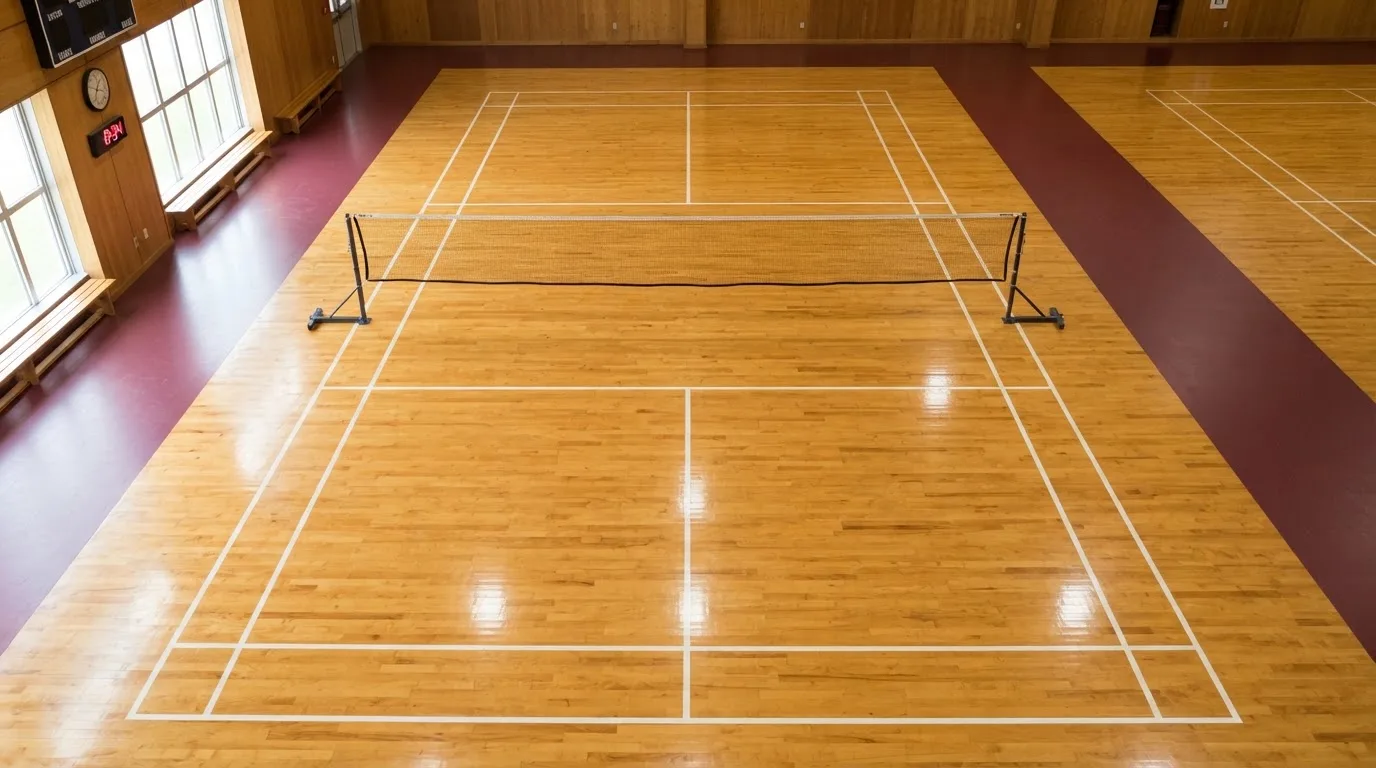
The court dimensions fix what is and is not possible on the shot. A badminton court is 13.4 m long, 6.1 m wide for doubles and 5.18 m wide for singles; the net is 1.55 m at the edges and 1.524 m at the centre. Those numbers do not change. What changes is the BWF calendar, which is dense — the Thomas Cup and Uber Cup (men’s and women’s team events) and the Sudirman Cup (mixed team), all held every two years, share space with the All England Open (since 1900), the BWF World Championships (since 1977) and the year-round World Tour. Badminton has been an Olympic sport since 1992, with mixed doubles added four years later, so the four-year Olympic cycle is a pricing event in its own right. For a punter, the practical consequence is that a tournament is rarely more than a fortnight away, and a year without a major badminton event is a year without a fixture.
The Statute Behind the Licence
The legal frame for betting in Great Britain is the Gambling Act 2005, which covers England, Scotland and Wales. Northern Ireland runs under older legislation and is outside the Act; a brand licensed by the Gambling Commission is licensed for Great Britain, not the United Kingdom as a whole, and a brand’s UK-facing marketing has to make that distinction work in practice. Since the Gambling (Licensing and Advertising) Act 2014, an operator whose remote facilities are used in Great Britain needs a Commission licence wherever it sits in the world — a Curaçao, Maltese or Gibraltar licence does not substitute. There is no state monopoly and no cap on the number of licences; the Commission’s public register is the only test of who holds one.
What the licence covers matters more than the brand’s nationality. The categories on the register for the reviewed brands are remote general betting standard (real events), with Ladbrokes additionally holding a remote betting intermediary category that lets it run an exchange-style product. Pool betting on horse and dog racing is a separate category held by the likes of Tote; spread betting on financial markets is regulated by the Financial Conduct Authority, not the Commission, and a financial spread betting account is a different product with different consumer protection. A bettor who drifts from one product to another should know which licence is on the other side of the bet.
The minimum age is 18. Identity is verified before a customer can deposit or gamble — the Commission introduced the requirement, with no exceptions for free bets or bonuses, in May 2019. That is why no licensed site accepts anonymous play, and why the welcome bonus is gated on a verification step rather than on a wager. The same rule is why source-of-funds questions appear at higher spend, and why a financial vulnerability check runs against public records once a customer’s net deposits cross £150 in a rolling 30-day window — a bankruptcy or county court judgment, not an income test.
There is no statutory list of permitted bets. The licence conditions and codes of practice (the LCCP) define the framework; the LCCP does not name which markets must be offered, so a bookmaker can refuse to price a market without breaking the law, and a punter cannot complain to the Commission that a brand did not quote the match they wanted. In-play betting is permitted under the same licence as pre-match; the controls sit in the LCCP’s social responsibility code, not in a separate statute. No statutory cap on stakes in sports betting was found — operators set their own maximum stakes and may restrict customers, and a winning punter is more likely to be restricted than a losing one.
What is banned at a licensed site matters for what a punter cannot do. Credit cards have been banned for gambling in Great Britain since April 2020, including credit-card-funded e-wallet top-ups; debit cards and bank-based payments are not covered by that ban. There is no statutory ban on cryptocurrency deposits at licensed operators — the question is what each operator’s terms say, and what the operator’s payment provider will process. The promotion rules in force since January 2026 cap wagering requirements on bonuses at 10x (so a £10 bonus with a 50x rollover is no longer legal — under the cap, no more than £100 of wagering applies), and ban mixed-product promotions that require gambling across two or more product types. Whether the cap applies to free bets with no wagering condition is not established, which is why the headline “free bet” should be read at the simple-text terms, not at the marketing line. Promo codes, voucher codes and any active URL of an offer are deliberately not quoted on this page — what matters is what an offer is worth, not how it is claimed.
Safeguards and the Wider Support Network
A licensed bookmaker is not just a site with odds on it. It is a site with a duty of care written into its licence conditions, and the duty shapes what a punter can do to manage their own play. The first tool is GAMSTOP, the multi-operator online self-exclusion scheme that has been a mandatory licence condition for online operators since 31 March 2020. A punter who registers with GAMSTOP is barred from every GB-licensed online site and app for a minimum of six months, with longer options of five years or five years with auto-renewal; after the minimum period the exclusion stays in place for a further seven years unless the customer asks GAMSTOP to remove it. GAMSTOP covers online only — betting shops use a separate service — and a punter who has self-excluded is not a punter any more until the exclusion is lifted.
The second tool is the deposit limit, which operators must offer on a fixed time frame under the Commission’s Remote Technical Standards. The first changes applied from October 2025; a second phase was postponed to September 2026, and whether that phase is live at the time of reading is not settled in the public material. Limits are the customer’s choice — there is no state-set ceiling for betting — but the operator must offer the mechanism, and a punter who sets a daily, weekly or monthly limit at a licensed site has that limit enforced.
The third tool is the financial vulnerability check that runs once net deposits cross £150 in a rolling 30 days. This is a public-record check (bankruptcy, county court judgments) and not an income check or a credit reference check. The separate “affordability check” that has been in the press is the announced financial risk assessment under the staged plan published by the Commission in July 2026 — written into the rules but with no start date, so a punter should expect it but should not assume it is currently in force.
The fourth tool is the self-help layer outside the operator. GamCare runs the National Gambling Helpline; GambleAware funds treatment and education; the NHS runs gambling clinics across the regions; Gamblers Anonymous runs peer-support meetings. A licensed operator’s safer-gambling page links to these organisations — Unibet’s UK site, for instance, links to BeGambleAware, GamCare, GAMSTOP, Gambling Therapy and the Betting and Gaming Council — but the support sits with the charities, not with the bookmaker. The Commission’s own complaints route is for disputes about whether a licensed operator has followed its licence conditions, not for complaints about a losing bet.
The honest framing of the licensed-unlicensed split, since it is the part most punter-facing material gets wrong: a licensed site offers identity verification before the first bet, GAMSTOP coverage, deposit-limit enforcement, a bonus cap, a vulnerability check at £150 of net deposits, and a route to dispute resolution. An unlicensed site offers none of those, and a punter whose funds are withheld by an unlicensed brand has no Commission complaints route, no approved dispute-resolution body, and no British consumer redress. Neither choice is “the safe one” by default — the licensed path costs the punter their anonymity and their right to a credit card deposit; the unlicensed path costs them every protection on the list and possibly their money.
What a Bonus Is Worth Once the Terms Settle
Badminton promotions tend to be folded into the sportsbook-wide welcome offer, with a free bet or a matched deposit as the headline and a set of rolls called out in the small text. The mathematics of what the offer actually costs the punter is the same on badminton as it is on any other sport — what changes is the menu. The reviewed material shows a 50% back-as-free-bet welcome offer at BetTom (with a matching 50% casino free slot fund, a structure that sits inside the Commission’s January 2026 mixed-product rule), acca insurance at BoyleSports (opt-in, £5 minimum stake, 1/2 minimum odds, £20 maximum refund as a free bet expiring seven days from issue, bets placed and settled on the same day), and best-odds-guaranteed concessions at six of the ten reviewed brands — all of those concessions run on horse racing, not on badminton, so a badminton punter looking for a value-add in the welcome offer should look at the sportsbook-wide terms, not the headline.
A free bet whose stake is not paid back with a win is worth less than its face value to the punter. The standard formula for that value is the free-bet amount times (odds minus one), divided by the odds, then multiplied by the payout share of the market on which it is staked. A £10 free bet on a market with a 95% payout share (a 5% margin, which is roughly the band most major bookmakers run on a two-way match market) and at decimal odds of 4.00, is worth £10 × (4.00 − 1) / 4.00 × 0.95 = £7.13 in expected value. The same free bet at decimal odds of 2.00 is worth £10 × (2.00 − 1) / 2.00 × 0.95 = £4.75. The lower the price, the less the free bet is worth — which is the opposite of what the punter who backs favourites would assume. A free bet is a tool for taking a price, not for taking a sure thing.
A matched deposit bonus with a wagering requirement is a different cost. The £50 back-as-free-bet at BetTom, for instance, requires the punter to turn the bonus amount over at the operator’s stated multiple before the bonus converts to withdrawable cash. Under the Commission’s January 2026 cap, no wagering requirement can exceed 10x, so the most a punter can be asked to wager is £500 of qualifying bets on a £50 bonus. At a margin of 5% across the qualifying bets, the expected cost of clearing the bonus is in the region of £25 — half the bonus — which is what a 10x rollover on a 5% margin costs in expectation, before any minimum-price restriction is applied. A punter should treat any “100% bonus” headline as the starting point for the same calculation, not as the value of the offer.
The honest read of any welcome bonus is that the value is real but capped, the cost is the turnover at the market’s margin, and the conditions are the difference between an offer worth claiming and an offer that quietly costs the punter more than it pays. There is no scenario in which a bonus adds to a punter’s edge at the bookmaker’s expense — the bonus is a price for behaviour the bookmaker wants, and the wagering requirement is the cost of that price. Reading the small text before claiming is the cheapest improvement a punter can make.
Live Betting and Cash Out on a Fast Market
Badminton is one of the better sports for in-play betting, in the sense that the data a punter needs is on the screen — the scoreboard does not lie and the rally-point format means the lead can swing quickly, which is what makes a fast-moving market interesting. The product a licensed bookmaker offers in this space ranges from bet365’s in-play betting and live streaming with the Match Live tracker, through Fitzdares’ in-play live odds and Swifty Sports’ Cash Out on selected markets with daily price boosts and live streaming, down to brands that quote a small menu of in-play markets without a tracker. The narrower the menu, the less the in-play product is doing, and the less the punter is getting from a sport that moves this fast.
The Cash Out feature is the bookmaker’s mid-match offer to settle a bet before the match finishes, at a price the bookmaker sets. The price is not negotiable and the bookmaker does not have to offer it on every market; six of the ten reviewed brands name Cash Out in their public material, and most restrict it to selected markets rather than the whole sportsbook. A punter who builds a strategy around Cash Out should check which markets it applies to before staking — the cash-out button on a badminton match outright is not the same product as a Cash Out button on a tennis set winner, and the difference between the two is the difference between a strategy and a hope.
Live streaming is the other half of the in-play product, and only three of the ten reviewed brands name it on the public material — bet365, Swifty Sports, and Fitzdares by implication through its in-play live odds. A streamed match lets the punter see the momentum a price has not yet caught, and a streamed match with a tracker that updates point-by-point is the closest a badminton punter gets to the tennis trading floor. Most other reviewed brands offer an in-play scoreboard but not a stream, which is enough to follow a bet but not enough to find one.
Building a Tip From Form, Stats and the Market
A badminton tip is a number. It is a probability, dressed up as a name and a price — the punter’s read on the chance that one player beats another, multiplied by whatever price the bookmaker is offering, with the margin taken out. The closer the punter’s probability sits to the true probability, the better the bets they will find over a season; the worse that fit, the more the margin will eat the difference. There is no shortcut around this, and there is no tipster service that bypasses it. The market is the test, not the marketing.
Form is the first input. The BWF publishes weekly world rankings, a race-to-finals list that runs across the season, and head-to-head records that go back years. A punter who has watched a player over the previous two seasons knows more about that player’s form than the average preview — the BWF Tour is dense enough that top players meet every few weeks, and the patterns (who beats whom on a fast court, who struggles in altitude, who travels well) are visible long before they reach the betting headlines. Form breaks when it breaks — injury, a coaching change, a new partnership in doubles — and the punter who treats form as a permanent thing loses to the punter who treats it as a recent sample.
Statistics are the second input, and the BWF publishes match-level data on the tour site. Three numbers carry most of the weight: win rate over the last twelve months, head-to-head record against the specific opponent, and performance on the specific court surface (the BWF plays on wooden courts in most venues but the conditions — humidity, altitude, indoor temperature — vary enough to matter). A punter with a spreadsheet and a Saturday afternoon can build a serviceable model from the public data; a punter without one is leaning on the bookmaker’s read, which is fine as long as the punter knows that’s what they’re doing.
Line-ups are the third input, and they matter more in doubles than in singles. A doubles partnership is a unit, not a sum, and a change in one player can swing a price by 20% before the first shuttle is hit. The BWF publishes the draw for every tour event a week or so in advance, and the punter who watches the draw has time to read the match-ups before the bookmaker’s price catches up.
Staking and bankroll discipline are the fourth input, and they are the part most punters skip. A standard staking rule is one or two per cent of the bankroll per bet, which means a £500 bank loses £5 to £10 on a losing bet and never faces a single stake that would ruin the bank in a bad week. The point of staking discipline is not to win more — it is to lose slowly enough that the punter’s edge, the small one they have built over a season, has time to show. A punter who doubles the stake after a loss, or who chases a near-miss with a bigger bet, is converting a small edge into no edge at all.
The last input is the honest acknowledgement that no tip is ever certain. A 1.50 favourite loses roughly one match in three over a long enough run; a 5.00 outsider wins roughly one in five. The bookmaker’s margin sits inside every price, and the punter who does not adjust for it is paying the bookmaker for the privilege of betting. The work is to find the prices where the punter’s probability is higher than the market’s, and to stake them in the size the bank can survive a bad run on. That is what a tip is, and that is what a tip is worth.
Reading the Odds and Choosing the Bet Type
Badminton odds are quoted in fractional form by British bookmakers (5/1, 11/4, evens) and decimal form by the same bookmakers on the same event (6.00, 3.75, 2.00). The conversion is a/b → a ÷ b + 1, so 5/1 is 6.00 in decimal and 11/4 is 3.75. A bookmaker cannot quote both on the same event at different prices — the conversion is mechanical — and the form a punter reads in is the form that suits their arithmetic.
A single is one bet on one outcome. A double is two singles chained — both must win for the bet to pay — and the odds multiply. A treble is three singles chained the same way; an accumulator (“acca”) is four or more. The number of bets multiplies the odds and divides the chance — a four-fold acca at four even-money legs pays 16.00 in decimal if all four win, which happens roughly one time in sixteen before any margin is taken out. After the margin, the payout share on a four-fold with four 2.00 legs is roughly 0.95^4 = 0.815, so the punter’s expected return on a £10 stake is £8.15 against a 16.00 payout if all four win. The margin scales with the number of legs, which is why bookmakers love accumulators and why a punter who builds a five-fold is paying the house five times the margin of a single.
A bet builder (sometimes called a same-game multi) is a single bet that chains several markets on one match — match winner, total games, handicap, first to ten points, that kind of leg. The odds are multiplied, the margin is layered onto each leg, and the resulting price carries a built-in margin that is usually higher than the margin on a straight match-winner market. A punter who uses a bet builder is paying for the convenience of one slip rather than several, and the convenience is real but the price is also real.
Cash out, already discussed above, is the bookmaker’s offer to settle the bet in mid-match at a price the bookmaker sets. The price will not be the true mid-point of the market; the bookmaker will keep a margin, and the punter should treat the cash-out price as a price they could have taken from another firm on the same event if the other firm had quoted it. A punter who uses cash out as a money-management tool is paying for the tool in margin.
Each-way is a pair of bets of equal stake — one on the win, one on the place. The stake doubles; the place terms vary by event and operator; in a badminton context the each-way market is usually offered only on tournament outrights and only on selected events, since badminton does not run the kind of handicap or place-format that racing does. A punter who backs a player each-way at 5/1 (a third of the field paying place at a third of the odds) is staking twice what they would on a single, and the place leg only pays if the player reaches the place threshold — which in a small field is rarely the same risk as a horse race’s.
Tournaments, Disciplines and the Calendar
The BWF calendar is the practical backbone of a badminton punter’s year. The All England Open (since 1900) is the sport’s oldest major and the first big price-discovery event of the European indoor season. The BWF World Championships (since 1977) are the headline individual event of the year and rotate host nation. The Thomas Cup (men’s team) and Uber Cup (women’s team) are held every two years, with the Sudirman Cup (mixed team) on the alternating year — a cycle that gives a major team event every year. The BWF World Tour runs year-round with Super 1000, Super 750, Super 500, Super 300 and Super 100 events; the year-end World Tour Finals is the climax.
The Olympic cycle is a separate pricing event. Badminton has been an Olympic sport since 1992, with mixed doubles added at Atlanta 1996, and the four-year cycle concentrates form and fitness in a way that distorts the season around it. A player who peaks for the Olympics is a different betting proposition in the Olympic year than the same player in the off-year, and the market catches up to that faster than the preview coverage does.
The doubles disciplines are the part of the calendar the average punter misses. Men’s doubles, women’s doubles and mixed doubles are all on the BWF World Tour and at the Olympics, and the pricing on a top doubles pair is often tighter than the pricing on the singles — the same small set of partnerships plays each other repeatedly, the head-to-head sample is rich, and a bookmaker who has priced the head-to-heads properly will not leave much on the table. A punter who looks at the doubles draws has a thinner menu but a sharper one, which is the opposite trade-off to the singles markets.
National team events — Thomas Cup, Uber Cup, Sudirman Cup — produce prices on ties rather than matches, and the team format changes the dynamics. A dead rubber is dead in team play the way it is in any sport; a bookmaker that prices each match independently rather than as part of the tie will sometimes leave a margin error in the punter’s favour. The honest framing is that team badminton is a smaller market with less sharp pricing, and a punter who works it has a thinner but less crowded field.
Ladbrokes — Established Brand, Racing-Led Bonus Structure
Ladbrokes is one of the two largest high-street brands in British betting, and the remote licence is held by LC International Limited under account 54743 — the same licence that covers the Coral product, since Ladbrokes and Coral operate under one corporate umbrella. The Commission account covers remote general betting standard (real events) and remote betting intermediary, which is the licence category that lets the brand run an exchange-style product alongside the sportsbook.
The terms call out odds boosts on selected markets, Best Odds Guaranteed on UK and Irish racing, in-play betting and Acca Boosts across the sportsbook. The Best Odds Guaranteed concession is racing-only — a badminton punter will not find BOG on a BWF event — and the Acca Boost applies across the sportsbook, so a multi-leg badminton slip with five or more selections can attract a percentage boost on the winnings. The in-play product covers the major badminton events; the menu on a routine World Tour match is narrower.
The brand’s strength is depth and stability — the price on a headline badminton match is unlikely to be far off the market’s median, and a winning punter is unlikely to be restricted as quickly as they would on a sharper shop. The weakness is the same as the strength: a brand this size does not need to be the cheapest, and on a routine match it usually is not. A punter who values a stable book and a long account life over the half-point of margin on a single bet gets what they came for.
Copybet — Racing-First Brand, Long-Standing BOG Concession
Copybet holds a Commission remote general betting licence (Account 53774). It highlights Best Odds Guaranteed and first-past-the-post racing payouts, though these racing-specific concessions do not extend to badminton. The brand’s badminton menu covers major events, with in-play markets available for routine fixtures.
Major badminton events are included in the sportsbook; the in-play menu on a routine match is the kind of menu a brand this size runs — adequate for match winner and game handicap, thin on the more exotic markets. The acca builder exists on the sportsbook; the question a badminton punter should ask is whether the operator’s price feed is sharp on the discipline, which is not something the brand’s own terms answer.
A punter who backs the operator for the racing product and stays for the badminton menu gets a stable book with a familiar racing bonus structure. A punter who needs a deep in-play badminton product, with a tracker and a cash-out button on every game, gets less than bet365 or Swifty Sports. The brand suits the punter whose betting calendar is wider than one sport.
BoyleSports — Acca Insurance With a Cap and a Clock
BoyleSports is Commission-licensed (Account 39469) for remote general betting on real events. It offers Acca Insurance with a £5 minimum stake, 1/2 minimum price, and a £20 maximum refund as a free bet expiring seven days from issue, provided bets are placed and settled same-day. The refund applies when one accumulator leg loses; it is a free bet, not cash.
The relevant numbers for a badminton punter: the £20 cap and the seven-day clock. A free bet at this brand expires inside a week, which is fine for an active punter and a problem for a casual one who only logs in for the All England. The 1/2 minimum price (1.50 in decimal) on the qualifying legs is a low bar and not a restriction in practice; the £5 minimum stake is also low.
The brand’s badminton coverage on the public material is a sportsbook rather than a specialist product. A punter who builds a four-fold badminton acca gets the insurance, the cap, and the clock — and the same wagering requirement that applies to every other free bet at the brand. A punter who needs a deep singles menu and a fast in-play product gets less than at a specialist.
BetTom — Sportsbook Welcome With a Casino Bundle
BetTom is licensed by the Gambling Commission (Account 64959) for remote general betting (real events). Its welcome offer bundles sports and casino bonuses, which should be read against the Commission’s January 2026 mixed-product promotion rule. Whether the specific structure remains current at the time of reading is a detail for the operator’s full terms rather than the app listing. Punters can find major badminton events on the platform, alongside standard in-play options.
Badminton events are widely covered in the sportsbook; the in-play product on badminton is functional rather than specialist. A punter who claims the welcome offer gets a free bet on the sportsbook and a free slot fund on the casino, and the conversion of each side is governed by the product-specific terms. The headline percentage is the same on both sides, but the cost of clearing the two is not the same — the casino product carries a higher margin than the sportsbook, and the expected cost of clearing the slot fund is higher than the expected cost of clearing the sports free bet at the same stake.
A punter who only wants the sportsbook half of the offer should check whether the operator’s terms allow opting in to one side only. A punter who takes both halves pays two lots of wagering requirement and clears two lots of margin. The headline is generous; the cost is the headline’s mirror image.
Tote — Pool Betting Heritage, Sportsbook on the Same Licence
Tote holds a Commission remote general betting licence (Account 54779). Known for its pool-betting heritage in horse racing, the brand extends into a wider sportsbook under the same licence. The pool-betting mechanic differs from fixed-odds sportsbooks—dividends settle post-event—so punters used to fixed odds should check the specific pool terms before staking. The badminton menu includes major international events, with in-play markets for routine matches.
Fans of the sport will find major badminton events covered; the in-play product on badminton is functional rather than specialist. A punter who values pool betting for the racing product gets the same brand on the sportsbook; a punter who values the sportsbook in isolation gets a smaller menu than bet365 and a thinner in-play product than Swifty Sports. The brand suits the punter whose betting calendar mixes pools on racing with fixed-odds on other sports.
Swifty Sports — Live Streaming With Bet Builder Coming
Swifty Sports is Commission-licensed (Account 58957) for remote general betting. It promotes Best Odds Guaranteed, Cash Out, price boosts, live streaming, and in-play betting, with Bet Builder listed as coming soon. Its live streaming and Cash Out features provide a competitive in-play product for this sportsbook scale. The site covers major badminton events, including in-play markets.
The relevant detail for a badminton punter is “coming soon” on Bet Builder. Once the feature ships, a punter will be able to chain match winner, total games, handicap and first-to-X markets on a single badminton match — until then, the brand’s product is singles, accumulators and in-play markets without a same-game multi. The Cash Out coverage on badminton is selected markets only, which means a match-winner cash out is more likely than a game-handicap cash out on a routine match.
A punter who values live streaming and Cash Out above bet-builder depth gets the best in-play product in the reviewed field. A punter who needs a same-game multi on badminton waits for the feature to ship, and checks the operator’s site for the launch date closer to the time.
Fitzdares — Racing-Led Premium Brand, In-Play Live Odds
Fitzdares holds a Commission remote general betting licence (Account 400). It offers Cash Out, accumulators, Lucky 15s, and various antepost markets across sports like horse racing, football, and tennis. Its Lucky 15s and special racing markets are traditional conventions that translate less directly to badminton than general sportsbook markets. Major badminton events are available to bet on, with in-play pricing.
The relevant point for a badminton punter is the in-play live odds and the absence of named live streaming on the reviewed material. The brand’s in-play product updates prices on badminton during the match; the menu is functional rather than specialist; a streaming feed is not in the public listing. A punter who wants a Lucky 15s-style multi on a badminton tournament outright gets the same brand; a punter who wants a streamed match with a point-by-point tracker gets less than at bet365 or Swifty Sports.
Betmaster — Maltese-Registered Parent, UK Gambling Commission Licence
Betmaster operates under a Gambling Commission remote general betting licence (Account 65699). While its parent company is registered in Malta, the site operates under this GB licence, which governs the bettor’s protection. A GB licence serves as the operational floor for consumer safety, regardless of the parent jurisdiction. Badminton enthusiasts will find coverage of major events, with standard in-play options.
Coverage of major badminton events is provided; the in-play menu is functional. A punter who values the GB-licensed status over the brand’s nationality gets what they came for; a punter who needs a deep in-play product or a live stream on a routine badminton match gets less than at the larger brands.
Bet600 — Best Odds Guaranteed on Horse Racing
Bet600 is licensed by the Gambling Commission (Account 44731) for remote general betting on real events. It offers Best Odds Guaranteed on horse racing, settling bets at the higher SP if it exceeds the price taken; as with other brands, this concession is racing-specific and does not apply to badminton. Major badminton events are featured, with in-play markets available.
Access to major badminton events is included; the in-play menu is functional. A punter who values the racing BOG concession and stays for the badminton menu gets a small book with the same BOG as the larger brands; a punter who needs a deep in-play product gets less than at the larger brands. The brand suits the punter whose betting calendar is mostly racing with a badminton side bet.
bet365 — The In-Play Benchmark
bet365 runs under Hillside (UK Sports) ENC, Commission account 55148, on a remote general betting standard (real events) licence. The brand’s public material on the App Store listing calls out in-play betting and live streaming across a worldwide schedule, plus Bet Track, Match Live and a Live Golf Tracker for following bets in play. The Match Live product is the closest a non-tennis sport gets to the tennis trading floor; the Live Golf Tracker is golf-specific, but the engineering that runs it is the same engineering that powers the in-play badminton product.
The badminton menu is the deepest in the reviewed field — match winner, handicap, total games, set winner, race to X points, and the more exotic markets the brand chooses to price. The in-play product updates prices through the match and offers Cash Out on the headline markets. The streaming coverage depends on broadcast rights, which vary by tournament, but the in-play product is the same with or without the video feed — a price update every point is the value a punter pays for, and the video is a bonus rather than the product.
The relevant cost of betting with bet365 is the same cost every sharp book charges — a margin baked into every price, and a sportsbook wide enough that the half-point of edge the brand leaves on a routine match is smaller than the half-point a smaller book leaves. A punter who bets badminton regularly gets the best in-play product in the reviewed field at a price close to the market’s median. A punter who needs the brand to be wrong about a match to make a bet work should look elsewhere.
Reading the Margin in the Odds
The number that decides whether a price is good or bad sits inside every price a bookmaker quotes, and it is the same number on every market a bookmaker offers. That number is the margin — the slice of every pound bet that the bookmaker keeps, on average, regardless of which outcome wins. The rest is returned to winning punters as a payout share.
The maths is straightforward on a two-way market. Take an illustrative two-way market at decimal odds of 1.90 / 1.90 (fractional 9/10) — an example used here to show the mechanic, not a quoted price. The implied probability of each outcome is 1 / 1.90 = 0.5263, and the two implied probabilities add up to 1.0526, not 1.00. The sum, 1.0526, is the overround; the payout share is 1 / 1.0526 = 0.95; the margin is 1 − 0.95 = 0.05, or 5%. So a market priced at 1.90 / 1.90 is a market where the bookmaker keeps five pence of every pound bet, on average, and returns ninety-five pence to the winning punters in aggregate. The same formula on a three-way market (the 1X2 of football) adds three implied probabilities and divides one by the sum.
The margin scales with the number of legs on an accumulator. A four-fold acca at four legs each priced at 2.00 in decimal — each leg a 95% payout share market — compounds to roughly 0.95^4 = 0.815, so the punter’s expected return on a £10 stake is £8.15 against a 16.00 payout if all four win. A six-fold at the same per-leg payout share compounds to 0.95^6 = 0.735; an eight-fold to 0.95^8 = 0.663. The further down the acca the punter goes, the more margin they pay, which is why a bookmaker’s margin on a five-fold is five times the margin on a single, and why the marketing that promotes accumulators is selling the punter a product whose price the punter is paying through the compounded margin.
The honest read of any quoted price is that the bookmaker is keeping something, and the punter’s job is to know how much. A margin between 2% and 5% is the band the major British sportsbooks run on headline events; a margin between 5% and 8% is the band on the routine markets. Badminton markets on a routine World Tour match sit toward the wider end of that band — the market is thinner than football or tennis, the price-discovery window is shorter, and the margin reflects that. A punster who reports margins below 2% on badminton markets is reporting a snapshot rather than a steady state.
A Punster’s Checklist for the Season Ahead
A badminton punter’s year is dense and the calendar is fixed. The All England in March, the Sudirman Cup or the Uber Cup or the Thomas Cup in the spring, the BWF World Championships in the summer in Olympic years and on a separate cycle in non-Olympic years, the year-end World Tour Finals in December, and the World Tour events every month in between. The four-year Olympic cycle distorts the season around it. A punter who plans a staking budget by the calendar rather than by the form gets the rhythm right; a punter who plans by the form gets the picks right and the rhythm wrong.
The form book is the first read every week. The BWF publishes world rankings on a Tuesday; the draws for the next tournament go up a few days later; the head-to-head records are public. A punter who builds a model from those three sources has better inputs than the average preview, and a model that runs over a season catches more value than a tip that runs over a weekend.
The bookmaker’s price is the test, not the model. A punter who backs the model without checking the price is paying the bookmaker’s margin without questioning it. A punter who checks the price and walks away when the model does not show an edge is paying less for the bets they take and making more on the bets they win. The difference between the two is not luck, and it is not a tip — it is the work.
The limits are the part the marketing never names. A bookmaker may restrict a winning punter, may change a market’s maximum stake, may pull a price mid-event, and may decline to price a match the punter wants to bet on. None of those are legal issues — the licence does not require a bookmaker to take every bet — but they are the reason a winning punter keeps more than one account open and reads the operator’s terms before they bet, not after. The Commission protects the punter’s stake, not the punter’s edge.
FAQ
How do you bet on badminton?
A licensed British bookmaker prices badminton under a remote general betting standard licence from the Gambling Commission. The punter verifies identity, sets a deposit limit, places a single or a multi-leg bet on a market the bookmaker offers (match winner, handicap, total games, set winner), and the bet settles at the price taken unless the bookmaker’s Best Odds Guaranteed concession applies — and BOG applies to horse and greyhound racing, not to badminton, on every reviewed brand. The punter’s stake returns at decimal odds on a winning bet; the bookmaker’s margin sits inside every price, and the punt is settled on the official result the BWF publishes.
What is a value bet and why is no tip ever certain?
A value bet is a price the bookmaker is offering that is bigger than the true probability of the outcome, once the bookmaker’s margin is taken out. The punter’s job is to find prices where the punter’s own probability is higher than the market’s, and to stake them in a size the bank can survive a bad run on. No tip is ever certain — a 1.50 favourite loses roughly one match in three over a long enough run; a 5.00 outsider wins roughly one in five. The bookmaker’s margin sits inside every price, and the work is to find the prices where the punter’s edge is real, and to stake them at one or two per cent of the bankroll.
What is the bookmaker’s margin and how can it be seen in the odds?
The margin is the slice of every pound bet that the bookmaker keeps, on average, regardless of which outcome wins. On an illustrative two-way market at decimal odds of 1.90 / 1.90, the two implied probabilities add up to 1.0526 — the overround. The payout share is 1 / 1.0526 = 0.95; the margin is 5%. A major British sportsbook runs a margin between 2% and 5% on headline events; badminton markets on a routine World Tour match sit toward the wider end of that band because the market is thinner and the price-discovery window is shorter than on football or tennis.
How is the return on a bet worked out from the stake and the odds?
Return equals stake multiplied by the decimal odds. A £10 stake at decimal odds of 3.00 returns £30, of which £20 is profit (the stake returns and the profit is added on top). On a combination bet, the odds of the legs multiply — two legs at 2.00 and 3.00 compound to a single price of 6.00, so a £10 stake returns £60 if both legs win. The bookmaker’s margin sits inside each leg’s price, so the compounded margin on an accumulator is higher than the margin on a single.
How can it be checked that a bookmaker holds a Gambling Commission licence?
The Commission’s public register can be searched by business name, trading name, domain or account number, and is the whole test of who holds a licence. Every reviewed brand on this page is on the register against a remote general betting standard (real events) licence; the licence category, the account number and the licence holder are public record. The Commission’s register carries the access date, and any count of licence holders is meaningless without that date. A brand licensed elsewhere — Curaçao, Malta, Gibraltar — is not licensed for Great Britain unless it is on this register, and a brand’s use of a .co.uk domain is not proof of a licence.
Tennis, darts & cue sports – AI Betting
Content created by the «AI Betting» team
