
Hurling betting odds in 2026: how the price is built and what it costs the punter
 Available in US
Hurling sits on a thin shelf of UK sportsbooks. Most British punters who back it do so two or three times a season — the All-Ireland final in July, a Munster or Leinster round-robin in May, the club final in January — and the price a bookmaker shows is built the same way as a price on any other sport. The difference is depth of market and the number of firms willing to quote one. This page goes through how a hurling price is put together, what it actually pays back, what the margin costs the punter, and which GB-licensed operators offer hurling with what kind of book. Current as of 26 October 2026 against the Gambling Commission’s public register and each operator’s own published terms.

Safer gambling and the cost of betting on hurling
Hurling draws in casual punters who would not normally have a betting account open during summer. That profile is exactly the one the Gambling Commission asks operators to handle carefully. The cost of betting on hurling is not only what the punter loses to the margin — it is also the cost of the safeguards the licence imposes, and the cost of the limits those safeguards put on play.
Every operator listed below takes part in GAMSTOP, the national multi-operator self-exclusion scheme. Exclusion runs for at least six months and can be set for one year, five years, or five years with automatic renewal; after the minimum term the exclusion stays in place for a further seven years unless the punter asks GAMSTOP to lift it. Online self-exclusion is the only way to block access to all GB-licensed online bookmakers at once. Betting shops use a separate scheme.
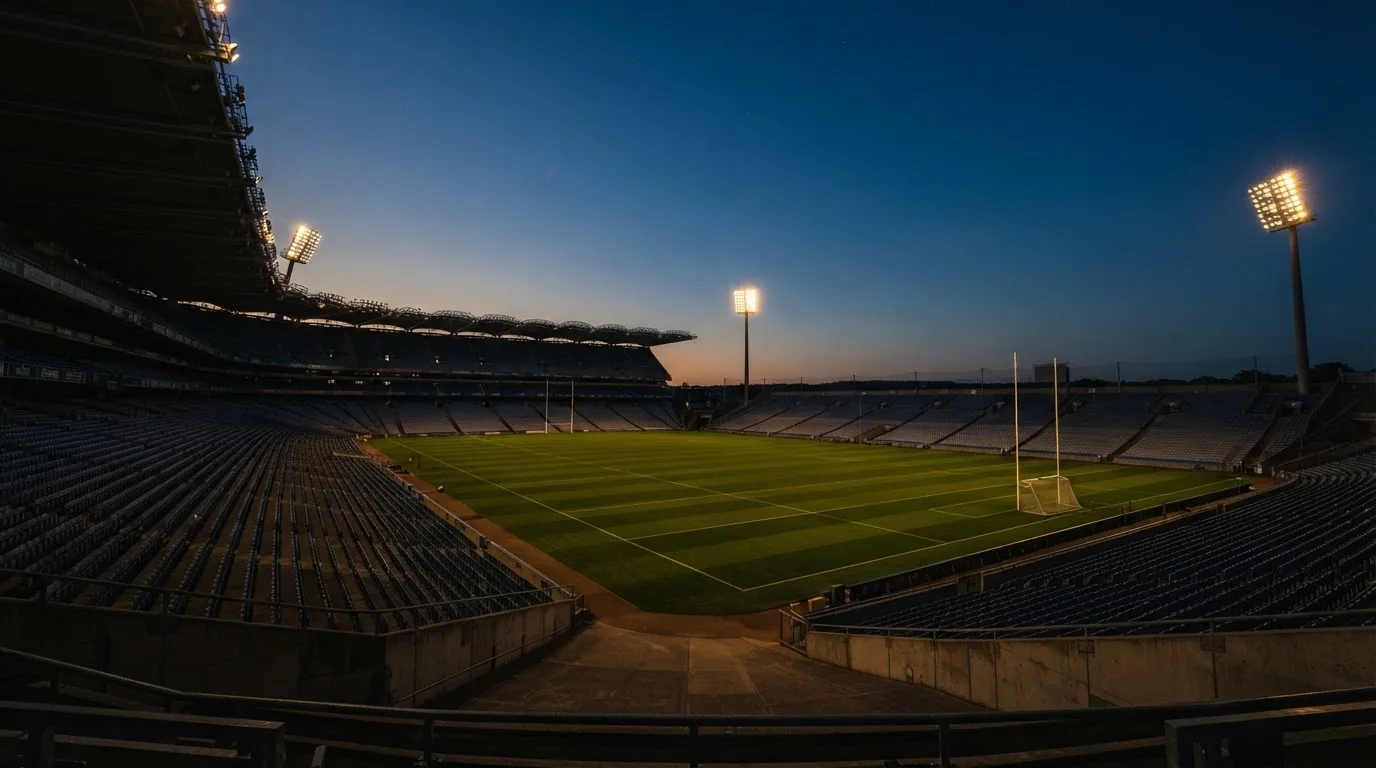
Before the first deposit, a GB-licensed bookmaker verifies name, address and date of birth — including for a free bet or bonus. Since 30 August 2024 a financial vulnerability check applies to licensed remote betting once the punter’s deposits minus withdrawals cross £150 in a rolling 30 days (the rolling-30-days threshold took effect on 28 February 2025). It is a public-record check, not an income check and not a credit reference check. Financial risk assessments have been announced by the Commission in a staged plan (Commission article of 7 July 2026) with no start date — write “announced, staged, no start date”, never “in force”.
Deposit limits (RTS 12) must be offered by every licensed operator: the first phase has applied since 31 October 2025, a second phase was postponed to 30 September 2026, and whether it is live at the time of reading is uncertain. There is no state-set ceiling on stakes or losses for betting; any limit is the punter’s own choice on the operator’s safer-gambling page. Credit cards have been banned for gambling in Great Britain since 14 April 2020, including credit-card-funded e-wallet top-ups; debit cards and bank transfers are not covered.
Help is the same across the industry. GamCare runs the National Gambling Helpline; GambleAware funds treatment and education; the NHS runs gambling clinics; Gamblers Anonymous runs local meetings. Each operator’s safer-gambling page links out to one or more of these. The number a punter actually dials when a session stops being a session is the same whichever bookmaker the account sits at.
What this costs in practice: the friction of verification before a £10 free bet, the friction of a vulnerability check after £150 in 30 days, the friction of GAMSTOP blocking a second account held at a sister brand. None of these charges a fee. They cost time, and they cost a punter who has just hit a bad streak the option of switching brands to chase it.
Bonuses, free bets and what an offer really takes
A “free bet” is the most familiar offer on a British sportsbook, and it is the offer most often misread. The marketing name — a £30 free bet, a £10 stake-back — sets the headline; the small print sets the price. The two numbers a punter actually needs are the minimum qualifying odds and the qualifying window. A free bet whose stake is not returned with a win is worth less than its face value, because the stake never comes home; a free bet with a four-leg accumulator at minimum odds 4/1 (5.00 decimal) takes more than one bet to clear, and each clearing event needs a price the margin has already trimmed.

Hollywoodbets’ sports welcome offer for new UK customers is a useful worked example. Deposit £10 or more by card, place a first sports bet, and if that first accumulator loses, the stake comes back as a free bet of up to £30. The qualifying bet is an accumulator of three or more legs at minimum odds 4/1 (5.00 decimal), settled within seven days of placement. One free bet per customer. The headline is “stake back as a free bet of up to £30” — read carefully, because the offer pays back the stake as a free bet, not as cash, and a free bet that wins pays back only the winnings, not the free-bet amount itself.
BetMGM’s sports welcome offer works differently. New UK customers who deposit £10 or more and place a sports bet within seven days receive four £10 free bets — two football accumulators of four or more selections and two sports multiples of two or more — each valid for seven days, with a minimum odds threshold and an opt-in. The total face value is £40, but the four bets are tied to fixed formats, and each must clear within its own seven-day window. Failing one of the four forfeits that one — the other three stay.
Promotion rules in force since 19 January 2026 cap wagering requirements on bonuses at 10x — a £10 bonus with a 50x rollover would need £500 of qualifying bets; under the cap no bonus requires more than £100 of qualifying turnover. Mixed-promo offers — a “bet on football to get free spins” type deal — are banned. Whether the cap applies to free bets with no rollover condition, and any cap on the bonus money itself, remain unclear; the cap is stated only as it reads on bonuses.
The cost of an offer is the difference between what it pays and what clearing it costs. A £10 free bet on a four-leg accumulator at minimum odds 4/1 (5.00) is worth the value of the free bet multiplied by (odds − 1) divided by odds, then multiplied by the payout share of the market — an average across many bets, not a guaranteed payout on a single bet. If the market’s payout share is 92 % (margin 8 %), a £10 free bet at 5.00 has an average value close to £10 × (5.00 − 1) ÷ 5.00 × 0.92, which works out near £7.36 on average. The headline “£10 free bet” reads £10; the average cost to the bookmaker of letting the punter keep that bet is £7.36, with the other £2.64 expected to come back through the margin on whatever the punter bets next. None of this is on the promotional page — it is what the arithmetic shows once the small print is read.
A “boosted odds” or “Super Boost” is a one-off inflated price on a specific selection. The boost is paid as cash winnings, not as a free bet, so the boost’s whole value is realised if the bet wins. The catch is selection: the boosted outcome is usually the favourite in a market where the margin is already low, and the boost is funded out of the price the operator would have offered anyway.
A “best odds guaranteed” welcome is different — it applies to horse and greyhound racing, paying out at SP (starting price) if SP is higher than the price taken. It does not apply to hurling.
What an offer costs the punter who never reads the small print: a £30 free bet that pays back only the winnings, an accumulator that needs three legs at 4/1 to clear, a seven-day window on each leg. What it costs the punter who does: the value of the free bet times the payout share of the market they use it on. The first figure is what marketing writes; the second is what the punter actually gets.
Live betting, cash out and in-play on hurling
Live betting on hurling is offered by most GB bookmakers with a GAA feed, but the in-play schedule is thin: a typical Championship weekend has two or three games on Saturday and one on Sunday, with county-level fixtures running most Saturday afternoons in summer. The number of in-play markets per game is small compared with football — match result after the next score, total points bands, next team to score, sometimes a handicap — and prices move slowly because the book is light.
Cash out is the mechanism that lets a punter settle a bet before the final whistle. It is offered by Swifty Sports, Spreadex, Sporting Index and others on selected markets. The price on a cash-out button is the bookmaker’s current mid-price on the bet, less a spread the bookmaker keeps. A punter who cashes out at half-time takes the price at half-time, not the price at the start; that price reflects the live state of the game, not what the punter paid. On a close Championship match the price moves sharply after each score; on a one-sided game the price drifts and a cash-out becomes a way to lock in a smaller win than the original ticket offered.
Spreadex offers one-click, auto and partial cash out, plus a Bet Builder that can be combined on fixed odds or on spread bets. Sporting Index offers auto cash-out on its fixed-odds side alongside its spread-betting markets. Swifty Sports lists Cash Out on horse racing and football markets; in-play on GAA is in the feed but is not separately advertised as a cash-out market. Where cash out is offered on hurling, the spread is the operator’s, and a punter who wants to compare two operators’ cash-out prices on the same match needs to open both apps side by side.
In-play on hurling is settled on the official result at the end of normal time including injury time — extra time does not count unless the operator’s market specifically names it. A bet placed in-play on the 70th minute winner settles on the result after 70 plus stoppage time, not on the result after extra time. That rule matters in a Championship match that finishes level and goes to extra time, and it matters more in a county game that ends in a draw and replays.
What live betting on hurling costs the punter is the in-play margin. In-play margins on thin markets are higher than pre-match margins because the book is light; a market with a £200 pre-match book and a £40 in-play book carries a wider spread on every price. The cash-out spread sits on top of that. A punter who plays hurling in-play is paying two margins at once — the spread inside the price and the spread inside the cash-out button.
Markets, bet types and the shape of a hurling price
Hurling matches settle on goals and points. A goal is worth three points; a point (over the crossbar) is worth one point; a team’s total is expressed as “X-Y” where X is goals and Y is points, so 2-12 reads “two goals and twelve points”, which is 18 points in total. A team that wins by a point in normal time has won the match; a team that wins by a goal has won the match by three. Bets settle on the official result at the end of normal time including injury time; extra time does not count unless the market says so.
The match-result market is the most familiar: home win, draw, away win. Hurling draws in normal time are rare in senior inter-county Championship matches because extra time and replay rules push ties to a conclusion, but county-level fixtures end in draws more often, and the draw is a third column on the price board at most bookmakers. Match-result with extra time and replay included is offered by some operators as a separate market — read the market name before placing the bet.
The total-points market is the second column on a hurling price board: over/under a line set by the bookmaker, typically 35.5, 37.5 or 40.5 for a Championship match. The line moves with the team news and the weather, and a wet day at Semple Stadium pulls the line down. The total includes goals and points, never just one.
The handicap market gives a head start to one side: Team A +3 means Team A starts the bet three points ahead, so a one-point loss for Team A is a winning handicap bet for the backer of Team A. The handicap is expressed in points, not goals, because a goal swings the score by three; a half-goal handicap (Team A +2.5) removes the draw from the equation.
The next-score market settles on which team scores the next goal or point. It is offered in-play and pre-match. On a light in-play book the next-score market is one of the most volatile: a goal for either side swings the price sharply.
Bet Builder — same-game multi — combines several markets from one match into one bet. Spreadex, Sporting Index and BetMGM offer a Bet Builder; bet365’s Bet Builder+ extends across pre-match and in-play. The price of a Bet Builder is the product of the legs’ prices, less a margin the operator applies to the combined bet. A four-leg Bet Builder at 2.00, 1.80, 1.95 and 2.10 has combined odds of 14.27 before the operator’s combined-bet margin; with a margin of 8 % the payout share is 92 %, and the bet pays back £14.27 × 0.92 = £13.13 for every £1 staked if all four legs win. The catch is that all four legs must win; one loss and the whole ticket loses.
The acca insurance offer refunds a stake as a free bet if one leg of an accumulator lets the punter down. The refund is a free bet, so the punter keeps only the winnings on the next bet, not the stake. Read the small print: a refund on a £10 accumulator that loses by one leg is a £10 free bet on the next accumulator, not £10 cash.
The shape of a price: a hurling match-result market at 2.10 / 3.40 / 3.60 (home / draw / away) has a payout share of 1 ÷ (1/2.10 + 1/3.40 + 1/3.60) = 1 ÷ (0.4762 + 0.2941 + 0.2778) = 1 ÷ 1.0481 = 0.954 — a margin of about 4.6 %. A market at 1.90 / 1.90 (the illustrative two-way market used to fix the page’s worked example below) has a payout share of 1 ÷ (1/1.90 + 1/1.90) = 1 ÷ (0.5263 + 0.5263) = 1 ÷ 1.0526 = 0.95 — a margin of 5 %. The margin is what the bookmaker keeps of every unit staked; the payout share is what comes back to the punter on average. The two numbers add to 100 %.
Hurling fixtures, competitions and the season a punter bets on
Hurling is governed by the Gaelic Athletic Association (GAA). Senior inter-county teams have fifteen players; senior games last seventy minutes, in two halves of thirty-five minutes. The season runs from January (the All-Ireland club finals) through the Allianz League (February to April), into the provincial Championships (May and June), the All-Ireland quarter-finals and semi-finals (late June and early July), and the All-Ireland final in late July. The club championship runs in parallel from late summer through to the next January.
The Championship is the part of the season a punter bets on. In 2026 the Leinster Championship had six teams and Munster five, each in a round-robin group; the top two met in the provincial final and the third-placed team went to the All-Ireland quarter-finals. The 2026 All-Ireland Senior Hurling Championship final was played at Croke Park, Dublin, on 19 July 2026; Limerick beat Galway. Tipperary won the 2025 All-Ireland Senior Hurling Championship.
The Allianz League is a winter-and-spring competition run on a Division 1A / 1B / 2A / 2B / 3A / 3B structure with promotion and relegation. Markets are thinner than on the Championship; bookmakers carry League prices but the in-play book is light and the margin wider. Some operators run a “Leinster / Munster” match-up market on League fixtures for punters who want to back the provincial game in green only.
The club championship — county senior, then provincial, then All-Ireland club on the third Sunday of January — is offered by Hollywoodbets (which lists it explicitly) and by some other GB bookmakers with a GAA feed. Markets on club games are limited: match result, total points, sometimes a handicap. The club final between Na Piarsaigh and a Galway or Kilkenny side draws more bets than a county quarter-final because the punter base recognises the names.
What a punter sees on the betting feed on a Championship weekend: every All-Ireland and provincial match priced in match result, total points, handicap, next-score, often a “winning margin” band. The in-play book opens at throw-in and closes when the game ends. The price board is built around the same team-to-score and total-points markets as football, with the goal-and-point scoring system expressed in points — a 2.5-point handicap on a hurling match is half a goal.
The cost of betting on the Championship in 2026: Championship match-result markets were priced at margins of about 4-6 % pre-match, with in-play margins higher. Total-points markets carried similar over-rounds. The price a bookmaker shows is the price after the margin; the price the punter would see on a perfectly efficient market — a market with no margin — would be higher. The difference is the bookmaker’s edge, and the edge compounds across accumulators.
How the ten hurling-friendly bookmakers compare
The ten operators below all hold a remote operating licence from the Gambling Commission for fixed-odds betting on real events, and all take part in GAMSTOP. None is “the only” licensed brand — a licence register lists far more firms than any comparison can feature. Each row names the licence account number and what the operator’s own published terms say about its hurling offer. The columns are: brand, Gambling Commission remote licence number and licence holder, and what the operator’s own terms state on the key’s subject.
| Brand | Gambling Commission remote licence number and licence holder | What the operator’s own terms state on the key’s subject |
|---|---|---|
| Hollywoodbets | 053028-R-330019-013 — Hollywoodbets International UK Limited | Lists All-Ireland club hurling; sports welcome offer refunds a first losing accumulator (3+ legs, 4/1 or greater, settled within 7 days) as a free bet of up to £30 on a £10+ card deposit |
| Smarkets | 039173-R-319366-011 — Smarkets (Malta) Limited | A betting intermediary (exchange) with back and lay markets; UK open bank transfer deposits instant £10-£10,000; withdrawals processed within 6 hours, £10-£100,000 |
| Bar One Racing | 056516-R-332750-007 — Bar-One Racing Limited | Rebranded to BAR 1 Betting; Irish independent bookmaker with shops and racing sponsorships; hurling coverage is reported in listings only and the operator’s own feed was not confirmed for hurling |
| London Bet | 066162-R-340278-004 — Thistle Bet Limited | App combines football, tennis, horse racing, greyhounds, darts, golf, cricket, NFL, NBA, MLB, snooker and in-play betting; GAA and hurling not separately advertised |
| Swifty Sports | 058957-R-334734-006 — Swifty Global (UK) Ltd | Best Odds Guaranteed on racing, Cash Out on horse racing and football markets, daily price boosts, live streaming, in-play; Bet Builder listed as coming soon; GAA not separately advertised |
| Spreadex | 008835-R-104580-022 — Spreadex Limited | Combines fixed-odds and spread betting; FCA-regulated spread betting and UKGC-regulated fixed odds; Bet Builder, one-click / auto / partial cash out, live streaming of UK and Irish racing, greyhounds, tennis, NFL and selected football |
| Sporting Index | 027343-R-308898-011 — Sporting Index Limited | Fixed odds and spread betting; in-play betting, Bet Builder for football, auto cash-out, Multi-Markets; GAA not separately advertised |
| BetMGM | 039198-R-319450-029 — LeoVegas Gaming PLC | Sports welcome offer of four £10 free bets (two 4+ leg football accas and two 2+ leg sports multiples) on a £10+ deposit and a qualifying bet within 7 days |
| DragonBet | 064908-R-339041-003 — DragonBet Ltd | Welsh football and rugby markets, racing, American football, in-play betting and Bet Builder; GAA and hurling not separately advertised |
| Fitzwilliam Sports | 048760-R-335434-009 — SBKI Limited | Dublin bookmaker with capped membership; “High Stakes Welcome” subject to compliance criteria; instant deposits, fast withdrawals, timeouts and deposit limits; GAA feed not separately confirmed |
A few rows will read thin on hurling, and that thinness is the page’s information. Bar One Racing, London Bet, Swifty Sports, Sporting Index, DragonBet and Fitzwilliam Sports do not advertise GAA or hurling on the surfaces the source confirms — a punter who wants hurling prices from one of these names needs to open the app on a Championship weekend and check the feed by hand. Spreadex and Hollywoodbets carry GAA on their listings, BetMGM covers the major Championships through its main feed, and Smarkets runs an exchange where a backer can name a price or a layer can lay one.
The single line that should change how a punter reads this table: an operator’s GAA feed is what its app shows on the day, not what its homepage says in advance. The licence is fixed; the in-play book for a given round-robin fixture is not. A punter who plans to bet a Championship quarter-final should open two or three of the apps above in the week of the match and compare the prices directly — the price the operator offers on Tuesday may not be the price the operator offers on Saturday.
Hurling betting in the UK: what it is, who offers it and where the rules sit
Hurling is a Gaelic sport governed by the GAA, and in Great Britain there is no statutory list of permitted sports or markets — a bookmaker serving customers in Great Britain needs a Gambling Commission licence, the licence is the test, and the Commission’s public register is the only place the licence can be verified. A Curaçao, Maltese or Gibraltar licence is not a substitute: since the Gambling (Licensing and Advertising) Act 2014 an operator whose remote facilities are used in Great Britain needs a Commission licence wherever it is based (sections 33 and 36 of the 2005 Act as amended).
The bookmaker’s licence categories that apply to a fixed-odds sportsbook are remote general betting standard (real events) for real fixtures and remote general betting standard (virtual events) for simulated events. A betting exchange — Smarkets, Betfair, Betdaq — runs under a remote betting intermediary licence. Spread betting sits in two places: a financial spread is regulated by the Financial Conduct Authority, and any other spread bet is inside General Betting Duty. Spreadex is regulated by both the FCA for spread betting and the Gambling Commission for fixed-odds betting, and its site states that spread-betting losses can exceed the deposit.
The minimum age is 18. Identity verification — name, address and date of birth — runs before the first deposit and before any free bet or bonus is credited, and that requirement has been in place since 7 May 2019. Verification includes a free bet, so a punter who wants to claim a £30 free bet must pass verification to receive it. The verification is one of the costs the licence imposes on both sides.
How odds are quoted in Great Britain: fractional (5/1, 11/4, evens) is the everyday form on racing and on most sportsbook marketing, and decimal (6.00, 3.75) is the form on exchange apps and on most in-play boards. Fractional odds a/b convert to decimal by dividing the numerator by the denominator and adding one: 5/1 → 5 ÷ 1 + 1 = 6.00, 11/4 → 11 ÷ 4 + 1 = 3.75, evens (1/1) → 2.00. The decimal form is what the audit uses to calculate returns and margins, and is what the operator pays out at.
Betting winnings are not taxed for the punter in Great Britain. The operator pays General Betting Duty, currently 15 % on gross profits; from 1 April 2027 a new remote betting rate of 25 % applies within it, while remote bets on UK horse racing, self-service betting terminal bets, pool betting and in-person betting stay at 15 % (HM Government policy paper of 26 November 2025). Whether the punter sees any of the duty in the odds is unclear — it is currently 15% to the operator, rising to 25% on remote betting from 1 April 2027, not a direct charge to the punter.
What the cost of betting on hurling in the UK adds up to: verification before the first deposit, a £150 rolling-30-days vulnerability-check threshold, a possible financial risk assessment if the Commission’s staged plan starts, an operator-set deposit limit on a fixed time frame, a margin inside every price, and a General Betting Duty that is the operator’s tax not the punter’s. The figure that is the punter’s is the margin — what the bookmaker keeps of every unit bet on a market — and that figure is what the worked example below sizes.
The worked margin on a two-way hurling market
A two-way market at decimal odds 1.90 / 1.90 (fractional 9/10 on each side) is the worked example the page uses to fix the size of the bookmaker’s edge. The market is illustrative — it is not a quoted price from any named operator — and the calculation is the same shape for every other price: take the reciprocal of each price, add the reciprocals together, take the reciprocal of the sum to get the payout share, and subtract the payout share from one to get the margin.
For 1.90 / 1.90: 1 ÷ 1.90 = 0.5263, doubled is 1.0526, the payout share is 1 ÷ 1.0526 = 0.95, and the margin is 1 − 0.95 = 0.05, or 5 %. The same arithmetic on a market at 1.85 / 1.95 gives a payout share of 1 ÷ (1/1.85 + 1/1.95) = 1 ÷ (0.5405 + 0.5128) = 1 ÷ 1.0533 = 0.9494, a margin of about 5.06 %. The further the prices are from evens, the wider the margin the bookmaker keeps on the two-way book — a market at 1.50 / 2.75 gives 1 ÷ (0.6667 + 0.3636) = 1 ÷ 1.0303 = 0.9706, margin about 2.94 %, because the favourite’s short price is paying back less than the underdog’s long price and the imbalance reduces the over-round.
The result for the worked example, then, is a margin band of about 4-6 % on a typical Championship match-result market, with 5 % as the midpoint. The band is the answer: the margin on a hurling two-way market is in the band 4-6 %, not 5 % exactly, because the price a bookmaker quotes on any given day is a price inside that band and not a single number.
What this costs the punter: on every £100 staked across a season of hurling bets, the punter can expect to pay £4-£6 of that £100 back to the bookmaker as the cost of the margin. A £10 single at 1.90 on a match-result market has an expected return of £10 × 0.95 = £9.50 — the other £0.50 is the operator’s edge on that market. The edge is the price of being able to bet at all, and it is what the punter pays whether the bet wins or loses.
Operator reviews
Each review below covers one of the ten operators above. The verdict at the end of each block is the page’s own judgement of what the brand is worth on hurling, and for whom.
Hollywoodbets: club hurling and the stake-back welcome
Hollywoodbets International UK Limited runs Hollywoodbets under Gambling Commission account 53028. The licence covers remote general betting standard (real events), which is the category every fixed-odds sportsbook on this page sits under. The site is set up for football and horse racing as its mainstays, but the All-Ireland club hurling championship is listed in its feed, and the operator’s GAA coverage extends to senior inter-county matches at provincial and All-Ireland level during the summer.
The sports welcome offer is the headline on the operator’s app: deposit £10 or more by card, place a first sports bet, and if that first accumulator (three or more legs, minimum odds 4/1 or 5.00 decimal, settled within seven days) loses, the stake comes back as a free bet of up to £30. One free bet per customer. The structure is a stake-back, and a stake-back delivered as a free bet is worth less than its face value because the stake is not returned with a win — see the worked example in the bonuses section above for the arithmetic on that.
In-play betting and Cash Out are present on the feed. The Best Odds Guaranteed welcome applies to horse racing, not to hurling. Bet Builder is not separately advertised for GAA, but the operator’s combined-bet markets cover the major markets on a Championship weekend.
For a punter whose main hurling interest is the club championship between January and March, Hollywoodbets has the cleanest feed on this list. For a punter whose main interest is the All-Ireland senior championship in summer, the operator is one of several on the list that covers it — the welcome offer is the differentiator, and the deal is designed for the first qualifying accumulator, so it is a one-time value rather than an ongoing benefit.
Smarkets: the exchange for a punter who wants to set the price
Smarkets (Malta) Limited runs Smarkets under Gambling Commission account 39173. The licence is a remote betting intermediary licence — the licence category for betting exchanges, where punters back and lay against each other and the operator takes a commission on net winnings. Smarkets charges a commission of 2 % on net winnings on most markets, which is below the headline-margin on most bookmakers; the trade-off is that the available liquidity on a thin market is thinner, and the price a backer names on a hurling match may sit unmatched for minutes.
Payments are the practical edge: open bank transfer deposits are instant from £10 up to £10,000, withdrawals are processed within six hours from £10 up to £100,000, and UK debit card deposits are instant from £10 up to £15,000. The withdrawal limit is wider than most bookmakers on this list, and the six-hour withdrawal time is faster than most.
For a hurling punter who wants to back or lay a Championship match at a price of their own, Smarkets is the operator on the list that offers that mechanism. For a punter who wants to bet on a club fixture that no other operator covers, the exchange is also the place to check — if the market exists at all, it sits on the exchange.
Bar One Racing: Irish racing heritage, GAA from the listings
Bar-One Racing Limited runs BAR 1 Betting under Gambling Commission account 56516. The operator rebranded from Bar One Racing to BAR 1 Betting, runs shops across Ireland, and sponsors horse racing at Dundalk, Fairyhouse, Navan, The Curragh, Curraheen Park and Cork. The operator holds the same remote general betting licence for real events.
The hurling feed is reported in third-party listings only — the operator’s own published terms did not separately confirm GAA coverage. A punter betting on hurling through this operator should check the in-app feed on the day, not the marketing material in advance, and should expect horse racing to be the main feed rather than GAA.
For a punter whose betting portfolio is mostly Irish horse racing and who wants the option to back a GAA fixture in passing, BAR 1 Betting is one possible home. For a punter whose main interest is hurling specifically, the operator is one of the less reliable names on this list — the operator focuses its commercial attention on the track, and the GAA feed operates as a secondary market rather than a headline product.
London Bet: the wider catalogue, not the hurling specialist
Thistle Bet Limited runs London Bet under Gambling Commission account 66162. The operator holds a remote general betting licence for real events, and the operator’s app combines football, tennis, horse racing, greyhounds, darts, golf, cricket, NFL, NBA, MLB, snooker and Pragmatic Play casino slots. Live in-play betting is on the feed.
Hurling is not separately advertised on the operator’s main pages, and the sportsbook’s depth on the catalogue it does advertise is the differentiator. The operator is set up for the punter who wants a sportsbook-plus-casino app with broad coverage of mainstream UK and US sports rather than a GAA specialist.
For a punter whose hurling interest is occasional, London Bet is one option among several — the in-app feed needs to be checked on the day.
Swifty Sports: racing depth, GAA not the headline
Swifty Global (UK) Ltd runs Swifty Sports under Gambling Commission account 58957. The operator’s app offers Best Odds Guaranteed, Cash Out on horse racing and football markets, daily price boosts, live streaming and in-play betting; Bet Builder is listed as coming soon.
GAA is on the feed but is not the headline. The racing feed is the operator’s main proposition, and the welcome offers that the source confirms are racing-led. A punter who wants hurling prices alongside a racing-heavy sportsbook will find both, but the hurling feed is not where the operator’s spend sits.
For a punter who bets mostly racing and occasionally bets hurling, Swifty Sports is a reasonable home.
Spreadex: fixed odds and spread betting under one roof
Spreadex Limited runs Spreadex under Gambling Commission account 8835 for fixed-odds betting and is regulated by the FCA for spread betting. The operator holds a remote general betting licence for real events, and the operator combines fixed odds and spread betting in one app — the FCA regulates the financial spread side, the Commission regulates the fixed-odds side. The site states that spread-betting losses can exceed the deposit.
The fixed-odds side offers one-click, auto and partial cash out, a Bet Builder that can be combined on fixed odds or on spreads, and live streaming of UK and Irish horse racing, greyhounds, tennis, NFL and selected football. The spread side offers index, total and Supertotal markets on sports; the spread book on hurling is light, and the fixed-odds book is the place a typical punter plays.
For a punter who wants both fixed odds and spread betting under one licence and one app, Spreadex is the operator on the list that offers both — the FCA-regulated spread side is the difference, and the spread side is the place where the operator’s risk disclosure bites. The fixed-odds side is comparable to the other names on the page.
Sporting Index: spread betting with a fixed-odds side
Sporting Index Limited runs Sporting Index under Gambling Commission account 27343. The operator combines fixed-odds and spread betting — a fixed-odds book alongside a spread book, with the ability to switch between the two on the same fixture. The fixed-odds side offers in-play betting, Bet Builder for football, auto cash-out and Multi-Markets; the spread side offers index, total and Supertotal markets.
Hurling is not separately advertised on the operator’s main pages, and the spread book on hurling is light. A punter who plays Sporting Index on football will find the same fixed-odds and spread structure available, but the GAA feed is not the operator’s main proposition.
For a punter who wants both sides of the fixed-odds/spread split, Sporting Index is a possible home alongside Spreadex.
BetMGM: the welcome offer that splits into four
LeoVegas Gaming PLC runs BetMGM under Gambling Commission account 39198. The operator’s sports welcome offer is the differentiator: new UK customers who deposit £10 or more and place a sports bet within seven days receive four £10 free bets — two football accumulators of four or more selections and two sports multiples of two or more — each valid for seven days, with a minimum odds threshold and an opt-in.
The total face value is £40 across four free bets, but the four bets are tied to fixed formats, and each must clear within its own seven-day window. The bettor forfeits a free bet if its format is not used in time. Football is named in the format — two of the four free bets are football accumulators of four or more legs — but the welcome offer is not exclusively football; a punter who plays hurling can use the sports-multiples side.
For a punter who wants a multi-leg welcome offer and is happy to place sports multiples rather than football accas, BetMGM is one option.
DragonBet: Welsh-led feed, GAA from the feed
DragonBet Ltd runs DragonBet under Gambling Commission account 64908. The operator’s app is published by DragonBet Ltd, and its feed runs Welsh football and rugby markets, racing, American football, in-play betting and Bet Builder markets. The differentiator is the Welsh feed, with GAA outside the operator’s advertised coverage.
For a punter whose betting portfolio includes Welsh football and rugby, DragonBet is a clean fit.
Fitzwilliam Sports: Dublin bookmaker with capped membership
SBKI Limited runs Fitzwilliam Sports under Gambling Commission account 48760. The operator holds a remote general betting licence for real events. The operator describes itself as a Dublin bookmaker with capped membership, and the welcome is a “High Stakes Welcome” subject to compliance criteria. The site links to GambleAware, GamStop and Gamblers Anonymous.
The differentiator is the capped membership — Fitzwilliam runs a tight book rather than a wide book, and the limits on stake and on account count are tighter than at a mass-market sportsbook. The GAA feed is implied by the Dublin location and the Irish licence holder, but the operator’s own published terms did not separately confirm hurling markets; a punter planning to bet hurling through Fitzwilliam should check the feed on the day.
For a punter who wants a Dublin bookmaker with tight account limits, Fitzwilliam is one option. Fitzwilliam represents a niche choice for the disciplined punter. Membership is capped, account opening is subject to compliance checks, and the operator is not a mass-market alternative for casual hurling betting.
Frequently asked questions on hurling betting odds
How can a punter check that a bookmaker holds a Gambling Commission licence?
The Commission’s public register can be searched by business name, trading name, domain or account number, and the register is the whole test of whether a brand holds a licence. A match on the register shows the licence category, the licence holder and the expiry date. The register is publicly accessible. A licence number on the operator’s own site is not a substitute — the register is the source of truth, and the licence number a punter sees on the operator’s homepage should be checked against the register before any deposit is made.
How is the return on a bet worked out from the stake and the odds?
Return equals stake multiplied by the odds, for a single bet or for each leg of an accumulator; net profit equals stake multiplied by (odds minus one). For a combination bet, the odds of the legs multiply into one price, and the same arithmetic applies. A £10 single at 3.50 returns £35; a £10 four-fold at combined odds 14.27 returns £142.70 if all four legs win. The return is what the operator pays out, before any free-bet or stake-not-returned rule.
What is the bookmaker’s margin and how can it be seen in the odds?
The margin is what the bookmaker keeps of every unit staked on a market, and it sits inside the prices the bookmaker offers. To see it, take the reciprocal of each price, add the reciprocals together across all outcomes, take the reciprocal of the sum to get the payout share, and subtract the payout share from one. A two-way market at 1.90 / 1.90 has a payout share of about 95 % and a margin of about 5 %. The wider the margin, the more the bookmaker keeps.
How do fractional odds such as 5/1 convert to decimal odds such as 6.00?
Fractional odds a/b convert to decimal by dividing a by b and adding one: 5/1 → 5 ÷ 1 + 1 = 6.00, 11/4 → 11 ÷ 4 + 1 = 3.75, evens (1/1) → 2.00. The decimal form is the form on which returns are calculated, and is the form most exchange apps and in-play boards display. Fractional odds 9/10 — a slight favourite on a hurling match — convert to decimal 1.90 and back to fractional 9/10. Both forms describe the same price.
Which tools for controlling play does a licensed bookmaker have to offer?
Every GB-licensed online bookmaker offers GAMSTOP self-exclusion (six months, one year, five years or five years with auto-renewal), a financial vulnerability check after £150 of net deposits in a rolling 30 days (since 28 February 2025), deposit limits (RTS 12 — the first phase has applied since 31 October 2025; a second phase has not yet been confirmed as live), timeouts, reality checks and links to GamCare, GambleAware, NHS gambling clinics and Gamblers Anonymous. The tools sit on the operator’s safer-gambling page and are free to set; GAMSTOP blocks the punter at every GB-licensed online bookmaker at once.
Are betting winnings taxed in Great Britain, and who pays General Betting Duty?
Betting winnings are not taxed for the punter in Great Britain. General Betting Duty is the operator’s tax on gross profits, currently 15 %; from 1 April 2027 a new remote betting rate of 25 % applies within it, while remote bets on UK horse racing, self-service betting terminal bets, pool betting and in-person betting stay at 15 %. A professional gambler should ask HMRC or an adviser for tax advice; the position above is general information, not advice.
Rugby, cricket & Gaelic – AI Betting
Content created by the «AI Betting» team
