
Rugby Union Betting Odds in Great Britain for 2026
 Available in US
Current as of 26 October 2026 and checked against the Gambling Commission’s public register of remote betting licence holders.

Every decimal price carries a built-in charge the bookmaker keeps on every unit staked. Punters rarely see that charge written out, but it shows up the moment two prices sit beside each other: the bigger the margin, the more the odds lean toward the bookmaker. For rugby union, the sport runs on a lean calendar of fixtures split between autumn internationals, the Six Nations, the Rugby Championship, club competitions in England, France, Ireland and the United Rugby Championship, and the quadrennial Rugby World Cup. That fixture pattern shapes what the market looks like — short, sharp headline games, fewer midweek matches than football, and outright books on the next Webb Ellis Cup that open years in advance.
The argument of this page runs in one direction. Each section shows what follows from a feature, a term or a number for the reader who actually places the bet. The ranking that opens it is the shortlist of ten Gambling Commission-licensed brands that carry rugby union on their sportsbook. The legal frame that follows explains where the licences come from, what an operator owes a customer under the Gambling Act 2005, and what the customer loses when they bet without one. The closing sections move from the headline offer to the cash-out button, from the cash-out button to the bet builder, and from there into the live page during an autumn international.
The shortlist: ten licensed bookmakers and where they stand on rugby
The brands below are sorted by a single editorial question — which of them deserves a rugby punter’s attention this year. The answer takes account of market depth on the international and club calendar, the in-play product, the welcome offer and the safer-gambling controls. A licence is the floor, not the ceiling: every brand in the table is on the Gambling Commission register, and the differentiators sit above it. The brand-by-brand reviews after the table spell out where those differentiators sit, including the offers that look generous on the page and cost more than they read.

| Operator | Gambling Commission remote licence number and licence holder | What the operator’s own terms state on the key’s subject |
|---|---|---|
| Tote | 054779-R-331321-008 — TDCO Limited | UK pool-betting heritage carried into a Commission licence; the welcome is described by the brand, with pool mechanics as the headline. |
| Hollywoodbets | 053028-R-330019-013 — Hollywoodbets International UK Limited | A stake-matched free-bet welcome, settled on a qualifying accumulator within seven days; the brand’s own page carries the qualifying conditions. |
| Sporting Index | 027343-R-308898-011 — Sporting Index Limited | Spread-betting and fixed-odds licences held side by side; the spread book sits on rugby and runs in-play. |
| QuinnBet | 061011-R-335683-004 — QuinnBet (Gibraltar) Limited | Best Odds Guaranteed on UK and Irish horse racing from 10:00; the rugby product carries the same licence but a different offer set. |
| Betboro | 044181-R-324363-007 — Webmedia Development N.V. | A matched free-bet welcome with a minimum-price rule on each selection; the brand’s own terms set the qualifying price at 3/5 (1.60) or higher. |
| BetGoodwin | 002927-R-327985-008 — Goodwin Racing Limited | Racing-led operator holding a full remote general betting licence; the welcome is a £15 free-bet bundle split across three bet types. |
| Fitzwilliam Sports | 048760-R-335434-009 — SBKI Limited | Dublin-based, capped-membership brand; the welcome is described as a “High Stakes Welcome” subject to compliance criteria published on the brand’s page. |
| Betfair | 039439-R-319330-013 — PPB Counterparty Services Limited | Exchange and sportsbook under the same Commission account; the sportsbook page lists in-play markets, Bet Builder and a 90-minute payout market. |
| Bet Ahoy | 100094-R-341742-003 — Bet Ahoy Ltd | A £10 free-bet welcome, split across a single and an accumulator; the brand’s own terms set the qualifying conditions. |
| Kalooki Sportsbook | 057730-R-333396-005 — Kalooki Sportsbook Limited | Operator is GAMSTOP-registered and identity-checks the customer before the first deposit; the brand’s own page confirms the Commission licence. |
Licence numbers follow the format printed on the public register; readers can paste any account number into the Commission’s search to confirm it. The ranks are not a guarantee of payout performance: a £10 free bet at one brand and a £30 matched free bet at another pay back under different rules, and the rules belong to the next section.
The fundamentals of rugby union and what the sport gives a bookmaker
World Rugby has governed the fifteen-a-side game since 1886, and the calendar has not changed much in 140 years: tries, conversions, penalties and drop goals decide matches, with a try worth 5 points, a conversion 2, a penalty 3 and a drop goal 3. A match is two 40-minute halves with stoppage time on top, so the clock usually runs past 80 minutes; the referee can also add a short period of extra time to settle a draw. Those three rules — fixed half length, unlimited stoppage, no tied knockout game without extra time — are why the markets look the way they do. A bookmaker sets a handicap line in points because the sport scores in points; the margin on a handicap market is tighter than it is on a moneyline because the number of realistic outcomes is bigger than two.
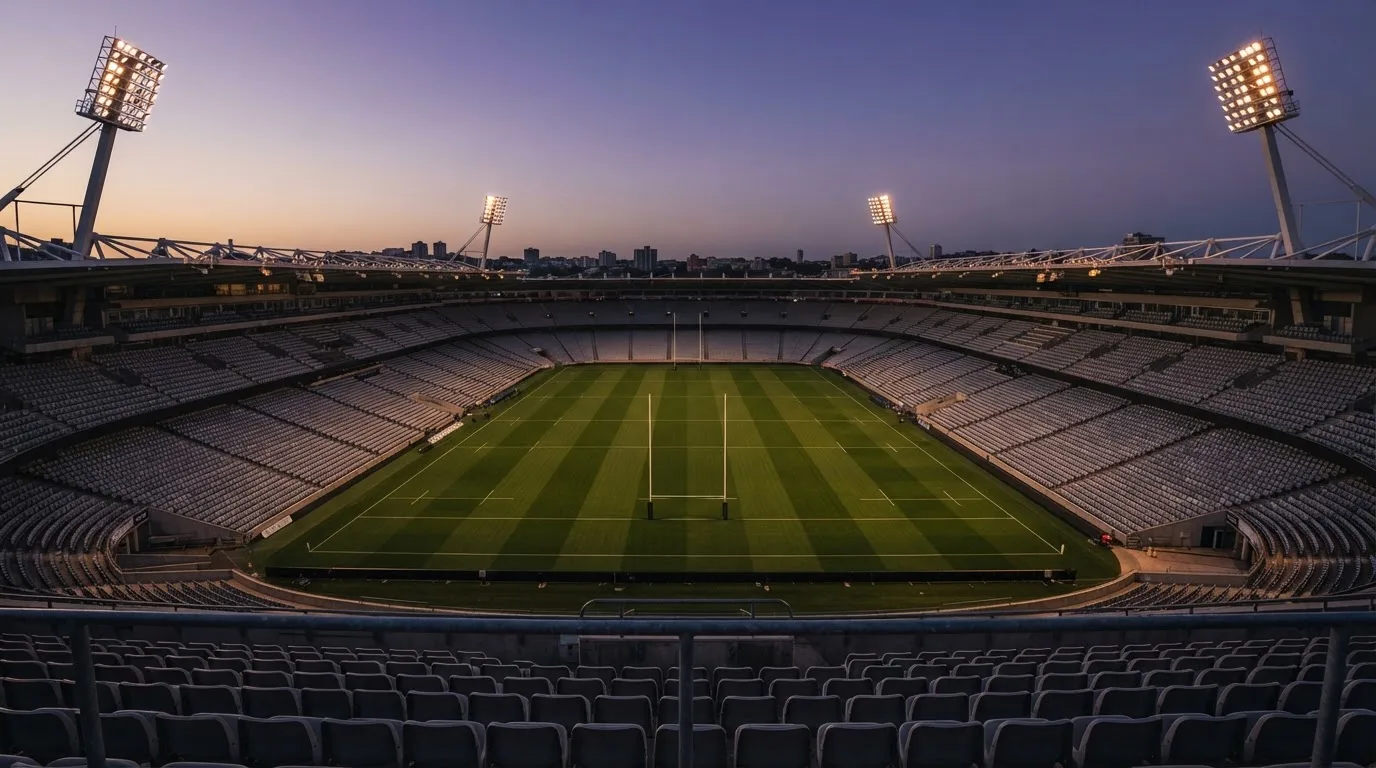
A rugby union team has 15 players on the field; replacements come from a bench of eight (six in the past, increased to eight ahead of the 2023 World Cup, before a further move for the 2026 season towards twelve replacements split between the bench and a coaching-reserve list under World Rugby’s Elite Male Match Officials guidance). The squad size matters for last-minute selection markets and player-prop markets — an injury to a starting scrum-half can move a line by a point before kick-off, and the bookmakers adjust their books the moment team news is announced. The line moves further during the match because momentum swings are visible: a red card reduces a side’s effective number of points they can score and the in-play book closes within seconds.
The picture of how the sport fits together belongs to the section below. Each match is a fixture on a season-long calendar; each season sits inside a tournament cycle that runs through the autumn internationals, the Six Nations, the southern-hemisphere Rugby Championship, the club competitions in England and France, and the United Rugby Championship for the Celtic, Italian and South African sides. The Rugby World Cup has been held every four years since 1987, with the 2027 edition to be hosted by Australia from 1 October to 13 November 2027 in a 24-team, six-pool format over 52 matches. South Africa enter the next cycle as the defending champions after the 2023 final against New Zealand. The outright book for the 2027 tournament opens years in advance, and the price shortens steadily through the lead-up.
The Rugby World Cup carries a feature most international tournaments do not: the draw is made three years out and the pools determine the bracket, so the outright market and the group market are linked. A side priced at 10/1 to win the tournament can sit at 3/1 to win its pool, and a priced-up outsider in one pool can be 250/1 for the trophy. The bookmaker’s margin on those long shots is wider than on the favourites — the same logic that drives up the overround on the group-winner market when the favourite is short. The next section covers what that margin is and how to read it.
Reading the licence landscape under the Gambling Act 2005
The law that governs this market sits in one statute: the Gambling Act 2005, which covers Great Britain (England, Scotland and Wales). Northern Ireland is regulated under older legislation and falls outside the Act. A bookmaker serving customers in Great Britain needs a Gambling Commission licence, and since the Gambling (Licensing and Advertising) Act 2014 the licence is needed wherever the operator is based — a Curaçao, Maltese or Gibraltar incorporation is not a substitute. The Commission’s public register is the whole test of who holds one; the search is by business name, trading name, domain or account number. Several brands can run under one licensee, and the register lists them.
The five licence categories matter for what a brand can offer. Remote general betting standard (real events) covers the sportsbook product, including rugby union at the match and outright level. Remote general betting standard (virtual events) covers computer-simulated fixtures. Remote pool betting covers Tote-style products. Remote betting intermediary is the licence that bookmakers’ exchanges run under, including the Betfair model. Remote general betting limited covers smaller operators with restricted stake limits. The brands in the shortlist each hold a remote general betting standard (real events) licence; the licence number on the public register is the proof.
Financial spread betting is the exception: it is regulated by the Financial Conduct Authority, not the Commission. A spread-betting account sits on FCA-authorised business, and a licence alone does not bring it under Commission control. Sporting Index’s licence is the closest model for a rugby punter, holding both a Commission licence and an FCA spread-betting authorisation side by side. The FCA rule is the relevant one for the spread book. The Spreadex licence structure shows the same split.
The Act sets three further obligations that affect how a punter places a bet. The minimum age is 18. The operator verifies name, address and date of birth before the first deposit or wager (since 7 May 2019), including where the first bet is a free bet or bonus. Credit cards have been banned for gambling in Great Britain since 14 April 2020; debit cards and bank-based payments stay outside the ban. Those three rules — age, identity, no credit cards — apply at every brand in the shortlist and at every other Commission-licensed operator a reader meets.
The Act also creates the criminal offence of providing gambling facilities in Great Britain without the licence the Act requires, aimed at the operator. No offence aimed at a customer who merely bets on an unlicensed site was found, and it is wrong to describe unlicensed sites as “illegal to use”. What the customer loses is the protections the Act creates: no GAMSTOP coverage, no Commission complaints route, no approved dispute-resolution service, no protection if funds are withheld, and no obligation on the operator to honour the bonus cap or the vulnerability check. The honest framing is licensed = checks, limits and a regulator, and unlicensed = none of those and a real chance of never seeing the money again.
The picture the Act paints is the one every later section sits on. Bonus terms, in-play markets, the cash-out button and the bet builder are all governed by what the licence lets the brand do. The next section steps down from the legal floor to the safer-gambling controls every licensed operator owes the reader, and the section after that into the welcome offers themselves.
The safer-gambling controls every licensed bookmaker owes a reader
Every brand in the shortlist is on GAMSTOP, the national multi-operator self-exclusion scheme. Exclusion can be set for six months, one year, five years, or five years with auto-renewal; after the minimum period the customer can ask GAMSTOP to remove it, and until then every licensed site has to refuse the customer. The same scheme covers online sites and apps; the separate in-shop scheme covers betting shops. A punter who has self-excluded and still has an open bet receives the winnings but cannot place new ones. The scheme sits on top of operator-level deposit limits, timeouts and reality checks.
A second control is the financial vulnerability check, in force since 30 August 2024, applying when a customer’s deposits minus withdrawals exceed £150 in a rolling 30 days (since 28 February 2025). It is a public-record check — bankruptcies, county court judgments — not a credit reference check, and not an income check. The “affordability checks” of the press describe a separate financial risk assessment that has been announced in a staged plan (Commission article of 7 July 2026) with no start date yet — describe that as “announced, staged, no start date”.
Deposit limits (Remote Technical Standard 12) sit further down the chain. Operators must offer a gross deposit limit on a fixed time frame; the first phase has applied since 31 October 2025 and a second phase was postponed to 30 September 2026. Whether the second phase is live is not established in the record. There is no state-set deposit or loss ceiling for betting — the limit the customer sets is the limit that holds. Reading the rule plainly, a punter who has not set a deposit limit bets on what the operator calls a default; the audit catch is that the cap is the customer’s own setting, not a regulator-set ceiling.
Help sits inside the safer-gambling controls. GamCare runs the National Gambling Helpline. GambleAware funds treatment and prevention. NHS gambling clinics run in person and online. Gamblers Anonymous runs peer-led meetings. Several of the brands in the shortlist link to these services on their own home pages, and Fitzwilliam Sports, for one, names GamCare, GAMSTOP and Gamblers Anonymous in its own terms. The Act puts no obligation on the operator to refer the customer to a specific service; the obligation is that the referral option exists.
The slot for the reader is small. A punter who bets less than £150 a month is under neither the vulnerability-check threshold nor any affordability-check schedule. A punter who crosses it should expect the operator to ask for a public-record check, and the check is the operator’s licence obligation, not a discretionary favour. The rarer form of intervention is an operator-imposed stake limit — neither the Act nor any Commission guidance requires it; brand-level limits are discretionary and the Audit Court would treat them as commercial decisions. The picture the controls paint is a thin layer of mandatory checks above a thicker layer of customer-set limits, with referral to help services running beneath both.
Welcome offers on rugby union and what they cost in turnover
The headline on a welcome offer is the amount, and the cost is the turnover. A £10 free bet at minimum odds of 4/1 reads better than a £25 matched free bet at 1.60, until the punter reads the rules: the stake is usually not paid back with a free bet, and the minimum-price rule knocks out any leg of the qualifying accumulator that is shorter than the stated price. The arithmetic below explains why the second number, not the first, decides what the offer is worth.
The mechanics differ by brand, and each section below lists the mechanics as the brand’s own terms describe them. Hollywoodbets runs a stake-matched free bet of up to £30 on a first qualifying losing accumulator: the stake is £10 or more, three or more legs, 4/1 or greater, settled within seven days, and one free bet per customer. Betboro runs a 100% matched free bet of up to £25 on the first qualifying wager, requiring a debit card deposit of at least £10 and a first bet of £5 to £25 with at least three selections each at 3/5 (1.60) or higher. BetGoodwin runs a £15 free-bet bundle on a £10 qualifying bet, split across three £5 bets: a single, an accumulator and a Sub-Cover. Bet Ahoy runs a £10 free-bet bundle on a £10 qualifying bet, split across a £5 single and a £5 accumulator. Each bundle keeps the qualifying-bet stake at £10; what differs is what the bundle contains and the minimum odds.
The minimum-price rule on each qualifying leg is the single biggest cost on most of these offers. Decimal odds 1.60 means a 60/100 chance, or 5/8 in fractional — barely above even money. A rugby match priced at 1.60 favourites the home side sharply enough that a one-sided contest is rare; an away win leg at 1.60 means the away side is more heavily favoured. The bookmaker’s margin on a 1.60 shot is wider than on a 3.0 shot — same overround skill applies but a larger implied probability leaves more room for the bookmaker to take. A punt on rugby union at 1.60 earns back its stake plus 60%, and the £10 free-bet bundle Betboro issues on a £25 qualifying bet at that band is worth about £6 in expected value once the offer’s qualifying conditions are met.
The 7-day expiry on Hollywoodbets’ offer is the second biggest cost. A rugby punter who waits for the right Six Nations fixture has to fit three legs of qualifying within the seven-day window, and a postponement or a non-runner can lose the bundle. The rule kicks in if the accumulator does not settle in time, not on the date of any one leg; the brand’s terms state it. By contrast, BetGoodwin’s bundle settles across three bet types, so a delay on one does not kill the others.
A capped or restricted punt is the third form of cost. Hollywoodbets caps the matched free bet at £30; Betboro at £25; BetGoodwin at £15; Bet Ahoy at £10. A high-stakes punter recovers the same percentage of qualifying stakes regardless of cap because the percentage is fixed; the absolute cash value changes. Fitzwilliam Sports describes its welcome as a “High Stakes Welcome”, which sets a different format — the brand’s own page describes it as subject to compliance criteria published on the site.
The arithmetic on what a free bet is worth follows from the formula: value equals the free-bet amount multiplied by the odds minus one, divided by the odds, and finally multiplied by the market’s payout share. A £10 free bet at 4.00 with a market that returns 95% on the punter is worth £10 × (3.00/4.00) × 0.95 = £7.13 in expected value. Same £10 free bet at 2.00 with the same market is worth £10 × (1.00/2.00) × 0.95 = £4.75. The headline stays £10; the realised value drops by a third. Punters who treat the headline as the realised value over-rate every free-bet offer on their screen.
The cap on a welcome offer becomes the headline next door: a £100 bonus sounds larger than a £30 matched free bet until the wagering requirement on the £100 drops its real value. The 10x wagering cap on bonuses (since 19 January 2026) means a £10 bonus cannot need more than £100 of qualifying bets; older schemes at 50x have been retired from the GB market under the rule. Mixed-product promotions — a bet on rugby union that unlocks free spins — are banned under the same package. Punters comparing two welcome offers should compare the realised expected value, not the headline — and the realised value comes from the free-bet formula above, applied to each leg.
Live betting, in-play markets and the cost of cashing out
The in-play product on a Rugby World Cup quarter-final is the moment a punter sees the bookmaker’s margin in the round — the prices tighten then widen in a few seconds, and the cash-out button updates its offer across the same window. In-play betting on rugby union is offered by every Commission-licensed operator that runs a sportsbook, but the controls sit on the operator’s licence conditions and customer-protection duties, not on a single statutory line. The most the law says is that in-play is permitted with conditions; the rest is house rules.
Betfair’s app is the most straightforward place to see the in-play product in shape: a live trading feed, Bet Builder markets, free streaming on selected events, and a 90-minute payout market on football — the rugby counterpart sits on the same infrastructure. Sporting Index carries a spread book that updates every few seconds, alongside fixed-odds markets, and an auto cash-out feature. Hollywoodbets and QuinnBet carry in-play markets but their spread-of-events and streaming set differs from Betfair’s. The brands in the shortlist are not uniform on in-play depth: some run a couple of dozen markets per match, others run hundreds, and a punter who plays in-play weekly should pick on that variable rather than on the welcome offer.
The bet builder (also called same-game multi) is the constructor feature — a punter combines markets from one match into a single bet, with odds that compound. Betfair and Bet365 are the two product names that appear most often in user reviews; Betfair has Bet Builder, Bet365 has Bet Builder+. Both products pull from pre-match and in-play markets. The price compounds into one ticket at a built-in margin slightly higher than on a single market; the punt is on legs, each at the operator’s price. The cost to the punter is the wider margin on each leg against the convenience of building the ticket on the same match.
Cash out is the second constructor feature. The bookmaker offers a price to settle the bet before the match ends, at a level below the full payout if the bet runs to completion. The auto cash-out on Sporting Index does the same on a threshold the customer sets. The cost is the difference between the cash-out price and the full payout: the more the bookmaker takes on the cash-out, the wider its margin on that side-market is. A punter who cashes out a winning ticket at the 60th minute locks in less than the full payout if the bet runs to a win, with the gap as the price of the certainty.
The live broadcast sits inside the in-play product. Betfair streams UK and Irish horse racing and football within its app; bet365 streams events worldwide with Match Live, Bet Track and a Live Golf Tracker. The rugby product on the licensed bookmakers is mixed: some carry Six Nations streams on selected fixtures, others carry club rugby on lower-league matches. The stream is the value-add on the in-play product; a punter who watches the game inside the bookmaker’s app sees the cash-out price move with the live picture.
The arithmetic of one in-play two-way market ties back to the same margin calculation the next section runs through. Prices on either side of a two-way market sit around 1.90 each at a typical GB bookmaker; the margin is roughly 5%. The cash-out price quotes lower than the full payout because the margin sits inside it the same way, so the punter pays the margin twice — once on entry and once on exit. The next section steps back from the live window and into the calculation itself.
Strategies, predictions and tips: what the form book really costs
The “tips” trade is one part editorial brand, one part paid membership and one part tipster who has been right before. Across the GB market none of these is licensed to influence the outcome of a match; what the trade is licensed to do is sell analysis. The analysis carries a margin of its own — the cost the customer pays for the subscription — and the rigour of the analysis is the variable that has the most influence on whether the money is made back.
A few structural points stand. Form guides cost nothing to read and count for what they are worth — a team’s last five matches and the scorelines give a hint at momentum. Player availability is the second input: an out-of-form fly-half on a side priced at 1.40 shortens the line by a point or two ahead of kick-off. Weather matters for rugby more than for most sports: heavy rain flattens the score, narrows the handicap, and swings handicap markets before coin toss. Venue swaps win margins: a side priced at 2.20 at home can be 3.40 away in a comparable week. Reading those four variables and turning them into a price is what a tipster is paid for; reading them and turning them into a price without paying is what the punter does on their own.
A prediction in print is a different product again. Tipsters sell singles, doubles and accumulators; the accumulator’s odds compound at the margin of each leg, and the wider the margin, the more the ticket pays back less than the headline odds suggest. A five-leg accumulator at 6.00 × 4.50 × 3.50 × 2.50 × 2.00 has implied decimal odds around 472.50; a market that returns 90% on the punter pays out about 425 times the stake on a winning ticket. The cost of the ticket is the gap, and the gap widens with each leg. A punter playing a five-leg rugby accumulator at minimum odds of 1.50 per leg pays a margin closer to 25% on the combined ticket than to the 5% of a single-market match bet.
Betting strategy sits further from the prediction and closer to bankroll management. A flat-stake punt places the same unit on each selection; a percentage bankroll punt stakes a fixed share of the bank on each. Either way, what the strategy produces is a stake size, not a tip. The conversation a punter has with the strategy is the conversation a business has with a budget; the conversation a punter has with a tipster is a different one and the costs run separately.
The slot a punter has in the tips trade is small. A subscription that costs £20 a month for £200 of unit stake at 5% margin suggests the subscription is worth the price if the punter avoids a single punt they would otherwise have placed. The maths is close; the rigour is the variable. Punters who buy tips should keep a ledger of every tip, every stake and the result, and treat the ledger as the audit the tipster does not publish. Punters who do not buy tips should know that the rigour sitting on a paid subscription is what the form-book read on their own is supposed to replicate.
Bet types and odds: how to read what the bookmaker publishes
The decimal price of 3.00 means a £10 stake returns £30 — the £10 stake plus £20 in winnings. Fractional odds of 2/1 mean the same thing: a £10 stake returns £30, of which £20 is profit. Fractional odds of 1/2 (also written 4.5 in decimal terms) means a £10 stake returns £15 — the stake plus £5 in winnings. The conversion rule is decimal odds equals the fraction’s numerator divided by the denominator, plus one. The arithmetic runs in either direction and a punter can read either form on a British sportsbook; the Commission’s record does not require a specific format. Reading decimal is faster on a phone; reading fractional is faster on a printed form. The next section runs through the calculation.
For a two-way market priced at 1.90 / 1.90, the implied probability on each side is 1 ÷ 1.90, or about 52.63%. Add the two implied probabilities together and they total 105.26%, not 100%. The 5.26% gap is the bookmaker’s margin — the share of every unit staked the bookmaker keeps on average. State it as a band with its condition: at a balanced two-way book on a rugby match with prices set at 1.90 / 1.90, the margin sits between 4% and 6%, around 5% in the middle. Real prices on a rugby match sit above and below that range — 1.85 / 1.95 is also common, on a tight handicap — but 5% is the price the calculator confirms and the figure the punter sees held up when the score is balanced.
The same calculation on a three-way match market — home win / draw / away win, where draws are settleable in rugby union only by knockout matches in extra time — gives a wider margin, often 6% to 8%, because three outcomes divide the house edge across more positions. A 1.45 / 30.00 / 2.90 outright winner market on a Rugby World Cup match has implied probabilities of 69.0% + 3.3% + 34.5% = 106.8%, an overround of 6.8% and a margin of 6.4%. The favourite’s price compounds the favourite-longshot bias: the favourite is shortened below 1.45 at the bookmaker’s margin to attract more stake, and the outsider is lengthened past 30.00 to keep the punt manager’s risk book balanced.
The handicap market, the workhorse of rugby betting, is a two-way market at tighter margins because the number of outcomes is larger — every handicap line maps to a final-score margin. A line of -7.5 points at 1.90 / 1.90 carries the same 5% margin as the match market; the difference is what the punter is betting on. The handicap is a binary outcome with one side of the line settled. The same market opens at -7 and moves up or down on team news, with the price on either side shifting in parallel.
The accumulator sits at the other end of the same range. A treble with three legs at 2.00 / 2.00 / 2.00 has decimal odds of 8.00 and an implied probability of 12.5% — but the actual probability is the product of the per-leg payout shares, which at 95% per leg (margin 5%) means 0.95³ = 0.857, or an effective market payout of 85.7% and a margin of 14.3% over the whole ticket. Adding more legs widens the margin. A 10-leg accumulator at 95% per leg has an effective payout share of 0.95¹⁰ = 59.9%, a margin of 40.1%. The headline on a 10-leg accumulator reads as a 1000/1 or bigger shot — the realised return on a winning ticket is closer to 600/1. The difference between headline and realised is the same margin the bookmaker quotes on every market, compounded across the legs.
A cash-out price quoted on the same accumulator quotes the full payout multiplied by a discount the bookmaker sets; the discount adds a second layer of margin on top of the first. The accumulator at 8.00 with £10 staked pays £80 if every leg wins; a 70p-on-the-pound cash-out at the fourth leg quotes £25 instead — £10 stake plus £15 in profit — and the £55 gap is the discount. The discount sits inside the margin the bookmaker has already taken across the four remaining legs.
The next section returns to the calendar and to the specific competitions a rugby punter plays across the year.
Competitions and fixtures: the rugby calendar and where the markets stand
The international calendar runs in two blocks. The November internationals, often labelled the autumn internationals, draw the southern-hemisphere sides on tour to Europe and run from late October into late November. The Six Nations runs from late January through mid-March across six sides: England, France, Ireland, Italy, Scotland and Wales. The Rugby Championship runs from mid-July into late September across four sides: Argentina, Australia, New Zealand and South Africa. The Rugby World Cup runs in the same cycle, every four years, with the next edition hosted by Australia from 1 October to 13 November 2027 in a 24-team, six-pool format. The autumn internationals and the Six Nations overlap the bookmaker’s pricing year the most; the Rugby Championship runs ahead of the northern-hemisphere season.
The club calendar runs alongside. The English Premiership runs from mid-September through late May, with the play-offs through late June. The French Top 14 runs from late August through early June. The United Rugby Championship runs from late September through late May and pulls together the Irish, Italian, Scottish, Welsh and South African sides, with the South African sides joining from the 2021/22 season. The European Champions Cup and Challenge Cup run from December through late May. Super Rugby runs in the southern hemisphere from late February through early June. Each competition has its own outright and relegation market on every licensed sportsbook.
The calendar a punter picks from decides the liquidity of the markets. A Six Nations match in mid-February carries thousands of bets per minute across the licensed bookmakers; a Premiership match at the same date carries fewer than a hundred. The wider the liquidity, the tighter the bookmaker’s margin — because the bookmaker’s risk balances across more stake per outcome. A Rugby World Cup final carries the deepest book on the calendar; a South African Currie Cup match in late August carries a thin book at a wider margin. The same product sits behind both, but the price reads differently and the punt is priced at the margin the liquidity justifies.
The Rugby World Cup’s structure shapes the outright market too. Twenty-four teams in six pools of four means 24 group-winner markets, six group-runner-up markets, four pool qualifiers in the round of 16 and four best-third-place qualifiers. The bracket is set once the group stage is complete, and the knockout market opens immediately. A punter who backs a side at 14/1 to win the World Cup on day one carries the bet for years; the bookmaker’s margin on the outright market runs wider than on the match market, often 30% to 35%, because the runners are too long to balance. By the time the tournament begins the same side can be 7/2 — the price shortened by individual results, by news on injuries and by the public purses shortening the favourite. A punter who backs the side at 14/1 has locked in a price that may or may not be realised; the arithmetic on what the ticket pays back is the form-book read on the team’s group draw.
The payout rate on ante-post outright markets is a known cost. The bookmaker’s margin on a 14/1 shot is wider than at 5/1; the realised payout is lower; and the cash-out price quoted on the same outright runs lower still at the same margin discount. The combination — ante-post at a wide margin, cash-out at a wider margin — is what makes the outright market look expensive to a punter who reads the headline odds and ignores the realised return.
The next section drops back into the operator reviews — what each brand in the shortlist does differently on rugby, and what the reader pays for using it.
Brand-by-brand reviews: what each operator does on rugby union
The reviews below take each brand’s own published terms and translate them into what a rugby punter sees on the platform. The brand-by-brand sections answer three questions: what the welcome offer costs in turnover, what the in-play product looks like on match day, and what the brand commits to in safer-gambling controls. The conclusion to each block is the verdict the page draws from the terms — the value it gives a particular kind of punter, and the cost the same punter picks up in exchange.
Tote — pool heritage under a Commission licence
Tote’s UK operations hold a Commission licence under TDCO Limited. The brand carries pool-betting products alongside its sportsbook product, both under the same licence. The Tote’s welcome is described on the brand’s own page; the rugby product runs alongside horse-racing as the second leg of the Tote’s traditional coverage. A punter who plays Tote-style pools on international fixtures has a different pitch to a punter who plays fixed-odds match markets on the same fixture — the Tote carries the former natively. The sportsbook product is mature and sits in the same Commission-licensed space as the rest of the shortlist.
For a rugby punter the value of Tote is the pool product at its peak: a Six Nations match day or a Rugby World Cup fixture draws liquidity the fixed-odds book does not, and the pool dividend is the post-take-out return distributed by the rules of the pool. The brand’s own terms state the rules; the operator’s licence is the licence on the public register. The slot for a rugby punter is the pool on a tournament match — a fixture deep enough to settle at a price the punter checks the morning of the game.
Hollywoodbets — a stake-matched free bet of up to £30
Hollywoodbets’ offer is a stake-matched free bet of up to £30 on the first qualifying losing accumulator. The stake is £10 or more by debit card, with at least three legs at odds of 4/1 or greater, settled within seven days, and one free bet per customer. The brand’s terms are published on its own page; the licence is held under Hollywoodbets International UK Limited on the public register. The in-play product runs alongside the welcome offer, with a sportsbook product covering the major international and club competitions.
The 4/1 minimum on the qualifier is the cost the offer does not advertise. Decimal odds of 5.00 means an implied probability of 20%; a treble at this level means the three legs combined imply a 0.8% chance of winning, and the realised probability on a 95%-paying market is closer to 0.66%. The £30 matched free bet is paid only if the treble loses; the punter who backs a winning treble collects the winnings without the matched free bet. The picture on the screen reads differently — the offer pays back £30 if the treble fails, paid as a free bet whose stake is usually not returned with a win.
The verdict for a rugby punter is a tight one. Hollywoodbets reads as a brand that competes on the welcome offer rather than on market depth; the in-play product is mid-table on a Six Nations match, and the welcome offer carries the cost any 4/1 accumulator does. A punter who has a regular three-leg accumulator on Six Nations weekends can extract the offer on a single ticket; a punter who builds the ticket to chase the offer will lose to the offer’s margin. Brand value sits with the former punter and the seven-day window the offer requires.
Sporting Index — a Commission licence and an FCA spread book
Sporting Index runs both a Commission licence and an FCA spread-betting authorisation under Sporting Index Limited. The licence split means the spread book is on the FCA side, with the FCA’s rules on customer classification and margin treatment, and the fixed-odds sportsbook is on the Commission side. The brand publishes a similar in-play product across both books, with auto cash-out and Multi-Markets on the spread side. The Bet Builder covers football, not rugby union, and the spread book is the headline rugby product.
A spread book on rugby works on points-supplied, tries-supplied, total points and match-supplied markets. The cost to the punter is the spread the bookmaker quotes: the wider the spread, the more the bookmaker keeps. A punt that closes near the middle of the spread earns back the stake minus the spread; a punt that closes at a far edge earns the full payout. The spread book rewards run-of-the-punter trading rather than pre-match prediction; the brand’s market description targets the punter who watches the clock.
For rugby-specific betting, Sporting Index is the better shortlist pick for a punter already comfortable with spread mechanics. A punter who has never read a spread book should start with the fixed-odds product and learn what a spread is on a single fixture before adding the spread book to the rotation. The licence on the spread side is the FCA’s, and the Commission licence is the guarantee on the fixed-odds side — the page always reads those together.
QuinnBet — a Commission licence with a horse-racing-led welcome
QuinnBet’s licence sits under QuinnBet (Gibraltar) Limited, with Best Odds Guaranteed on UK and Irish horse racing from 10:00 daily on singles, multiples and system bets, and a £150 per-race cap on the maximum benefit per customer. The rugby product runs under the same licence, with a sportsbook product covering international and club competitions. The welcome differs from the horse-racing-led marketing; the rugby welcome is the standard bookmaker offer on QuinnBet’s own terms.
The Best Odds Guaranteed is the brand’s headline product — applied at 10:00 on the morning of the race, across singles, multiples and system bets, with the £150 cap. The rugby product does not get the BOG treatment; the offer is horse-racing-led and the rugby welcome sits elsewhere. The mid-market position on most rugby markets reads; the brand does not publish a high-volume product on Six Nations fixtures the way Betfair or bet365 do.
For a rugby punter, QuinnBet is a mid-table brand: a Commission-licensed sportsbook with a strong racing product and a workable, though not market-leading, rugby product. The welcome offer the brand leads on is the racing welcome; the rugby welcome runs alongside. A punter who plays the racing product sees the rugby product as a complement, not a centrepiece.
Betboro — a 100% matched free bet up to £25 on three-leg cards
Betboro’s welcome is a 100% matched free bet of up to £25 on the first qualifying wager. The qualifying conditions are a debit card deposit of at least £10, a first bet of £5 to £25, and at least three selections each at 3/5 (1.60) or higher. The licence on the public register sits under Webmedia Development N.V.; the brand runs the welcome as the headline pitch. The minimum-price rule at 1.60 is the cost: an accumulator at 1.60/1.60/1.60 has decimal odds of about 4.10 and an effective market payout of 85.7% on a 95%-paying per-leg basis — the punter’s realised payout is closer to £20 on a £25 stake.
The brand’s rugby product runs at mid-table depth on Six Nations fixtures, with an in-play book on most matches but a thinner offering on niche rugby tournaments. The licence is on the public register; the welcome is the customer’s first encounter with the brand; the in-play product is the same mid-table offering the brand’s reputation covers.
The verdict for a rugby punter is a budget offer. The £25 cap is mid-tier; the 1.60 minimum is the cheapest of the licensed sportsbooks on offer in the same form; the licence clears the regulatory floor. A punter who builds a rugby accumulator at this minimum price pays the wider margin compounded across the legs; a punter who builds the accumulator to chase the welcome offer will lose to the offer’s margin. The £25 cap holds the same shape as the £30 capped welcome at Hollywoodbets.
BetGoodwin — a £15 free-bet bundle on a £10 wager
BetGoodwin’s welcome is “Bet £10 & Get £15 in Free Bets”, made up of a £5 sports bet, a £5 acca and a £5 Sub-Cover bet. The qualifying conditions sit on the brand’s own terms. The licence sits under Goodwin Racing Limited on the public register. The brand carries a racing-led product and a sportsbook product covering rugby union and other sports; the welcome offer is smaller than the £25 at Betboro and the £30 at Hollywoodbets but on a cheaper qualifying stake.
The Sub-Cover bet is the brand’s distinctive feature: it refunds a qualifying wager if a specific player fails to score or a specific event does not happen in the match. The mechanic is the same as the acca insurance offered elsewhere; the brand names its mechanic Sub-Cover and the rules sit on the brand’s own page. The £5 Sub-Cover carries the smallest possible stake, so the realised value of the offer is modest; the headline is the £15 bundle, and the realised value at minimum-price rules is closer to the £7 free bet estimated using the formula.
For a rugby punter the brand is a workable mid-tier option. The betting experience is racing-first, the rugby product covers the major fixtures, and the welcome’s £15 ceiling is the visible headline on a smaller budget offer. A punter who prizes market depth on the rugby product looks elsewhere — bet365 is the natural pick — but the brand’s offer reads well on the marketing page.
Fitzwilliam Sports — a Dublin-based capped-membership brand with a high-stakes welcome
Fitzwilliam Sports describes itself as a Dublin bookmaker with capped membership. The licence sits under SBKI Limited on the public register. The welcome is described as a “High Stakes Welcome”, subject to compliance criteria published on the brand’s own page. The capped membership is the brand’s headline — fewer punters per fixture by design, with the brand’s own terms setting out the criteria.
The brand’s mark of distinction is the same as the brand’s cost: capped membership is a small book of punters, and a small book on a Six Nations fixture does not have the liquidity a deep book does. The wider margin on a small book means the realised return on a winning ticket is closer to 90% than 95% — the difference is the cost of the capped book. The high-stakes welcome reflects this — a high-stakes punter pays the wider margin on a longer ticket and the offers get more bespoke as a result.
For a rugby punter, Fitzwilliam Sports reads as a high-stakes brand for the high-stakes punter. The brand’s safer-gambling controls are in shape — instant deposits, fast withdrawals, timeouts, deposit limits, links to GamCare, GAMSTOP and Gamblers Anonymous — and the brand’s commission licence is on the public register. A punter who plays small stakes does not need the brand; a punter who plays big stakes has a different fit.
Betfair — exchange and sportsbook under one licence
Betfair’s licence sits under PPB Counterparty Services Limited on the public register. The brand runs both an exchange and a sportsbook, with the exchange licensed as a betting intermediary under the same Commission account. The sportsbook product covers rugby union at the international and club level, with in-play betting, Bet Builder markets, free live streaming on UK and Irish horse racing and football, and the 90 Minute Payout market. The brand carries the deepest book of the shortlist on Six Nations fixtures.
The exchange is the brand’s second-string distinction. Betting exchanges work on back-and-lay markets laid by the public; the back odds and the lay odds move inside a narrower band than a fixed-odds bookmaker’s, and the bookmaker’s commission on a winning lay bet is the spread a regular bookmaker’s margin replaces. A rugby punter who backs the favourite at 1.40 and lays it at 1.42 has the trade priced inside a 2% spread; the realised return on a winning back bet is closer to the punter’s whole stake minus the Betfair commission on the lay trade. The exchange works for a punter who understands the trade mechanics; the sportsbook works for a punter who doesn’t.
For a rugby punter Betfair is the dominant shortlist brand. The exchange products run six days a week through the rugby season; the sportsbook product carries the deepest book on each match; the live streaming is free inside the app. The 90-minute payout is football-led but the same product shape sits on selected rugby markets. The brand’s Commission licence is on the public register; the brand’s safer-gambling controls are standard.
Bet Ahoy — a £10 free-bet bundle on a £10 wager
Bet Ahoy’s welcome is “Bet £10 & Get £10 in Free Bets”, made up of a £5 sports bet and a £5 acca. The licence sits under Bet Ahoy Ltd on the public register. The brand carries a sportsbook product covering rugby union and other sports, with a smaller betting product than the high-volume brands on the shortlist. The £10 ceiling is the smallest welcome on the shortlist.
The brand is small by design — a smaller licence holder on the public register with a less liquid sportsbook product. The mid-table depth on Six Nations fixtures reads; the brand’s product on niche competitions is limited. The welcome’s £10 ceiling is the entire headline; the realised value of the £10 bundle at minimum-price rules sits below £5 on the realised-value calculation the bonus section sets out.
For a rugby punter the brand reads as a budget option. The smaller book means a wider margin on each fixture; the welcome offer is small; the brand’s licence clears the regulatory floor. A punter who plays small stakes sees the brand as a low-cost first-time book; a punter who prizes market depth looks elsewhere.
Kalooki Sportsbook — GAMSTOP membership and identity checking
Kalooki Sportsbook’s licence sits under Kalooki Sports Book Ltd (company number 12938274) on the public register, account 57730. The brand is a GAMSTOP member; identity verification before the first deposit is part of the brand’s flow under the post-2019 rules. The brand’s rugby product runs at mid-table depth on the major fixtures.
The brand’s distinguishing features are not the welcome — the brand is newer to the licensed market than the rest of the shortlist. The brand’s flow is the GAMSTOP-registered flow, with identity verification on first deposit, withdrawal lock, and the safer-gambling controls the section above outlines. The brand’s product is sportsbook-led, with a smaller casino component.
For a rugby punter the brand reads as an alternative shortlist pick. The brand’s product is mid-table and the welcome is in line with the rest of the shortlist. A punter who values the safer-gambling controls reads the brand’s published terms on the home page; a punter who prizes market depth looks elsewhere. The brand’s licence is on the public register; the brand’s safer-gambling controls are standard.
Frequently asked questions about rugby union betting in Great Britain
How does rugby union betting work in the United Kingdom?
A licensed sportsbook sets a price on an outcome — the match winner, a handicap line, a total-points line, an outright tournament winner — and the bet pays back the stake plus the winnings if the outcome settles. Prices run in decimal (3.00, 4.50) or fractional (2/1, 7/2) form and the two convert by the same arithmetic. A bet is made through the operator’s own account, with identity check before the first deposit under the post-2019 rules.
How is a bet placed on rugby union, and what does a stake mean?
Open an account at a licensed bookmaker, verify name, address and date of birth, deposit £10 or more by debit card or bank transfer, choose a rugby fixture from the sportsbook, click the price, set the stake on the bet slip, and confirm. A £10 stake at 3.00 returns £30 if the bet wins — the £10 stake plus £20 in profit. The stake is the amount the punter is risking; the price is the multiple on that stake.
How does a punter check whether a bookmaker holds a Gambling Commission licence?
Search the Commission’s public register by business name, trading name, domain or account number. Every licence number on this page sits on the register, and a punter who pastes the account number into the register gets the licence category, the licence holder and the registered site back. The register is the only test the Commission publishes; nothing the operator says on its own page overrides it.
How is the return on a bet worked out from the stake and the odds?
Multiply the stake by the decimal odds. A £10 stake at 3.00 returns £30. The £10 stake is returned; the £20 in winnings is the profit. For a combination bet, multiply the leg prices into one ticket — a treble at 2.00, 3.00 and 4.00 returns a £10 stake 24 times over, or £240 in cash. The same arithmetic works in fractional odds by adding one to the fraction.
What is the bookmaker’s margin, and how can it be seen in the odds?
The margin is the share of every unit staked the bookmaker keeps on average. Take a two-way market priced at 1.90 and 1.90, divide 1 by each price to get the implied probability (about 52.63% each side), add the two implied probabilities together to get 105.26%, and the 5.26% gap is the margin. The wider the gap, the more the bookmaker keeps. State it as a band: at a balanced two-way book on a rugby match, the margin runs from around 4% on tight markets to 6% on loose markets.
How do fractional odds such as 5/1 convert to decimal odds such as 6.00?
Add one to the result of dividing the numerator by the denominator. 5 ÷ 1 = 5, plus 1 = 6.00. Fractional odds of 11/4 read as 11 ÷ 4 = 2.75, plus 1 = 3.75. The fraction’s numerator is the profit per unit stake; the decimal’s odds minus one is the same profit. The form a punter reads is a personal choice — both prices pay back the same amount on the same outcome.
Rugby, cricket & Gaelic – AI Betting
Content created by the «AI Betting» team
