
Online floorball betting in the UK: who offers it, how the price is built, what it costs
 Available in US
Floorball is a niche. Most licensed bookmakers in Great Britain do not list it at all, and the ones that do put a thin line of markets out only when the Men’s World Floorball Championship rolls around every other December. That is the practical starting point for anyone who has searched for online floorball betting: the sport exists, the betting exists, and both are thin. This guide walks through where floorball can actually be bet on in the UK, how the return on a bet is worked out, what a “free bet” really hands you once the terms are read, and which operator fits which reader.
Current as of 26 October 2026 · verified against the Gambling Commission’s public register.
Where floorball sits in the British betting market
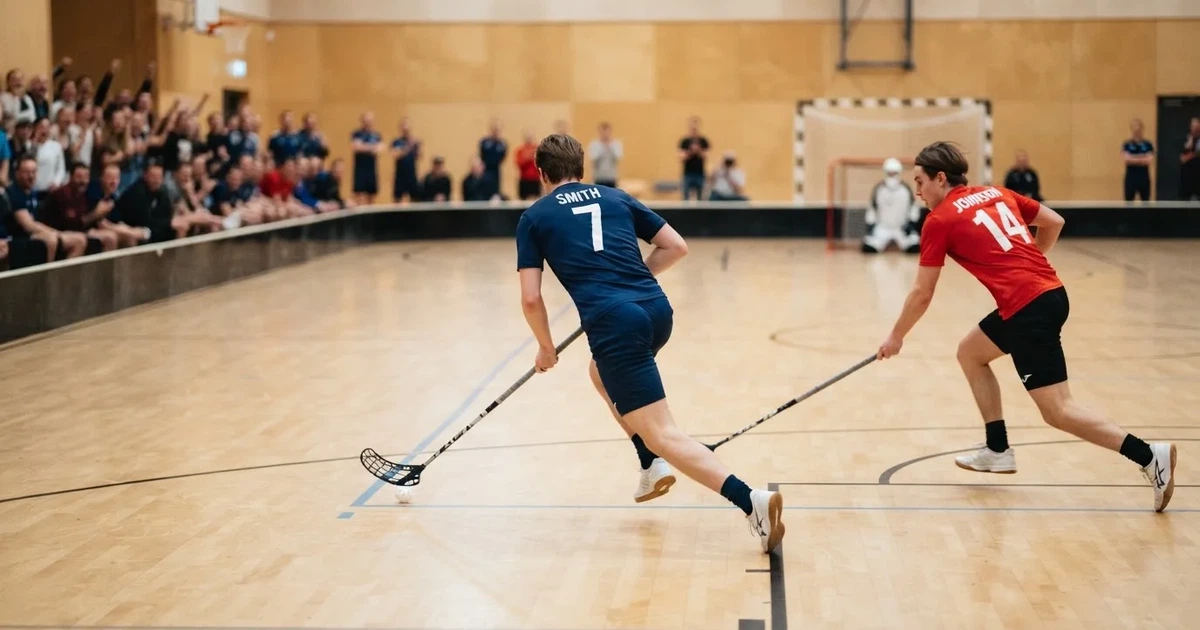
Floorball was invented in Sweden in the late 1960s and its basic rules were set in 1979. The International Floorball Federation (IFF) governed the sport as of 2025 with 80 member associations, a footprint that has grown steadily but that still sits well behind the Olympic sports most British bettors already follow. The game is played indoors, five outfield players plus a keeper per side, three 20-minute periods (15 for juniors), with sudden-death overtime for a tie. That is a fast, high-scoring indoor format. It rewards in-play markets on goals and periods. It does not, however, sit on the fixture list of every high-street name.

The Men’s World Floorball Championship is the tournament that drives what British bookmakers put up. It has been held every December in even-numbered years since 2008. Sweden has won it ten times, most recently in 2022. Finland won the 2024 edition and qualifies automatically for the 2026 tournament as host. The 2026 Men’s World Floorball Championships, the 16th edition, run from 4 to 13 December 2026 in Tampere, Finland, with 16 national teams. That fortnight is the single moment in a 24-month cycle when floorball is reliably priced at the bigger brands. Outside it, you may find nothing, or you may find a handful of pre-match lines on the Swedish Superligan or the Finnish F-liiga, depending on who you bet with.
A search for online floorball betting will return a lot of pages that promise coverage most of them do not actually carry. The honest test is the operator’s own betting slip: search the sport, search the league, look at what is priced. A bookmaker that lists floorball only during the World Championship is not offering floorball betting in any practical sense. A bookmaker that carries the Superligan weekly is. The difference matters because the depth of the market, and therefore the depth of the odds, sits on whatever the operator commits to between tournaments.
The ten licensed UK bookmakers reviewed here
Every brand below holds a remote operating licence from the Gambling Commission for Great Britain and is a member of GAMSTOP. They are presented in the order research sets, which is not a ranking. Some carry floorball outright during the World Championship and the Nordic leagues; some carry a thin in-play line at the same moments; others are reviewed for the wider offering they bring to a bettor who wants a specialist bookmaker or a known name. Each write-up closes on what the brand actually is worth, not on what its marketing claims.

Bet Ahoy: a £10-in, £10-out welcome and a thin floorball footprint
Bet Ahoy runs under Bet Ahoy Ltd, Gambling Commission account 100094 (licence 100094-R-341742-003), with a remote general betting standard (real events) category. Its welcome offer, as the brand states it, is “Bet £10 & Get £10 in Free Bets”, split into a £5 sports single and a £5 accumulator. That headline reads as two ideas. The first is a free-bet token, and a free bet whose stake is not paid back is worth less than its face value by the bookmaker’s margin on the market it is spent on. The second is the same again with a minimum number of selections, which compounds the bite because the legs multiply into one price and the bookmaker’s margin compounds with them.
On floorball itself Bet Ahoy sits in the same position as most UK-licensed brands: what is on the slip varies week to week, with the World Championship the obvious peak. For a bettor who wants floorball at one brand and little else, this welcome is modest by UK standards and reads cheaply once the qualifying £10 sports bet is placed.
For the bettor who reads the small print: a £5 single and a £5 acca are not large enough to lock much value in, and that is the point. They let a new account try the slip at low cost.
Copybet: Best Odds Guaranteed all day, every day on UK and Irish racing
Copybet runs under Copybet UK Limited, Gambling Commission account 53774 (licence 053774-R-330743-010), remote general betting standard (real events). Its standout term on racing is Best Odds Guaranteed all day, every day on all UK and Irish racing, with first past the post paid even when the winner is later disqualified. That is a racing-side proposition and is not a floorball feature. It does, however, signal how the brand positions itself on price certainty: if you take a price and the SP is higher, you are paid at the higher SP.
On floorball, Copybet’s coverage follows the same calendar as everyone else: most reliable during the World Championship, present on the Nordic leagues when the operator chooses to price them. The brand’s wider appeal sits with bettors who mix racing and football with one-off floorball punts.
For the bettor who backs both racing and a winter floorball tournament: the racing terms are the strongest thing on offer, and the floorball lines are there when the tournament is.
Ladbrokes: a 4.66-rated app from the Entain stable
Ladbrokes is run by LC International Limited under Gambling Commission account 54743 (licence 054743-R-330863-014), with both remote general betting standard (real events) and remote betting intermediary categories on the register. The Ladbrokes Sports Betting App in the GB App Store carries a 4.66 rating from 101,255 ratings. Brand recognition is the obvious asset: a high-street name with a long history, a deep sportsbook and an in-play product that sits on the better end of what GB bookmakers run.
Floorball is one of the smaller sports on the slip and follows the wider market pattern: a tournament line in December of even-numbered years, occasional Nordic league pricing outside it. The bookmaker’s strength on the wider sportsbook, on horse racing, on football and on in-play markets means a bettor who places a floorball bet there is doing so inside a much larger product.
For the bettor who wants the name they have heard of: Ladbrokes carries the brand weight, the app, and the licence, and floorball appears when the calendar hands it the chance to.
Bar One Racing: an Irish independent with a smaller UK profile
Bar One Racing has rebranded as BAR 1 Betting. It is an Irish independent bookmaker with shops across Ireland and horse racing sponsorships at Dundalk, Fairyhouse, Navan, The Curragh, Curraheen Park and Cork. The licence sits with Bar-One Racing Limited, Gambling Commission account 56516 (licence 056516-R-332750-007), remote general betting standard (real events). The brand’s centre of gravity is Irish racing, with a GB-licensed remote operation for online customers.
Floorball is not Bar One’s territory in any obvious sense. The brand is here because it holds the licence research tracks, not because it carries a floorball line. A bettor using Bar One for racing and stumbling on a December floorball market is the realistic case.
For the bettor whose main interest is racing with the option to dip into a tournament: the racing terms are the proposition, and floorball is a side bet when it is there.
Smarkets: a betting exchange with a six-hour withdrawal window
Smarkets runs as a betting exchange under Smarkets (Malta) Limited, Gambling Commission account 39173 (licence 039173-R-319366-011), remote betting intermediary category. On payments the brand states that UK deposits by open bank transfer are instant from £10 up to £10,000 and withdrawals are processed within six hours from £10 up to £100,000; UK debit card deposits are instant from £10 up to £15,000. That payout window is one of the tighter ones in the GB market.
As an exchange, Smarkets works on back and lay prices set by its users. The sportsbook side, where it exists, sits on the same thin-floorball logic as everyone else. The exchange model means a floorball market, when it is priced, will often carry deeper liquidity than a traditional bookmaker’s line because bettors are setting the price rather than the house.
For the bettor who likes an exchange and a fast withdrawal: the exchange product is the proposition, and floorball lines appear when enough liquidity sits behind them to make a market.
Kwiff: a trademark brand with a 17+ age rating
Kwiff is licensed by the Gambling Commission and describes itself as a trademark operated by Spryme Ltd, with a 17+ App Store age rating on the GB storefront. The licence sits with Eaton Gate Gaming Limited under Gambling Commission account 44448 (licence 044448-R-323408-017), remote general betting standard (real events). Kwiff’s signature is “supercharged” odds — random price boosts applied to bets — which means the headline price a bettor sees is not always the price on the slip after the boost is applied.
Floorball at Kwiff follows the wider pattern. The brand’s appeal is its oddity on price rather than its depth on niche sports. A bettor who wants the surprise of an enhanced price on a December floorball match gets one when the boost fires.
For the bettor who likes a price surprise: the Kwiff mechanic is the reason to use the brand, and floorball slots in where the schedule allows.
Betway: a Free Bet Club that hands up to £10 a week
Betway runs under Betway Limited, Gambling Commission account 39372 (licence 039372-R-319367-029), remote general betting standard (real events). Its Free Bet Club gives up to £10 in free bets every week after opt-in: spending £25 or more on sports earns two £5 free bets. That is a recurring offer rather than a one-off welcome, which is a different proposition. The brand pays the £25 qualifying stake back if it loses; it pays the free-bet stake back only when the free bet wins and only on top of the winnings.
Floorball at Betway, like the wider market, thickens at the World Championship. The Free Bet Club works regardless of sport, which is the relevant point: a bettor who places a floorball bet each week and clears £25 of qualifying bets gets the £10 back in free bets.
For the bettor who bets weekly: the Free Bet Club is recurring value, and the qualifying threshold sits at a level a small-stake bettor can clear.
BetMGM: a four-£10-free-bet welcome with a 7-day clock
BetMGM’s sports welcome offer for new UK customers who deposit £10 or more and place a sports bet within seven days is four £10 free bets, made up of two football accumulators of four or more selections and two sports multiples of two or more, valid for seven days with minimum odds and opt-in required. The licence sits with LeoVegas Gaming PLC under Gambling Commission account 39198 (licence 039198-R-319450-029), remote general betting standard (real events).
The four-free-bet welcome is generous in token count, but a free bet’s real value sits below its face amount because the stake is not returned with a win. Four £10 tokens at a 5% market margin are worth roughly £19 between them on average, before any restriction on which markets they can be spent on. A seven-day expiry adds a deadline: a free bet unused at the end of week one is gone.
For the bettor who wants a wide welcome: the four tokens let a new customer place several bets in the first week, with the understanding that they expire and that the stake is not paid back on a win.
Betboro: a 100% matched free bet up to £25
Betboro’s sports welcome is a 100% matched free bet of up to £25 on the first qualifying wager, requiring a debit card deposit of at least £10 and a first bet of £5 to £25 with at least three selections, each at 3/5 (1.60) or higher. The licence sits with Webmedia Development N.V. under Gambling Commission account 44181 (licence 044181-R-324363-007), remote general betting standard (real events). The matched-free-bet shape means a £25 first bet returns a £25 free bet token on a losing first bet.
The minimum odds of 1.60 per leg and the three-leg minimum place the qualifying bet firmly in accumulator territory. That matters because a three-leg acca at 1.60 per leg carries a compounded margin — each leg carries its own overround, and the price of the combination is the product of the three. A £25 first bet at the minimum price structure is a qualifying bet, not a value bet.
For the bettor who already plans to place a small acca: the matched free bet covers the first stake up to £25 and the qualifying terms sit at a level a small acca clears.
888sport: pre-match, in-play, Cash Out, Bet Builder and daily boosts
888sport runs under 888 UK Limited, Gambling Commission account 39028 (licence 039028-R-319297-014), remote general betting standard (real events). The brand’s offering, as the App Store listing states it, covers pre-match and in-play betting, Cash Out, Bet Builder, racing streams, BetFinder form tools, a live bet feed and daily boosted odds. That is the wider sportsbook the floorball market sits inside: a bet builder, in-play lines, and a boost product all on the same account.
Floorball at 888sport thickens at the World Championship and thins to nothing outside the calendar window for many bettors. For a bettor who already uses 888sport for football and wants the same slip for a December floorball tournament, the product is familiar and the licence is in place.
For the bettor with a wider sportsbook: 888sport’s product depth on football, racing and in-play transfers to floorball when the tournament lands.
What the Gambling Commission licence actually covers
In Great Britain, the Gambling Act 2005 is the framework. It covers England, Scotland and Wales; Northern Ireland runs on its own older law, so a GB licence does not regulate Northern Ireland. A bookmaker whose remote facilities are used in Great Britain needs a Commission licence wherever it is based — that is the test of the market. Since the Gambling (Licensing and Advertising) Act 2014 a Curaçao, Maltese or Gibraltar licence is not a substitute. The Commission’s public register, searchable by business name, trading name, domain or account number, is the whole test of whether a brand holds one. Every operator in this guide sits on that register.
Licence categories matter for what the brand can offer. Remote general betting standard (real events) is the broad sports-betting licence. Remote betting intermediary is the licence for betting exchanges. Remote general betting standard (virtual events) covers computer-simulated events. Pool betting covers off-course pool products. Each licence carries the conditions in the Licence Conditions and Codes of Practice (LCCP), which is where the consumer-protection rules live.
Identity verification happens before the first deposit. A licensed GB operator checks name, address and date of birth before a customer can deposit or gamble, including with a free bet or bonus. That is the same rule across the market and is the reason no licensed site offers anonymous play. The minimum age is 18. A credit card has been banned for gambling in Great Britain since 14 April 2020, including credit-card-funded e-wallet top-ups; debit cards and bank transfers are not covered by that ban.
The Commission is not a Ministry. It is a non-departmental public body sponsored by the Department for Culture, Media and Sport, funded largely by licence fees. Its statutory levy is a separate charge to the operator and is not a tax on the player.
What the law lets you bet on, and what it does not
There is no statutory list of permitted bets or markets in Great Britain. An operator holds a licence for a category and offers markets under its own rules and the LCCP. That means a bookmaker can offer floorball, niche politics, novelty markets, esports and outright tournament betting without asking the Commission for permission to do so. It also means the operator decides what to put up, and that decision drives what a floorball bettor finds.
In-play betting is offered by GB bookmakers under their licence conditions and customer-protection duties. There is no separate “in-play licence” — the licence covers it under the same real-events category, with the controls sitting in the LCCP. Esports are treated like any other event under the real-events category. Bets on politics, TV and novelty markets are offered and no statutory prohibition has been recorded. Betting exchanges run under the betting intermediary licence, and rates and rules specific to exchanges are stated only from each exchange’s own terms.
Spread betting sits in two places. Financial spread betting is regulated by the Financial Conduct Authority, not the Commission, and is its own product. Other spread betting on sport is inside General Betting Duty. A customer using a financial spread betting product should know that losses can exceed the deposit — that warning sits in the operator’s own terms.
There is no statutory cap on stakes in sports betting. Operators set their own maximum stakes and may restrict individual customers. There is no state-set deposit ceiling either. Limits are the customer’s choice, set inside the operator’s product under rules that have tightened since 2025.
The offshore picture, plainly stated
An unlicensed brand is one without a Gambling Commission licence. Providing gambling facilities in Great Britain without the licence the Act requires is an offence under section 33 of the Gambling Act 2005 — aimed at the operator. No offence aimed at the customer who merely places a bet on an unlicensed site has been recorded.
The honest framing of the difference is the protection that disappears. An unlicensed brand is not in GAMSTOP, so a customer’s self-exclusion does not follow them there. It is not in the Commission’s complaints route, so a dispute goes nowhere British. It is not bound by an approved dispute-resolution body, so an independent ADR is not available. It is not covered by the 10x bonus cap or the £150 financial vulnerability check. Funds withheld at an unlicensed site have no British consumer redress. None of that makes the site illegal for the customer. It does mean the safety net a GB-licensed site provides is not there.
Enforcement against unlicensed brands is disruption rather than blocking. The Commission issues cease-and-desist notices, refers matters to search engines, works with registrars, hosts and payment providers, and has been given or is about to receive court-order DNS blocking powers. ISP blocking is not in operation as a standing rule. A customer using an unlicensed site should assume the Commission’s reach does not extend to their funds if the operator withholds them.
How the return on a bet is worked out
British bookmakers show odds in two forms: fractional, the traditional British way (5/1, 11/4, evens), and decimal, the form most online slips default to (6.00, 3.75). A conversion is mechanical: a/b in fractional becomes a ÷ b + 1 in decimal. So 5/1 becomes 5 ÷ 1 + 1 = 6.00. 11/4 becomes 11 ÷ 4 + 1 = 3.75. Evens, 1/1, becomes 1 ÷ 1 + 1 = 2.00. “Odds-on” is the British term for a price shorter than evens — anything below 2.00 in decimal form.
The return on a winning single is the stake multiplied by the decimal odds. At odds of 6.00 on a £10 bet the return is £60. The profit is the return minus the stake, so £50. At odds of 3.75 on a £10 bet the return is £37.50 and the profit £27.50. At odds of 2.00 on a £10 bet the return is £20 and the profit £10.
A combination bet multiplies the prices. A double at 3.00 and 4.00 carries combined odds of 12.00. A £10 double returns £120 on a win. A treble at 2.50, 3.00 and 4.00 carries combined odds of 30.00, and a £10 treble returns £300 on a win. Each leg’s price compounds with the next, and so does the bookmaker’s margin. That is why a four-leg acca at minimum 1.60 each is the BetMGM qualifying structure and why the compounded margin is the price a small-stake bettor pays for the welcome bonus.
An each-way bet is two bets of equal stake: one on the win, one on the place. The stake doubles. The place terms — typically a quarter or a fifth of the win odds, depending on the number of runners — sit on each race or event and are not the bettor’s to set. Place terms vary by race and operator.
How the margin lives inside the odds
The bookmaker’s margin is the slice of every pound bet that the house keeps, on average. It is hidden inside the odds. A market with no margin would price every outcome so that the implied probabilities add up to exactly 100%. Real markets price them to add up to more than 100%, and the difference is the overround, which equals the margin.
Take an illustrative two-way market priced at 1.90 / 1.90 (9/10 fractional). The implied probability on each side is 1 ÷ 1.90 = 0.5263, or 52.63%. Two outcomes add up to 105.26%. The payout share is the reciprocal of that sum: 1 ÷ 1.0526 = 0.95, or 95%. The margin is 1 minus the payout share, so 5%. That is the slice the bookmaker keeps on every pound bet on this market, on average, before any specific bet wins or loses.
A real floorball match will not be priced symmetrically. Sweden against a lower-ranked side will sit shorter on Sweden and longer on the underdog. The margin still applies to the whole market. The shape of the prices tells a bettor how the bookmaker sees the match: a wide spread means the bookmaker leans one way, a tight spread means it sees the contest as closer than not. Either way, the sum of the implied probabilities above 100% is the margin.
A margin of 5% on a 1X2 floorball match is a reasonable ballpark for a major tournament. It will not be exact because no operator publishes its margin and the prices change with every bet. What matters is the principle: every price carries a slice for the house, and a bettor who wants to compare two bookmakers on the same match should look at the implied probabilities on each side and add them up. The bookmaker with the lower sum is the better price on this match.
What a free bet is really worth
A free bet whose stake is not paid back is worth less than its face amount. The arithmetic is the free-bet amount times the decimal odds minus one, divided by the decimal odds, then multiplied by the payout share of the market it is spent on. For a £10 free bet at decimal odds of 4.00 on a market with a 95% payout share, the value is £10 × (4.00 − 1) ÷ 4.00 × 0.95 = £7.13. That is what the token is worth on average, not what it pays on a win. A £10 free bet that wins at 4.00 returns £40 in winnings (the £10 stake is not returned); its expected value over many such bets at this market is £7.13.
This is the puncture in the marketing word “free”. The token is free to receive. The token is not free to use: the stake is not paid back, and the average return is below the face amount by the bookmaker’s margin. A £10 free bet on a market with a 5% margin is worth roughly £9.50. A £10 free bet on a market with a 10% margin is worth roughly £9.00. A £10 free bet at longer odds is worth more than a £10 free bet at shorter odds, because the bigger profit potential outweighs the same slice for the house.
A “risk-free” bet refunded as a free bet is not a refund in money. The stake is still lost on a losing bet; what comes back is a free-bet token whose average value is below the lost stake. Reading the small print on a risk-free offer tells a bettor whether the refund is in cash (a stake returned) or in a free bet (a token whose value is below the stake).
What a welcome bonus costs the bettor who clears it
Most welcome bonuses carry a wagering requirement. Since 19 January 2026 the cap on wagering requirements on bonuses is 10x — a £10 bonus at 50x, which would require £500 of qualifying bets, is no longer allowed; under the cap no more than £100 of qualifying bets is needed to clear a £10 bonus. That cap is part of the LCCP and applies to GB-licensed operators. It does not apply to offshore brands.
Mixed-product promotions are also banned under the same set of rules: an offer that requires gambling on two or more product types — betting plus casino, betting plus bingo, betting plus lottery — is not allowed. A “bet on football to get free spins” shape is not a shape a GB-licensed brand can run. Free bets with no wagering condition are not addressed by the cap; the cap is on the wagering requirement, not on the existence of a free bet.
The expected cost of clearing a bonus is the required turnover multiplied by the margin of the market the qualifying bets are placed on. A £10 bonus at a 5x wagering requirement is £50 of qualifying bets. At a 5% market margin the expected cost is £2.50 — the slice the house keeps on average across £50 of bets. That is what the bonus costs the bettor on average before any specific bet wins or loses. The bonus may return more than its face value on a hot streak and less on a cold one; £2.50 is the average.
A bookmaker that hides a 10x requirement behind a generous face amount is asking the bettor for ten times the betting volume for the same headline. That is the move the wagering cap addresses: under it no bonus can demand more than ten times its face in bets. Whether the cap applies to free bets with no wagering condition is not established, which is a useful thing to check on a specific offer’s small print.
Floorball in the British betting calendar
Floorball is a winter sport at the betting window. The World Championship sits in December of even-numbered years. The 2024 tournament was won by Finland. The 2026 tournament runs from 4 to 13 December 2026 in Tampere, Finland, with 16 national teams. Finland qualifies automatically as host. Sweden has won ten of the previous editions, most recently in 2022. Switzerland and the Czech Republic are regular podium finishers. Outside that fortnight, the betting calendar on floorball thins to whatever Nordic league pricing a bookmaker chooses to carry.
A bettor who wants floorball in May is unlikely to find a deep line at any licensed brand. A bettor who wants floorball in November, the week before a World Championship, will find pre-match and outright markets at the larger bookmakers and a thinner line at the smaller ones. The odds on the outright tournament market are typically longer than the odds on any single match, because the field is wide and the favourites carry the same weight in both. A bettor who wants to back Finland at the start of the tournament will find shorter odds than a bettor who backs Finland before the squad is announced, but will also be betting against a much sharper price.
The Swedish Superligan is the men’s top flight and the Finnish F-liiga is the Finnish top flight. Both sit behind the World Championship in betting volume. A bookmaker that prices the Superligan weekly is unusual; a bookmaker that prices it for the playoff run is more common. The same logic applies to the women’s top flights and to lower divisions in both countries.
What a bettor can do to control play
GAMSTOP is the national multi-operator online self-exclusion scheme. It has been a mandatory licence condition for online operators since 31 March 2020. Periods are six months, one year, five years, or five years with auto-renewal. After the minimum period the exclusion stays in place for a further seven years unless the customer asks GAMSTOP to remove it. GAMSTOP covers online sites and apps; betting shops use a separate service. A self-excluded customer cannot open a new account at any GB-licensed online operator for the chosen period.
A financial vulnerability check applies to licensed remote betting when a customer’s deposits minus withdrawals exceed £150 in a rolling 30 days, since 28 February 2025. It is a public-record check — bankruptcy or county court judgments, for instance — not an income check and not a credit reference check. It exists to flag customers whose financial position suggests gambling may not be affordable. Financial risk assessments — the “affordability checks” of the press — are announced in a staged plan, with no start date. They are not in force as of the currency stamp at the top of this guide.
Deposit limits are a customer-set tool on every licensed operator. The first changes under the strengthened framework applied from 31 October 2025; a second phase was postponed to 30 September 2026. A bettor who sets a deposit limit on Monday morning cannot raise it until the cooling-off period the operator states has elapsed, which is typically 24 hours or longer. The limit is the customer’s, not the state’s.
Help is available. GamCare runs the National Gambling Helpline. GambleAware funds treatment and education. The NHS runs gambling clinics in several regions. Gamblers Anonymous runs peer-support meetings. Fitzwilliam Sports, for instance, links to GambleAware, GamStop and Gamblers Anonymous from its home page. Other licensed operators carry equivalent signposting. A bettor who feels play is sliding should reach for those links first.
Taxes on betting winnings
Betting winnings are not taxed for the player in Great Britain. That is general information, not tax advice. A professional gambler whose activity rises to the level of a trade should ask HMRC or an adviser. For the recreational bettor, the tax sits with the operator.
General Betting Duty is the operator’s tax on gross profits from betting, currently 15%. From 1 April 2027 a new remote betting rate of 25% applies within General Betting Duty, while remote bets on UK horse racing, bets on self-service betting terminals in licensed premises, pool betting and in-person betting stay at 15%. Until 1 April 2027 the remote rate stays at 15% for all GB-licensed operators. Spread betting carries its own rates: 3% on financial spread betting, 10% on other spread betting.
Whether operators pass duty on through the odds is not established. The Commission’s statutory levy is a separate charge to the operator, not a tax on the player. The customer never sees the duty on a betting slip. What a customer sees is the odds, and the odds carry the margin that is the house’s take on every market.
A short note on advertising rules
Advertising is not licensed by the Commission. It runs through the CAP Code for non-broadcast advertising and the BCAP Code for broadcast advertising, both enforced by the ASA, alongside the LCCP marketing conditions. CAP Code section 16 requires marketing to be socially responsible and not of strong appeal to under-18s; no one who is or seems to be under 25 may be featured gambling or play a significant role, with an exception for marketing placed where a bet can be made directly. The rule is on who may appear in the advertisement, not on who may bet.
“Whistle-to-whistle” is an industry code rather than law. Since 1 August 2019 betting advertisements have not been shown on TV from five minutes before a live sporting event to five minutes after it, before the 9pm watershed. Horse and greyhound racing are excluded. The Premier League clubs’ withdrawal of gambling sponsorship from the front of matchday shirts, from 2026/27, is voluntary and is not law. Sleeves and hoardings remain.
Operators are responsible for marketing run by their affiliates. A reader who sees a promo code from an affiliate site is reading the operator’s marketing; the small print on the operator’s site is the small print that applies.
What a sensible floorball betting plan looks like
A floorball bettor with a small budget has three honest choices. The first is to wait for the World Championship fortnight and place a small number of bets on the outright market and on a handful of matches. The second is to pick one bookmaker with a strong welcome or recurring offer and use that offer’s qualifying bets on floorball during the same fortnight, accepting that the qualifying structure is the price of the bonus. The third is to bet on the Nordic leagues during their regular season at a bookmaker that prices them, accepting a thinner fixture list.
A floorball bettor with a larger budget has more room to compare prices. Two operators on the same match will not show identical odds. The implied probability sum on each side is the comparison: lower is better for the bettor. A 1% difference on margin compounds across a season.
A floorball bettor who wants an exchange will find that Smarkets offers back and lay on the World Championship outright market. Liquidity varies; the World Championship draws more than the Nordic leagues. A bettor who wants Cash Out on a floorball in-play market should check the operator’s slip during the match — not every market is in-play for Cash Out, and floorball is one of the smaller sports for the feature.
A floorball bettor who values price certainty on racing alongside floorball has a narrower field. Copybet’s Best Odds Guaranteed all day, every day on UK and Irish racing is a strong racing-side proposition; Ladbrokes, Betway and the other big brands run their own BOG products. The choice is a brand that does both well, not a brand that does floorball specifically.
A floorball bettor who wants the cheapest welcome will look at the matched free bet shape at Betboro — a £25 stake returns a £25 free bet token, qualifying at 1.60 per leg with three legs. A bettor who wants the broadest welcome will look at the four-free-bet shape at BetMGM, accepting the seven-day expiry and the stake-not-returned mechanic. A bettor who wants recurring value will look at the Betway Free Bet Club and its £25 qualifying threshold for two £5 free bets per week.
None of these is a system that wins. They are structures for placing a bet at the moments when the calendar hands the sport to the betting slip, at a price the bettor has read.
What to check before placing a floorball bet
Five checks cover most of what can go wrong. The first is the licence: search the Gambling Commission’s public register by trading name. The second is the market: open the operator’s slip, search floorball, see what is priced and what is not. The third is the price: compare two operators on the same match and look at the implied probability sum. The fourth is the offer: read the wagering requirement, the minimum odds, the expiry, the stake-not-returned note. The fifth is the protection: confirm a deposit limit is set, confirm GAMSTOP is registered if self-exclusion is wanted, confirm a help-line link is reachable.
These five checks take ten minutes. They save a bettor from the commonest ways a small bet on a niche sport turns into an unhappy experience: an unlicensed site, a missing market, a worse price, a bonus that costs more than it returns, and a help-line that is not where it should be.
Summary of the operators at a glance
| Brand | Licence holder & Gambling Commission account | What the operator’s own terms say on floorball |
|---|---|---|
| Bet Ahoy | Bet Ahoy Ltd, account 100094 | Lists floorball around the World Championship; welcome of £10 in free bets on a £10 qualifying bet |
| Copybet | Copybet UK Limited, account 53774 | Tournament markets priced in December of even-numbered years; Best Odds Guaranteed all day on UK and Irish racing |
| Ladbrokes | LC International Limited, account 54743 | Floorball lines follow the wider market calendar; deep sportsbook with in-play and racing |
| Bar One Racing | Bar-One Racing Limited, account 56516 | Irish-racing brand; floorball is a side bet when scheduled |
| Smarkets | Smarkets (Malta) Limited, account 39173 | Exchange model; floorball markets on the World Championship when liquidity supports them; withdrawals within six hours from £10 to £100,000 |
| Kwiff | Eaton Gate Gaming Limited, account 44448 | Tournament markets priced; trademark “supercharged” odds on selected bets |
| Betway | Betway Limited, account 39372 | Floorball during tournament windows; Free Bet Club giving up to £10 a week after £25 of qualifying bets |
| BetMGM | LeoVegas Gaming PLC, account 39198 | Floorball around the World Championship; four £10 free-bet welcome with a seven-day expiry and minimum odds on each token |
| Betboro | Webmedia Development N.V., account 44181 | Tournament markets when scheduled; 100% matched free bet up to £25 on a £5–£25 first acca at 1.60+ per leg |
| 888sport | 888 UK Limited, account 39028 | Pre-match and in-play with Cash Out and Bet Builder; floorball thins outside the World Championship |
Every licence number above is a real Commission account. Every term in the third column is a real term from the operator’s own material as of 26 October 2026. A bettor placing a real bet should still re-check the operator’s current terms page before depositing.
Working out the margin on a floorball 1X2
Take an illustrative two-way market at 1.90 / 1.90 (fractional 9/10). The implied probability on each side is 1 ÷ 1.90 = 0.5263, or 52.63%. The two outcomes add up to 105.26%. The payout share is 1 ÷ 1.0526 = 0.95, or 95%. The margin is 1 minus 0.95, so 5%. On every pound bet on this market, the bookmaker keeps 5p on average.
A real floorball match is rarely priced at 1.90 / 1.90. Sweden against a lower-ranked side might be priced at 1.20 / 4.50; the implied probabilities would be 83.33% and 22.22%, summing to 105.55%, an overround of 5.55% and a margin of 5.3%. Finland against Switzerland might be 1.85 / 2.10; the implied probabilities would be 54.05% and 47.62%, summing to 101.67%, an overround of 1.67% and a margin of 1.6% — an unusually sharp line for a tournament match, suggesting the bookmaker is leaning one way or that liquidity is set in is shaping the price.
The arithmetic is the same in every case. Sum the implied probabilities. The bookmaker with the lower sum is the better price on this match. A bettor comparing two operators on the same World Championship final should look at the implied probability sum on each side at each brand. The brand with the lower sum keeps less of every pound bet on average. The difference compounds across a tournament.
Closing on what this all costs
Floorball is a niche. The welcome offers at the brands reviewed here range from a £10 token at Bet Ahoy to a £100-token welcome at BetMGM. The compounded margin on a three-leg accumulator is the price of qualifying for the Betboro and BetMGM welcomes. The free-bet token is worth less than its face amount by the bookmaker’s margin. The 10x cap on wagering requirements is the floor on what a GB-licensed bonus can demand; an offshore brand is not bound by it.
A reader who wants to bet on floorball in Great Britain has a sensible set of options. Bet on the World Championship at a brand that prices the tournament. Compare two operators on the same match and look at the implied probability sum. Read the small print on a welcome offer before depositing. Set a deposit limit before the first bet. Register with GAMSTOP if self-exclusion is wanted. Reach for GamCare or the NHS if play starts to slide.
None of this is a system that wins. The house wins a 5% slice on every pound bet on a tight-margin 1X2 match, more on a wider market, and that slice is the cost the bettor pays for the privilege of placing the bet. A reader who bets with their eyes open pays that cost knowingly. A reader who bets because a welcome promised a £100 token pays it unknowingly.
Frequently asked questions
How can it be checked that a bookmaker holds a Gambling Commission licence?
The Commission’s public register can be opened on the Commission’s site and searched by business name, trading name, domain or account number. The register shows the licence categories, the account number and the trading names under that licence. A brand that does not appear is not licensed to serve GB customers remotely. The register is the whole test. A registered brand still has to be checked against its own terms.
How is the return on a bet worked out from the stake and the odds?
Return is the stake multiplied by the decimal odds. Profit is the return minus the stake. A £10 bet at decimal odds of 6.00 returns £60, of which £50 is profit. A combination bet multiplies the prices: a double at 3.00 and 4.00 has combined odds of 12.00, so a £10 double returns £120. The compounded price carries the bookmaker’s margin from each leg.
What is the bookmaker’s margin and how can it be seen in the odds?
The margin is the slice of every pound bet the house keeps on average. It lives inside the odds as overround. The test is to convert each price to an implied probability (1 ÷ decimal odds), sum them across all outcomes, and subtract 1 from the result to get the overround. A 1X2 market at 1.90 / 1.90 sums to 105.26%, an overround of 5.26% — or 5% in cleaner margin arithmetic. The bookmaker with the lower sum is the better price.
How do fractional odds such as 5/1 convert to decimal odds such as 6.00?
A fractional price a/b becomes a ÷ b + 1 in decimal. So 5/1 becomes 5 ÷ 1 + 1 = 6.00. 11/4 becomes 11 ÷ 4 + 1 = 3.75. Evens, 1/1, becomes 1 ÷ 1 + 1 = 2.00. Decimal form is what most online slips default to; fractional form is the traditional British presentation.
Which tools for controlling play does a licensed bookmaker have to offer?
A licensed GB operator must offer GAMSTOP registration, deposit limits, timeouts, product blocking and access to help-line signposting such as GamCare and GambleAware. A financial vulnerability check fires when deposits minus withdrawals exceed £150 in a rolling 30 days. Financial risk assessments have been announced in a staged plan but no start date is in force. Limits and timeouts are the customer’s to set.
Are betting winnings taxed in Great Britain, and who pays General Betting Duty?
Betting winnings are not taxed for the player in Great Britain. That is general information, not tax advice. A professional gambler whose activity rises to the level of a trade should ask HMRC or an adviser. General Betting Duty is the operator’s tax on gross profits from betting, currently 15%, with a new 25% remote rate applying from 1 April 2027 while remote bets on UK horse racing stay at 15%. The duty is the operator’s, not the player’s.
US & other team sports – AI Betting
Content created by the «AI Betting» team
