
Best Betting Exchange Sites for UK Punters in 2026
 Available in US
Current as of 26 October 2026; licence status verified against the Gambling Commission’s public register.
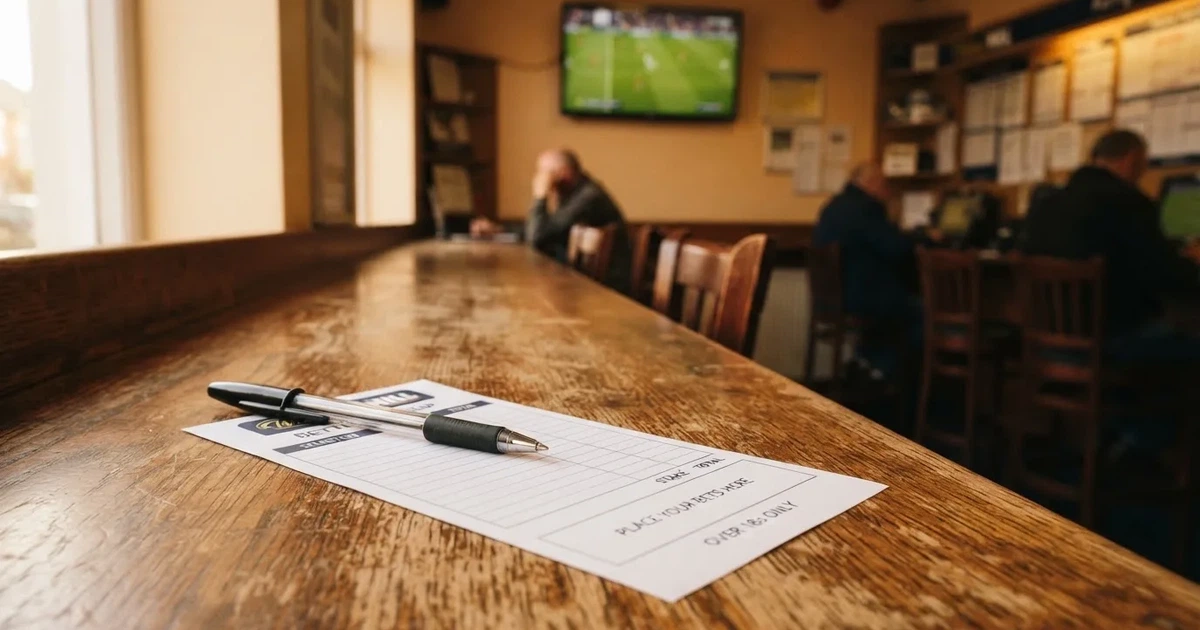
A betting exchange is a different animal from a bookmaker, and the difference lives in the price. A bookmaker makes markets and pays out of its own pocket when a customer wins, so it builds a margin into every line — the gap between what it pays and what is mathematically fair, taken as a percentage of turnover, is its keep. An exchange, by contrast, lets customers bet against each other. The operator takes no position on the outcome. Its revenue comes from commission on net winnings, and its odds are usually sharper because there is no built-in overround to pad the price. The rest of this page works out what that difference is worth in pounds, who offers it under a Gambling Commission licence, and what the rules cost the person paying them.
In-Play, Cash Out, and the Live Exchange
Momentum is the point of live betting, and exchanges handle it better than most fixed-odds books because the price updates second by second as backers and layers trade into it. Three of the ten featured operators lean on that proposition hard. Betfair sits on top of the market, with free live streaming inside the app for events including UK and Irish horse racing and selected football fixtures, a Bet Builder that combines markets from the same fixture, and a 90 Minute Payout market that settles the bet on the result at full time without the bet ever being dragged into added time. Matchbook runs as a betting exchange, with its own Bet Builder, multiples, in-play betting, and live streaming of horse racing and greyhounds.

The other seven sit a step back from the headline pitch but still carry it in some shape. DAZN Bet offers Cash Out alongside Bet Builder, daily bet boosts, and in-play betting, with the published caveat that cash out availability is not guaranteed and bets stand if it is unavailable. Midnite shows in-play events with an acca builder, popular accas, and price boosts that carry their own maximum-stake limits. Star Sports offers pre-event and in-play markets with Bet Boosts, Daily Specials, Weekend Enhanced Boosts, and in-play betting on football, horse racing, golf, and US sports.
Two pieces of housekeeping follow from the way live exchanges settle. First, on most exchanges bets are matched only when someone on the other side takes the price, and Betfair’s published odds limits sit between 1.01 and 1000 in decimal form — anything outside that band will not be matched at any reasonable size, because no layer wants unlimited liability on a price that pays a thousand times the stake. Second, bet sizes are not restricted on the matched side, as long as opposing customers cover the stake. The cap on a live bet is therefore not the operator’s but the liquidity sitting on the other side of the price at that second. That matters most on lower-tier football, darts, and table tennis, where an in-play price can disappear for thirty seconds at a time and a £500 back bet becomes a £5 bet because nobody took the other side.
Cash out is a separate live product, and it is run as a bookmaker function even on an exchange that offers it. The exchange pays out an in-running figure that reflects the current back and lay prices; if that figure is lower than the original stake, the customer takes the haircut, and if cash out is unavailable at the moment the customer clicks, the bet stands on its original terms. DAZN Bet states this verbatim. Midnite publishes maximum-stake limits on its price-boost markets, which is the operator’s way of saying that the boosted price is good, but only up to a certain number of pounds — a backstop against the kind of liquidity gap that an exchange would otherwise expose.
Predictions, Systems, and the Lay Bet
A laying system is the strategy most associated with betting exchanges, because a lay bet is the operation an exchange makes possible. A back bet wagers on the outcome; a lay bet wagers against it, and the layer takes the role a bookmaker normally plays. Liability is the most a layer can lose in the worst case: at decimal odds of 5.00 against a £10 stake, the layer pays out £50 if the outcome occurs and pockets the £10 stake if it does not. The arithmetic is the inverse of backing. Backing at 5.00 returns £60 on a £10 stake; laying at 5.00 with a £10 liability collects the backer’s stake and pays nothing further if the outcome loses.

Two practical strategies follow from that. The first is trading, where a customer takes one side of a price early and closes it for a smaller profit or loss as the price moves. A backer at 4.0 who lays at 3.4 has locked in a return whatever happens, because the two bets together cover every outcome and the gap between the two prices is the trade’s gross profit before commission. Most exchanges charge commission on net winnings per market, and losing bets generally incur no commission — Smarkets’ published standard rate is 2%, and new customers have been offered 0% commission for 60 days on a first deposit of at least £10. The 0% period is a hook: the customer trades through it, builds a position, and then begins paying commission on net winnings when the period ends.
The second is the laying strategy proper, where the customer systematically lays outcomes they think are too short. Laying the favourite in a horse race at a price shorter than the horse’s true chance is the textbook example, and the same construction works on football, tennis, and any market where the published price drifts as kick-off approaches. The risk is liability: a lay bet’s loss is the backer’s stake multiplied by (odds − 1), not the stake itself, and a £1,000 liability is not a £1,000 bet in the customer’s account. A laying system that does not size the liability is short and the customer runs out of bankroll on the third loser of the run.
A bookmaker that runs no exchange offers none of these mechanics, and three of the ten featured names are bookmakers, not exchanges. The right tool matters: a laying system requires an exchange, and a Bet Builder or an accumulator is the fixed-odds book’s native product. Star Sports, BetTom, Fafabet, Bet600, and DAZN Bet are fixed-odds books. Midnite, Spreadex, and Kalooki Sportsbook sit closer to the bookmaker side of the line. The list of true exchanges among the featured set is short: Betfair, Smarkets, and Matchbook.
Bet Types, Odds, and What the Price Actually Means
Betting exchanges generally limit odds to between 1.01 and 1000 in decimal form, and bet sizes are not restricted as long as opposing customers match the stake. Fractional odds are the older British form, where 5/1 means a £1 stake returns £6 (£5 profit plus £1 stake) and 11/4 means a £1 stake returns £3.75 profit plus the £1 stake back. Evens is 1/1, which is 2.00 in decimal; anything shorter than evens is odds-on. Decimal odds are the easier form for arithmetic, because the return is always stake multiplied by odds, and the net profit is stake multiplied by (odds − 1).
The first question a punter should ask of any price is what margin sits inside it. A two-way market with true odds of 1/1 on each side would price each outcome at 2.00 decimal. A bookmaker that offers each side at 1.90 is keeping 5% of every pound wagered, because the sum of the implied probabilities (1 ÷ 1.90 plus 1 ÷ 1.90) is 105.26% and the gap between that sum and 100% is the margin. An exchange at the same prices would carry the same gap, but the gap exists because the back and lay prices have not yet met in the middle, and a patient trader can usually sit closer to true odds by entering the queue at the right price rather than taking whatever the book shows.
Backers and layers think in different odds forms even when they share a market. A backer at 1.90 wants a price that reflects the outcome’s chance; a layer at 1.90 wants a price that does the same. The exchange displays a back price and a lay price side by side, with the back price always slightly shorter than the lay price for the same outcome, because the spread between them is what a market-maker — and even a customer market-maker — earns for quoting both sides. Closing that spread by trading at the mid is the trade; closing it less efficiently is what pays commission.
The match odds on an exchange tend to beat a fixed-odds book on the bigger events because of liquidity. A Premier League fixture attracts hundreds of thousands of pounds of matched volume on Betfair, and the spread between back and lay tightens to a single tick. A League Two fixture at 3pm on a Saturday attracts a fraction of that, and the spread opens out to several ticks. Spreadex, which is regulated by the FCA for spread betting and by the Gambling Commission for fixed-odds betting, and states that spread betting losses can exceed the deposit, sits in a third category altogether — a financial product, not a sports bet.
The Ten Operators in the UK Market
The featured set covers the Gambling Commission-licensed operators that matter for the exchange conversation in 2026. The Commission’s public register is the test of who holds a licence; every brand below is on it, with the account number a reader can use to confirm that fact. The licence category matters: Betfair, Smarkets, and Matchbook hold the betting intermediary licence, which is the only category that lets customers bet against each other; the rest hold general betting licences that authorise fixed-odds markets. Both kinds of operator are licensed, both are on the public register, both are reviewed below.
Smarkets
Smarkets is one of the three exchanges on the featured list, and its published terms read like an attempt to win the price-sensitive punter by undercutting the bigger players. Standard commission is 2% on eligible exchange bets; new customers have been offered 0% commission for 60 days, conditional on a minimum first deposit of £10. The Commission’s public register shows the licence under account number 39173, held by Smarkets (Malta) Limited, in the category remote betting intermediary. The 0% hook is the headline pitch, and it is a real offer: a customer who trades through the 60-day window and closes positions at a net profit pays no commission on those profits during the period. After the window closes, the standard 2% rate applies on net winnings per market, and losing bets generally incur no commission. For a customer whose edge is small enough that 2% would wipe it out, the 60-day window is the cheapest entry to exchange trading in the UK market.
Betfair
Betfair is the biggest name in the segment, and the Commission’s register shows the licence under account number 39439, held by PPB Counterparty Services Limited, in the category remote general betting standard (real events). Flutter and Betfair merged in 2001, with Betfair chosen as the primary exchange, and Flutter ceased operations in January 2002 — a fact from the segment’s history that explains why Betfair sits where it does in the market today. The product set is the broadest of any single operator: in-play betting, Bet Builder, free live streaming of events including UK and Irish horse racing and selected football fixtures within the app, and a 90 Minute Payout market that settles on the full-time result. Commission is the published cost on every winning bet, and the rates sit at the higher end of the exchange range — a premium for liquidity, because a price on Betfair is more likely to be matched at size than the same price on a smaller venue. For a customer who values match depth over per-bet cost, the trade is clean.
Matchbook
Matchbook is the third exchange on the list, with the Commission’s account number 39504, held by Triplebet Limited, in two categories: remote general betting standard (real events) and remote betting intermediary. The product is the same shape as Betfair’s, with Bet Builder, multiples, in-play betting, and live streaming of horse racing and greyhounds inside the app. Matchbook’s pitch has historically been lower commission than Betfair on the bigger sports, and the published rate reflects that positioning. For a customer who likes to lay on horse racing in-running formats and tested the depth on Betfair, Matchbook’s liquidity is thinner on football and tighter on racing — the trade is between commission and depth, and the right choice depends on which sport the customer trades.
Midnite
Midnite holds account number 101839 on the Commission’s register, licensed for remote general betting. The product is a fixed-odds book with a modern app feel: in-play events, an acca builder, popular accas, and price boosts that carry their own maximum-stake limits. The sports welcome offer is published in the app’s UK terms: new customers who bet £5 or more on pre-match odds of EVS (2.0) or greater within 14 days of sign-up receive £25 in free bets and 50 free spins, valid for 7 days. The free-bet value is modest: a £25 free bet at 2.0 with no stake return, applied to a market with a 5% margin, is worth roughly £12 on average after the 7-day expiry — a number worth keeping in mind because the headline figure is twice the realised value. For a customer who wants a modern fixed-odds book with a clean acca product, Midnite is in the conversation.
Star Sports
Star Sports holds account number 9177, held by Star Racing Limited, licensed for remote general betting. The published product set is wide: pre-event and in-play markets with Bet Boosts, Daily Specials, and Weekend Enhanced Boosts, plus in-play betting on football, horse racing, golf, and US sports. Star Sports sits on the racing side of the panel — a heritage book with a strong horse racing product — and the boosted-odds mechanism gives it an angle on the Saturday football market that a smaller operator would struggle to match. For a racing-led punter who also bets football, Star Sports covers both markets without forcing a switch.
Fafabet
Fafabet holds account number 57385 on the register, held by Taichi Tech Limited, licensed for remote general betting. The standout product is Best Odds Guaranteed on UK and Irish horse racing win and each-way bets from 9am on race days: if the starting price is bigger than the original price taken, the bigger odds are paid. That rule is worth real money on every bet where the SP drifts, and it is the kind of small print that shapes a punter’s relationship with a bookmaker over a season. For a racing customer who takes early prices, BOG is a near-permanent upgrade to the bottom line.
Bet600
Bet600 holds account number 44731 on the register, held by Tyche Tech Limited, licensed for remote general betting. The product is similar to Fafabet’s on the racing side: Best Odds Guaranteed on horse racing, with the SP paid when the starting price is bigger than the early or show price taken. Bet600 is a smaller name than Fafabet in the UK market, and the racing product is the strongest part of the offer. For a punter whose betting calendar is the BOG calendar, Bet600 and Fafabet cover the same need with comparable terms, and the choice between them is more about app feel and market depth than about the published headline.
DAZN Bet
DAZN Bet holds account number 48756 on the register, held by DZBT Limited, in the category remote general betting standard (real events). The product set includes Cash Out, Bet Builder, daily bet boosts, and in-play betting — with the published caveat that cash out availability is not guaranteed and bets stand if it is unavailable. The brand has visibility from its parent broadcaster, which gives it a marketing reach the smaller operators do not have, and the live product is the centre of gravity. For a customer who bets in-play and wants a bookmaker with a strong live product, DAZN Bet is in the conversation.
Kalooki Sportsbook
Kalooki Sportsbook is operated by Kalooki Sports Book Ltd (company number 12938274), licensed by the Gambling Commission under account number 57730, and is a GAMSTOP member. The licence category is remote general betting standard (real events). Kalooki sits in the smaller end of the UK-licensed market, and the brand’s distinguishing feature is the corporate structure: a single UK-registered company with a single Commission account, no parent group above it. For a customer who values simplicity over scale, that is the pitch.
BetTom
BetTom holds account number 64959 on the register, held by Bet Tom Limited, in the category remote general betting standard (real events). The sports welcome offer is published in the app’s UK terms: 50% back as a free bet of up to £50, with a matching 50% back up to £50 as free slot funds for casino play; full terms apply. The 50% structure is the kind of offer that looks generous until the wagering requirement is read — and the £50 cap on the free bet means the headline “50%” is paid on a smaller base than the headline “up to £50” suggests. For a customer who likes a smaller bookmaker with a clear welcome structure, BetTom is on the list.
The Comparison at a Glance
The table below shows each operator’s Commission account number, the licence holder as it appears on the public register, and a one-line summary of what each operator’s own terms state on the relevant key — drawn directly from the public register or the operator’s published terms, not from a third-party listing.
| Operator | Gambling Commission account | Licence holder | Key term in the operator’s own words |
|---|---|---|---|
| Smarkets | 39173 | Smarkets (Malta) Limited | Standard commission 2% on net winnings; 0% commission for 60 days on first deposit of £10 or more |
| Betfair | 39439 | PPB Counterparty Services Limited | Free live streaming of UK and Irish racing and selected football within the app; 90 Minute Payout market |
| Matchbook | 39504 | Triplebet Limited | Bet Builder, multiples, in-play betting and live streaming of horse racing and greyhounds |
| Kalooki Sportsbook | 57730 | Kalooki Sportsbook Limited | UK-registered operator (company number 12938274), GAMSTOP member |
| BetTom | 64959 | Bet Tom Limited | Sports welcome: 50% back as a free bet up to £50, plus 50% back up to £50 as free slot funds for casino |
| DAZN Bet | 48756 | DZBT Limited | Cash Out, Bet Builder, daily bet boosts and in-play; cash out not guaranteed, bets stand if unavailable |
| Midnite | 101839 | Midnite Limited | Sports welcome: bet £5+ at EVS (2.0)+ in 14 days, receive £25 in free bets and 50 free spins, 7-day expiry |
| Star Sports | 9177 | Star Racing Limited | Bet Boosts, Daily Specials, Weekend Enhanced Boosts; in-play on football, racing, golf and US sports |
| Fafabet | 57385 | Taichi Tech Limited | Best Odds Guaranteed on UK and Irish racing win and each-way bets from 9am on race days |
| Bet600 | 44731 | Tyche Tech Limited | Best Odds Guaranteed on horse racing; SP paid when bigger than the early or show price taken |
How an Exchange Fits the Broader Market
A betting exchange is a marketplace where customers bet against each other on the outcome of discrete events; the exchange itself is not a party to the bets. Bookmakers earn revenue from less favourable odds, while exchanges earn it from commission, and exchange odds are usually better because overrounds are smaller. The proposition, taken at face value, is sharper prices in exchange for a commission on net winnings. The catch is liquidity: an exchange is only as good as the customers on the other side of the price, and a thin market on a small fixture is not a sharper market than a fixed-odds book — it is just a less populated one.
The bookmakers on the featured list are not interchangeable. Fafabet and Bet600 both offer Best Odds Guaranteed on UK and Irish racing; the value is in the rule, not the brand. Star Sports offers a wider racing and US sports product than either, with boosted odds on top. Midnite and DAZN Bet sit closer to the modern app-led bookmakers, with Bet Builders and acca products that smaller books do not match. Kalooki Sportsbook and BetTom are smaller UK-registered books, with a single Commission account each. The choice between them is less about the headline offer and more about the market coverage the customer needs and the welcome structure the customer is willing to clear.
The Commission itself sets the floor. Since 7 May 2019, name, address, and date of birth are verified before a customer can deposit or gamble, including with a free bet or bonus. That means there is no anonymous play at a licensed site, and there is no unlicensed means no Commission complaints route, no approved dispute-resolution body, no GAMSTOP coverage, no British consumer redress if funds are withheld, no protection under the 10x bonus cap, and no application of the £150 financial vulnerability check. A customer who picks an unlicensed brand accepts all of those losses and has no recourse against any of them.
How the Gambling Commission Licences the Market
The Gambling Commission, a non-departmental public body sponsored by the Department for Culture, Media and Sport, licences the whole commercial market under the Gambling Act 2005, which covers Great Britain — England, Scotland, and Wales. Northern Ireland is outside the Act and has its own older law; a GB licence does not regulate Northern Ireland. Since the Gambling (Licensing and Advertising) Act 2014, an operator whose remote facilities are used in Great Britain needs a Commission licence wherever it is based; a Curaçao, Maltese, or Gibraltar licence is not a substitute.
The licence categories matter for this page. Remote general betting standard (real events) covers fixed-odds books on real-world sport. Remote betting intermediary covers betting exchanges, where customers bet against each other and the operator takes commission. Both categories are licensed; both are listed on the public register; both authorise the operator to take bets from customers in Great Britain. An operator holding one category cannot offer the other — a betting intermediary licence does not authorise the operator to run a fixed-odds book on its own account, and a general betting standard licence does not authorise the operator to run an exchange.
The public register can be searched by business name, trading name, domain, or account number, and is the whole test of whether a brand holds a licence. Licensed operators use .com as well as .co.uk, so the domain proves nothing. Minimum age is 18. There is no state-set deposit or loss ceiling: limits are the customer’s choice, and operators must offer a gross deposit limit on a fixed time frame, but the customer sets the figure.
Financial vulnerability checks apply to licensed remote betting when a customer’s deposits minus withdrawals exceed £150 in a rolling 30 days; the check is a public-record check, not an income check and not a credit reference check. Financial risk assessments — the affordability checks of the press — are announced, staged, with no start date. Neither the £150 check nor the announced affordability framework is a tax on the customer; both are compliance work the operator does against the licence.
Player Protection, Self-Exclusion, and Help
GAMSTOP is the national multi-operator online self-exclusion scheme and a mandatory licence condition for online operators since 31 March 2020. Periods are six months, one year, five years, or five years with auto-renewal; after the minimum period, the exclusion stays in place for a further seven years unless the customer asks GAMSTOP to remove it. GAMSTOP covers online sites and apps; betting shops use a separate service. A customer who self-excludes through GAMSTOP is barred from every licensed online operator for the chosen period, and no individual brand can reverse that decision.
The minimum age is 18, and identity is verified before the first deposit. A customer cannot open an account, deposit, or gamble — including with a free bet or bonus — until the operator has confirmed name, address, and date of birth. The check is a public-record check against the operator’s data sources, and a customer whose details do not match is asked for further evidence.
For customers who need help, the routes are: GamCare and the National Gambling Helpline for live support and counselling, GambleAware for information, NHS gambling clinics for treatment, and Gamblers Anonymous for peer support. These are the routes that work for a customer who has decided the betting is doing harm; they are not for the customer who has decided to place another bet. The gambling industry, in Great Britain, runs safer-gambling rules by licence condition rather than by customer choice, and the framework is set out in the LCCP and the Remote Technical Standards.
Crypto, Anonymity, and What the Licence Forbids
Crypto is not a separate route into the UK betting market — there is no GB-licensed crypto-only exchange, and no GB licence category that authorises anonymity. The framework requires identity verification before the first deposit, and the verification applies whether the deposit is in pounds, euros, or cryptocurrency. The customer is still the customer, and the check still runs.
There is no statutory ban on cryptocurrency deposits at licensed operators; the framework requires identity verification regardless of the payment method, and the operator’s published terms set out what payment methods are accepted. A customer who uses a crypto on-ramp to fund a debit card and then a debit card to fund a betting account has not bypassed the verification; the operator sees the pounds, not the on-ramp. A customer who uses a crypto wallet directly at an unlicensed operator has bypassed the verification entirely, and has accepted the consequences that follow: no GAMSTOP coverage, no Commission complaints route, no British consumer redress.
The Commission’s register is the test of who holds a licence. A customer who wants to verify a brand before opening an account searches the register by business name, trading name, domain, or account number. The register is public, including a one-line summary of each licence and the categories it covers. A brand that does not appear on the register is unlicensed, and the consequences of using an unlicensed brand sit with the customer.
Bonuses, Free Bets, and What the Promotion Rules Cost
A betting exchange charges commission on net winnings and gives no welcome bonus, because the welcome bonus on a fixed-odds book is paid out of the margin that the exchange does not charge in the first place. The trade at the heart of the UK market is between commission and bonus: the exchange customer pays a per-bet cost on net winnings, the fixed-odds book customer pays a margin on every bet and receives a free bet or bonus on the side. Neither is cheaper in absolute terms; the cost sits in different places.
The headline offers on the featured set, read in the operator’s own terms, are: Midnite’s sports welcome — bet £5 or more on pre-match odds of EVS (2.0) or greater within 14 days of sign-up, receive £25 in free bets and 50 free spins, valid for 7 days; BetTom’s sports welcome — 50% back as a free bet up to £50, with a matching 50% back up to £50 as free slot funds for casino play, full terms apply. Both offers include a wagering requirement, and both are subject to the 10x wagering cap that came into force on 19 January 2026: a £10 bonus at the old 50x rate would need £500 of qualifying bets; under the cap, no more than £100 of qualifying bets is required. The cap is the headline; the operator’s terms set the per-offer rate below it.
The free-bet value is the figure worth computing. A £25 free bet at 2.0 with no stake return, applied to a market with a 5% margin, is worth roughly £11.84 on average. The formula: free-bet value = free-bet amount × (odds − 1) ÷ odds × payout share. The 5% margin means the market pays out 95% of stake on a true 1/1 line, and the £25 free bet at 2.0 has a payout-share-adjusted return of £11.84 against the headline £25. The 7-day expiry tightens the realised figure further, because the customer has to find a market at the right price inside the window or lose the bet. Midnite’s welcome is a real offer, but the realised value is less than half the headline.
BetTom’s 50% back structure is a different shape: a £100 deposit returns £50 as a free bet (stake not returned) plus £50 as free slot funds. The £50 free bet on the sports side, applied at the same 2.0 / 5% margin as the Midnite example, is worth £23.68. The £50 free slot funds is a casino product, not a sports product, and the value depends on the slot’s published return-to-player figure and the wagering requirement the operator attaches. A customer who wants the headline figure to mean what it says should read the operator’s terms, not the marketing email.
The marketing claim that the operator will give £50 in free bets is a different claim from the operator paying £50 in real money at the end of the offer. The first is a credit that pays out only if a winning bet lands; the second is a refund. The 50% back structure is a credit, and the credit is paid only if the qualifying bet loses. A customer who reads the headline as a refund reads the offer wrong.
The Mobile and App Layer
The app is the surface most customers bet through, and the App Store description is where most of the operator’s product claims live. The featured set’s app descriptions describe in-play layouts, acca builders, Bet Builders, live streaming, cash out, and boosted odds — the same shape of product most UK-licensed books offer, with different operational depth. The app description is the operator’s marketing copy and not the licence; the Commission’s register is the licence.
Spreadex, which is regulated by the FCA for spread betting and by the Gambling Commission for fixed-odds betting, and states that spread betting losses can exceed the deposit, sits in a separate category from the rest of the featured set. Spread betting is a financial product, not a sports bet, and the FCA regulates the product, not the Gambling Commission. A customer who opens a Spreadex account for fixed-odds betting has a different account structure than a customer who opens the account for spread betting — and the liability rules are different in the two products.
The betting intermediary licence covers the exchange-only operators; the general betting standard licence covers the fixed-odds books. Both licences are listed on the Commission’s register, both authorise the operator to take bets from customers in Great Britain, and both carry the same player-protection framework. The product differs: an exchange customer pays commission on net winnings, a fixed-odds book customer pays a margin on every bet. The app is the surface of both, and the customer experience on the surface is shaped by the operator’s product team, not the licence category.
Frequently Asked Questions
How does a betting exchange work?
A betting exchange is a marketplace where customers bet against each other on the outcome of discrete events; the exchange itself is not a party to the bets. Customers can back an outcome (wager that it will happen) or lay it (wager that it will not), and the layer takes the role a bookmaker normally plays. The exchange earns revenue from commission on net winnings per market, while a bookmaker earns it from the margin built into its odds; exchange prices are usually sharper because the overround is smaller.
How can I check that a bookmaker holds a Gambling Commission licence?
The Commission’s public register is the whole test of who holds a licence, and it can be searched by business name, trading name, domain, or account number. A customer who wants to verify a brand before opening an account searches the register for the trading name shown in the app description or the operator’s footer, then checks the licence category and the account number. A brand that does not appear on the register is unlicensed, and the consequences of using an unlicensed brand sit with the customer.
How is the return on a bet worked out from the stake and the odds?
The return on a winning bet at decimal odds is stake multiplied by odds, and the net profit is stake multiplied by (odds minus 1). At fractional odds of 5/1, a £10 stake returns £60 (£50 profit plus £10 stake) at decimal 6.00. At evens (1/1, decimal 2.00), a £10 stake returns £20 (£10 profit plus £10 stake). For a combination bet, the odds of the legs multiply into one price, and the return is stake multiplied by the combined odds.
What is the bookmaker’s margin and how can it be seen in the odds?
A two-way market at decimal odds of 1.90 on each side implies a probability of 52.63% on each outcome, and the sum of the implied probabilities is 105.26%. The gap between that sum and 100% is the margin: 5.26% in this example. A market with a smaller sum of implied probabilities is a sharper market, and an exchange typically shows a smaller sum than a fixed-odds book because there is no built-in overround.
Are betting exchanges safer than fixed-odds bookmakers?
Both are licensed by the Gambling Commission in their respective categories, and both carry the same player-protection framework: identity verification before the first deposit, GAMSTOP coverage, the £150 financial vulnerability check, and the ASA-Code marketing rules. The product differs — an exchange takes commission on net winnings, a fixed-odds book takes margin on every bet — but the licence framework does not. The customer should read each operator’s terms and the Commission’s register rather than rely on a category label.
Betting sites & exchanges – AI Betting
Content created by the «AI Betting» team
