
Cycling betting tips that survive the market
 Available in US
Stand at the foot of a horscategorie climb on a July afternoon and you are looking at the most over-analysed sport in betting. Grand Tour favourites, stage hunters, domestiques at breakaway odds: every column is researched to the millimetre, every price reshaped by what the rest of the market has done. A tip earns its keep not by being clever, but by being slightly cheaper than the true probability once the bookmaker’s cut is removed. That is the only edge on offer here. And it is smaller than the marketing suggests.
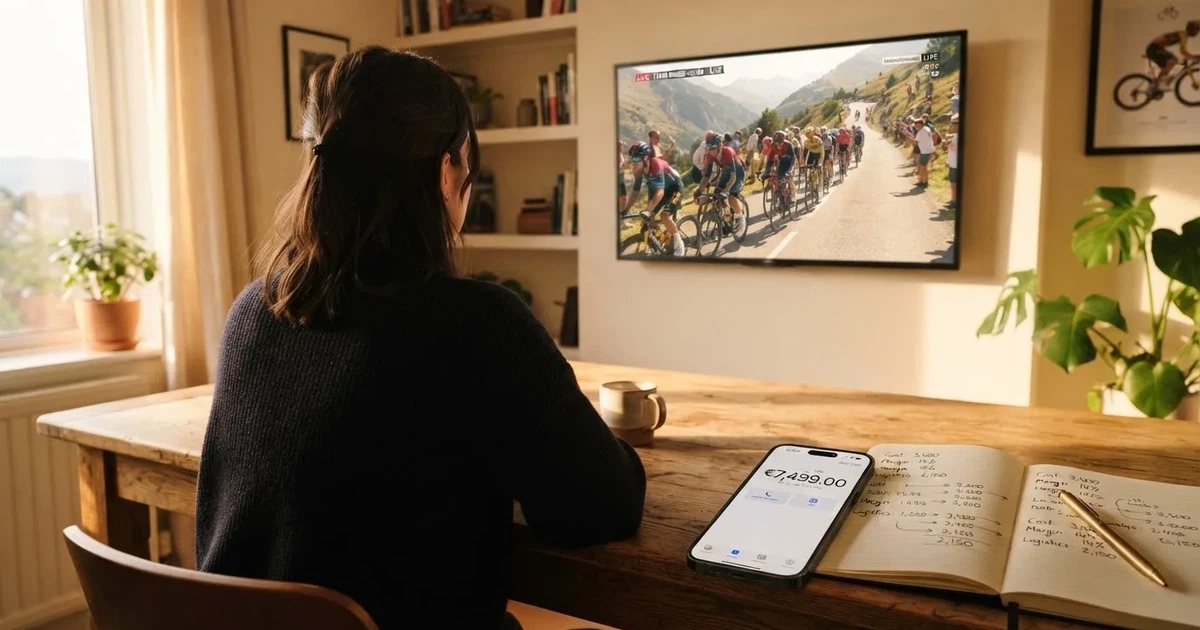
This page is a guide, not a sheet of picks. It explains how a prediction is actually built — form, stage profile, team orders, recent races, the market’s own movement — what a value bet means in cycling rather than football, why staking discipline matters more than any single pick, and why no tip is ever certain. It also walks through the markets a UK bettor can actually use, the licence frame behind every brand on a shortlist, and the operators worth a closer look for cycling specifically. The cycling calendar is short and lumpy: three Grand Tours, a handful of WorldTour stage races, the Classics from March to October. Most of the live betting year is concentrated inside May, June, July, August and September, with two quiet halves on either side. The shape of that calendar is the first thing a tipster reader has to internalise — there are long stretches where the only prices are ante-post, and those prices have a different logic from race-day prices.
The data below is current as of 26 October 2026 and was checked against the Gambling Commission’s public register for the licence claims it contains.
Legality and regulation: who is allowed to take your bet
Cycling is not the kind of sport where a GB licence is optional. The Gambling Commission licenses the whole commercial market under the Gambling Act 2005, and since the Gambling (Licensing and Advertising) Act 2014 an operator whose remote facilities are used in Great Britain needs a Commission licence wherever it is based. Sections 33 and 36 of the 2005 Act are the relevant teeth: providing gambling facilities here without the licence the Act requires is an offence, aimed at the operator. A Curaçao, Maltese or Gibraltar licence is not a substitute in GB. The Act covers England, Scotland and Wales; Northern Ireland sits outside it under older legislation, which is why the language is “Great Britain” or “GB-licensed”, never that a GB licence regulates Northern Ireland.

There is no state monopoly and no cap on the number of licences. The Commission issues several categories — remote general betting standard (real events) is the one most cycling operators sit under; remote betting intermediary is the exchange licence; remote pool betting covers pools on horse and dog racing. There is no statutory list of permitted bets. What you can place a wager on is governed by the operator’s licence category, its own rules, and the Licence Conditions and Codes of Practice (LCCP).
Identity is verified before the first deposit, since 7 May 2019. That means no anonymous play at a licensed site: name, address and date of birth are checked, including when the qualifying stake is a free bet or bonus. There is no statutory cap on stakes, either, and operators set their own maximum stakes and may restrict individual customers. In-play cycling is allowed at most GB operators, though the actual market depth depends on the brand — see the operator sections further down.
The simplest way to verify a claim is the Commission’s public register. Search by business name, trading name, domain or account number. A licence is the entry, not a Count number quoted from memory. Licensed operators use .com and .co.uk interchangeably, so the domain itself proves nothing — it is the register entry that counts. There is no such thing as “the only” licensed brand. The set on this page is a shortlist, not the whole market, and the Commission lists many more.
Financial spread betting is a different regime. Where a bookmaker offers spread betting on cycling, that side of the product is regulated by the Financial Conduct Authority, not the Gambling Commission. The losses can exceed the deposit — the FCA’s whole point. The two regulations sit side by side.
Tax: the bettor pays no tax on winnings in Great Britain, general information rather than personal tax advice. General Betting Duty (15%) is the operator’s tax on gross profits, and from 1 April 2027 a remote rate of 25% applies within it, while remote bets on UK horse racing, pool betting and in-person betting stay at 15%. Spread betting has its own rates. Whether operators pass duty on through the odds is not established, and the page does not write it as a fact.
Responsible gambling: what the licence buys the bettor
A GB licence is not just a permission to trade. It buys a set of consumer protections that operate because the licence is in place, and there is no realistic equivalent on the unlicensed side. None of it matters unless a customer uses it.
GAMSTOP is the national multi-operator self-exclusion scheme and is a mandatory licence condition for online operators since 31 March 2020. Periods are six months, one year, five years, or five years with auto-renewal. After the minimum period the exclusion stays in force for a further seven years unless GAMSTOP is asked to remove it. GAMSTOP covers online sites and apps; betting shops use a separate service.
Financial vulnerability check (LCCP condition 3.4.4, in force since 30 August 2024) applies when a customer’s deposits minus withdrawals exceed £150 in a rolling 30 days, with the figure live since 28 February 2025. It is a public-record check — bankruptcies, county court judgments — not an income check, and not a credit reference check. Financial risk assessments, the affordability checks of the press coverage, were announced in a staged plan on 7 July 2026, with no start date. The right phrasing is “announced, staged, no start date”.
There is no state-set deposit or loss ceiling for betting. Limits are the customer’s choice. The tools that licensed operators must provide include deposit limits and timeouts, and the customer sets the figures.
Credit cards are banned for gambling in Great Britain since 14 April 2020 (LCCP condition 6.1.2), including credit-card-funded payments routed through an e-wallet; debit cards and bank-based payments are outside that ban.
Help: GamCare runs the National Gambling Helpline, alongside GambleAware, NHS gambling clinics, and Gamblers Anonymous. A licensed operator’s safer-gambling page links to all of them.
The flip side is also worth stating. On an unlicensed site: no GAMSTOP coverage, no Commission complaints route, no approved dispute-resolution body, no British consumer redress if funds are withheld, not bound by the bonus cap or the vulnerability check. The framing the page uses is honest rather than alarming — licensed means checks, limits, GAMSTOP, the bonus cap; unlicensed means none of that, plus possible loss of funds. Neither side is “the safe choice” by default. The licence is the baseline, not a guarantee.
How cycling actually works: the calendar and the races behind every market
The UCI — Union Cycliste Internationale, based in Switzerland — has governed road cycling since 1900, and it runs the annual men’s and women’s road world championships. The UCI WorldTour, created in 2005 as the ProTour and renamed the WorldTour in 2011, is the top men’s road calendar. It bundles the three Grand Tours with the other major stage races and the one-day Classics, all under one sporting umbrella. That calendar is what a UK bookmaker’s “cycling” tab actually prices.
The three Grand Tours are the Giro d’Italia (first held 1909), the Tour de France (1903) and the Vuelta a España (1935). UCI rules allow a Grand Tour to last 15 to 23 days, which means three weeks of daily stages, two rest days in the typical design, and a leader’s jersey that changes colour per race — pink in the Giro, yellow in the Tour, red in the Vuelta. The general classification (GC) is the cumulative-time race across all stages; the points classification rewards sprinters and opportunists; the mountains classification rewards the climbers. Each race runs a parallel set of secondary markets: stage winner, head-to-head match-ups between named riders for the day, King of the Mountains, young rider, the team classification.
The Tour de France is the largest betting event of the calendar. The 2026 Tour ran from 4 to 26 July 2026, starting in Barcelona with a team time trial and finishing on the Champs-Élysées in Paris, over 21 stages and 3,245 km with 23 teams. Tadej Pogačar (UAE Team Emirates, Slovenia) won the 2026 Tour — his fifth Tour victory. The shape of a Tour market is denser than any one-day Classic — a brand with a serious cycling product tends to have stage markets, GC outright at the start of each stage, head-to-heads, top three, top five, jersey markets, and live outrights once the race starts. A brand with a thin product might only price GC outright and the daily stage winner, with everything else locked down.
Beside the Grand Tours, the calendar has the spring Classics (Milan–San Remo, the cobbled Classics from late March through April, the Ardennes in mid-April), the week-long WorldTour stage races (Paris–Nice, Tirreno–Adriatico, Dauphiné, Tour de Suisse), and the late-season classics (Lombardia and a handful of others). Each of these has its own market. Spring Classics betting is heavily head-to-head because the outright winner market is volatile. Stage race betting is heavily GC outright and stage winner markets, with hill finishes and time trials splitting the day.
The women’s calendar runs on a parallel structure under the UCI Women’s World Tour: a women’s Tour de France and equivalent stage races, one-day Classics, and the women’s road world championship. Markets vary by operator — some price women’s cycling at near-equivalent depth to men’s, others only carry head-to-heads and outrights.
The shape of a cycling price: market, margin and value
Cycling’s most overbet races have bookmaker margins on outright winner markets in the high single digits — 8 to 12% is normal for a Grand Tour GC market. The two-way match-up market is the cleanest statistical object in cycling: pick rider A to beat rider B across a defined stage or race, and the price has two outcomes, both treated equally by the settlement rules.
The margin is the share of every unit staked that the bookmaker keeps, on average. It is calculated from the prices the brand publishes, not stated by the bookmaker itself. The arithmetic, for a two-way market priced at decimal odds 1.90 and 1.90 (an example, not a quoted price), is straightforward: the payout share is 1 ÷ (1/1.90 + 1/1.90) = 0.5, written differently 50%; the margin is the rest, also 50%. That is an extreme case chosen to make the geometry visible. A real head-to-head market sits somewhere between 4% and 10% margin, depending on operator liquidity, race day, and how the brand has built its book. A typical Grand Tour GC market with twenty or more runners, prices ranging from short favourites to long shots, often settles with a margin under 10%.
What this means for the bettor. Two prices, both 1.90 (an example), do not imply a fair coin. The bookmaker’s 50% margin in that example is the same mechanism as a 5% margin on a tighter match — it is the deduction from the payout share. A bet wins at one of the two outcomes, and the cumulative effect of the margin is what the bookmaker keeps over many bets. A reader thinking “this market is fair because the prices look even” has misunderstood what even prices mean: a two-way match with two even favourites is structurally the simplest place for a margin to be large, because no price can compensate for it. Three-way markets (a three-rider match-up, or a stage with three realistic winners) do better on margin; outright winner markets with twenty runners come out cheapest.
Value is the rest of the idea. A value bet exists when a price is larger than the true probability, with the bookmaker’s margin already removed from the consideration. The catch: the bettor needs a probability estimate, and forming one is most of the work. For a sprint stage, the field of likely winners is narrow and the odds are tighter; the value, if any, is in finding a rider whose recent sprint form has improved and is priced as if it had not. For a mountain stage, the field is smaller, the prices larger, the variability higher, and the value either more obvious or the bet is a long shot by design.
Why no tip is ever certain. Even a well-built probability estimate is a guess. A mechanical in the lead group, a crash in the finale, a crosswind splitting the peloton — every stage hides a long tail of outcomes that no preview has priced. A 30% probability pick wins 30% of the time across a large sample, and the path to a profit requires many bets over a long period, with each individual result largely noise. A tip that promises a win is one that has not understood the market it operates in.
How to build a prediction without inventing one
A prediction is a probability with a price attached to it. The probability comes from a small set of ingredients, all observable: form, course profile, team orders, recent races, the rest of the market. None of these is a guarantee; together they constrain the estimate enough to make value defensible.
Form means the recent results, weighted by relevance. A fourth-place at Paris–Nice is more informative for a Tour GC pick than a win at a small race in February. The publicly available form is also the publicly available form for every other bettor, including the bookmaker’s traders. There is little informational edge available from form alone at the Tour.
Course profile is the second ingredient. A pure sprint stage with five classified climbs in the final 50 km filters the field harder than a pancake stage with a bunch sprint expected. A mountain stage with a hors-catégorie summit inside the last 20 km filters it harder again. Profile reading pins down the type of rider who can win, before any name is shortlisted.
Team orders matter at Grand Tours in particular. A GC team with two protected riders does not let both ride for the stage win when the team leader is the GC favourite. In the final week, a domestique sacrifice on a breakaway is the squad’s tactical play, not a sign of weakness.
Recent races are how the form is updated. A rider who placed top ten in a five-day WorldTour race a fortnight before the Tour de France is in better shape than the same rider’s results from August. A rider whose Dauphiné form had him top three and then races the Tour without a peak is rare.
The market itself. When the leading favourite’s odds shorten and the second favourite’s odds lengthen, the market is saying something about the race. The information is in the movement, not any single price.
What the prediction is not: it is not a guaranteed win, it is not an exact score, and it is not a name to back at any price. A prediction that ignores the price has not done the work. A prediction that picks a price but cannot say how the estimate was built is doing the calculation backwards.
Staking and bankroll discipline
The arithmetic of a staking plan is small and the discipline is large. A unit is a fixed share of bankroll, usually 1% to 3%, settled at the start of a season. A bet of one unit on a price at 4.00 returns four units; a bet of one unit on a price at 2.00 returns two units. Across many bets, the only thing that matters is the average edge per bet — the margin subtracted from the sum of (true probability × decimal odds) over the whole sample. Stake sizing decides how loud that average is.
The signature mistake is staking to “win a target”. A reader who decides to win £500 from a £10 starting bank is sizing the bet, not the bettor. The right plan sizes the stake to the value of the edge, capped by the bankroll, and lets the bankroll grow or shrink over a long period.
Odds-on markets are the place where staking discipline is tested hardest. A bet at 1.40 looks “safe” and is the single most common way bankrolls leak. A price of 1.40 has a 70% implied probability; to break even a bettor needs to win 71.4% of the time at that price. The cut-off varies by bookmaker because the cut-off depends on the market margin. The point is general: shorter prices carry lower returns per unit of stake and demand a higher win rate to be profitable, and a long losing streak at short prices is what most novice bankrolls die on.
Combination bets multiply prices and reduce the probability of winning. A double at 3.00 and 4.00 pays 12.00 on a one-unit stake, and the chance of winning is the product of each leg’s true probability. The marketing word “accumulator” obscures the math; the bet is a multiplication of probabilities with the bookmaker’s margin compounded into every leg. Combination bets are entertainment betting, not value betting, except in a narrow set of cases where the bettor has reason to think each leg is mispriced and the market is thin.
The closing-line test. Across a sample of bets, the closing odds from the same bookmaker are the strongest evidence of value. If the average price the bettor took was higher than the average closing price, the bettor has likely found value over time. The reverse is consistent with chasing steam.
In-play cycling and the live product
Live outright betting on a Grand Tour stage is a different object from pre-race outright. The market is fast, the liquidity is thinner, the prices move on a small incident, and the cash-out button is the only path to an early settlement. A short list of conditions in-play at a GB-licensed bookmaker: the operator must keep the bet suspended while the feed is uncertain, must settle on the official UCI result, and may apply a Rule 4 deduction if a named rider is scratched.
A bettor’s tool: in-play outright only on races where live pictures are available, and only when the situation on screen justifies a different view from the pre-race price. The casual use of “live” just to place the same bet twice, pre-match and in-play, is a leak.
Licensing and payment context for the operator shortlist
The operator reviews below sit on a single test: each one holds a Gambling Commission remote licence for Great Britain, verifiable against the public register. Several of the larger brands run under the same parent licence as one of their siblings — Ladbrokes and Coral, Paddy Power and Betfair — and the page treats each as the named brand the bettor sees.
Three structural notes before the reviews. First, every GB-licensed online operator is a GAMSTOP member, and the self-exclusion coverage is consistent across the set. Second, payouts and minimum stakes are operator-specific and live in each brand’s help pages; the brand write-ups state what research carries, not a house view. Third, the welcome offers cited are described from each operator’s published terms as of the data snapshot; the page does not print a code, and the operator reviews describe the offer qualitatively rather than as a step-by-step claim.
The comparison table that follows gathers the licence facts and what each operator’s own terms state about cycling markets. Cells use an em dash only where research carries no specific figure for that operator and that subject.
The cycling-friendly shortlist
Spreadex
Spreadex runs fixed-odds and spread betting on the same app, with one-click and partial cash-out, a Bet Builder that spans fixed odds or spreads, and live streaming across UK and Irish horse racing, greyhounds, tennis, NFL and selected football. The cycling product is the fixed-odds book, but the spread betting architecture is the same. Licence: Gambling Commission remote 008835-R-104580-022 (account 8835), held by Spreadex Limited, with Spreadex on the register. The Financial Conduct Authority regulates the spread side of the business under a separate regime, and Spreadex publishes the standing warning that spread betting losses can exceed the deposit — which is what FCA-regulated spread betting is for.
Cycling-wise, Spreadex is a credible mid-sized option: spread betting on flat stages adds a third dimension of price (above, below the spread) and a different settlement, useful for a reader who already trades spread markets on horse racing. Worth it if the spread architecture fits the rest of your betting; the cycling fixed-odds menu is less deep than a specialist cycling bookmaker, and the spread side is the differentiator.
Bar One Racing
Bar One Racing has rebranded as BAR 1 Betting, an Irish independent bookmaker with shops across Ireland and sponsorships at Dundalk, Fairyhouse, Navan, The Curragh, Curraheen Park and Cork. Licence: Gambling Commission remote 056516-R-332750-007 (account 56516), held by Bar-One Racing Limited, with Bar One Racing on the register. The cycling coverage is best read as racing-led — horse racing is the brand’s bread and butter — and the cycling product on the GB-licensed site is general-sports betting rather than a cycle-specialist offer. Encyclopaedic sources note the sponsor portfolio but do not detail a cycle-only market depth.
The brand suits the cross-shop punter looking for an Irish independent alongside the majors; for the reader whose only sport is cycling, the absence of cycle-specific depth is the price. Worth it for the horseracing-led book; less so if cycling is the whole book.
Smarkets
Smarkets runs as a betting exchange, with the Commission account under a remote betting intermediary licence: 039173-R-319366-011 (account 39173), held by Smarkets (Malta) Limited, with Smarkets on the register. The exchange architecture is the point — back and lay prices set by other customers, with Smarkets taking a commission on net winnings rather than building a margin into the price. The payment routes research carries: open bank transfer deposits are instant from £10 to £10,000, withdrawals processed within 6 hours from £10 to £100,000; UK debit card deposits are instant from £10 to £15,000.
For cycling, an exchange suits the bettor willing to lay favourites as well as back them — the GC outright winner market has natural liquidity around the leading favourites, and a backer-lay pair on the same rider is a different order from a one-way punt at a bookmaker. Worth it for the liquidity-aware reader, especially during the Tour de France; the commission model is also the differentiator.
William Hill
William Hill sits on Commission remote 039225-R-319373-015 (account 39225), held by WHG (International) Limited, with William Hill on the register. The cycling product is broad: outright winner, head-to-heads, stage markets, and a Best Odds Guaranteed (BOG) term on UK and Irish horse racing from 8 AM on the day of the race, on both single and multiple bets; the rule does not apply to ante-post, tote or pari-mutuel bets. Cycling is not horse racing, and the BOG does not extend to cycling odds in the same way, but the architecture is the structural benchmark.
Worth it for a reader who already uses William Hill for horse racing and wants the same operator to extend into cycling outright and stage betting — the brand’s product depth is competitive at major races, though the cycling-specific menu is wider at the deeper specialists.
BetMGM
BetMGM operates under Commission remote 039198-R-319450-029 (account 39198), held by LeoVegas Gaming PLC, with BetMGM on the register. The sports welcome offer, as the operator’s terms state, is four £10 free bets (two football accumulators of four-plus selections and two sports multiples of two-plus) for new UK customers who deposit £10 or more and place a sports bet within 7 days, with minimum odds and an opt-in required; the free bets are valid for 7 days. The free-bet stake is not paid back with a win, which is the standing shape of these offers across operators.
For cycling, BetMGM is a competent mid-market sportsbook — outright GC, stage winner, daily head-to-heads at the Tour, with thinner depth elsewhere. Worth it if LeoVegas’s overall product holds appeal for the reader; the cycling menu is solid at the big three tours but not a cycle-specialist.
Midnite
Midnite runs on Commission remote 101839-R-342850-001 (account 101839), held by Midnite Limited, with Midnite on the register. The site pages show in-play events, an acca builder, popular accas, and price boosts with maximum-stake limits, and the operator’s sports welcome offer is £25 in free bets plus 50 free spins for new customers who bet £5 or more on pre-match odds of EVS (2.00) or greater within 14 days of sign-up, with the bonus valid for 7 days.
The Midnite product is a modern take on the sportsbook-plus-casino with esports presence. For cycling, the menu is similar in depth to the other mid-market books — outright, stage, head-to-heads at the bigger races. Worth it if the modern app-on-sportsbook experience matches what the reader wants; the bonus structure has a stingy minimum price on the qualifying bet that the page reads closely.
Paddy Power
Paddy Power runs under Commission remote 039439-R-319330-013 (account 39439), held by PPB Counterparty Services Limited, with Paddy Power on the register. The Paddy Power Sports Betting app covers football, horse racing, boxing, rugby, tennis, golf, darts, snooker and F1, with cycling as part of the wider general-sports menu. The brand is known as much for its PR-style promotions as for the betting product.
For cycling, Paddy Power is a strong mainstream option — outright GC and stage markets at all three Grand Tours, plus a solid Classics calendar, with the operator’s signature price boosts adding a second angle at the bigger races. Worth it if the brand’s marketing style is part of the appeal; the price boosts are real and the cycling menu is mainstream-deep.
Betboro
Betboro operates under Commission remote 044181-R-324363-007 (account 44181), held by Webmedia Development N.V., with Betboro on the register. The sports welcome offer is a 100% matched free bet of up to £25 on the first qualifying wager, requiring a debit card deposit of at least £10 and a first bet of £5 to £25 with at least three selections each at 3/5 (1.60) or higher.
Betboro is a smaller bookmaker in the GB-licensed set, and the cycling menu is best characterised as a mainstream sportsbook offer rather than a cycle-specialist depth. The minimum price on each leg of the qualifying bet (3/5 = 1.60) is a material restriction — many sprinter stage markets and most head-to-head favourites go off shorter than 1.60 on the opening day, which means the qualifying bet has to be constructed carefully. Worth it for the price-conscious reader who places small accumulating bets; less so for the cycling-only bettor.
Octobet
Octobet is licensed under Commission remote 062545-R-337248-006 (account 62545), held by Octopus Game Limited, with Octobet on the register. The sportsbook welcome offer is 50% back as a free bet up to £50, plus a £10 casino bonus for new customers.
The Octobet product is a sportsbook-plus-casino with a smaller cycling footprint than the bigger brands. The welcome offer is the differentiator at the high end of the £50 ceiling; the cycling menu itself is thin. Worth it for the offer amount, less so for cycling depth.
BetVictor
BetVictor operates under Commission remote 039576-R-319370-028 (account 39576), held by BV Gaming Limited, with BetVictor on the register. The brand offers Best Odds Guaranteed on UK and Irish horse racing, enhanced live race streaming, a BetFinder feature for racing bets, and Smart Stats. The cycling product is a strong mainstream book — outright, stage, head-to-heads across the major races, with a clean interface.
Worth it as a clean mainstream book for the reader who wants a single operator across cycling and horse racing; the brand’s overall quality is the differentiator rather than any single cycle-specialist feature.
Operator-by-operator summary
| Brand | Gambling Commission licence | What the operator’s terms state on cycling markets |
|---|---|---|
| Spreadex | 008835-R-104580-022 (account 8835), Spreadex Limited | Fixed-odds plus spread betting on the same app; spread side regulated by FCA |
| Bar One Racing | 056516-R-332750-007 (account 56516), Bar-One Racing Limited | Racing-led Irish independent with a general-sports menu; cycling breadth shallow |
| Smarkets | 039173-R-319366-011 (account 39173), Smarkets (Malta) Limited | Exchange with commission-on-winnings; open bank transfer and debit card routes published |
| William Hill | 039225-R-319373-015 (account 39225), WHG (International) Limited | Best Odds Guaranteed on UK and Irish racing; broad outright and stage markets |
| BetMGM | 039198-R-319450-029 (account 39198), LeoVegas Gaming PLC | Welcome offer of four £10 free bets on qualifying deposit and stake |
| Midnite | 101839-R-342850-001 (account 101839), Midnite Limited | In-play, acca builder, popular accas and price boosts with stake limits |
| Paddy Power | 039439-R-319330-013 (account 39439), PPB Counterparty Services Limited | Full multi-sport menu with cycling covered at the major races |
| Betboro | 044181-R-324363-007 (account 44181), Webmedia Development N.V. | Matched free bet up to £25 with a 3/5 (1.60) minimum price per leg |
| Octobet | 062545-R-337248-006 (account 62545), Octopus Game Limited | 50% back as a free bet up to £50 plus a £10 casino bonus |
| BetVictor | 039576-R-319370-028 (account 39576), BV Gaming Limited | Best Odds Guaranteed, BetFinder, Smart Stats; broad mainstream cycling menu |
How a single price carries its full information
A decimal odds line carries three numbers in one figure. The implied probability is the inverse of the price: 4.00 implies a 25% chance. The return is the price multiplied by the stake: £10 at 4.00 returns £40. The net profit is the return minus the stake: a £40 return on £10 stakes gives £30 of profit. The stake is not returned automatically on a free bet — that is the standing caveat across the GB-licensed set.
The payout share is what a fair book would pay out across all outcomes of one market. For a two-way market priced at 1.90 and 1.90 (an example) the payout share is 50%; the margin is the other 50%. For a market priced 1.80 and 2.10 (also an example), the payout share is roughly 54%, and the margin roughly 46%. Real two-way match-ups on a GB bookmaker tend to land in the 90% to 96% payout share band, which is a 4% to 10% margin. A 50% margin in the worked example is the extreme case chosen to make the geometry visible — a reader should expect real markets to carry far less, but the principle is the same in either direction.
Statistically, a margin of 5% to 10% on cycling markets means the bettor is paying 5p to 10p per pound staked, on average, for the service of having the bet. This is the headline figure a punter ought to keep in mind: every bet carries a cost, the cost is built into the price, and the cost is recovered only across a long sequence of bets where the bettor’s probability estimates beat the market’s.
The arithmetic is an estimate, not a forecast. No single bet’s outcome is determined by the margin, and the brand’s margin is a structural figure across many markets, not a single bet’s expected loss.
Reading a Tour de France price: a worked example
Consider a Tour de France stage market with three realistic winner candidates priced by the bookmaker at 4.00, 6.00, and 8.00 (examples to make the arithmetic visible, not a quoted price). The combined payout share is 1 ÷ (1/4.00 + 1/6.00 + 1/8.00) = 1 ÷ (0.250 + 0.167 + 0.125) = 1 ÷ 0.542, roughly 1.85, or 185%. The margin is the rest, which is impossible — a healthy three-way market should sum to under 110% and a marginal one around 105% to 108%.
The numbers in this paragraph say less than the structure. A three-way market priced 4.00, 6.00, 8.00 is a broken book — none of the candidates wins often enough to support those prices. The real test of a market is the sum of the implied probabilities: above 100% means the bookmaker is taking a margin; at 100% it is a perfectly fair bet with no margin; below 100% it is an arbitrage opportunity. The bookmaker’s side of this sits in the region of 102% to 110% on outright cycling markets, depending on operator and race day.
The reader’s takeaway: a price is a probability statement once you invert it, and a market is a margin statement once you sum them. Both numbers together, not either alone, is the price’s full information.
Why the closing line matters more than the open
Across a sample of bets, the closing line — the last price the bookmaker publishes before the race settles — is the strongest evidence available that the bettor’s estimate was right. The simple test: across the last 100 bets, was the average price you took larger than the average closing price? If yes, you have likely been on the right side of the value line. If no, you have been chasing steam.
The closing line is the consensus opinion at the moment of maximum information. The bookmaker is not the consensus — the market as a whole is. A movement from 4.00 to 3.50 in the closing minutes is a consensus update, and the bettor’s edge against it is the only edge that survives.
The point this makes: a tip that calls the result is one thing; a tip that calls the result at a price the closing line beat is the only tip worth keeping. The first is a guess that happens to come true; the second is a sample of value.
Cycling betting tips: what a tipster can and cannot do
A tipster adds a probability estimate to the price. That is the whole product. A tip that says “back rider X to win stage 12” without naming the price, the bookmaker, and the reason for the estimate, has not done the work. A tip that does name all three is doing the same work as any other disciplined bettor, and the value of the tipster is the standing accuracy of the estimates over many picks.
What a tipster cannot do:
- call an outcome with certainty. A well-built probability of 30% wins 30% of the time across a large sample; no individual tip is reliable.
- name the margin. The price the tipster recommends reflects the market at the time, not a fixed quote.
- substitute for staking discipline. A 30% tip at 4.00 is a value bet; a 30% tip at 2.00 is a value bet only if the price does not reflect the estimate. A third tip at the same estimate but a different stake is a different bet.
- predict crashes, mechanicals, weather. The long tail of cycling outcomes is large, and a tip that doesn’t price it is mispriced.
What a tipster can do:
- name a probability estimate, with the reasoning behind it.
- name a price, from a named bookmaker, at a snapshot date.
- sit on the right side of the value line consistently across many bets.
- discipline a bankroll by allocating stakes to value and only value.
A tipster’s record is the only test. A 12-month return on turnover, with every pick placed to a stated unit stake at a stated bookmaker, with the picks stated in advance, is the only honest record. A tipster who publishes a long list of winners without the losers is not publishing a record.
What a cycling tipster does at each stage of the calendar
Ante-post — months before the race. The market is built around an estimated probability for each rider based on the previous season’s form and the team rosters announced. A ante-post pick is a long shot by design, and prices are best read as expressions of the bookmaker’s expectation of the field’s condition, not as predictions. Most ante-post bets are settled as losers.
Pre-race — one to two weeks before the race start. The team rosters are confirmed, the route is published, and the bookmaker’s prices are reshaped by the team orders. A pre-race pick is the cleanest single bet of the calendar — the price has the most information in it and the field is most stable.
Stage-by-stage — during the race. The markets are denser, the prices smaller, and the live feed is the new input. A stage-by-stage pick is best read as an in-play decision; a preview-style bet on the next day’s stage is a hybrid that does not always have the right amount of information.
Closing-line discipline — the last 15 minutes before each stage settles. The market is sharpest here; the closing line is the consensus at maximum information. Picks at this window are the highest-expected-value kind, and the price the punter takes close to the cut-off is the closest to a fair price the bookmaker publishes.
The economy of a cycling tip
The price is the tip’s most expensive ingredient. A tip at 4.00 is a different bet from the same probability at 3.50. The 4.00 is a 50% larger return, the 3.50 is a shorter price with a higher implied probability. The math reverses for value at different estimates: a 30% true probability at 4.00 implies a value of 1.2 (the bet is worth 20% more than the price), at 3.50 the value is 1.05 (just barely above fair), at 3.00 the value is 0.9 (worse than fair).
A reader’s rule of thumb: take the price that gives the best value rather than the price the bookmaker is “advertising”. A price boost on a short-priced favourite from 1.50 to 1.80 looks large in size but does little for value if the underlying estimate is closer to 60% — the boost is on the wrong end of the price. Value is a product of probability and odds; the bigger-looking boost is not always the bigger value.
Cycling specials and the markets outside outright
Cycling carries a long tail of specials that mainstream operators price occasionally. Top three, top five, top ten, group betting, head-to-heads, nationality markets, jersey markets, and stage markets are the main families. The depth varies by operator and by race, and the reader’s job is to compare the depth across the shortlist before pinning the price.
Each market carries its own margin. A two-way head-to-head is the cheapest object; a stage winner market with twenty runners is mid-priced; a GC outright with eighty runners and a small spread is the most expensive to bet on. A reader who builds a portfolio across these market types will pay varying margins on each, and the average is what matters.
Cycling betting on the women’s calendar
The UCI Women’s World Tour is the equivalent of the men’s WorldTour. The women’s Tour de France is a smaller version of the men’s Tour in scale, but it has a market, and a small set of operators carry outright and stage prices. The pattern is similar: a thinner market with shorter fields and longer prices, and a margin that can be larger at the long end of the price list.
A reader looking at women’s cycling should expect the depth to be shallower than the men’s calendar at most operators, with the major tours the exception. The value calculation is the same shape; the closing line test applies the same way. The selection of operators pricing women’s cycling at depth is smaller than for men’s, and the bettor’s choice of bookmaker matters more.
The shape of the calculation
The arithmetic on this page is the margin — the bookmaker’s share of every unit staked, calculated from the published prices. For a two-way market at decimal odds 1.90 and 1.90 (an example, not a quoted price), the payout share is 50%, the margin is 50%, written as 0.50 of every unit staked. This figure is a band, not a single number, because real markets vary by operator and race day. A reader should expect a real two-way match-up on a GB-licensed operator to land somewhere between 90% and 96% payout share, which is a 4% to 10% margin, with extreme cases on either side.
The figure is a statistical average across many bets. It is not a forecast of any single bet’s outcome, and it does not mean a 50% margin on a single bet returns half the stake as a fee. The margin is the structural cost built into the bookmaker’s prices, and the bettor pays it across every bet placed at that bookmaker.
The conclusion this calculation supports, and nothing beyond it: the bookmaker’s margin is the price of having the bet, and any tip’s edge must be larger than the margin to be profitable in the long run. A punter beating a 5% margin by an average of 2% over many bets is profitable; a punter beating it by zero (calling the price exactly fair) is breaking even before stake-losses; a punter calling it worse than fair is paying the bookmaker. No mathematical model can change this, and no tipster’s record can change it either — only the actual price the punter takes and the actual probability of the bet winning.
Practical checks before the first bet
A reader who has decided to place a cycling bet should run a short checklist before the stake.
- The bookmaker is on the Gambling Commission public register. Search by name, trading name, domain, or account number. The register is the only test.
- The price reflects the probability. Use the closing line as the reference.
- The stake is a unit of bankroll, not a target win. A unit of 1% to 3% of the bankroll is a working range.
- The market is settled by official UCI result, not by the bookmaker’s discretion.
- The reader has read the operator’s rules on the specific bet type, particularly in-play and head-to-head.
- The reader is in a state to think about the bet, not chasing a previous loss.
A reader who answers all six with “yes” is in a position to place the bet; one who answers “no” to any of them is not.
Where the page stands on tips and outcomes
The page does not name stage winners, GC favourites, or picks for the next race. Picking winners is forecasting; the page is a guide. The guide explains how a tip is built, what a tip can do, and what a tip cannot do. The reader who walks away with a single number — the margin — has the figure that changes every other figure on the page: the margin is the cut the bookmaker takes on every bet, the cost of having the bet, the threshold above which any tip must beat to be profitable in the long run. Everything else follows from that.
The next stage on the calendar shapes the betting, not the page. A bettor using the page through the Tour de France works one way; through the Giro or the Vuelta another; and through the spring Classics, with their one-day volatility, a third. The market calendar is the betting calendar, and the closer the bettor sits to race day, the closer the price sits to fair.
Frequently asked questions
How do you bet on cycling?
Cycling bets come in three shapes: outright winner on the GC at a Grand Tour, stage winner or head-to-head on a single stage, and specials on jersey classifications, group betting or nationality. A bet is a stake at a decimal price; the return is the stake multiplied by the price, the net profit is the return minus the stake. The price is set by a bookmaker with a built-in margin, and the bettor pays the margin across every bet placed at that bookmaker. Stakes are sized as a fixed share of the bankroll — 1% to 3% as a working range — not as a target win.
Can you bet on cycling in the UK?
Yes. The Gambling Commission licenses remote general betting under the Gambling Act 2005; an operator taking bets from customers in Great Britain must hold such a licence wherever it is based. Cycling is treated like any other sport for licensing purposes, and the cycling menu at most GB-licensed operators covers the three Grand Tours and the major Classics at depth, the WorldTour stage races at shallower depth, and women’s cycling at varying depth. The simplest verification is the Commission’s public register, which is searchable by name, domain, or account number.
What is a value bet, and why is no tip ever certain?
A value bet is one where the price is larger than the true probability of the bet winning, with the bookmaker’s margin taken out of the comparison. The catch is that the bettor needs a probability estimate, and forming one is most of the work. No tip is certain because every individual bet is a single trial of an underlying probability, and the outcome of a single trial does not necessarily match the underlying rate. A 30% probability bet wins 30% of the time across a large sample; on any single occasion it can win, lose or push. The path to a profit is many bets over time, not a single tip.
What is the bookmaker’s margin, and how does it appear in the odds?
The margin is the share of every unit staked that the bookmaker keeps across all outcomes of a market, on average. It is calculated by summing the implied probabilities of all outcomes — the inverse of each price — and subtracting from 100%. A market priced 1.90 and 1.90 (an example, not a quoted price) sums to roughly 105% implied probability (so a 5% margin in this case, depending on rounding). The margin is built into the prices and is paid by the bettor across every bet.
How is the return on a bet calculated?
The return on a winning bet is the stake multiplied by the decimal odds. For a £10 stake at 4.00, the return is £40; the net profit is £40 minus the £10 stake, which is £30. For a free bet whose stake is not paid back with a win, the net is the full return, not the return minus the free-bet amount. The stake is set by the bettor and the odds by the bookmaker; the calculation runs the same way at every licensed operator.
How can I check that a bookmaker holds a Gambling Commission licence?
The Commission’s public register is searchable by business name, trading name, domain, or account number, and lists every licence in force. A brand making a licence claim should appear on the register against a named licence holder. The register is the whole test. The domain alone (.com versus .co.uk) does not prove a licence — licensed operators use both interchangeably. A brand not on the register has no GB licence, and the protections of a GB licence — GAMSTOP coverage, the bonus cap, the financial vulnerability check, the Commission complaints route — do not apply.
Combat & motorsport – AI Betting
Content created by the «AI Betting» team
