
Best Spread Betting Platforms UK 2026
 Available in US
26 October 2026 · Licence status verified against the Gambling Commission’s public register.
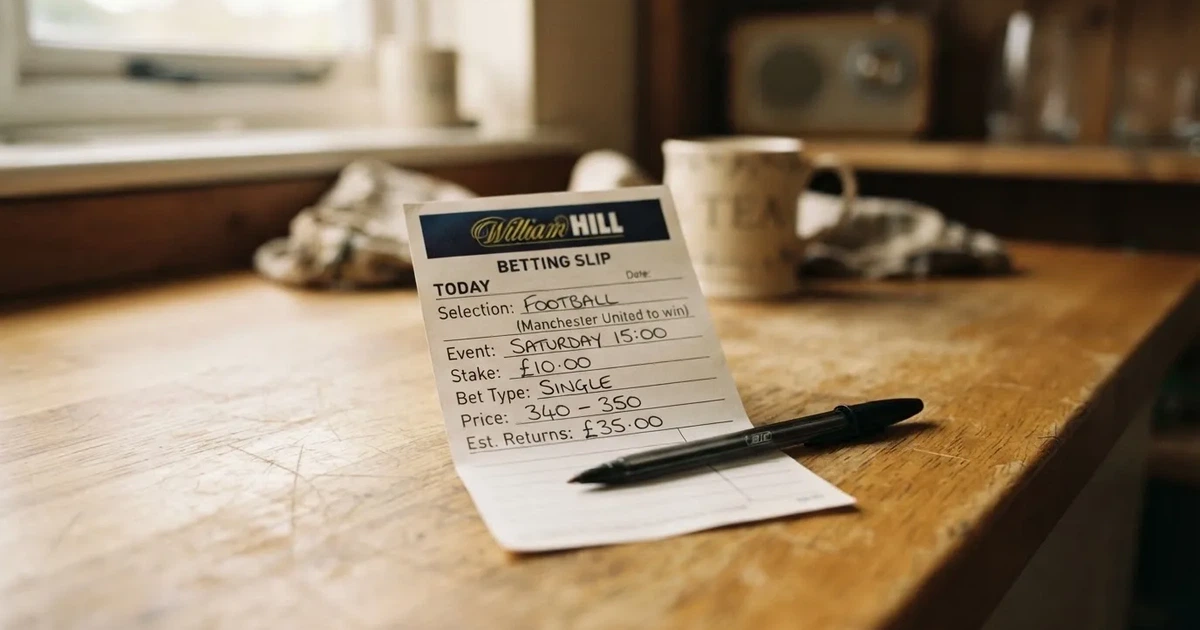
Spread betting is the part of the betting market where the stake is the wrong thing to focus on. The stake is what the bettor risks per unit, but the loss is the stake multiplied by the number of units the result misses by. That distinction is the heart of every decision a bettor makes on this side of the market, and it is the part the welcome offer does not advertise. A £10 fixed-odds bet either wins a multiple or returns the stake; a £10 spread bet at a football Supremacy line can return £30 — or lose £50, £70 or more, depending on how wrong the call is. The mechanics have not changed in the eighty years since Charles K. McNeil, a Connecticut maths teacher turned Chicago bookmaker, first wrote a spread on a chalkboard in the 1940s, but the platforms offering them in Great Britain have multiplied beyond recognition.
This page works through what UK sports spread betting costs a reader in 2026, who is licensed to take that money, and which of the reviewed operators are worth a closer look for which kind of punter. The ranking and the comparison sit near the middle so the groundwork is laid first; the angle of the page is cost, and the cost story runs through every section.
Why Spread Betting Demands a Different Set of Safeguards
The single sharpest fact about sports spread betting is that the loss is not capped at the stake. With a fixed-odds bet the worst that happens on any single selection is losing what was put down; on a spread bet the worst that happens is the stake multiplied by the distance between the result and the chosen level. Spreadex’s own homepage carries the warning that spread betting losses can exceed the deposit, and the same caveat sits in every responsible spread-betting company’s terms. That line is not boilerplate. A football Supremacy quote of 0–2 goals with a stake of £10 a goal means a 3–0 home win pays £60 and a 4–1 away win costs £50; a cricket runs spread of 340–350 with £10 a run means a score of 400 pays £500 and a score of 300 costs £500. The shape of the risk is symmetric in principle but asymmetric in practice because most sporting results cluster near the quoted line, and the tail outcomes — the very high and very low scorelines — are precisely where the largest swings happen.

That asymmetry is why the responsible-gambling cluster sits first on this page. The whole shape of the product turns on it. A reader who treats a £10 stake as a £10 ceiling on the day’s loss has misunderstood the bet before placing it.
How the Loss Can Run Past the Stake
Two mechanics drive the unlimited-loss feature. The first is settlement by difference: profit or loss equals the stake multiplied by the number of units the result differs from the chosen level. There is no cap on how many units a sporting result can be away from a quoted line, so there is no cap on how much can be lost. The second is leverage. In financial spread betting, collateral is typically 5–10% of total exposure; in sports spread betting the deposit works as that collateral, and the platform is exposed to the full difference between result and line. A small deposit can support a position several times its size, and a small wrong call can wipe the deposit and more.

This is the reason every spread-betting platform licensed in Great Britain runs GAMSTOP enrolment as a licence condition, and the reason the platforms emphasise stake-sizing rules and stop-loss tools in their onboarding. The product rewards discipline precisely because it punishes its absence.
The Practical Safety Net
Three layers of protection are worth naming up front. First, GAMSTOP is the multi-operator self-exclusion scheme for online betting in Great Britain; enrolment is mandatory for every licensed remote operator, and periods run from six months to five years, with a further seven-year hold after the minimum period ends. Second, licensed platforms operate a financial vulnerability check: once deposits net of withdrawals exceed £150 in a rolling 30 days, a public-record search — bankruptcy or county-court judgments — runs before further deposits are accepted. Third, every licensed operator offers a deposit limit the customer can set themselves; the operator cannot remove it without the customer’s consent, and the first phase of tighter rules on those limits has been in place since 31 October 2025, with a second phase postponed to 30 September 2026. Help lines run through GamCare, the National Gambling Helpline, GambleAware, NHS gambling clinics and Gamblers Anonymous.
Why a Smaller Bankroll is a Tighter Constraint
The product scales linearly with the stake per unit, and the stake per unit is the budget-control lever the bettor actually holds. A punter with a £200 bankroll placing £5 a goal on a Supremity line of 0–2 is exposed to a maximum loss per match of £5 times the number of goals by which the home side wins. With realistic goal margins that is rarely more than £15 or £20; with a five-goal blowout it is £25; with a freak seven-goal margin it is £35. The same punter doubling the stake to £10 doubles every one of those numbers. The first habit a careful spread bettor develops is sizing the unit so that the worst plausible result costs no more than a defined share of the bankroll — often between 5% and 10% — and never sizing up after a loss to “chase back”. The platforms cannot enforce that discipline; the bettor has to.
Spread Betting Tips, Tipsters and the Honest Answer
The internet is full of “best bets against the spread” lists, “NFL spread picks” and tipsters promising returns on sports spread bets. The honest answer is short: tipsters are paid to sound certain, and certain is the one thing nobody can be. A spread bet is a contract whose payoff is a function of how wrong or right the prediction turns out to be, and the difference between a good tipster and a bad one is the average distance between the tipster’s line and the actual result. That distance is small in the long run for the best operators and large for the worst, but it is never zero, and it is never knowable in advance for any single match. The point of a tipster subscription is to buy an edge, not to buy a forecast.
What a Tipster Can and Cannot Add
What a tipster can add is research time. A serious football NFL handicapper watches tape, tracks injury reports and adjusts for weather; a cricket spread bettor tracks pitch type, overhead conditions and team news; a horse-racing spread bettor studies form, going and jockey bookings. None of that makes the tipster right; it makes the tipster’s average distance from the result smaller than a casual fan’s. Across enough selections the average compounds into a real edge, and a real edge is the only thing a tipster is selling. A spread bettor who treats a tipster’s pick as a stake-sizing input — small stake when the tipster has a thin edge, larger stake when the tipster has a strong one — is using the service properly. A spread bettor who treats a tipster as a forecaster will lose.
Why NFL, NBA and World Cup Picks Get the Most Air
North American leagues — NFL, NBA, college football and basketball — are where the bulk of the spread-betting tipster industry lives, for two reasons. First, the schedules are dense and the data is public; a tipster with a model can grind through hundreds of picks a season and the law of large numbers works in their favour. Second, the bookmaker’s margin on point spreads is small — typically 4.55% on a -110 / -110 line — so a real edge translates into real profit. World Cup spread betting, Premier League spread betting and Champions League spread betting attract fewer tipsters because the spreads are wider and the bookmaker’s margin is larger; a 6% to 8% margin eats any modest edge a tipster can produce, and the tipster industry stays away in droves. The Premier League and the NFL are the two markets where the marginal tipster is worth listening to; the World Cup final is the one where the bookmaker has the structural advantage and the tipster does not.
Bankroll Strategy is the Underrated Part
Bankroll strategy is the underrated half of spread betting, and it is the half that decides whether a bettor survives the cold streaks every spread bettor hits. Three rules do most of the work. First, never stake more than a fixed percentage of the bankroll on a single selection, regardless of confidence. Second, never raise the unit size to recover losses; that is the gambler’s fallacy wearing a spread-betting suit. Third, keep a written record of every selection, the stake, the closing line and the result; a tipster’s edge is visible in that record over a season, and a bettor who does not keep one is betting blind. The platforms offer stop-loss tools and deposit limits for a reason, and a careful bettor uses them as the floor, not the ceiling.
Bet Types, Markets and the Mechanics Behind the Spread
Spread betting covers more ground than the standard point-spread line. Each variant settles the same way — by multiplying the stake by the distance between result and chosen level — but each quotes a different number, and the bettor’s job is to read what that number actually means.
Buying and Selling the Spread
The vocabulary splits cleanly in two. Buying the spread means betting that the result will be higher than the quoted level; selling means betting that the result will be lower. On a football Total Goals line of 2.7–2.9, buying at 2.9 wins if three or more goals are scored and loses if fewer than three are scored; selling at 2.7 wins on two goals or fewer and loses on three or more. The middle of the quoted range is roughly the market’s view of the most likely outcome, and the spread itself is the bookmaker’s margin plus a safety buffer. Reading the spread is reading the margin: a tight spread on a popular market means a small margin; a wide spread on a niche market means a large one.
Spread Betting Markets Worth Naming
A handful of markets carry the bulk of the volume. Supremacy quotes the expected goal margin between two football sides; the spread is the bookmaker’s view of that margin. Total Goals quotes the expected number of goals in a match; the spread sits around the bookmaker’s projected total. Winning Margins quotes the expected winning goal margin for the favourite; the spread is wider because blowouts are less common than narrow wins. In cricket, the Runs market quotes the expected team score; in horse racing, the Race Indexes quote a composite of finishing positions of named horses; in rugby, the spread books the expected points margin between two sides. Each market settles by the same formula and each costs the same kind of mistake, but the spreads and the bookmaker’s margins are very different.
Fixed Odds Versus Spread Betting
The honest comparison is on three axes: risk, reward and complexity. Fixed odds cap the loss at the stake and the profit at stake × (odds − 1). Spread betting wins on the result minus the chosen level multiplied by the stake, with no cap on either side. Fixed odds are simpler because the contract is closed at the price quoted on the betting slip; spread bets require a mental model of how wrong the bettor might be. Fixed odds win small and often on short-priced favourites; spread bets win large and rarely on well-read lines. For a bettor who wants a binary outcome and a closed risk, fixed odds are the cleaner product. For a bettor who has a strong view of how much a side will win by, spread betting offers more upside at the cost of more downside.
Point Spreads, the North American Variant
Point-spread betting is the North American cousin of the UK sports spread bet, and the differences are sharp enough to deserve their own paragraph. In a point spread the favourite is given a handicap the underdog is given the same handicap in reverse; a -7 favourite has to win by more than seven points for a spread bet on them to pay. The standard price is 10 to 11 (-110), meaning £11 wins £10; the bookmaker’s margin is the 4.55% baked into that price. Where the UK sports spread and the North American point spread really diverge is on ties: a UK Total Goals spread bet on 2.9 settles on the next decimal of goals, with no exact tie; a North American point spread landing exactly on the number is a push, and the stake is refunded. The two products feel similar and price very differently, and a bettor moving between them has to reset the mental model rather than translate it.
Rugby Spread Betting, Cricket Spread Betting and the Tail Risk
Two markets deserve a mention because the tail risk is genuinely different. Rugby spread betting tends to quote narrower point margins because rugby scores cluster tightly; the spread is small, the bookmaker’s margin is small, and the swing on a single match is limited. Cricket spread betting on team runs has a wider spread because team scores swing more than rugby margins, and the difference between a 250 all out and a 350 all out is the difference between a £1,000 win and a £1,000 loss on a £10-a-run stake. The shape of the risk depends on the sport, and a bettor who picks markets by familiarity rather than by understanding of the spread is paying a margin to learn a lesson.
The Sports and Tournaments Where Spread Betting Actually Works
Spread betting is not equally good across every sport. Some markets price tighter than others, some have more reliable data, and some are dominated by tipsters who grind out small edges over long seasons.
Football — Premier League, Champions League and Internationals
Football is the biggest single sport for spread betting in Great Britain, and the Premier League is the biggest single competition. The spreads on Premier League matches are the tightest in football because the data is the deepest; bookmakers can model expected goals, expected assists and expected shots on target with real precision, and the spreads on Supremacy, Total Goals and Winning Margins are typically less than a goal. Champions League and Europa League matches price slightly wider because the data is thinner; internationals price wider still. The bettor’s edge in football is reading the data the bookmaker has not priced into the line — a manager change, a key injury, a tactical shift — and translating that into a stake size.
Horse Racing and the Race Indexes
Horse racing is the second-largest UK spread-betting market, and the Race Indexes are the flagship product. Sporting Index quotes indexes that settle on the finishing positions of named horses in major races, and the spreads tighten around the favourites and widen on the longer-priced runners. The bookmaker’s margin on the favourite indexes is small; the margin on the outsider indexes is much larger. The shape of the bettor’s edge is reading form and going more accurately than the market, which means studying the Racing Post, watching the track and noting the jockey bookings. A small edge compounded over a season is the only way to beat the indexes; a punt on the favourite at the quoted spread is a slow bleed.
Cricket, Rugby, NFL and NBA
Cricket spreads book team runs and player performances; the spreads are wider than football but the data on pitches, conditions and player form is rich enough to support a model. Rugby spreads are tight because scores are predictable. NFL and NBA spreads are the North American point-spread markets and price on a -110 / -110 line with a 4.55% margin; the data is dense, the tipster industry is large, and the edge for a careful bettor is real over a long season. World Cup spread betting pulls all four together for a few weeks every four years, and the spreads widen because the data is patchy and the bookmaker’s margin is correspondingly larger.
Where the Edge is Smallest
The honest word on markets with small edges: bookmakers’ margins make the difference. A 2% margin on a popular market means a 2% drag on every bet; a 8% margin means an 8% drag. The bettor who picks markets by their own familiarity rather than by the bookmaker’s margin is paying tuition fees to a market that does not want to teach. The discipline is to spend the size of the bet where the bookmaker’s margin is smallest and the bettor’s information edge is largest, not where the bettor feels most at home.
How a Spread Bet Actually Works From Selection to Payout
The mechanics of placing a spread bet are short, but each step has a cost a reader should see before signing up.
Picking the Market and Reading the Spread
The first step is choosing a market — Supremacy, Total Goals, Winning Favourites, a Runs line, a Race Index. The platform quotes a spread: two numbers separated by a dash, the lower being the sell price and the higher being the buy price. The middle of that range is roughly the bookmaker’s view of the most likely outcome. A bettor who buys at the top is betting the result will beat the bookmaker’s view; a bettor who sells at the bottom is betting the result will fall short of it. The choice of where to buy or sell inside the spread is the bettor’s stake-sizing decision: closer to the middle means a smaller stake and a smaller win; further from the middle means a larger stake and a larger win, with a correspondingly larger downside.
Choosing the Stake Per Unit
The stake per unit is the single most important decision in spread betting. It is the multiplier on every unit of distance between the result and the chosen level. A £5 stake on a football Supremacy line of 0–2 goals means £5 for every goal of margin between the two sides; a £10 stake doubles that. The right stake is a function of the bankroll, the spread’s historical volatility, and the bettor’s confidence; the wrong stake is the one that wipes the bankroll on a single freak result. Most platforms allow the bettor to set a default stake limit during onboarding for exactly this reason.
Settling the Bet
Settlement is automatic at the close of the event. The result is compared to the chosen level, the difference is multiplied by the stake, and the win or loss is credited or debited to the account. On a Total Goals line of 2.7–2.9 with a stake of £10 a goal, a 3–1 finish pays 10 × (3 − 2.9) = £1; a 0–0 finish costs 10 × (2.9 − 0) = £29. The arithmetic is the same for every market and every sport, and the bettor who cannot do it before placing the bet has not finished placing the bet.
What Happens in a Tie or a Void
A North American point spread landing exactly on the number is a push and the stake is refunded. A UK sports spread does not have that feature — the spread is quoted in decimals that the sport does not produce, so an exact tie is impossible by construction. A void or postponed event is settled under the platform’s house rules; most platforms void the bet and refund the stake, but a small number apply a Rule 4-style deduction or settle on the official result when play resumes. Reading the house rules before placing the bet is the cheapest piece of research a bettor does all week.
The Ten Platforms Reviewed and the Criteria That Ranked Them
The ranking that follows is built on five criteria, and the criteria are stated here so the ordering has somewhere to be argued with.
The Criteria
The first criterion is Gambling Commission licensing. Every reviewed platform holds a remote general betting standard (real events) licence, and the licence number is quoted from the Commission’s public register, not from the operator’s marketing. The second criterion is spread-betting product depth. Some platforms quote a full range of spread markets — Supremacy, Total Goals, Winning Margins, Runs, Race Indexes; others offer only a handful. The third criterion is stake and loss controls: deposit limits, stop-loss tools, time-out features, GAMSTOP enrolment, the financial vulnerability check at the £150 monthly threshold. The fourth criterion is pricing transparency: how tight the spreads are on the most popular markets and how visible the bookmaker’s margin is. The fifth criterion is suitability: which kind of bettor the platform fits — the football specialist, the casual sports punter, the horse-racing reader, the data-driven cricket bettor.
The Angle: Cost
The angle of this page is cost, and cost shows up in three places. First, the welcome offer — what the qualifying bet costs, how the free bet expires, what the minimum odds are, and whether the free bet stake is returned on a win. Second, the long-run cost of the spread — the bookmaker’s margin on the most popular markets, which is the drag on every bet the bettor makes. Third, the product’s structural cost — the fact that losses can exceed the deposit and the discipline required to keep them inside the bankroll. Every operator write-up closes on one of these three angles, not on the operator’s marketing.
A Note on Welcome Offers
Every operator below runs a welcome offer, and every welcome offer is described qualitatively rather than as a code or a claimed promotion. The offers differ in their qualifying-bet minimum, the minimum odds, the free-bet expiry and whether the stake is returned on a win. Reading the platform’s own terms before claiming is the cheapest research a reader does all week, and a reader who acts on the offer alone without reading the terms is paying for the privilege of finding out what the offer actually costs.
Spreadex
Spreadex is regulated by the FCA for financial spread betting and by the Gambling Commission for fixed-odds betting, with Commission account 8835 against licence holder Spreadex Limited. The platform offers a wide range of sports spread markets — football Supremacy, Total Goals, Winning Margins and Winning Favourites, plus cricket, rugby, golf and racing — alongside its fixed-odds sportsbook. The welcome offer is £60 in free bets for a £10 fixed-odds qualifying bet, with the free bets usable across both fixed odds and spread betting and the qualifying bet to be placed within 28 days of opening the account. The qualifying bet is at minimum odds of 1/2 and any winnings from the free bets exclude the stake. The cost of the offer is the qualifying bet, which has to be settled before the free bets unlock; a bettor who backs the favourite at 1/10 to settle the qualifying bet pays a 9% drag to the bookmaker’s margin for the privilege of using the free bets. The free bets expire seven days after issue. The product is the broadest spread-betting book in the reviewed set, and the cost is the broad spread of markets priced into a margin that is competitive on football and wider on niche sports. A versatile choice for the existing fixed-odds player looking to explore spread markets under one roof.
Sporting Index
Sporting Index is the second of the two pure spread-betting platforms in the reviewed set. Commission account 27343 against licence holder Sporting Index Limited. The product is spread-only on the sports side, with a deep range of football, cricket, rugby, racing and golf markets; the Race Indexes are the platform’s flagship product and price tighter than most rivals. The welcome offer is a £10 fixed-odds qualifying bet at minimum odds of 1/2, unlocking three £10 fixed-odds free bets, three £5 Total Goals spread bets, three £5 Winning Favourites spread bets and a £1 Race Index spread bet; the qualifying bet cannot be placed in-play or cashed out early, which is a real constraint on a careful bettor. The cost of the offer is the qualifying bet plus the structure of the package — a punter who uses the fixed-odds free bets efficiently gets the most out of it; a punter who reaches for the spread bets without a model is paying the bookmaker’s margin on markets where the edge is hardest to find. The platform’s spreads on football Supremacy are competitive, the spreads on the Race Indexes are tighter than the field, and the product is purpose-built for the spread bettor who wants the platform to do spread betting rather than fixed odds with spread markets on the side. A strong choice for the racing analyst who wants deeper spread markets, though less suited to the football-only punter.
Coral
Coral is the Entain March consumer, with Commission account 54743 against licence holder LC International Limited; the licence covers remote general betting standard (real events) and remote betting intermediary, the latter for the Coral-owned betting exchange infrastructure. The welcome offer is “Get £40 in Free Bets when you bet £20”: a deposit and sports bet of £20 or more at minimum odds of 2.0 (1/1), with £40 in free bets issued within seven days and expiring seven days after issue, for new GB customers who opt in. Standard promotion terms apply to the qualifying bet and its seven-day clock. The free-bet stake is not returned on a win. Coral’s spread-betting coverage is thinner than Spreadex’s or Sporting Index’s — the platform is fundamentally a fixed-odds bookmaker with a spread-betting section, and the spreads on the markets it does offer price wider than the dedicated spread platforms. Reliable for the fixed-odds player wanting an occasional spread punt, though clearly not intended for the high-frequency spread bettor.
Sky Bet
Sky Bet is operated by SBG Sports Limited under Commission account 67370. The welcome offer is £30 in free bets credited as three £10 free-bet tokens after a deposit of at least £5 and a first single or each-way bet of at least 5p at minimum odds of 1/1 or greater. Promotion terms apply to the qualifying bet, which has a higher 1/1 entry point than the specialist platforms. The free-bet stake is not returned on a win. The spread-betting coverage is thin — Sky Bet is a fixed-odds bookmaker with a small spread section, and the markets it does offer price wider than the dedicated spread platforms. Solid for the existing Sky user who wants to try spread markets occasionally; perhaps limited for someone prioritizing spread-only volume.
Dabble
Dabble is operated by Dabble Sports UK Ltd under Commission account 65677. The welcome offer is “Bet £10, Get £10 in Free Bets” on a first deposit for new customers, with minimum odds applying, a seven-day free-bet expiry and the stake not returned. The qualifying bet and expiry terms form the bulk of the promotion’s cost; a bettor who uses the platform lightly will struggle to clear the free bets in time. The spread-betting coverage is the thinnest in the reviewed set — Dabble is a social-betting fixed-odds app with a small spread section that prices wide on the markets it offers. Worth it for the social-betting punter who values the chat and copy-bet features over spread-betting depth; not the right choice for a spread bettor with a season-long model.
Swifty Sports
Swifty Sports is operated by Swifty Global (UK) Ltd under Commission account 58957. The platform offers Best Odds Guaranteed, Cash Out on horse racing and football markets, daily price boosts, live streaming and in-play betting; Bet Builder is listed as coming soon. The welcome offer is described qualitatively rather than quoted, and the qualifying bet, minimum odds and free-bet expiry should be checked on the platform’s terms page. The spread-betting coverage is thin — Swifty is a fixed-odds bookmaker with a small spread section — and the spreads on the markets it does offer price wide. Good for the stream-and-boosts fan, but unlikely to satisfy someone looking for a deep spread-betting experience.
Betfred
Betfred is operated by Petfre (Gibraltar) Limited under Commission account 39544. The app features Bet Builder, Sub Switch, Racing Post data, Extra Places, live casino and bingo; the spread-betting coverage is thin and the markets price wide against the dedicated spread platforms. The welcome offer is described qualitatively rather than quoted, and the qualifying terms vary by promotion. Useful for the horse-racing follower who likes extra place options; arguably too basic for the pure spread-betting enthusiast.
Lottoland
Lottoland is operated by EU Lotto Limited under Commission account 38991, licensed for customers in Great Britain. The product is unusual for a spread-betting list: the platform combines casino, lottery betting, sports betting and scratchcards under one roof, and the spread-betting coverage is the thinnest of the reviewed set. An interesting multi-product option for the casual player, but the spreads and market variety cannot match a dedicated spread platform.
888sport
888sport is operated by 888 UK Limited under Commission account 39028. The platform offers pre-match and in-play betting, Cash Out, Bet Builder, racing streams, BetFinder form tools, a live bet feed and daily boosted odds; the spread-betting coverage is thin and the markets price wide against the dedicated spread platforms. The right fit for the punter who wants form tools and streaming alongside a casual spread interest, rather than pure spread-betting depth.
VBet
VBet is operated by SCGO Limited under Commission account 44662. The app offers Bet Builder, pre-match and in-play betting, live streaming and a live calendar with results and stats; the spread-betting coverage is thin and the markets price wide against the dedicated spread platforms. A practical companion for the stats-driven bettor, though it lacks the breadth of specialized spread-only platforms.
The Calculation That Frames the Cost
The bookmaker’s margin is the single number that frames every other cost on this page. On a two-way market priced at 1.90 / 1.90 (fractional 9/10), the payout share for one unit staked on either outcome is 1 ÷ (1 ÷ 1.90 + 1 ÷ 1.90), which works out to 0.95, or 95%. The margin — what the bookmaker keeps of every unit bet on this market — is 1 minus the payout share, which is 0.05 to 0.06 depending on rounding, in the band of roughly 5% to 6%. That band is the drag on every bet the bettor places: a punter staking £10 on either outcome loses an average of 50p to 60p to the bookmaker’s margin over the long run, before any edge or tipster cost is counted. The bettor’s edge has to clear that band before any profit is made, which is why tipsters who promise returns without showing their closing-line average are selling hope rather than edge.
The practical reading is short. The five per cent to six per cent band is the floor on the bookmaker’s margin in the most competitive markets on this page; the spreads on Premier League football and the major horse-racing indexes price inside it. Wider-spread markets — niche sports, lower-league football, smaller cricket leagues — price at 8% to 12% margins, and a bettor’s edge has to clear those bands before any profit is made. The discipline is to spend the size of the bet where the bookmaker’s margin is smallest and the bettor’s information edge is largest; the rest of the work is stake sizing and bankroll management.
How Spread Betting Fits Inside UK Gambling Law
The legal frame around UK spread betting is sharper than it looks at first glance, and the sharpness comes from the split between the Gambling Commission and the Financial Conduct Authority.
The Two Regulators and Their Remits
Financial spread betting in Great Britain is regulated by the Financial Conduct Authority, the same regulator that oversees the rest of the UK financial services industry; that is why Spreadex runs under both an FCA registration and a Commission licence. Sports spread betting offered by a bookmaker sits with the Gambling Commission under the Gambling Act 2005, the same Act that covers fixed-odds sportsbooks and betting exchanges. The Commission is a non-departmental public body sponsored by the Department for Culture, Media and Sport; it licenses the whole commercial market in Great Britain — England, Scotland and Wales — under the Gambling Act 2005 as amended by the Gambling (Licensing and Advertising) Act 2014. Northern Ireland is outside the Act and runs under its own older law, so a “GB-licensed” operator is licensed for England, Scotland and Wales, not for Northern Ireland.
The Test of a Real Licence
The Commission’s public register can be searched by business name, trading name, domain or account number, and it is the whole test of whether a brand holds a licence. The licence categories in the reviewed set are remote general betting standard (real events), the standard remote sportsbook licence, and remote betting intermediary, the licence for betting exchanges; every reviewed platform holds the former. The register lists the licence holder, which is often a parent company, and the trading name, which is the brand on the front of the website. Several brands can run under one licence holder — Ladbrokes and Coral under LC International, Paddy Power and Betfair under Flutter — so the licence is the licence, not the brand, and a reader who sees two brands with the same account number is looking at one operator, not two.
What the Licence Buys the Bettor
A Gambling Commission licence buys the bettor four things. First, identity verification before the first deposit, which means no anonymous play at a licensed site and which catches the under-18s and the self-excluded. Second, GAMSTOP enrolment as a licence condition since 31 March 2020, which means a self-exclusion covers every licensed platform rather than one at a time. Third, financial vulnerability checks at the £150 monthly threshold, which run a public-record check before further deposits are accepted. Fourth, a complaints route through the Commission and approved alternative dispute resolution, which a bettor can use if the operator refuses to settle a dispute in good faith. None of those protections apply at an unlicensed site, and the bettor who plays at one loses all four.
Advertising, Bonuses and the 19 January 2026 Rules
Advertising for gambling in Great Britain is not licensed by the Commission; it runs through the CAP Code (non-broadcast) and BCAP Code (broadcast), enforced by the ASA, alongside the LCCP marketing conditions. The CAP Code section 16 keeps marketing socially responsible, keeps it from being of strong appeal to under-18s, and bars anyone who is or seems to be under 25 from appearing gambling or playing a significant role in a gambling advertisement (the rule concerns who may be in the ad, not who may bet). Promotion rules in force since 19 January 2026 cap wagering requirements on bonuses at 10x — a £10 bonus at 50x needs £500 of bets; under the cap no more than £100 — and ban mixed-product promotions that require gambling on two or more product types. Whether the cap applies to free bets with no wagering condition is not established, and a reader who is unsure should read the offer terms before claiming.
Tax and the Player’s Position
Betting winnings in Great Britain are tax-free for the player; the tax is the operator’s, not the customer’s, and a reader who sees a deduction labelled “tax” on a betting slip is looking at General Betting Duty being passed through, not at a charge on the customer. General Betting Duty is currently 15% on the operator’s gross profits from general betting, and from 1 April 2027 a new remote betting rate of 25% applies within it, while remote bets on UK horse racing, self-service betting terminal bets, pool betting and in-person betting stay at 15%. Spread betting has its own rates: 3% on financial spread bets and 10% on other spread bets, levied on the operator. Whether operators pass duty on through odds is not established, and no claim should be made about the customer’s exposure.
The Offshore Warning
A GB licence is compulsory at the point of consumption, which means an operator whose remote facilities are used in Great Britain needs a Commission licence wherever it is based. Providing gambling facilities in Great Britain without the licence the Act requires is an offence under section 33 of the Gambling Act 2005, aimed at the operator; no offence aimed at a customer who merely bets on an unlicensed site was found. The bettor who plays at an unlicensed site loses the four protections a licence buys — no GAMSTOP coverage, no Commission complaints route, no approved dispute resolution, no British consumer redress if funds are withheld — and is not bound by the 10x bonus cap or the £150 vulnerability check. The honest framing: licensed means checks, limits, GAMSTOP, the bonus cap, but also verification before the first bet; unlicensed means none of those protections and possible loss of funds. Neither is “the safe choice” by default; the licensed choice is the choice that keeps the bettor inside the British safety net, and the unlicensed choice is the choice that takes the bettor out of it.
The Welcome Offers Side by Side
The table below lines up the ten reviewed platforms on the criteria that decide the cost of the welcome offer: the qualifying bet, the minimum odds, the free-bet value and the free-bet expiry. Cells where the platform’s own terms are not confirmed are marked with a dash.
| Platform | Qualifying bet | Minimum odds | Free bets | Free-bet expiry |
|---|---|---|---|---|
| Spreadex | £10 fixed odds | 1/2 | £60 across fixed odds and spread | 7 days from issue |
| Sporting Index | £10 fixed odds | 1/2 | 3× £10 fixed odds, 3× £5 Total Goals spread, 3× £5 Winning Favourites spread, 1× £1 Race Index spread | 7 days from issue |
| Coral | £20 fixed odds | 2.0 (1/1) | £40 | 7 days from issue |
| Sky Bet | 5p fixed odds | 1/1 | 3× £10 | 7 days from issue |
| Dabble | £10 fixed odds | not established | £10 | 7 days from issue |
| Swifty Sports | not established | not established | not established | not established |
| Betfred | not established | not established | not established | not established |
| Lottoland | not established | not established | not established | not established |
| 888sport | not established | not established | not established | not established |
| VBet | not established | not established | not established | not established |
The table shows the pattern clearly. The dedicated spread-betting platforms — Spreadex and Sporting Index — price the qualifying bet at the minimum stake and the minimum odds (1/2, fractional 9/10) so the qualifying cost is small; Coral and Sky Bet require higher minimum odds (1/1) at higher stakes, which raises the qualifying cost in margin terms. The free-bet expiry is uniform at seven days from issue across the platforms that publish a number, and the free-bet stake is not returned on a win at every platform that publishes the term. The five platforms whose research did not establish the welcome terms are described qualitatively elsewhere on this page, and a reader who wants the numbers should check the platform’s own offers page before claiming; the cells marked with the no-data marker are the honest answer to “what does the platform not say in research”, not an apology for the absence.
Frequently Asked Questions
What is sports spread betting?
Sports spread betting is a form of wagering where the payoff depends on how accurate the prediction is, not on a simple win-or-lose outcome. The bettor buys or sells at a quoted level, and the profit or loss is the stake multiplied by the number of units the result differs from that level — symmetric in design and asymmetric in practice, with no cap on the loss beyond the bettor’s ability to keep paying.
How to spread bet on football?
The bettor chooses a market — Supremacy (expected goal margin), Total Goals (expected match goals) or Winning Margins (expected winning goal margin) — reads the quoted spread and decides whether to buy (betting the result will be higher) or sell (betting it will be lower). The stake is set per unit, the bet is placed at the chosen level inside the spread, and the bet settles at the close of the match on the difference between the result and the chosen level multiplied by the stake.
What is sport spread betting?
Sport spread betting is the broader category under which football, cricket, rugby, horse racing, golf and others sit; each market quotes a spread on a different measure of the result, but every spread bet settles the same way — by multiplying the stake by the distance between the result and the chosen level. The product is regulated in Great Britain by the Gambling Commission for sports and by the Financial Conduct Authority for financial spread bets on indices and shares.
How can it be checked that a bookmaker holds a Gambling Commission licence?
The Commission’s public register can be searched by business name, trading name, domain or account number, and the search returns the licence categories, the licence holder and the trading names under the licence. Every platform reviewed on this page is listed on that register against the account number quoted in the operator write-up above, and a reader who wants to confirm can search the register using the platform’s account number.
How is the return on a bet worked out from the stake and the odds?
For a fixed-odds bet, the return equals the stake multiplied by the odds (decimal), and the net profit is the stake multiplied by (odds − 1). For a spread bet, the return is the stake multiplied by the difference between the result and the chosen level, with no cap on either side and no fixed price on the betting slip — the bettor’s profit or loss is settled when the event closes and the difference is calculated.
Betting sites & exchanges – AI Betting
Content created by the «AI Betting» team
