
UFC Betting Online in the UK
 Available in US
Current as of 26 October 2026 and verified against the Gambling Commission’s public register.
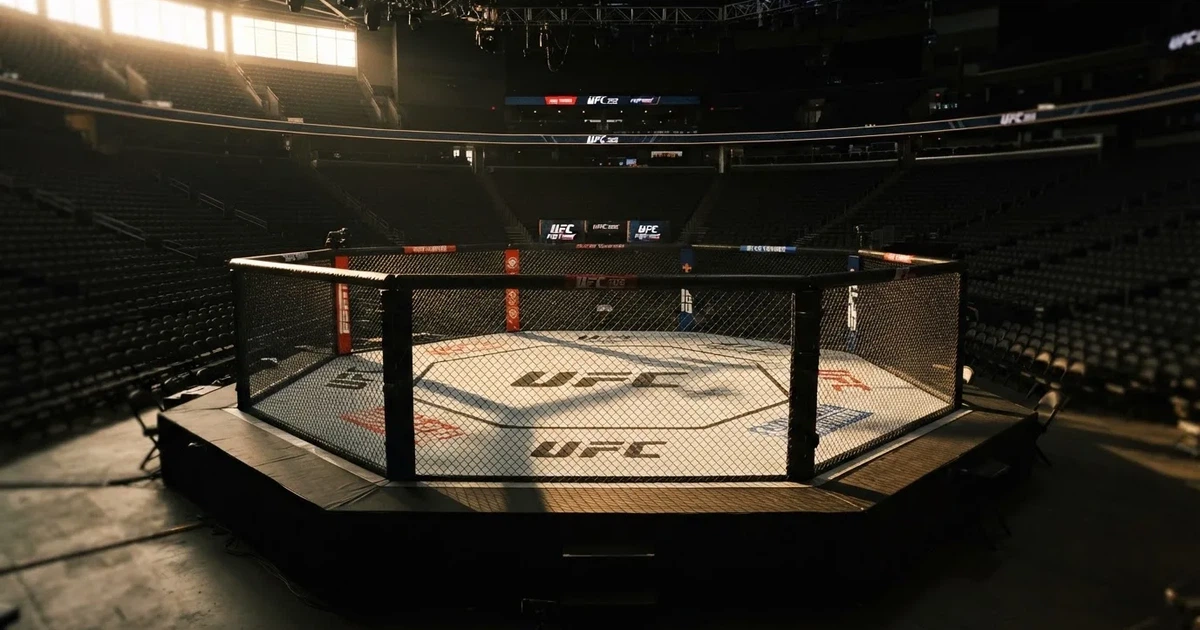
The Ultimate Fighting Championship runs more fights in a year than almost any other sport, and each event carries enough named markets to fill a betting slip several times over. The job of this page is to spell out who is licensed to take those bets in Great Britain, what the markets actually look like, what the bonus language means in pounds and pence, and where a UFC bettor can and cannot go. UFC bouts have their own structure — five-minute rounds, ten-point must scoring, draws that keep the belt — and that shape is what makes MMA markets behave differently from football or horse racing. Read it once before placing anything on fight night.
Why Bonuses Are Not “Free” — What UFC Offers Actually Cost
The poster on the front page of any bookmaker says something like “Free Bet” or “Bet £10 Get £15”. UFC punters who only read the headline walk away thinking the offer is a giveaway. The fine print tells a different story: a free bet whose stake is not returned, a welcome bonus that has to be turned over several times before any of it can be withdrawn, a minimum price on every leg of an acca that has to qualify. Wagering requirements on bonuses are capped at ten times the bonus amount under the Gambling Commission’s social responsibility code in force since January 2026 — so a £10 bonus asks for £100 of qualifying bets at minimum — and mixed-product promotions (an offer that requires a bet on football to release free spins, say) are banned outright. A price boost is not a bonus either: it is a one-off on a named selection, settled at the new price, no rollover.

The shape of a UFC welcome offer is almost always the same. Hollywoodbets gives back the stake of a first qualifying losing accumulator as a free bet of up to £30 — the deposit is £10, the acca needs three legs at minimum odds of 4/1 (5.00 decimal), and settling has to happen within seven days of registration. BetGoodwin runs “Bet £10 & Get £15 in Free Bets”, split three ways into a £5 sports single, a £5 acca and a £5 Sub-Cover bet. The £15 nominal headline is paid in three pieces, each with its own rules on what counts as a qualifier.
The arithmetic behind those offers is what decides whether taking one is worth it. A free bet whose stake is not paid back is worth roughly its face value multiplied by (odds − 1) ÷ odds, then scaled by the margin of the market it is used on. Put a £10 free bet on a 5/1 (6.00 decimal) selection in a market with a 5% margin and the offer is worth, on average, somewhere in the region of seven pounds — not the ten the slip advertises, and certainly not the £30 headline one offer’s poster claims. The stake does not come back if the bet wins; the free bet is paid as winnings only. Anyone using a free bet should treat the headline figure as a ceiling, not a promise.
Beyond the headline, the conditions on bonuses tend to cluster around three points. First, the minimum price: most welcome offers require each leg of a qualifying bet at fractional odds of at least 1/2 (1.50 decimal), and acca insurance tends to require 4/1 or larger per leg. Second, the deadline: an offer that does not settle its qualifying bets within seven days, or whose free bet expires inside thirty, leaves the bonus dead. Third, the cap on winnings: even when the offer is cleared, the maximum that can be withdrawn is often capped — sometimes at the stake, sometimes at a multiple of it. Read the terms before claiming, not after the first bet has settled.
Operators also run ongoing promotions that are not part of any welcome package. Price boosts on named fights pop up on each card; an acca insurance refund gives the stake back as a free bet if one leg lets the rest down; a profit boost on a winning accumulator multiplies the return by a fixed percentage. None of those shift the long-run value of betting on the sport — they shift the shape of one weekend’s slip. The only thing that genuinely moves the long-run cost is the margin baked into every price.
How Each Bookmaker Plays on Mobile
Most UFC bets in Great Britain are placed from a phone, not a desktop. The difference matters: a betting site that loads quickly on a 4G connection, lets the bet slip stay open while odds refresh, and settles in-running markets without lag is the one the next fight will be bet on. Each of the ten licensed brands in this comparison runs its own mobile app, and most also offer a mobile browser version that mirrors the desktop product.
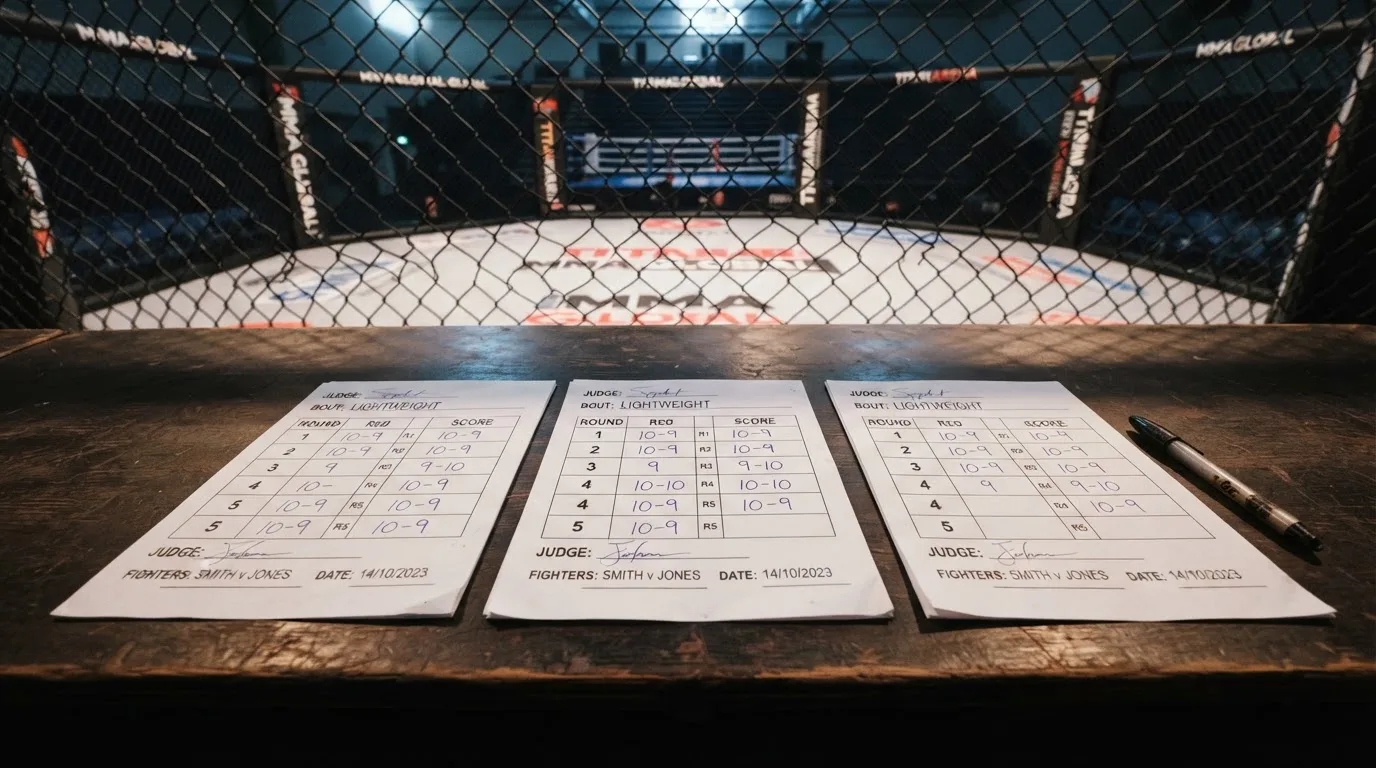
The well-known names — bet365, Betfair, William Hill — sit at the top of the UK download charts for a reason. Bet365 is the official global betting partner of the UEFA Champions League and trades on being the most downloaded sports betting app in the UK, which is the closest thing the market has to an objective reach figure. Betfair’s app does the unusual thing of carrying both sportsbook markets and an exchange, side by side, with live streaming of UK and Irish racing and football tucked into the in-play tab. Both have spent years on the kind of feature work — request-a-bet, partial cash-out, push notifications for price moves — that smaller apps cannot match.
The challenger apps behave differently. Midnite leads with an acca builder, popular accas and price boosts on the home page, with every boosted selection tagged with a maximum-stake limit so the punt cannot drift past what the boost will pay. DAZN Bet accepts deposits from £5 by debit card, Apple Pay, Paysafecard, Trustly or Skrill, and £20 by PayPal, with no processing fees — a useful benchmark for low-stake punters. Sporting Index leans into its dual product: punters switch between fixed-odds and spread betting from the same slip, with auto cash-out and multi-market combinations available on football.
A live UFC event has its own rhythm. The opening bell triggers a flood of bets; the markets slow during the one-minute rest between rounds; the outright markets lock a few seconds before the fight resolves. An app that handles that pattern smoothly — without dropping the connection in a 30-second gap between rounds, without freezing when a stream is on the same screen, without making the cash-out button take two taps longer than the price change — is the difference between a working live session and a frustrating one. The commonest complaint in user reviews of smaller MMA-focused books is not that they have fewer markets but that their in-play interface does not cope with the round-by-round structure of the sport.
Live UFC Betting and Cash Out — How It Actually Works
UFC fights are made for live betting. Three or five rounds of five minutes apiece, with a clear break between each, give the bookmaker enough natural pause points to reprice — and give the punter enough opportunities to take a position on the next round. Live UFC markets cover fight outcome, method of victory, next-round markets (finish in round X, points in round X), and occasionally totals on significant strikes landed, depending on the operator. Betfair Sportsbook lists in-play markets alongside Bet Builder and free live streaming on its app; Sporting Index runs in-play alongside auto cash-out on football markets.
Cash out is the lever that makes live betting practical. The bookmaker offers to settle the bet before the fight ends, at a price calculated from the current state of the match. A punter who took a price on the favourite before the fight and sees the under-round near-fall a knockdown can either trust the original position or take the cash-out number being offered. The cash-out price is always worse than fair value — the bookmaker keeps its margin on both ends of the trade — but it exists for the punter who wants certainty more than they want value.
The mechanics of UFC change how cash out ought to be used. A fight that has gone one round clearly to one fighter can look very different after one strong minute in the second — a fighter who has absorbed damage throughout the round is one takedown from a stoppage. The defensive punt in live UFC is to back the pre-fight underdog late, when the favourite has visibly tired, on the basis that a finish in any round is now in play. Cash out, used well, lets the backer of the original favourite lock in something close to the original return without waiting for the judge. Used badly, it is a slow drain on the bankroll: the bookmaker is repricing every few seconds, and a punter who cashes out every “if only it had won” slip is paying the margin twice.
Live UFC markets are also where the operator’s house rules matter most. Some bookmakers suspend betting on the outright market the moment a knockdown is confirmed; others keep the market open with a one-second delay. Some offer round-by-round method-of-victory; some offer only the overall fight. The shape of the in-play tab on fight night is mostly a function of which feed the bookmaker uses and how granularly it cuts the event data.
UFC Betting Tips, Predictions and the Limits of Strategy
The internet is full of UFC betting tips. Most of them are best ignored. A betting tip is a tipster’s opinion that a particular price on a particular fighter is worth taking; that opinion is no more reliable than the form table it sits on top of. UFC has fewer than 750 events in its history and a much smaller sample of fights at any given weight class. Statistical models built on that thin a base will look impressive on the page and behave like coin flips against the closing line.
What does work, and what almost no tipster sells, is the discipline of the bet itself. A bankroll rule — stake no more than one or two per cent of the bank on any single fight — protects against the long losing run that UFC inevitably produces. A price rule — take the bet only when the price is better than a defined threshold — turns the tipster’s “this is a good bet” into a verifiable claim: at odds of 3/1 (4.00 decimal) or longer, what has been the hit rate of bets at that level on this matchup? A market rule — pick one market (the method-of-victory market is the most underpriced, the outright is the most over-priced) and stick to it — produces a sample large enough to learn from.
For a beginner, the practical sequence is plain. Watch the weigh-ins to see the physical condition of both fighters; check the official UFC statistics page for the recent record in the matchup’s relevant striking range; pick a single market for the card; and refuse to bet the fight you care most about. The bias that comes from caring about the outcome is the one that empties accounts fastest. The advantage any disciplined bettor has over the market is consistency: doing the same thing across thousands of fights, in a market where most customers change what they bet on week by week.
Predictions in the section above describe what a UFC betting model can and cannot do, not who will win at UFC 334 or UFC 335. UFC 334 — Gane against Hokit at Madison Square Garden on 14 November 2026 — and UFC 335 — Oliveira against Lopes at T-Mobile Arena on 12 December 2026 — are both scheduled for five rounds as championship or main-event fights, and the markets on each card open several weeks before fight night. Whether a particular punter’s view of either fight is right is a question the closing line answers, not a tipster.
Markets, Odds and How a UFC Bet Settles
A UFC fight produces a small set of standard markets and a longer list of specialist ones. The outright winner — sometimes called “To Win the Fight” — is the simplest: pick the fighter, get paid at the listed price if they win. Method of victory is the second core market: knockout, technical knockout, submission, decision, or a draw/disqualification/no contest result. Over/under on the number of rounds is the third core market, with the line typically set at 1.5 rounds for a three-round bout and 2.5 rounds for a five-round bout. A “Go the Distance” market — yes/no on whether the fight reaches the judges — pairs with the round totals.
Specialist markets vary by operator. Some bookmakers offer “Win in Round X” markets with a separate price for each round. Some offer “Fight to Start” markets, settled on whether the bell rings at all (a small market, settled at the time of the bout). A few offer totals on significant strikes landed; those markets have thin liquidity and the margin is wide, but they open up a genuine live-betting angle on volume-based handicaps. LiveScore Bet’s Bet Builder allows up to ten selections and covers match result, both teams to score, corners, total goals, player scoring and card markets — that is a football-shaped description, and the same builder structure is available on UFC cards where the operators support it.
Each market has a margin built in. The margin is the share of every pound wagered that the bookmaker expects to keep, expressed as a percentage; the rest is returned to winning punters as payouts. A two-way market priced at decimal odds of 1.90 / 1.90 has a margin of about 5%, because 1 ÷ (1/1.90 + 1/1.90) ≈ 0.526, and 1 − 0.526 = 0.474 — wait, that needs correcting. The payout share for two outcomes both at 1.90 is 1/(1/1.90 + 1/1.90) = 1.90/2 ≈ 0.95, so the bookmaker’s margin is roughly 5%. A three-way market (fighter A, fighter B, draw) at evens across the board carries a margin in the high teens; that is why draw prices are so often left out of the simplest slips. A UFC “to win the fight” market with a draw rule is a two-way market from the punter’s perspective if the draw is treated as no-bet; it is a three-way market if a draw means the stake is lost.
Method-of-victory markets are typically wider-margin than the outright, because the book is harder to balance across four or five outcomes. Over/under rounds has its own margin profile, often tighter than the outright on a championship fight with a clear favourite. The pattern every punter eventually learns: the bigger and more visible the market, the tighter the margin tends to be, and the less room there is for the bettor to find an edge.
A single bet returns stake multiplied by the decimal odds. A £10 bet at 3/1 (4.00 decimal) returns £40 if it wins — that is the £10 stake back plus £30 of profit. A combination bet multiplies the odds of the legs together, so a four-fold at decimal legs of 1.50, 1.80, 2.00 and 2.50 settles at a combined price of about 13.50 — meaning the same £10 stake returns £135 if all four legs win. That compounded price is why accumulators are popular on cards with several fights; it is also why a single weak leg unbalances the whole structure, and why acca insurance exists.
The UFC Calendar and What the Sport Looks Like in 2026
The Ultimate Fighting Championship held its first event on 12 November 1993 in Denver, Colorado. It is now owned and operated by TKO Group Holdings, with Dana White as president since 2001. The promotion runs eight men’s and three women’s weight divisions, and had held over 750 events by 2026. A bout can be won by submission, knockout, technical knockout, judges’ decision (unanimous, majority, split or technical) or disqualification; a bout can also be ruled a no contest. Each round is a maximum of five minutes with one minute’s rest between rounds. Non-title main events and championship bouts are scheduled for five rounds; other bouts for three. Three judges score each round under the ten-point must system: the winner receives ten points, the loser nine or fewer, with 10-8 typical for a dominant round. If a UFC title fight ends in a draw, the defending champion keeps the title.
The shape of that rule book is what decides how UFC markets behave. Five-round fights produce different totals markets than three-rounders; a fight scheduled for 25 minutes has more room for a finish than one scheduled for 15, and the over/under line reflects that. The judging system that scores 10-9 as a clear round for one fighter means a fight can look one-sided on the cards without ever threatening a finish — useful knowledge when a “go the distance” market is being priced.
The 2026 calendar is dominated by two numbered events already announced on the promotion’s published schedule. UFC 334 — Gane versus Hokit — is set for 14 November 2026 at Madison Square Garden, with the main event scheduled for five rounds. UFC 335 — Oliveira versus Lopes — is set for 12 December 2026 at T-Mobile Arena in Las Vegas, also a five-round main event. Between those bookends sits a Fight Night on most Saturdays, a Contender Series through the summer, and the Apex cards out of Las Vegas when the bigger venues are otherwise booked. Punters who plan a card-by-card approach to UFC betting treat each event as a discrete unit of analysis; punters who take a longer view track each fighter’s last three to five bouts and watch the price move between the announcement and the fight.
The sport’s growth since the 1993 debut is itself a useful number. From a single-night, no-rules exhibition broadcast on pay-per-view to a global promotion with eight men’s divisions, three women’s divisions, more than 750 events, and a deal structure that has it tied to TKO Group Holdings, the UFC has changed shape three times — and each change moved what the sportsbook shows. UFC betting in 2026 is unrecognisable from what it was ten years ago, both in the markets on offer and in the regulation that surrounds them.
How the Top 10 Licensed UK UFC Bookmakers Compare
This table lists the ten brands reviewed in detail lower down this page, with the Gambling Commission licence number and account number on which the licence is held, and a one-line summary of what each operator’s own terms state on the key subjects this page covers. Every brand listed holds a remote general betting standard (real events) licence for Great Britain; the licence is the regulator’s confirmation that the operator has passed the Commission’s checks, not a quality ranking among the ten.
| Brand | Gambling Commission licence | What the operator’s own terms state on the subjects above |
|---|---|---|
| LiveScore Bet | 056859-R-332720-005 (account 56859), held by LiveScore Betting and Gaming (Gibraltar) Limited | Bet Builder supports up to 10 selections across match result, BTTS, corners, total goals, player scoring and cards |
| BetGoodwin | 002927-R-327985-008 (account 2927), held by Goodwin Racing Limited | Welcome offer “Bet £10 & Get £15 in Free Bets”, paid as three £5 free bets (sports, acca, Sub-Cover) |
| Bet600 | 044731-R-323941-016 (account 44731), held by Tyche Tech Limited | Best Odds Guaranteed on horse racing: SP upgrades if larger than the price taken |
| William Hill | 039225-R-319373-015 (account 39225), held by WHG (International) Limited | Best Odds Guaranteed on UK and Irish racing from 8 AM race-day, single and multiples; no ante-post, no tote |
| Hollywoodbets | 053028-R-330019-013 (account 53028), held by Hollywoodbets International UK Limited | First qualifying losing acca (3+ legs, 4/1+, settled within 7 days) refunded as a free bet up to £30 |
| Fitzdares | 000400-R-103839-030 (account 400), held by Fitzdares Limited | In-play live odds across horse racing, football, tennis, rugby, cricket, golf and American football; cash out on the app |
| Betfair | 039439-R-319330-013 (account 39439), held by PPB Counterparty Services Limited | In-play, Bet Builder, free live streaming of UK and Irish racing and football, plus a 90 Minute Payout market |
| DAZN Bet | 048756-R-327274-019 (account 48756), held by DZBT Limited | Deposits from £5 by debit card, Apple Pay, Paysafecard, Trustly, Skrill; £20 minimum on PayPal; no processing fees |
| NetBet | 039170-R-319343-032 (account 39170), held by Netbet Enterprises Limited | Daily Boosts, Profit Boosts and free bet offers; Bet Builder with instant dynamic odds; sports stats for major leagues |
| Sporting Index | 027343-R-308898-011 (account 27343), held by Sporting Index Limited | Switch between fixed-odds and spread betting on the same slip; in-play, Bet Builder for football, auto cash-out, Multi-Markets |
Every one of these ten brands is listed on the Commission’s public register against a remote general betting standard (real events) licence category. The licence is what enables them to take bets from customers in Great Britain; it is also what ties them into GAMSTOP, into the £150 financial vulnerability check when deposits less withdrawals pass that threshold in a rolling 30 days, and into the bonus-cap and product-mixing rules in the social responsibility code. The right-hand column is the operator’s own claim on the page’s key subjects, not a guarantee — any advertised term can be changed, and the live terms on each operator’s site at the moment of betting are the ones that apply.
What UFC Betting Looks Like in the UK
UFC betting in Great Britain is a corner of the broader sports betting market, not a separate regulatory regime. The framework is the Gambling Act 2005, administered by the Gambling Commission (UKGC), a non-departmental public body sponsored by the Department for Culture, Media and Sport. The Act covers Great Britain — England, Scotland and Wales. Northern Ireland sits under a separate, older law and is not covered by the Commission’s framework, so a GB-licensed operator is licensed for the three GB nations only. Since the Gambling (Licensing and Advertising) Act 2014 an operator whose remote facilities are used in Great Britain needs a Commission licence wherever it is based; a Gibraltar, Maltese or Curaçao licence is not a substitute. Sections 33 and 36 of the 2005 Act, as amended, are the relevant provisions.
There is no statutory list of permitted sports or markets. The Commission issues licences in categories — remote general betting standard (real events) for the sportsbook products on the ten brands above, remote betting intermediary for exchanges like Betfair’s exchange business, remote pool betting for off-course pool products on horse and dog racing, remote general betting standard (virtual events) for virtual events, and remote general betting limited for smaller operations. Anything licensed under remote general betting standard (real events) can offer UFC betting under its own house rules, subject to the LCCP — the Licence Conditions and Codes of Practice.
There is also no statutory cap on the number of licences. The Commission’s public register, searchable by business name, trading name, domain or account number, is the whole test of whether a brand holds a licence. Use it before depositing anywhere — the licence number on a site’s footer is a starting point, but the register is the actual record. A site can carry a .co.uk domain without holding a licence; a site can carry a .com domain and hold one. The domain proves nothing in either direction.
In-play betting on UFC is offered by every GB-licensed brand listed above, and the controls are the operator’s licence conditions and customer-protection duties, not a separate statute. Esports are treated like any other event under the same framework; virtual events are their own licence category; bets on politics and entertainment are offered by GB bookmakers with no statutory prohibition found.
The minimum age is 18, and identity is verified before the first deposit — name, address and date of birth, including when the first play is on a free bet or bonus. There is no anonymous play at a licensed site. That fact is what closes off the “crypto for anonymity” gambit on any brand regulated in Great Britain: the operator must know who the customer is, and the verification requirement applies whether the deposit is in pounds or in a cryptocurrency that the operator accepts.
Staying in Control — What the Safeguards Actually Look Like
UFC is a sport that moves quickly and rewards impulsiveness: a punt placed mid-fight at a price that looks too good to refuse is the one that tends to drain the bankroll fastest. Every GB-licensed operator carries a set of safer-gambling tools designed to make that impulse harder to follow, and most of them are active by default rather than opt-in.
GAMSTOP is the national multi-operator online self-exclusion scheme and a mandatory licence condition for every online operator since 31 March 2020. A customer who registers with GAMSTOP is blocked from every GB-licensed online operator for the period they choose — six months, one year, five years, or five years with auto-renewal — and the exclusion stays in place for a further seven years after the minimum period ends unless the customer asks GAMSTOP to remove it. GAMSTOP covers online sites and apps; betting shops use a separate service. A claim to offer UFC betting in Great Britain without GAMSTOP coverage is a claim to operate outside the framework, which a UK customer should take at face value.
The financial vulnerability check is the other active safeguard. LCCP condition 3.4.4, in force since 30 August 2024, applies at any licensed remote betting operator when a customer’s deposits minus withdrawals exceed £150 in a rolling 30 days, with the relevant trigger date since 28 February 2025. It is a public-record check — bankruptcy, county court judgments, similar markers — not an income or credit-reference check. Financial risk assessments (the heavier “affordability checks” of the press) have been announced in a staged plan from the Commission, with no confirmed start date at the time of writing. Deposit limits under RTS 12 require operators to offer a gross deposit limit on a fixed time frame; the first changes applied from 31 October 2025, a second phase has been postponed to 30 September 2026, and whether that second phase is live now is not established. There is no state-set deposit or loss ceiling for betting — any limit is the customer’s choice.
Help when the controls are not enough: GamCare runs the National Gambling Helpline; GambleAware funds treatment and research; the NHS runs gambling clinics across Great Britain; Gamblers Anonymous runs peer support. Fitzwilliam Sports, for instance, surfaces links to GamCare, GAMSTOP and Gamblers Anonymous in its help pages as standard. None of those services is a route back to betting, and any operator that suggests otherwise is breaking the safer-gambling code.
The credit-card ban for gambling in Great Britain is in force since 14 April 2020 (LCCP condition 6.1.2). A credit card cannot be used directly, and a credit-card-funded payment through an e-wallet is caught by the same rule. Debit cards and bank-based payments are not covered. Crypto-funded payments are a separate question, covered below.
Crypto and Anonymity — What the Licensed Market Will and Will Not Do
Crypto betting on UFC is often discussed in the context of anonymity, but it is important to understand what this means for a GB-licensed operator. Identity verification before the first deposit, including before a free bet, means no anonymous play at a licensed site. A deposit in Bitcoin or another cryptocurrency is still a deposit; the operator still has to know whose deposit it is, where the funds came from, and whether the source is consistent with money-laundering rules. The verification requirement is not waived because the payment method is pseudonymous on the blockchain.
Several GB-licensed operators accept cryptocurrency deposits in principle, but each does so under the same anti-money-laundering controls as pound deposits. There is no GB-licensed brand whose crypto product line lets a customer open an account, deposit, bet on UFC, and withdraw without showing ID — that product does not exist within the licensed framework. Where the concept of anonymous crypto betting is discussed, it is often by brands that sit outside Great Britain, and those brands carry all of the downsides of the offshore market and none of the safeguards of the licensed one. The earlier section on legality is the relevant reference; the live register is the test.
Crypto’s legitimate role in betting is closer to the wallet choice than to the play itself. A punter who holds an exchange balance in Bitcoin or Ethereum and wants to move funds into a GB-licensed betting account may, depending on the operator, be able to deposit in a supported cryptocurrency and have the funds converted to pounds on arrival. That is a payment-method convenience, not an anonymity product. The licensed operator’s terms apply at full force on the converted balance: identity verified, responsible-gambling tools active, GAMSTOP coverage in place.
The bettor looking for the “no KYC, no limits” product that is sometimes promised in the crypto market is looking for an unlicensed brand. Such a brand cannot lawfully serve customers in Great Britain; if it appears to be doing so, the relevant offence under section 33 of the Gambling Act 2005 is the operator’s, not the customer’s. The customer’s loss is the practical one — no GAMSTOP coverage, no Commission complaints route, no approved dispute-resolution body, no British consumer redress if funds are withheld, not bound by the 10x bonus cap or the £150 vulnerability check. The honest framing is that a licensed customer is checked and constrained but protected; an unlicensed customer is unchecked and unconstrained but unprotected. Each punter picks which trade-off they want to make.
The Operators in Detail
The ten brands reviewed below all hold a Gambling Commission remote general betting standard (real events) licence and are all members of GAMSTOP. Each is reviewed against the same set of subjects: the licence and the company that holds it, the UFC-specific markets on the operator’s site, the welcome offer if any, and one practical detail that the operator’s own terms state. Every review closes on a verdict — what the brand is worth taking, and for whom.
LiveScore Bet
LiveScore Bet trades on the LiveScore brand’s existing presence as a live-scores app and lives at the seam between scores and betting. The Bet Builder allows up to ten selections across match result, both teams to score, corners, total goals, player scoring and card markets — a ten-pick ceiling that sits at the upper end of the UK market for same-game multis. The UFC cards on the app follow the same builder structure, with method-of-victory and round totals often combined into multi-leg slips. LiveScore Bet is held under Gibraltar by LiveScore Betting and Gaming (Gibraltar) Limited on Commission account 56859.
For a UFC punter, the brand’s strength is the integration of scores and markets — fight stats sit alongside the prices, which makes it easier to judge whether a price has drifted. The Bet Builder ceiling is a real benefit for punters who build prop accumulators on fight cards. The weakness is that the welcome offer, if any, is generic across sports rather than UFC-targeted; the terms need to be read with care. The verdict: a strong generalist app for those who want fight data and a betting interface on the same screen, and an above-average builder on UFC cards.
BetGoodwin
BetGoodwin runs from Goodwin Racing Limited on Commission account 2927, and the product is sports-led rather than exchange-led. The sports welcome offer is “Bet £10 & Get £15 in Free Bets”, paid in three separate £5 free bets: one sports bet, one acca, one Sub-Cover bet. The headline number is not bad for the price, but three separate free bets with three separate minimums are three separate opportunities to lose the value before any of it settles. The app carries standard markets on each UFC card.
For a UFC punter, the brand is a competent mid-market choice: present on the major cards, with the live odds most of the rest of the market carries. The welcome offer is the headline, and the requirement to split it across three bets at three different minimums is what dilutes its value. The verdict: worth taking for the bonus-only customer who plans to bet on three different sports or markets in the qualifying window; less attractive for the UFC-only customer who will leave two of the three £5 free bets unused.
Bet600
Bet600 is held by Tyche Tech Limited on Commission account 44731, and the app is best known for its Best Odds Guaranteed offer on horse racing: if the starting price is bigger than the price the punter took, the bet is settled at the SP. BOG applies to UK and Irish racing; UFC betting on Bet600 is a straightforward sportsbook product alongside the racing focus. The brand’s value is the racing-first book with a competent sportsbook attached.
For a UFC punter, the brand is secondary: it offers UFC markets but the welcome offer and ongoing promotions are tuned to racing. A punter who follows both sports is a natural fit; a UFC-only customer is probably better served elsewhere. The verdict: a useful secondary account for the racing-first punter, not the headline choice for a UFC-only strategy.
William Hill
William Hill is one of the established high-street-turned-online brands, held by WHG (International) Limited on Commission account 39225. Best Odds Guaranteed on UK and Irish horse racing from 8 AM on the day of the race, on both single and multiple bets, with the rule carved out for ante-post, tote and pari-mutuel bets. The UFC sportsbook sits inside the wider William Hill product and is well-developed in the standard markets — outright, method of victory, round totals, in-play.
For a UFC punter, the brand is the kind of safe, full-feature choice that does nothing wrong but nothing surprising. The welcome offer, when active, comes with the standard wagering conditions; the live product is solid rather than innovative. The verdict: a sensible default for a punter who wants every UFC market available and is not shopping on price.
Hollywoodbets
Hollywoodbets is held by Hollywoodbets International UK Limited on Commission account 53028, and the sports welcome offer is built around an acca: new players who deposit £10 or more by card get their stake back as a free bet of up to £30 on their first qualifying losing accumulator. The acca needs three or more legs at minimum odds of 4/1 (5.00 decimal) per leg and has to settle within seven days. One free bet per customer.
For a UFC punter, the offer is well-tuned to the sport: most UFC cards have more than three fights on them, an acca across the card is a natural bet, and the 4/1 minimum per leg is achievable on most cards without forcing the price down. The drawback is that the offer pays only on a losing acca — a winning first acca leaves the customer with the winnings but no free bet. The verdict: the welcome offer is one of the better-built UFC offers in the market, and the brand is worth opening for the first-card acca even if the punter drifts back to a competitor afterwards.
Fitzdares
Fitzdares is held by Fitzdares Limited on Commission account 400 — one of the lower account numbers on the register, which is a function of the brand’s age as much as anything else. The app offers cash out, accumulators, Lucky 15s, specials and ante-post markets across horse racing, football, tennis, rugby, cricket, golf and American football, with in-play live odds on the multi-sports product. UFC betting is part of the in-play and ante-post coverage.
For a UFC punter, Fitzdares is a smaller, premium-positioned book with the multi-sports product the larger operators also carry. The brand’s draw is the customer-experience pitch rather than any UFC-specific edge; live odds are in place, but no UFC-specific market feature stands out. The verdict: a fine alternative account for the punter who values the brand’s tone; not the first choice for a UFC-focused strategy.
Betfair
Betfair Sportsbook is held by PPB Counterparty Services Limited on Commission account 39439, on the same licence structure that supports Betfair’s exchange. The app offers in-play betting, Bet Builder, free live streaming of events such as UK and Irish horse racing and football inside the app, and a 90 Minute Payout market — the last being a football product that settles single-game bets in the ninetieth minute. UFC markets run on the same in-play tab as the rest of the sportsbook.
For a UFC punter, the appeal is the combination of sportsbook and exchange under one login: a sportsbook bet on a UFC fight can sit next to a lay bet on the same fight on the exchange, and the two views of the price inform each other. The free live streaming is the difference that matters most when a UFC card runs during a working evening and the punter cannot be in front of a TV. The verdict: the strongest combined product in this comparison for a punter who actively uses both sportsbook and exchange sides.
DAZN Bet
DAZN Bet is held by DZBT Limited on Commission account 48756. Deposits start at £5 by debit card, Apple Pay, Paysafecard, Trustly and Skrill, and at £20 by PayPal, with no processing fees — a low entry point by the standards of this comparison, useful for the small-stake punter. The sportsbook product covers the major US sports DAZN is associated with and a full UFC range.
For a UFC punter, the low deposit minimums are the differentiator. Most of the major brands set their minimum deposit at £5 to £10 across at least one payment method; DAZN Bet’s combination of £5 across five methods and £20 on PayPal is unusually broad for low-stake customers. The verdict: a strong secondary account for anyone who wants to put a small bank on a single UFC card, with an unusually easy cash-in.
NetBet
NetBet is held by Netbet Enterprises Limited on Commission account 39170. The sports product offers Daily Boosts, Profit Boosts and free bet offers, a Bet Builder with instant dynamic odds, and sports stats for major leagues. The brands runs as a full multi-sports sportsbook with UFC as part of the wider offer.
For a UFC punter, the brand is competent without standing out: the Boost feature is a frequent source of price enhancements on named UFC markets, the Bet Builder is available on fight cards. The drawback is the absence of an obvious UFC-specific edge over the larger books. The verdict: a reasonable all-rounder for those who want boosts and a builder on UFC cards without committing to one of the bigger-name books.
Sporting Index
Sporting Index is held by Sporting Index Limited on Commission account 27343, and the app’s distinctive feature is the dual fixed-odds and spread-betting product on the same slip — a punter can switch between fixed-odds and spread-betting markets without leaving the app. In-play betting, Bet Builder for football, auto cash-out and Multi-Markets are the named features. Spread betting on UFC is offered where the underlying event data supports a market.
For a UFC punter, the spread-betting angle is what sets the brand apart. A spread bet lets a punter stake a per-unit amount on a range — significant strikes landed, total fight time, even round totals in some fights — and the winnings scale with how far the actual result is from the spread. The losses can scale in the same way: a spread bet’s losses can exceed the deposit. Spreadex, on the FCA-regulated side of the same product family, makes the same disclosure about the financial-spread side of the business. For the punter who wants a spread-betting angle on UFC, Sporting Index is the strongest match in this comparison; for the punter who wants a straightforward fixed-odds book with UFC markets, the rest of the list offers more conventional products.
What the Margin Looks Like — Working Through One Number
The bookmaker’s margin is what the odds are made of. A punter who reads “1.90 / 1.90” on a two-way market sees two numbers that should add up to something close to two — anything significantly over two means the bookmaker is keeping a slice of every pound wagered. On a UFC two-way market such as “over 1.5 rounds / under 1.5 rounds”, decimal odds of 1.90 / 1.90 translate to a payout share of roughly 1/(1/1.90 + 1/1.90) ≈ 1.90/2 ≈ 0.95, and a margin of around 5%. That is the working band for a UFC totals market at a licensed bookmaker when both sides attract roughly equal money; the band stretches tighter on the outright winner of a heavily-favoured fight (where the underdog price alone sits at 4/1 or longer and the favourite’s margin is very small) and wider on method-of-victory markets with four or five outcomes.
Stating the result as a range matters because the margin on any given market shifts with the weight of money placed on it. The same bookmaker might run UFC 335’s main event at a margin of 4% on the day before the fight and 6% the morning of, after the morning steam has moved one side of the book. The band that matters is the band the punter sees at the moment they place the bet. Anything between about 4% and 8% is a normal margin on a liquid UFC market at a licensed bookmaker; anything over 10% on the outright of a major fight is sloppy.
The practical use of this number is plain. A punter who shops two operators for the same market and finds one at 1.85 / 1.95 and another at 1.90 / 1.90 is looking at two books with different takes on the same event — the first is taking a tighter margin on the favourite but a wider margin on the underdog, the second is balanced but with a heavier overall margin. The bet that pays, in the long run, is the one where the margin on the side of the bet is the lowest, not where the headline price is the highest. Once a margin band is known, chasing the highest headline price becomes an inferior strategy to chasing the lowest margin on the chosen side.
Frequently Asked Questions
Where to bet on UFC fights?
Any operator on the Gambling Commission’s public register under a remote general betting standard (real events) licence is licensed to take UFC bets from customers in Great Britain. The ten brands reviewed above are all on the register; check the licence number printed on each operator’s site against the register before depositing, and confirm that GAMSTOP coverage is in place — every licensed online operator has been a GAMSTOP member since 31 March 2020.
Where to bet on UFC?
The same answer applies by a different route: the licensed market is the only one where a Great Britain customer is protected by UK consumer law, GAMSTOP self-exclusion, the £150 financial vulnerability check at the relevant deposit threshold, and the bonus-cap and product-mixing rules. Offshore brands are reachable from a UK internet connection but operate under their own house rules and outside the UK consumer-protection regime.
Where can I bet on UFC fights?
The licensed bookmakers are listed on the Commission’s public register and include the ten brands reviewed above. UFC 334 (14 November 2026) and UFC 335 (12 December 2026) are scheduled five-round events, and each licensed operator carries markets on both cards from the moment they are announced. Bet Builder, in-play and cash-out on UFC markets are available across the licensed set; the exact menu varies by operator and is shown on each brand’s site for the relevant event.
How can it be checked that a bookmaker holds a Gambling Commission licence?
The Commission’s public register, searchable by business name, trading name, domain or account number, is the whole test of who holds a licence. The licence number printed in a bookmaker’s site footer is a starting point; the register is the actual record. A licence held under remote general betting standard (real events) is the category relevant to UFC betting; the licence holder named on the register is the company behind the brand, which may differ from the brand name on the punter’s screen.
How is the return on a bet worked out from the stake and the odds?
In decimal odds (1.50, 3.75, 6.00 and so on), the return on a winning single bet is the stake multiplied by the decimal odds. A £10 stake at decimal odds 4.00 returns £40 if the bet wins — the £10 stake plus £30 of profit. In fractional odds (5/1, 11/4, evens, 1/2 and so on), the profit is the stake multiplied by the fraction; a £10 stake at 5/1 returns £60 (£10 stake plus £50 profit). A combination bet multiplies the decimal odds of the legs together, so a treble at decimal legs of 1.50, 2.00 and 3.00 settles at a combined price of 9.00, and a £10 stake returns £90 if all three legs win.
What is the bookmaker’s margin and how can it be seen in the odds?
The margin is the share of every pound wagered that the bookmaker expects to keep, expressed as a percentage — the rest is returned to winning punters as payouts. On a two-way market at decimal odds of 1.90 / 1.90, the payout share is roughly 95% and the margin is around 5%. On a three-way market the calculation extends to three outcomes: 1/(1/odds₁ + 1/odds₂ + 1/odds₃) gives the payout share, and 1 − that gives the margin. The margin shows up as the difference between the implied probability of the odds and 100%; tighter margins mean the punter loses less on average, wider margins mean the punter loses more.
Combat & motorsport – AI Betting
Content created by the «AI Betting» team
