
Curling Betting Odds 2026
 Available in US
The odds a bookmaker prints are not a guess about who will win. They are a price, set so that whatever happens the bookmaker keeps a slice of every pound staked. On curling — a sport with a handful of elite competitions rather than a year-round fixture list — that slice tends to be fatter than on a Premier League Saturday, because thinner liquidity gives the price-setter more room to push. This page is about that gap, and what a bettor pays to bet into it.

Data current as of 26 October 2026, checked against the Gambling Commission’s public register of remote operating licences.
Curling Betting and the Law in Great Britain
There is no statutory list of permitted sports or markets in Great Britain. The Gambling Act 2005 does not say which events a bookmaker may offer or forbid; it says who needs a licence to take bets from customers in Great Britain. The test is the licence, and the licence is held by hundreds of operators. No single brand is “the only” licensed one, and a licence is not the same as a recommendation.
What the licence actually covers
A Gambling Commission remote operating licence comes in five shapes relevant to online customers: remote general betting standard (real events), remote general betting standard (virtual events), remote general betting limited, remote pool betting and remote betting intermediary (the licence a betting exchange runs under). Every brand compared on this page holds the first of those, which is the standard licence for fixed-odds and in-play sports betting. Since the Gambling (Licensing and Advertising) Act 2014 an operator whose remote facilities are used in Great Britain needs a Commission licence wherever it is incorporated — a Curaçao, Maltese or Gibraltar licence does not substitute for it. Northern Ireland sits outside the 2005 Act under its own older law, so the phrase “GB-licensed” is the right one.
How to check the licence yourself
The Commission’s public register is searchable by business name, trading name, domain or account number. It is the whole test of whether a brand holds a licence; no count of “licensed operators” is meaningful without the date the register was checked, because the list changes. The register is also where a bettor sees the licence holder — a brand can run under a parent company (Ladbrokes and Coral under Entain, Paddy Power and Betfair under Flutter), so the name on the betting slip is not always the name on the licence. Licensed operators use .com as well as .co.uk, which means the domain proves nothing on its own.
What a licence does and does not give a customer
A GB licence brings certain protections, and the absence of one removes them. On the licensed side: identity verification before the first deposit (name, address and date of birth, in force since 7 May 2019), mandatory GAMSTOP coverage for online operators since 31 March 2020, the 10x cap on bonus wagering requirements since 19 January 2026, and a financial vulnerability check on the public record once deposits net of withdrawals exceed £150 over 30 days (in force since 28 February 2025). On the unlicensed side: none of those protections, no approved dispute-resolution route, no Commission complaints channel and no British consumer redress if funds are withheld. The bookmaker’s own house rules apply instead.
Enforcement against unlicensed operators is disruption, not blocking: cease-and-desist notices, search-engine referrals, work with payment providers and hosts, and DNS blocking powers granted or about to be granted to the Commission. Providing gambling facilities in Great Britain without the licence the Act requires is an offence under section 33 of the Gambling Act 2005, aimed at the operator. No offence aimed at a customer who merely bets on an unlicensed site was found; the loss is the loss of protection, not a criminal record.
Financial spread betting and the FCA
Spread betting on financial markets is regulated by the Financial Conduct Authority, not the Commission — Spreadex, for example, is regulated by the FCA for spread betting and by the Gambling Commission for fixed-odds betting, and spread betting losses can exceed deposits. The two licences are separate, the rules around marketing and consumer protection are different, and a financial spread bet is not the same product as a fixed-odds sports bet.
Safer Gambling Around Curling Bets
The protections below are not optional extras. They are conditions of holding a remote licence in Great Britain, and they are the reason a licensed site looks more like a form than a casino cashier.
GAMSTOP
Every online operator licensed in Great Britain is a GAMSTOP member, and GAMSTOP self-exclusion is a condition of that licence. The minimum period is six months; the longest is five years with auto-renewal. After the minimum period the exclusion stays in place for a further seven years unless the customer asks GAMSTOP to remove it. GAMSTOP covers online sites and apps; betting shops use a separate scheme.
Affordability and vulnerability checks
Two checks sit inside the customer journey. The financial vulnerability check (LCCP condition 3.4.4, in force since 28 February 2025) is a public-record check — bankruptcy, county-court-judgment data — that runs once deposits net of withdrawals exceed £150 over a rolling 30 days. It is not an income check and not a credit reference check. The financial risk assessments (the “affordability checks” of the press) are announced in a staged plan with no start date, so write “announced, staged, no start date” and never “in force”. The Commission’s stated policy is phased, and no customer should be told a higher tier is live until it actually is.
Deposit limits
Operators must offer a gross deposit limit on a fixed time frame. The first changes to the technical standard (RTS 12) have applied since 31 October 2025; a second phase was postponed to 30 September 2026 and whether it is live is not established. There is no state-set ceiling on deposits or losses: limits are the customer’s choice within what the operator offers.
Bonuses and the wagering cap
Since 19 January 2026 the wagering requirement on bonuses is capped at 10x — a £10 bonus with a 50x wagering requirement needed £500 of qualifying bets; under the cap no more than £100 is needed. Mixed-product promotions (an offer that requires gambling on two or more product types, like “bet on football to get free spins”) are banned. Whether the cap applies to free bets with no wagering condition, and any cap on the money value of a bonus, remain a matter for each platform’s individual rulebook.
Where to get help
GamCare runs the National Gambling Helpline; GambleAware funds treatment and research; the NHS runs gambling clinics; Gamblers Anonymous runs meetings. A bettor who feels the staking has moved past entertainment should reach for those, not for a bonus.
Curling: The Sport Behind the Odds
Curling is not a mainstream betting market, and that matters more than the sport’s profile suggests. The thinner the market, the wider the bookmaker’s margin tends to be, and the harder it is for the price to be sharpened by competing books.
How the game works
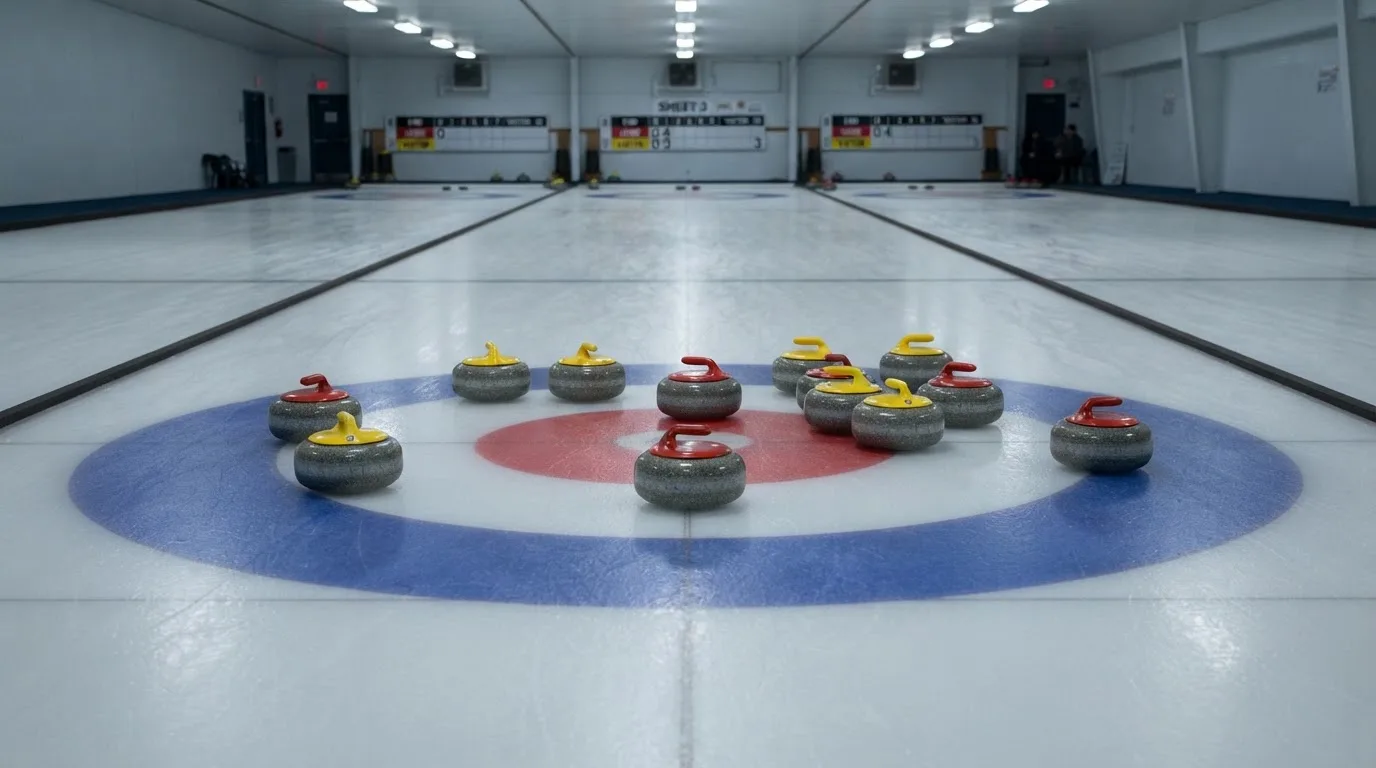
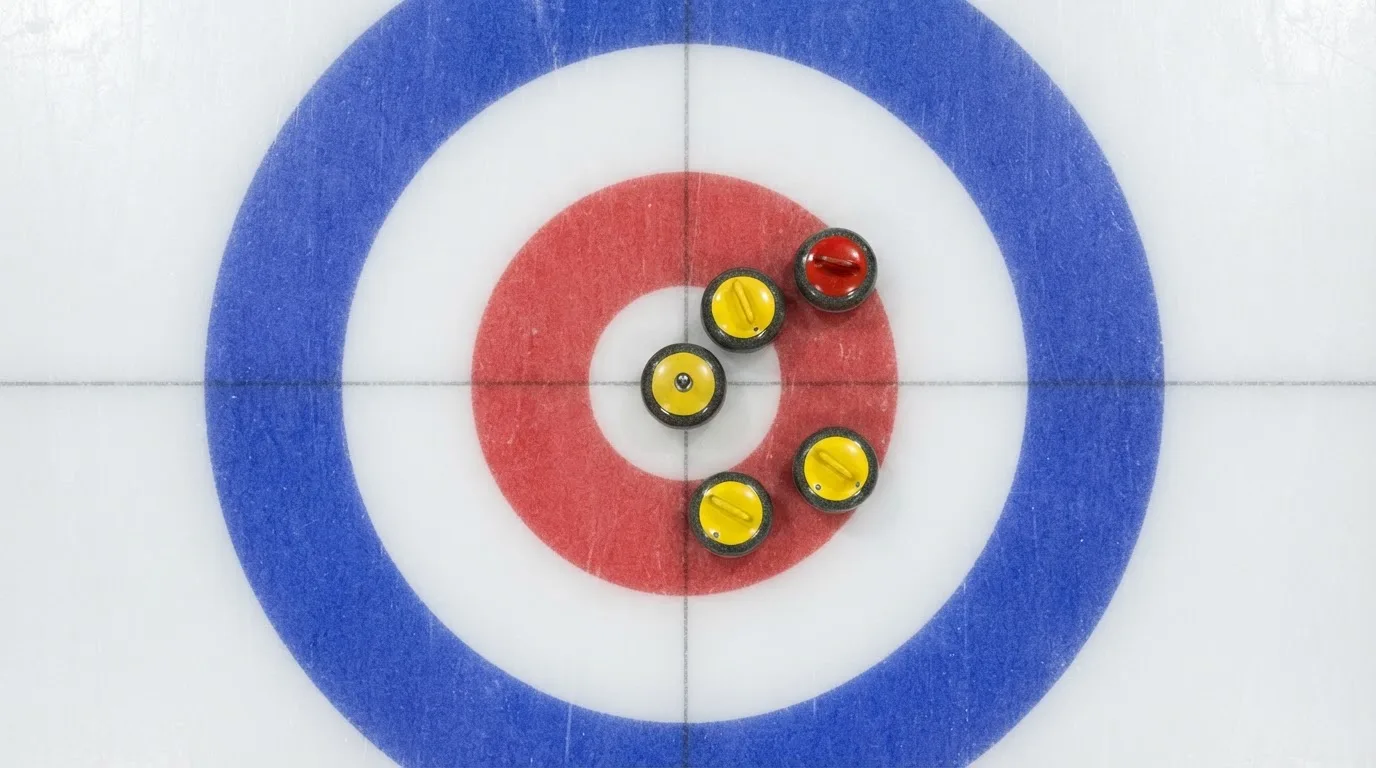
A curling team has four players — two in doubles — and each player throws two of the team’s eight stones. Stones weigh between 17.24 and 19.96 kilograms under World Curling Federation rules, slide across a sheet of ice roughly 45 metres long toward a circular target called the house, and are guided by teammates with brooms. Games usually run eight or ten ends; international competitive games are generally ten ends. After all sixteen stones of an end are thrown, the team with the stone closest to the button scores one point for each of its stones closer than the opponent’s nearest stone; only stones in the house count. Tied games go to extra ends.
The hammer and the blank end
The hammer is the last stone of an end. It goes to the team that did not score in the previous end; if an end is blanked (no score) the hammer stays with the same team. A team with the hammer and the lead scores one and keeps the hammer; a team without it has to force a mistake or blank the end to keep it. That dynamic — when does a team try to score, when does it try to blank — is what most pre-match curling odds try to price.
Where the medals are
Curling became an official Olympic medal sport at the 1998 Winter Olympics, with mixed doubles added in 2018. The sport’s competitive calendar runs from autumn through early spring at the elite level, peaking with the World Championships and the Olympic cycle. Outside the elite calendar there is a longer tail of national championships and tour events, and the betting market does not cover all of them at all books.
What this means for the odds
A sport with a handful of elite competitions and a small betting handle is a textbook case for a wide margin: the bookmaker has to cover the risk on a small number of outcomes with relatively little price-discovery pressure from competing books. Where football sees a Premier League match priced across dozens of books at a margin of two to five per cent, curling sees far fewer books, and the prices that do appear tend to run higher. That is the structural backdrop to every curling price a British bettor sees.
Tournaments and What to Look For
Curling’s calendar does not run year-round at the elite level. Knowing which competitions a bookmaker covers is half of finding curling prices at all.
The Olympic cycle
Olympic curling is the highest-profile event in the sport, contested every four years, with mixed doubles added in 2018. Coverage tends to be wider for Olympic curling than for almost any other curling competition, because the audience is bigger and the book’s risk is more easily laid off. The drawback: prices become only the most public events, not necessarily the most bettable ones.
World Championships
The men’s and women’s World Curling Championships run annually, alongside the World Mixed Doubles Championship. These tend to be covered by mainstream books in season, with markets on match winner, outright winner and a small set of side markets. Liquidity is thinner than football or tennis, so the odds carry the wider margin described above, and outright markets are often the only outright curling market the book runs.
Tour events and national championships
The World Curling Tour and national championships run through the season and are covered unevenly. Mainstream books cover what they can lay off; smaller books cover less. The honest framing: a bettor who wants prices on the men’s final at the Worlds will find them at most licensed books; a bettor who wants prices on a Friday-night tour event will probably not.
In-play and the same-game multi
In-play betting on curling is offered by licensed UK bookmakers and is governed by the operator’s licence conditions rather than a separate statute. The available markets are thin: most books offer match winner next end, match winner after X ends and a small outright book. Same-game multis and bet builders exist at some books but are not universal; the closer the competition to the elite level, the more likely a bet builder is to be available.
How Curling Odds Are Set — and What the Margin Costs
The payout share and the margin
For a market with two possible outcomes priced at decimal odds *o₁* and *o₂*, the payout share is 1 ÷ (1/*o₁* + 1/*o₂*) and the margin is 1 minus the payout share. The margin is what the bookmaker keeps of every unit staked on that market before any other cost (tax, operations, marketing) is paid. On a market where the two outcomes are priced at 1.90 and 1.90 — both sides even money at 9/10 fractional — the payout share is 1 ÷ (1/1.90 + 1/1.90) = 1 ÷ (0.5263 + 0.5263) = 1 ÷ 1.0526 = 0.9500, and the margin is 1 − 0.9500 = 0.0500, or 5.00 per cent. That is the floor for a sharp mainstream market; it is not the price a curling bettor will see.
What that looks like in practice
A 5 per cent margin means that for every £100 bet into a perfect market, the bookmaker keeps £5 on average over a large number of bets. On curling, with thinner liquidity and fewer competing books, the margin tends to run higher — not because the book is greedier in some absolute sense, but because there is less competitive pressure to push it down. The honest framing: a curling bettor pays more per unit staked than a football bettor, on average, on the same book.
How to read a price as a margin
Take any two-way market. Invert each decimal price (1.95 → 1/1.95 = 0.5128), add the inversions, divide 1 by the sum, and subtract from 1. That is the margin. On a one-way market (outright winner), the same arithmetic applies across all runners; a 12-runner field with average implied probability of 8.33 per cent (decimal 12.00) sums to 100 per cent only at zero margin, and the gap between 100 per cent and the implied sum is the book. The wider the gap, the more the bookmaker keeps.
Why margin matters for curling
Most curling bettors pick a price the way they would pick a horse: by eye, by feel, by the name on the shirt. The arithmetic above is what a price is made of, and it is the same arithmetic a bookmaker runs in reverse to set one. A bettor who knows how to invert a price is not smarter than the book, but is harder to flatter.
Curling Betting Markets at Licensed UK Bookmakers
The market list below covers what licensed UK bookmakers typically offer on curling during a competitive event. Not every book runs every market; the table below clarifies where curling markets appear.
Match winner (the basic line)
The match-winner market prices which team wins the match. On the men’s and women’s World Championships and on Olympic curling this is the most common market and usually the sharpest, because more books run it. In a one-sided game the underdog can be priced in the 3.50 to 5.00 range (decimal), with the favourite around 1.40 to 1.80; tied games close around 1.90 / 1.90 on each side.
Outright winner
The outright market prices which team wins the tournament. Outrights are offered at the start of an event and at major checkpoints through it, with the field priced individually and the favourite typically in the 3.00 to 5.00 range depending on the competition. Outrights are where the widest margins live, because the field is long and the handle is thin.
Next end winner
The next-end market is an in-play market on which team scores the next end. Available during live coverage at mainstream books during the World Championships and the Olympics; not universal elsewhere.
Correct score after X ends
A line on the score after a specified number of ends, usually 5 or 6. Available at the bigger books on major events. The market is multi-way and the margin is wide; the price is rarely a sharp read.
Handicap and totals
Handicap lines on curling (a team given a head start of one or two ends) and totals markets (over/under total ends played) are offered by some books on the bigger events. Both markets run wider margins than match winner, because the liquidity is lower.
Same-game multi and bet builder
Bet builder / same-game multi is offered at mainstream books on major curling events; not universal across the field. The deeper the book, the more likely a same-game multi exists. Bet builders compound the margins of their constituent markets, and the compounded margin is the right read on what they cost the bettor.
The Curling Betting Landscape
This section compares ten UK-licensed bookmakers on the question that matters to a curling bettor: is curling explicitly mentioned in the operator’s programme, and how is that supported by the licence?
The table
The table below names each operator, the Gambling Commission licence that backs it, and what the operator’s own published terms say about curling coverage specifically. Where research does not carry a figure for a given operator on a given matter, the column carries the article-language no-data marker — meaning the operator’s own public terms were not found to carry the matter.
| Brand | Gambling Commission licence | What the operator’s own terms state on curling |
|---|---|---|
| BetMGM | 039198-R-319450-029 (LeoVegas Gaming PLC) | No-data on curling markets in current public terms |
| Star Sports | 009177-R-104555-019 (Star Racing Limited) | No-data on curling markets in current public terms |
| BetTom | 064959-R-339314-003 (Bet Tom Limited) | No-data on curling markets in current public terms |
| Betboro | 044181-R-324363-007 (Webmedia Development N.V.) | No-data on curling markets in current public terms |
| Lottoland | 038991-R-319408-020 (EU Lotto Limited) | No-data on curling markets in current public terms |
| BetGoodwin | 002927-R-327985-008 (Goodwin Racing Limited) | No-data on curling markets in current public terms |
| Betfair | 039439-R-319330-013 (PPB Counterparty Services Limited) | No-data on curling markets in current public terms |
| Fitzdares | 000400-R-103839-030 (Fitzdares Limited) | No-data on curling markets in current public terms |
| QuinnBet | 061011-R-335683-004 (QuinnBet (Gibraltar) Limited) | No-data on curling markets in current public terms |
| Bet Ahoy | 100094-R-341742-003 (Bet Ahoy Ltd) | Listings-only coverage from aggregator source |
The licence is the floor; the curling coverage is the question. Every brand above holds a remote general betting standard (real events) licence and is therefore authorised to offer curling betting under GB law. Whether each brand actually does, and on which competitions, is what a bettor needs to check in the betting programme before staking — not a fact a comparison table can carry on its own.
What the table does and does not say
The table does not rank. A licence is a permission to operate, not a recommendation; a place in a comparison is not a licence; offers are described only as each operator’s own terms state them. The table does name the licence holder behind each brand — LeoVegas Gaming PLC for BetMGM, Star Racing Limited for Star Sports, Bet Tom Limited for BetTom, Webmedia Development N.V. for Betboro, EU Lotto Limited for Lottoland, Goodwin Racing Limited for BetGoodwin, PPB Counterparty Services Limited for Betfair, Fitzdares Limited for Fitzdares, QuinnBet (Gibraltar) Limited for QuinnBet, Bet Ahoy Ltd for Bet Ahoy. The holder is what a customer is contracting with, and the holder is what the Commission’s register names.
The column on curling coverage is honest about what the operator’s own terms state and what they do not. A bettor who wants to know whether the operator’s programme covers the men’s World Championship outright market before the event opens has to look at the betting programme itself; the terms are not the place that information lives.
Verdict
For a curling bettor the table’s job is to name who is licensed, who stands behind the brand and where the curling-specific answer has to be found. The answer on each competition is operator-specific and changes through the season; the licence is the constant. BetMGM’s licence is held by LeoVegas Gaming PLC, Betfair’s by PPB Counterparty Services Limited, and Bet Ahoy’s by Bet Ahoy Ltd — three different corporate parents behind three different products, all of them licensed to take bets from customers in Great Britain.
Reviewed Bookmakers
The operators below are compared on the question that matters to a curling bettor: does the betting programme state coverage for the sport, or is that coverage absent from the terms?
BetMGM
BetMGM’s UK sports welcome offer for new customers who deposit £10 or more and place a sports bet within 7 days is four £10 free bets: two football accumulators of four or more selections and two sports multiples of two or more. The free bets are valid for 7 days, carry a minimum-odds requirement and require opt-in. The licence is held by LeoVegas Gaming PLC under Commission account 39139.
BetMGM is a deep mainstream book whose programme covers the bigger curling events when they run. For the kind of bettor who wants a single account across sports and casino with a known parent, BetMGM sits comfortably in the shortlist. Curling markets are not explicitly defined in the operator’s current terms, so bettors should verify market availability via the sports programme.
Star Sports
Star Sports lets customers speak to a trader directly on 08000 521 321 to open an account, place bets or ask customer queries, and also offers support by post. The licence is held by Star Racing Limited under Commission account 9177.
Star Sports is a smaller, trader-led book where a customer can phone through a bet. For the kind of bettor who wants a named voice on the other end of the line, that is the offer. Note that curling coverage is not explicitly advertised, as the trader-led approach prioritizes individual customer support over broad automated market coverage.
BetTom
BetTom’s UK sports welcome offer is 50 per cent back as a free bet of up to £50, with a matching 50 per cent back up to £50 as free slot funds for casino play. The licence is held by Bet Tom Limited under Commission account 64959.
BetTom is a mainstream book with a sports-plus-casino welcome package. For a bettor who wants both halves of the offer from a single signup, the pairing is the point. Curling coverage is not guaranteed in the operator’s terms; the betting programme is the place to check for the specific competition.
Betboro
Betboro’s UK sports welcome offer is a 100 per cent matched free bet of up to £25 on the first qualifying wager, requiring a debit card deposit of at least £10 and a first bet of £5 to £25 with at least three selections each at 3/5 (1.60) decimal or higher. The licence is held by Webmedia Development N.V. under Commission account 44181.
Betboro’s offer is modest in money terms — a £25 free bet is at the low end of mainstream UK welcome offers — and the minimum price of 1.60 on each leg of the qualifying bet keeps the requirement ordinary.
Lottoland
Lottoland’s UK app combines casino, lottery betting, sports betting and scratchcards, and the operator states it is licensed by the Gambling Commission for customers in Great Britain. The licence is held by EU Lotto Limited under Commission account 38991.
Lottoland is a multi-product book where lottery betting is the headline and sports betting is one arm. For a bettor who wants lottery and sports under one account, the combination is the point.
BetGoodwin
BetGoodwin’s UK sports welcome offer is “Bet £10 & Get £15 in Free Bets”, made up of a £5 sports bet, a £5 acca and a £5 Sub-Cover bet. The licence is held by Goodwin Racing Limited under Commission account 2927.
BetGoodwin is a smaller mainstream book with a sports welcome offer built around three small free bets rather than one larger one. The structure splits the customer’s stake across three bet types.
Betfair
Betfair Sportsbook offers in-play betting, Bet Builder, free live streaming of events such as UK and Irish horse racing and football within the app, and a 90 Minute Payout market. The licence is held by PPB Counterparty Services Limited under Commission account 39439.
Betfair is the deepest mainstream book in the comparison by some distance — in-play, bet builder, live streaming across multiple sports, and a settlement feature on football that pays out if the team you backed goes two goals up. Curling is not listed in the available markets within the operator’s published guidelines.
Fitzdares
The Fitzdares app offers cash out, accumulators, Lucky 15s, specials and antepost markets on horse racing, football, tennis, rugby, cricket, golf and American football, with in-play live odds. The licence is held by Fitzdares Limited under Commission account 400.
Fitzdares positions itself as a premium book with horse racing as the headline. The market list above is football-, horse- and ball-sport-led, and curling does not appear. In short, this is not a platform for curling specialists.
QuinnBet
QuinnBet’s Best Odds Guaranteed applies to Irish and UK horse racing bets from 10:00am daily on singles, multiples and system bets, with a maximum benefit of £150 per customer per race. The licence is held by QuinnBet (Gibraltar) Limited under Commission account 61011.
QuinnBet’s BOG is the headline product feature and it is horse-racing-led. For a curling bettor the BOG is irrelevant — it does not apply to curling — and this sport remains off-menu in their current sports betting offer.
Bet Ahoy
Bet Ahoy’s UK welcome offer is “Bet £10 & Get £10 in Free Bets”, made up of a £5 sports bet and a £5 acca. The licence is held by Bet Ahoy Ltd under Commission account 100094.
Bet Ahoy is a smaller book at the modest end of mainstream UK welcome offers. The structure splits the customer’s stake across two bet types, both at £5. Curling is not confirmed in the operator’s terms, as current listings appear via third-party aggregators rather than a direct statement from the operator.
Reading the Numbers
Fractional to decimal
British odds are written as fractions: 5/1 means a £1 stake returns £5 profit plus the £1 stake back. Decimal odds write the same price as 6.00 (the profit and the stake combined into one number). The conversion is *a/b* → *a ÷ b + 1*. So 5/1 → 5 ÷ 1 + 1 = 6.00; 11/4 → 11 ÷ 4 + 1 = 2.75 + 1 = 3.75; evens (1/1) → 1 ÷ 1 + 1 = 2.00. A price shorter than evens is “odds-on”: 4/6 is 1.67, 1/2 is 1.50. The rule of thumb: the decimal price always equals one more than the fractional ratio.
What a winning bet pays back
For a single bet at decimal odds *o* and stake *s*, the return is *s × o* and the net profit is *s × (o − 1)*. A £10 stake at 3.75 returns £37.50 (£27.50 profit); a £10 stake at 1.50 returns £15.00 (£5.00 profit). For a combination bet the prices of the legs multiply into one combined price: three legs at 2.00, 3.00 and 4.00 combine to 24.00, and a £10 stake returns £240 (£230 profit) only if all three legs win.
What the margin costs
For an illustrative two-way market priced at 1.90 / 1.90 (decimal), the payout share is 1 ÷ (1/1.90 + 1/1.90) = 1 ÷ 1.0526 = 0.9500, the margin is 5.00 per cent, and a £100 stake on a fair coin costs £5 on average across many bets. On curling the margin tends to run wider than that; the precise figure depends on the book, the competition and the market, and the only honest statement is that a curling bettor pays more per unit staked than a football bettor, on average, on the same book.
Where to bet over
The starting price (SP) is the price the book settles at when the market closes; best odds guaranteed (BOG) pays the higher of the SP and the price the bettor took. BOG on UK and Irish horse racing is the headline example, and on curling it does not apply. Overround is the bookmaker’s old name for margin. Acca insurance refunds a stake as a free bet if one leg of an accumulator lets it down. Enhanced odds are promotional prices on selected markets and carry their own terms. None of these are “free” in any meaningful sense; they are all prices set by the book.
A Practical Reading of a Curling Price
The arithmetic in the section above is the same on every sport. What changes on curling is the gap between the price the book prints and the price a fair market would print — and that gap is the margin the bettor pays.
Why curling carries a wider margin
Liquidity is the first reason. A market with a thin handle gives the price-setter more room to push the price away from the true probability, because there is less competing money to drag it back. Football sees a Premier League match priced across dozens of books at a margin of two to five per cent; curling sees fewer books on a smaller handle, and the prices that do appear tend to run higher.
The second reason is the calendar. Curling’s elite season is short and clustered around a small number of events. A bookmaker who wants to offer curling prices has to staff the trading desk for those weeks and not for the rest of the year, which raises the per-bet cost. That cost is paid out of the margin.
What the bettor can do
Three moves are open. First, shop the price across the books that run curling: even a one-point difference in decimal (1.85 to 1.90) is a meaningful reduction in the implied margin. Second, read the competition carefully: outright markets on long-shot fields tend to run wider margins than match-winner markets on the elite events, because the field is longer and the handle thinner. Third, do not chase the marketing: enhanced odds and acca insurance on curling are usually small in money terms and run the operator’s margin on top of the market’s.
What the bettor cannot do
The bettor cannot make the margin disappear. Every price carries one, and the margin is the cost of betting into a market the bookmaker has set. The honest framing is that the margin is a known cost on every bet, and the job is to minimise it rather than to evade it.
Frequently Asked Questions
How do I bet on curling?
Find a bookmaker licensed by the Gambling Commission (the licence shows on the Commission’s public register, searchable by business name or domain), open an account, complete the identity check (name, address and date of birth), and look for curling in the betting programme. Coverage is concentrated on the Olympic cycle and the World Championships; smaller events are covered unevenly across books. Markets typically include match winner, outright winner, next-end winner in play and sometimes a same-game multi. Stake with a debit card or bank transfer — credit cards have been banned for gambling in Great Britain since 14 April 2020.
Can I bet on curling in Great Britain?
Yes, at any bookmaker holding a Gambling Commission remote licence for real events. There is no statutory list of permitted sports or markets; the Act says who needs a licence, not what events may be bet on. Coverage at any given book depends on the book, the season and the competition; not every book runs curling on every event. A bettor who wants prices on a specific competition should check the betting programme at a shortlist of books before staking.
How can I check that a bookmaker holds a Gambling Commission licence?
The Commission’s public register is the test. It is searchable by business name, trading name, domain or account number, and it lists the licence holder, the licence categories and the trading names. The licence holder is the corporate parent, not always the brand; Ladbrokes and Coral are both under Entain, Paddy Power and Betfair under Flutter. A brand that does not appear on the register is not licensed to take bets from customers in Great Britain.
How is the return on a bet worked out from the stake and the odds?
For a single bet at decimal odds *o* and stake *s*, the return is *s × o* and the net profit is *s × (o − 1)*. So a £10 stake at 3.75 returns £37.50 (£27.50 profit); a £10 stake at 1.50 returns £15.00 (£5.00 profit). For a combination bet the prices of the legs multiply into one combined price; a £10 stake on three legs at 2.00, 3.00 and 4.00 returns £240 only if all three legs win.
What is the bookmaker’s margin and how can I see it in the odds?
The margin is what the bookmaker keeps of every unit staked on a market. For a two-way market priced at decimal odds *o₁* and *o₂*, the payout share is 1 ÷ (1/*o₁* + 1/*o₂*) and the margin is 1 minus the payout share. On a market priced 1.90 / 1.90 the margin is 5.00 per cent; on a market priced 1.80 / 1.80 the margin is 11.11 per cent. The margin widens with thinner liquidity, and curling margins tend to run wider than football margins.
How do fractional odds like 5/1 convert to decimal odds like 6.00?
The conversion is *a/b* → *a ÷ b + 1*. So 5/1 → 5 ÷ 1 + 1 = 6.00; 11/4 → 11 ÷ 4 + 1 = 3.75; evens (1/1) → 1 ÷ 1 + 1 = 2.00. A price shorter than evens is “odds-on”: 4/6 is 1.67, 1/2 is 1.50. The decimal price always equals one more than the fractional ratio, because the fractional form excludes the stake and the decimal form includes it.
Tennis, darts & cue sports – AI Betting
Content created by the «AI Betting» team
