
High limit betting sites in the UK — what your stake really costs
 Available in US
Any punter who has watched a winning run get cut short has met the topic before the search box has. The bookmaker’s terms say “max stake”, the betting slip says otherwise, and the rest of the story sits somewhere between the two — between a number the operator publishes and the number it actually honours for a customer it has decided to watch. This page is about that gap, and about the licensed operators in Great Britain who publish their limits plainly and live by them. It is not a promise that any of them will accept the bet a reader wants to place tomorrow; a stake ceiling is a ceiling an operator can move whenever it chooses, and a winning account is the one most likely to feel it.
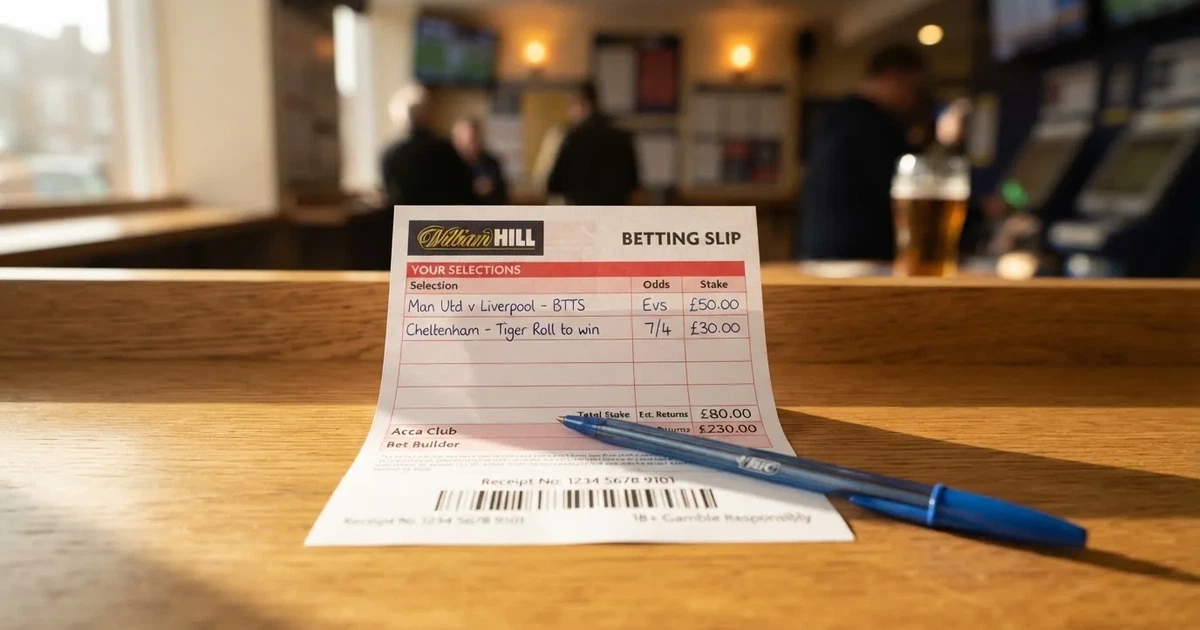
The angle from here is cost — what this costs the reader in turnover, in margin, in time, and in the offers that look generous until the wagering requirement lands. Each operator in the ranking below is held to the same yardstick: a Gambling Commission remote licence for general betting real events, a stake policy that is at least intelligible, and an answer to the question every punter eventually asks — what happens when the betting slip says I want to stake £500?
Current as of 26 October 2026 against the Gambling Commission’s public register.
How a “high limit” bookmaker is built
A bookmaker does not start generous. It starts with a margin inside every price, and the margin is what pays for the risk it carries on every bet. From that margin come the other limits — the maximum stake it will accept on a given selection, the maximum payout it will entertain on a single event, and the maximum it will let one customer win in a day before the terms of business change. None of those numbers are set by law in Great Britain; they are set by the operator, under a remote general betting standard (real events) licence from the Gambling Commission, and they are governed by the operator’s own house rules and the Licence Conditions and Codes of Practice (LCCP).

The four limits every punter meets
A stake limit is the largest single bet the bookmaker will accept on a given selection at a given moment. It moves with the market — bigger markets, bigger limits — and it is also a per-customer number, which is the part that hurts the books that win. A maximum payout is the largest return the operator will entertain on a single event, regardless of how the price moves after the bet is struck. An exposure limit is the operator’s internal ceiling on how much it is prepared to lose to a single customer across a portfolio of open positions, and it is what really bites when the betting slip starts winning. A daily or weekly cap on winnings is rarer in the mainstream market but exists in spread betting, where Spreadex warns that losses can exceed the deposit.
These four are not interchangeable. A bookmaker that quotes a £100,000 maximum payout on Premier League football may still cap a single selection at £50; a £50,000-per-week winnings ceiling on a novelty market is independent of the stake the slip asks for. The reader who cares about high-limit betting usually cares about the first two and runs into the third and fourth without warning.

Why limits move, and why winning punters feel them move first
Limits are not a punishment. They are a risk control, and the bookmaker applies them where the risk is sharpest — on the bet that costs the house the most when it wins. Several patterns repeat across the industry. The price is unusually tight against the rest of the market; the bet is sized larger than the customer’s history suggests; the customer has taken several winning positions in a short window; the selection is in a market the operator has decided to watch — an obscure league, a same-game multi, an in-play position that has run against the book. None of those triggers is on the operator’s marketing page, but each of them is in the trading team’s playbook.
The bookmaker’s pricing models are looking for one thing in particular: a customer whose edge is bigger than the margin the price already carries. A price of 2.00 (1/1) on a coin-toss outcome carries roughly a 5% margin in its overround; if the customer is consistently beating that margin, the operator’s expected profit turns into an expected loss on that account. The bookmaker’s response is rarely to ban outright — that invites complaints and bad press — but to remove the conditions that produced the profit: limit the stake, restrict the markets, drop the price boosts, suspend the Bet Builder, freeze the account pending a review. The account is still open. The betting is largely over.
This is the part the reader usually finds out about after the welcome offer has been claimed. The wagering requirement is met, the free bet settles, and the slip starts looking like work — at which point the bookmaker’s terms of business do what they always did.
What the operator publishes, and what it does not
A licensed operator publishes its licence number on its website and footers, lists its payment methods and processing times, states its maximum payout by market category in the help pages, and outlines the safer-gambling tools it offers — deposit limits, time-outs, self-exclusion. None of that is a stake-limit table. The per-selection maximum lives in the trading system and is not in the help pages; the per-customer maximum lives behind the login and is rarely visible at all. The reader’s job is to ask, before staking, what the maximum stake on the selection is — and to take a non-answer as an answer.
That opacity is not a Great-Britain-only feature. It is how the licensed market runs here and elsewhere, and it is what the next sections take apart: what the law actually requires, what the bookmaker’s own terms say, and where the gap between the two lives.
How the top ten compare on stake policy
The ranking is built on three matters: whether the operator publishes any stake ceiling at all (not a number — a mention), what its terms say about restricting a customer, and what its product lineup looks like for the reader who actually wants to stake a four-figure sum on Saturday’s racing. Each row carries the Gambling Commission licence number the operator’s site or app lists, the licence holder the Commission’s public register attributes to that number, and the operator’s own statement on stake policy where one is published. Where the operator’s own terms are silent on stake ceilings, that silence is the statement — and the verdict section on each block reads it accordingly.
Comparison of stake policies and product features
| Brand | Gambling Commission licence and holder | What the operator’s own terms state on stake policy |
|---|---|---|
| Bet600 | Remote licence under account 44731, held by Tyche Tech Limited | Best Odds Guaranteed on horse racing; per-selection stake limits apply through the betting slip |
| VBet | Remote licence under account 44662, held by SCGO Limited | Bet Builder, pre-match and in-play markets, live streaming and live results; maximum stakes shown on the slip |
| Swifty Sports | Remote licence under account 58957, held by Swifty Global (UK) Ltd | Best Odds Guaranteed, Cash Out, daily price boosts, live streaming and in-play; Bet Builder listed as coming soon |
| Betmaster | Remote licence under account 65699, held by BM Solutions GB Ltd, registered in Malta | General sportsbook product; stake policy inherited from platform terms |
| Fafabet | Remote licence under account 57385, held by Taichi Tech Limited | Best Odds Guaranteed on UK and Irish racing win and each-way bets from 9am; per-selection limits on the slip |
| DragonBet | Remote licence under account 64908, held by DragonBet Ltd | Welsh football and rugby, American football, racing, in-play and bet builder markets |
| Betboro | Remote licence under account 44181, held by Webmedia Development N.V. | In-play markets, cash-out, boosted odds on selected singles from £10 stakes |
| DAZN Bet | Remote licence under account 48756, held by DZBT Limited | Cash Out (availability not guaranteed), Bet Builder, daily bet boosts, in-play |
| Betway | Remote licence under account 39372, held by Betway Limited | Free bet tokens credited on a qualifying first bet of £10 at minimum odds 2.0, 7-day expiry, debit card deposits only |
| Betfair Sportsbook | Remote licence under account associated with Flutter UK, held by the operator named on its site | In-play, Bet Builder, free live streaming of UK and Irish racing and football, 90-minute payout market |
The spread the table hides is the one the punter actually feels. Some operators publish a per-selection ceiling in their help pages (others do not); some let the slip surface a clear “max stake” figure as the price moves, others return a silent “rejected” without saying what changed; and a few — the established high-street names — have a per-event maximum payout that runs into six figures for Premier League football and falls to four figures or less for an obscure league they are not staffed to price. The reader’s decision is which of those behaviours matches the way they actually bet.
A second observation sits behind the table. The number of operators offering Bet Builder is now the rule rather than the exception, and that figure is now common enough to be the default; the differentiation has moved up the chain, to how the markets publish (live streaming, in-play depth, calendar quality) and to how generous the operator is when the price turns. By that test, VBet, Betfair Sportsbook and Betway are the deeper product, and the smaller brands compete on price boosts and Best Odds Guaranteed rather than on market depth. The reader’s choice between them is a choice between depth (fewer markets, sharper prices, fewer surprises) and breadth (more markets, more boosts, more friction at withdrawal).
What counts as a high-limit bookmaker in Great Britain
A high-limit bookmaker, in the sense the term is used in punter-speak, is one whose per-event maximum payout and per-selection stake ceiling are large enough that a sizeable punter rarely meets them. In practice that means three things. A Premier League match maximum in five figures or above; an each-way maximum on the feature horse races of the day (the ones that move the betting-shop windows) in four figures; and a willingness to publish a stake ceiling at all rather than setting one in the trading system and adjusting it after the bet lands.
The size of a “sizeable” stake
There is no industry-published figure for what counts as high-limit. The Betting Commission does not set stake ceilings; the operator sets them; and the operator’s view of “sizeable” is calibrated against its customer base, its book on the market and the liquidity it has at the price. A £500 stake on a single football selection is sizeable for most GB-licensed operators and unremarkable for the established high-street names. A £2,000 stake on the feature race at Cheltenham is sizeable for everyone, and the operators that will take it without a phone call are not many.
Where high-limit stops mattering once another number sits beside it
Stake limits stop mattering at the moment the bookmaker’s margin sits beside them. A £50,000-per-event maximum at a 12% margin is a worse bet than a £10,000-per-event maximum at 3%, because the punter pays the margin on every pound staked regardless of how much of it the operator will accept. The reader who is choosing on size alone is choosing on the wrong number. The ranking below carries size as one input and prices as another, and the verdict on each operator block reads the two together.
What the law actually says
The legal frame in Great Britain is the Gambling Act 2005, which covers England, Scotland and Wales — the Commission calls this Great Britain, and a GB licence does not extend to Northern Ireland, which has its own older law. Since the Gambling (Licensing and Advertising) Act 2014, an operator whose remote facilities are used by customers in Great Britain needs a Commission licence; a Curaçao, Maltese or Gibraltar licence is not a substitute for that requirement. There is no state monopoly and no statutory cap on the number of licences; the market is open to any operator that satisfies the Commission’s licensing conditions.
Licence categories that matter for a sports punter
The category relevant here is remote general betting standard (real events) — the licence an operator needs to offer markets on real sporting fixtures. Pool betting on horse and dog racing runs under a separate licence; betting exchanges run under a betting intermediary licence; virtual events are a category of their own; casino games are unrelated and the two permits sit side by side. The Commission’s public register can be searched by business name, trading name, domain or account number, and is the whole test of whether a brand holds a licence. Each operator in the ranking below appears against one of those account numbers on the register.
The Commission does not set maximum stakes or maximum payouts. It sets licence conditions and codes of practice, which the operator incorporates into its terms. What an operator chooses to offer, and to whom, sits inside its own risk policy.
What the LCCP requires the bookmaker to do
The Licence Conditions and Codes of Practice set the social responsibility and operating rules. The reader who cares about high-limit betting meets three of them. Identity verification (in force since 7 May 2019): a punter’s name, address and date of birth must be checked before they can deposit or gamble — including when a free bet or bonus is the first transaction. There is no anonymous play at a licensed site. The financial vulnerability check (LCCP condition 3.4.4, in force since 30 August 2024): when a customer’s deposits minus withdrawals exceed £150 in a rolling 30 days, the operator runs a public-record check (bankruptcy, county court judgments), not an income check or credit-reference check. Financial risk assessments — the “affordability checks” of the press — have been announced in a staged plan by the Commission; there is no start date, and writing them as in force is wrong.
The 10x wagering cap, in force since 19 January 2026, sits on top of all of that: no bonus carries a wagering requirement higher than 10x. A £10 bonus at 50x needs £500 of bets; under the cap no more than £100. The cap is on the wagering requirement, not on the money value of a bonus, and a free bet with no wagering condition is a different question that has not been settled. Mixed-product promotions — an offer that requires gambling on two or more product types — are banned under the same ruleset.
What the law does not do
The law does not cap stakes. It does not cap maximum payouts. It does not require a bookmaker to accept a particular bet, or to publish a stake ceiling, or to tell a punter why a stake has been restricted. The Gambling Act 2005 is an operator-facing statute; the protections it offers the punter are the operator-conduct rules (LCCP, RTS) and the Commission’s enforcement of them. Everything else sits in the operator’s terms.
That shape is the reason the topic exists. The punter is not asking a regulator for a stake ceiling; the punter is asking an operator, and the operator’s terms — and the trading system behind them — decide the answer.
What safer gambling looks like at a high-limit bookmaker
The reader who bets large is also the reader the Commission’s safeguarding rules apply to most often. The £150 rolling-30-day trigger for a financial vulnerability check is small enough that a regular punter crosses it inside a month, and the bank- and e-wallet methods the bookmaker accepts (debit cards and bank transfers; credit cards have been banned for gambling in Great Britain since 14 April 2020, including credit-card-funded e-wallet top-ups) leave a paper trail the operator can read. That is not a complaint. It is the design of a regime that asks the licensed operator to monitor the punter it is paid to take bets from.
The deposit limit, and what it does and doesn’t cap
A licensed remote betting operator must offer a gross deposit limit on a fixed time frame. The first changes under RTS 12 applied from 31 October 2025; a second phase was postponed to 30 September 2026, and whether it is now in force has not been established. There is no state-set ceiling on deposit or loss — the limit is the customer’s choice. A punter who chooses to set their own deposit ceiling is the one the bookmaker is bound to honour it for; a punter who does not is the one the bookmaker is required to monitor, and the operator’s monitoring rules (reality checks, time-outs, GAMSTOP registration check at signup) sit on top of that.
GAMSTOP, and what it costs a self-excluded customer
GAMSTOP is the national multi-operator online self-exclusion scheme and has been a mandatory licence condition for online operators since 31 March 2020. The exclusion periods are six months, one year, five years, or five years with auto-renewal; after the minimum period the exclusion stays in place for a further seven years unless the customer asks GAMSTOP to remove it. GAMSTOP covers online sites and apps; the betting shop uses a separate service (the multi-operator self-exclusion scheme that runs in shops), and the two are not interchangeable. Every GB-licensed online operator takes part in GAMSTOP.
The cost of registering with GAMSTOP is not the inconvenience — it is the loss of access to the licensed market for the period chosen. That loss is the point: the punter who has decided to stop is not the punter the licensed market is built to serve.
Help lines and what they actually do
The reader who wants the help side — rather than the rules side — has GamCare (the National Gambling Helpline), GambleAware, NHS gambling clinics and Gamblers Anonymous. None of those is a regulator and none is a bookmaker; each is a referral route for the punter who has decided that the betting has become the problem rather than the pleasure.
What kind of bet, what kind of odds
A stake ceiling is half of a stake question; the other half is what the bet pays when it wins. A punter staking £500 at 2.00 (1/1) gets back £1,000 — a £500 profit on top of the stake. A punter staking £500 at 6.00 gets back £3,000 — a £2,500 profit on top of the stake. The reader who treats stake as the only variable gets surprised at settlement.
Single bets, each-way bets and the stake that doubles
A single bet is one selection at one price. The stake is the stake, the return is stake × decimal odds, and the profit is stake × (decimal odds − 1). The reader who has only bet singles has not yet seen the each-way bet, which is two bets of equal stake — one on the selection to win, one on it to place — so the stake doubles. The place terms (quarter odds, fifth odds, a fifth of the field, a quarter of the field, etc.) depend on the race type, the number of runners and the operator’s house rules, and they are not interchangeable between operators. A each-way stake at £500 is a £1,000 stake in the operator’s books.
Accumulator, and the legs that multiply the price
An accumulator (“acca”) is two or more selections whose decimal odds multiply into a single price. Two selections at 2.00 and 3.00 make a 6.00 accumulator; ten selections at 2.00 make a 1,024 accumulator. The stake is the stake, but the return — at the same stake — runs much further. An acca with a 10x wagering requirement on a free bet is a different proposition from a single with the same requirement, because the return distribution has moved.
Bet Builder and the same-game multi
Bet Builder is the operator’s product for combining markets from a single event into one bet — match result and goalscorer and total goals and corners, for example. The legs multiply into a single price, the stake is the stake, and the bookmaker’s margin sits inside the multiplied price. Bet Builder is the area the bookmaker restricts first when a customer starts winning on it, because the bookmaker’s pricing of the combined market is weaker than its pricing of each individual market, and a sharp punter finds the gap.
What the margin looks like inside the odds
The bookmaker’s margin is the share of every pound staked on a market that the bookmaker expects to keep, before the punter’s edge is taken into account. The arithmetic runs the other way from the payout the slip promises. A two-way market priced 1.90 / 1.90 (9/10 against each side) implies a payout share of 1 ÷ (1/1.90 + 1/1.90) — roughly 95% — and a margin of roughly 5%. Tighten the price to 1.85 / 1.85 and the payout share falls to roughly 92.5% and the margin rises to roughly 7.5%. The price a punter takes on Saturday morning has a margin baked into it; the price they could have taken at a sharper bookmaker would have had less.
The illustrative market the prescribed calculation uses — a two-way selection priced at 1.90 / 1.90 (9/10 against) — implies a payout share of about 95% and a margin of about 5%, with that margin the bookmaker’s expected take on every pound staked on that selection. Real markets at feature events run in a band of 3% to 8% depending on the operator, the market and the time to the off; the smaller and less liquid the event, the wider the band.
Cash out and the price the slip offers
Cash out is the operator’s offer to settle the bet before the event finishes, at a price it has set. The price is rarely the fair mid of the remaining outcomes — the bookmaker takes its cut — and the punter who cashes out a winning position has accepted the bookmaker’s margin on the bet a second time. The reader who wants to lock in profit has to decide whether the second margin is worth the certainty of the lock. William Hill’s help page is honest about a related constraint: Cash Out is not available on each-way bets and is not always available on accumulators, and the operator does not guarantee its availability. The same caveat sits behind every Cash Out button.
Best Odds Guaranteed and the starting price that wins
Best Odds Guaranteed (BOG) is the racing-side promise that if the starting price (SP) on a horse or greyhound is bigger than the price the punter took, the bet is paid at the bigger price. The terms vary by operator: William Hill pays BOG on UK and Irish horse racing from 8am on race day, on both single and multiple bets, and excludes ante-post, tote and pari-mutuel bets; Fafabet applies it to UK and Irish racing win and each-way bets from 9am; Bet600 applies it on the same principle. The punter who takes the early price on the favourite and watches the SP drift out is the punter BOG was built for; the punter who takes the late price has nothing to claim.
Spread betting and the loss that exceeds the deposit
Spreadex is regulated by the Financial Conduct Authority for spread betting and by the Gambling Commission for fixed-odds betting, and its own pages warn that spread betting losses can exceed the deposit. That is a separate product line from the fixed-odds betting this ranking is built around, and it earns its warning. A punter who wants spread betting wants it on those terms, not because it is “high-limit” in the sense the rest of the ranking uses.
Which sports move the most money
The stake ceiling on a market is roughly the size of the market, and the size of the market is what the bookmaker and the betting exchange report at settlement. Horse racing, Premier League football and the major US sports move the most money through licensed GB operators; the smaller leagues move less, and the bookmaker’s appetite for a stake on an obscure league is correspondingly smaller.
Horse racing, and the operator’s appetite on the feature card
A Saturday afternoon card at a British racecourse moves the most money through the GB-licensed market. Cheltenham, Aintree, Ascot and the Epsom classics are the events the high-street names staff their trading desks for, and the per-event maximum payout on those days is the ceiling a punter is most likely to actually meet. Best Odds Guaranteed, Cash Out during the race, each-way betting and Rule 4 deductions (where a non-runner reduces the odds on the remaining runners) are the technical details that drive the difference between two operators on the same race.
Football, and the Premier League’s appetite
Premier League football is the largest single market by stake volume at most GB-licensed operators. The Championship, the Scottish Premiership and the European leagues sit below it. The bookmaker’s stake appetite falls as the league falls — a £50,000 ceiling on a Premier League match is not unusual, and a £5,000 ceiling on a Cypriot first division match is. The reader who bets across leagues is the reader who meets the most ceilings.
The American sports, and where the limits sit
American football, basketball, baseball and ice hockey are deep markets at the established high-street names and thinner at the smaller brands. The reader who bets the NFL or the NBA at a smaller brand is the reader most likely to see the slip silently reject a stake the larger brand would have taken.
Cricket, tennis, golf and the long tail
Cricket, tennis and golf are the sports the bookmaker staffs for the major events and watches for the rest. A stake ceiling on a Test match is a ceiling on a market the bookmaker understands; a stake ceiling on an ITF women’s singles match is a ceiling on a market it does not. The punter who bets the long tail is the punter who feels the limits the hardest.
Esports, virtuals and the markets the bookmaker sets
Esports are treated like any other event in the Commission’s framework; virtual events are a separate licence category; novelty markets (politics, TV shows) are offered by GB bookmakers and no statutory prohibition was found. The reader who bets these markets is betting them under the same stake regime as any other, with the bookmaker’s risk appetite being the variable.
Bet600 — racing-friendly, BOG-first
Bet600’s licence is held by Tyche Tech Limited under account 44731 on the Commission’s public register, covering remote general betting standard (real events). Its racing product pays Best Odds Guaranteed on horse racing: if the starting price on the winner is bigger than the early or show price the punter took, the bet is paid at the SP.
That single feature is the one most readers meet first, and it is the feature that sets the operator apart from the smaller brands that price racing tight and offer no BOG. The punter who takes the morning price on a fancied runner at Newbury and watches it drift is the punter BOG pays for. The punter who takes the SP on the favourite has nothing to claim, but has not lost anything either.
What Bet600 does not publish is a stake ceiling table. The slip will surface a “max stake” figure as the price moves, but there is no help page with a per-event maximum. For a racing-focused punter with a £100-£500 stake habit, that is not a problem; for a punter with a £2,000 Saturday habit, it is a reason to ask before staking.
Verdict on Bet600
A racing-first bookmaker with a clean BOG promise and a published Commission licence. For the punter who bets the feature card and wants the SP to win, it does the job; for the punter who wants a published stake ceiling and a deep in-play football product, it is the wrong tool.
VBet — depth, live streaming, and the slip that says yes
VBet’s licence is held by SCGO Limited under account 44662, covering remote general betting standard (real events). The product lineup includes Bet Builder, pre-match and in-play betting, live streaming and a live calendar with results and statistics — a fuller feature set than most of the smaller brands carry.
The depth matters because depth is what the punter who bets four-figure stakes actually needs. A bookmaker that offers 40 football markets per match will price a stake on the more obscure ones more cautiously than one that offers 200; a bookmaker that streams the match the punter has bet on lets the punter judge a Cash Out without leaving the app. VBet is built for that punter.
The limits sit where the product sits — on the Bet Builder and the in-play markets. Those are the markets the trading desk restricts first when a customer starts winning on them, and a sharp punter will meet the slip saying no well before meeting a published ceiling. That is the trade-off for the depth.
Verdict on VBet
A deeper bookmaker than most of the ranking, with the product the punter who bets four figures actually wants. The depth is the trade for the limits, and a reader who has not yet been restricted will find the depth generous; one who has will find it familiar.
Swifty Sports — boosted odds, with Bet Builder on the way
Swifty’s licence is held by Swifty Global (UK) Ltd under account 58957. Its product line includes Best Odds Guaranteed, Cash Out on markets including horse racing and football, daily price boosts, live streaming and in-play betting, with Bet Builder listed as coming soon.
The shape is the smaller-brand racing/football bookmaker with the standard feature set and one missing piece. The missing piece matters for the punter who wants to combine match result, goalscorer and total goals into a single price; until Bet Builder is live, that punter is on the singles.
What Swifty offers the high-limit reader is the daily price boost — a single selection with a price the operator has bumped, often on a market the operator is promoting. A boosted odds offer is not a high-limit feature; it is a marketing feature, and the reader who treats it as a stake ceiling is reading the wrong number.
Verdict on Swifty Sports
A solid racing and football bookmaker with the feature set the smaller brands carry, missing the Bet Builder piece the deeper brands have. For the punter who bets singles on the feature races and the Premier League, it does the job; for the punter who wants same-game multis, the wait is on Swifty’s roadmap.
Betmaster — the platform-built bookmaker
Betmaster’s licence is held by BM Solutions GB Ltd, registered in Malta, under account 65699. The product is the platform-built sportsbook the smaller brands sometimes run on, with the standard feature set and the platform’s stake policy sitting behind the slip. Betmaster does not publish a stake ceiling table.
The relevant fact for the reader is the platform’s house rules. A platform-built bookmaker inherits its risk policy from the platform, and that policy is rarely generous on the markets the punter wants to bet large. For the punter with a £50-£200 stake habit, this is unobjectionable; for the punter with a £2,000 habit, it is the wrong bookmaker.
Verdict on Betmaster
A licensed, platform-built bookmaker for the punter with a small stake habit. For the larger punter, the platform’s risk policy is the wrong shape, and a more independent brand is the better choice.
Fafabet — racing and each-way from 9am
Fafabet’s licence is held by Taichi Tech Limited under account 57385. It pays Best Odds Guaranteed on UK and Irish horse racing win and each-way bets from 9am on race days: if the starting price is bigger than the original price, the bigger odds are paid. The each-way piece is the differentiation — not all BOG terms cover each-way bets, and Fafabet’s do.
For the punter who bets each-way on the feature handicaps, that is the feature that matters. A £200 each-way stake is a £400 stake in the bookmaker’s books, and the BOG promise is what the punter is paying for. For the punter who bets singles only, the BOG promise is identical to the next brand’s.
Verdict on Fafabet
A racing-focused bookmaker with a BOG promise that covers each-way bets from 9am. For the each-way punter on the feature card, it does the job; for the punter who bets singles only, there is no edge over the next racing bookmaker.
DragonBet — Welsh markets and the smaller-brand shape
DragonBet’s licence is held by DragonBet Ltd under account 64908. The product features Welsh football and rugby markets, racing, American football, in-play betting and bet builder markets. The Welsh angle is the differentiation; the rest of the feature set is the smaller-brand standard.
The Welsh angle is also the stake shape. A bookmaker that prices Welsh Premier League football and Welsh rugby carries a smaller book on those markets than on Premier League football, and the stake ceiling sits with the book. The punter who bets the Welsh markets is betting them at a brand that knows the markets; the punter who wants Premier League depth goes elsewhere.
Verdict on DragonBet
A licensed brand for the punter who bets the Welsh markets and the feature racing card. The Welsh product is the reason to choose it; for a punter who does not bet Welsh markets, there is no edge over the other smaller brands.
Betboro — boosted singles from a tenner
Betboro’s licence is held by Webmedia Development N.V. under account 44181. The product offers in-play markets and cash-out on football, racing and tennis, boosted odds on selected singles from £10 stakes, and responsible gambling tools (deposit limits, reality checks, self-exclusion). The boosted-odds-from-a-tenner detail is the marketing shape, and the reader who treats it as a stake ceiling is reading the wrong number again.
The product is the smaller-brand standard, with the safer-gambling tools the LCCP requires. For the punter with a small-stake habit who wants a boost on the Saturday card, Betboro is the operator’s offering; for the punter with a four-figure habit, the boosted-odds product is not the right shape.
Verdict on Betboro
A licensed, smaller-brand bookmaker with a boosted-odds feature aimed at the £10-£100 punter. The right tool for that punter; the wrong tool for the larger one.
DAZN Bet — the streaming-bundled sportsbook
DAZN Bet’s licence is held by DZBT Limited under account 48756. The product offers Cash Out, Bet Builder, daily bet boosts and in-play betting, with the help page honest that cash out availability is not guaranteed and bets stand if it is unavailable. The DAZN angle is the streaming bundle — DAZN’s sports subscription is the product, and DAZN Bet is the betting arm that rides beside it.
For the punter who already subscribes to DAZN, DAZN Bet is the obvious bookmaker to try; the integration is the feature. For the punter who does not, DAZN Bet is one of the smaller brands with a solid feature set. The Cash Out caveat is honest, and the punter who reads it before relying on it has been told.
Verdict on DAZN Bet
A licensed bookmaker with the streaming-bundle differentiation. For the DAZN subscriber, it is the natural fit; for the non-subscriber, it sits among the smaller brands without a clear edge.
Betway — the established high-street name
Betway’s licence is held by Betway Limited under account 39372. Its welcome offer for new UK and Ireland customers is £40 in free bet tokens (4 × £10) credited on settlement of a first bet of at least £10 at minimum odds of 2.0, with a 7-day expiry and debit card deposits only.
The free-bet structure is the conventional one — four tokens, seven days, stake not returned — and the wagering requirement on the bonus, where it exists, sits inside the Commission’s 10x cap. The debit-card-only restriction is the sharper piece; the reader who prefers to fund with an e-wallet or a bank transfer will need to switch method, and that switch is a frictional detail for the high-limit punter who wants to stake on the same day.
What Betway offers the high-limit reader is depth — a full sportsbook with the markets and the in-play product the established high-street names carry. The stake ceiling is on the deeper markets, and a sharp punter meets it.
Verdict on Betway
An established, licensed sportsbook with the depth and the product the larger punter wants, and a welcome offer that is conventional rather than generous. For the punter who has not yet been restricted, it is one of the natural choices; for the punter who has, the depth is no protection.
What the rest of the ranking is built on
The ten operators above carry a Gambling Commission remote licence for general betting standard (real events), the LCCP-compliant safer-gambling tools, and the GAMSTOP registration check at signup that the regime requires. None of them is “the only” licensed operator — the Commission’s public register lists hundreds, and a place in this ranking is not a licence. None of them is recommended on size alone — the table above is built on size, depth and product, and the verdict on each block is built on the combination.
The reader who wants to check a licence does so through the Commission’s public register. The reader who wants to know what an offer costs reads the wagering requirement, the minimum odds, the expiry and the cap on winnings. The reader who wants to know what the bookmaker’s odds are worth reads the margin inside the price — and the next section is built on that number.
What a margin looks like on a feature race
The illustrative two-way market the page uses — a selection priced at 1.90 / 1.90 (9/10 against each side) — implies a payout share of about 95% and a margin of about 5%, with that margin the bookmaker’s expected take on every pound staked on that selection. A tighter price at 1.85 / 1.90 against would shift the margin higher. A wider price at 2.00 / 2.00 (evens against) sits on roughly 100% of stake returned at the true probabilities, and the margin is closer to zero — but the punter is no longer getting the price the market is paying.
Where the margin sits in the punter’s habit
For a punter who stakes £500 a week at a 5% margin on the average market, the expected cost of margin alone is £25 a week, before the punter’s edge or lack of edge is taken into account. For a punter who stakes £5,000 a week at the same margin, the expected cost is £250 a week. The margin is the same number on the slip; the cost of it is the stake multiplied by it.
The reader who is choosing on stake size is choosing on the wrong number. The reader who is choosing on margin is choosing on the right one, and the ranking above mixes the two so that the size-conscious reader does not pick a margin-heavy bookmaker by mistake.
What the margin does not tell the reader
The margin is the bookmaker’s expected take before the punter’s edge. A 5% margin on a market the punter prices at 2% better than the bookmaker is a market the punter beats on. A 5% margin on a market the punter cannot price is a market the punter loses on at the rate of the margin. The arithmetic is honest in both directions.
When the bookmaker’s terms change
The terms of business at a GB-licensed operator sit inside the LCCP, the operator’s own house rules, and the small print on each promotion. The reader who bets large is the reader most likely to feel the small print bite, and the section below is built on the points the small print is most likely to cover.
Maximum payout, and the per-event ceiling
The per-event maximum payout is the largest return the operator will entertain on a single event regardless of how the price moves after the bet is struck. The reader who wins big is the reader most likely to meet it, and the meeting usually comes as a settlement email rather than a slip warning. Each operator’s help pages state the ceiling by category (football, racing, tennis, other); the ceiling on a Premier League match is usually larger than the ceiling on a Championship match, and the ceiling on a feature race is larger than the ceiling on a selling-race plate.
The restricted account, and the markets that disappear
When the bookmaker restricts an account, what usually goes first is the markets — the Bet Builder disappears, the in-play depth thins, the price boosts stop appearing on the slip. The stake limit survives as a single hard cap; the Cash Out button stops appearing on certain sports; and the welcome offer (if there is one for an existing customer) is no longer available. The reader who has been restricted is reading a different bookmaker than the reader who has not, and the distinction is rarely made clear on the marketing pages.
The welcome offer, and what it costs
A welcome offer is a marketing expense the operator has decided to spend, and the cost of it to the reader sits in the wagering requirement, the minimum odds, the expiry and the cap on free-bet winnings. A free bet’s stake is usually not paid back with a win, so a £10 free bet at 5.00 returns £40 (the £10 free bet × (5.00 − 1)), not £50. A £40 free bet at 2.00 returns £40 (the £40 free bet × (2.00 − 1)), which is the same number on the slip and the same number in the pocket. The reader who reads the wagering requirement before claiming has not been surprised at settlement.
A reader’s checklist for a high-limit bookmaker
A short list of the questions a high-limit punter asks before staking on a new brand. Each is a question the operator’s site answers in part; the reader’s job is to ask the question the site does not.
- Is the brand on the Gambling Commission’s public register, under the licence number its site claims? The register is the whole test.
- What is the per-event maximum payout on the sport the reader bets? The help pages state it, sometimes.
- What is the per-selection stake ceiling on the market the reader bets? The slip answers it, sometimes, and a phone call to customer service answers it always.
- What does the welcome offer cost — the wagering requirement, the minimum odds, the expiry, the cap on free-bet winnings? The promotion’s terms answer it.
- What does the safer-gambling toolset look like — deposit limits, time-outs, reality checks, GAMSTOP? The site’s safer-gambling page answers it.
- What does the withdrawal method look like, and how long does it take? The site’s payments page answers it.
The reader who has asked those six questions before staking is the reader most likely to be unsurprised at settlement. The reader who has not is the reader the small print is built for.
Frequently asked questions
Which bookmakers do not limit?
No operator publishes a “no limit” promise, and a brand that did would still set per-event and per-selection ceilings in its trading system. What the high-limit punter can do is choose a brand whose per-event maximum payout is large enough for the stake habit, whose per-selection ceiling is large enough for the markets the punter bets, and whose restricted-account policy is at least intelligible. The Commission’s public register is the test of who is licensed; the operator’s own help pages are the test of who is large enough.
Why do sportsbooks limit winning bettors?
Because a bookmaker’s pricing model assumes a customer who loses at the rate of the margin inside the price. A customer who consistently beats the margin turns the bookmaker’s expected profit into an expected loss on that account, and the bookmaker’s response is to remove the conditions that produced the profit: a smaller stake ceiling, a thinner market selection, the removal of the Bet Builder, the suspension of price boosts. The account is usually still open; the betting is largely over.
Why do sportsbooks limit sharp bettors?
For the same reason, with a sharper edge. A sharp bettor is a customer who prices markets more accurately than the bookmaker, often across a portfolio of positions. The bookmaker’s expected loss on that account compounds across markets, and the trading desk’s response is the same as for any other winning account — restrict the conditions that produced the profit. The bookmaker’s terms usually describe this as “risk management”; the punter’s terms usually describe it as being gubbed. Both descriptions are accurate.
How can it be checked that a bookmaker holds a Gambling Commission licence?
Through the Commission’s public register, which can be searched by business name, trading name, domain or account number. A licensed operator will publish its account number on its website or in its app’s footer, and that account number is what the reader types into the search. A brand that does not publish a number, or whose number does not appear on the register, is not licensed for the GB market, and the reader who stakes with it has none of the LCCP protections.
How is the return on a bet worked out from the stake and the odds?
For a single bet, the return is stake × decimal odds, and the profit is stake × (decimal odds − 1). A £100 stake at 3.00 returns £300 — a £200 profit on top of the stake. For an accumulator the decimal odds of the legs multiply into one price, and the return is stake × that single price. For an each-way bet the stake doubles — one bet on the selection to win, one on it to place at the place terms — and the return on each is stake × the appropriate odds.
What is the bookmaker’s margin and how can it be seen in the odds?
The margin is the share of every pound staked on a market that the bookmaker expects to keep, and it sits inside the overround of the prices. A two-way market at 1.90 / 1.90 (9/10 against each side) implies a payout share of about 95% and a margin of about 5%. A two-way market at 1.85 / 1.85 implies a payout share of about 92.5% and a margin of about 7.5%. The margin is what the bookmaker earns before the punter’s edge; the punter’s edge is the difference between the punter’s price and the bookmaker’s true probability, and the punter who beats the margin by more than the bookmaker’s pricing gap is the punter who is eventually restricted.
Betting sites & exchanges – AI Betting
Content created by the «AI Betting» team
