
Online motorsport betting in Great Britain
 Available in US
Current as of 26 October 2026 · checked against the Gambling Commission’s public register.
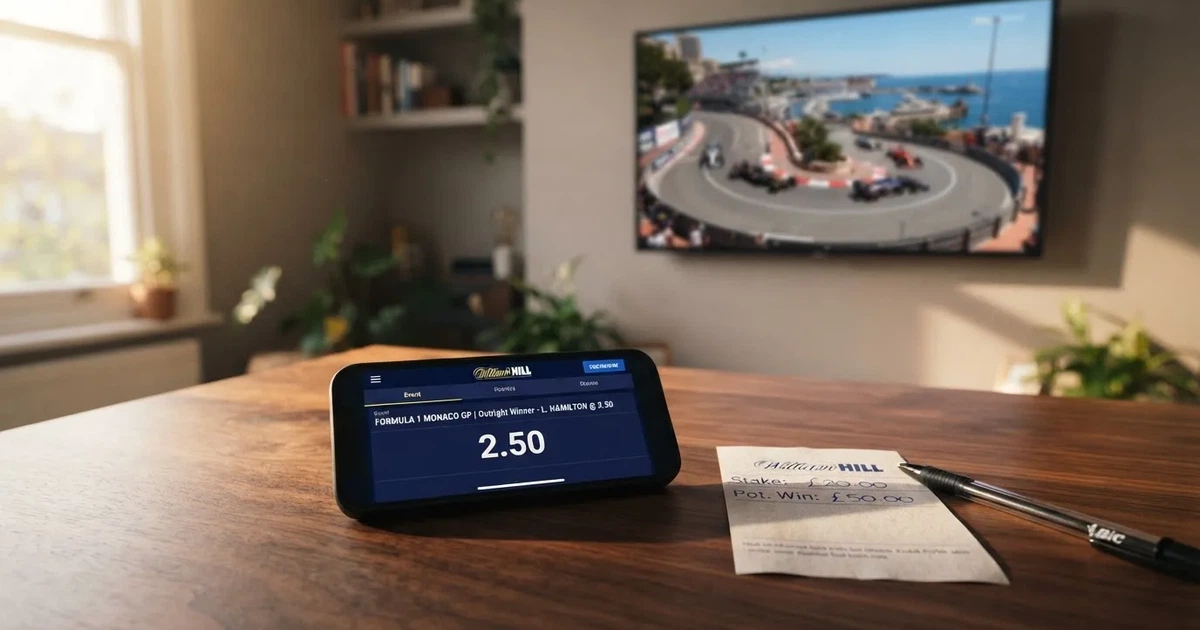
Motorsport is one of the quieter sports in British betting shops, but online it has become harder to avoid. Formula One drives the bulk of the volume, with Formula E, IndyCar, the World Endurance Championship, MotoGP, the World Rally Championship and NASCAR running all year and bookmakers taking bets on most of it. The list of licensed operators is longer than the list of operators that actually post a price for the Monaco Grand Prix on the morning of the race, and the gap between the two is one of the more useful things to know before opening an account.
This page is written for the British punter, in pounds, and against the rules in force under the Gambling Act 2005. The angle is cost: what a price actually returns, what the bookmaker’s margin takes off the top, and what a welcome offer really clears to once its terms are worked through. Nothing here is a tip, because nobody knows who will win a race, and the page carries no working bonus code. The numbers and dates are taken from the Commission register, operator terms and the relevant sporting authorities.
Where motorsport betting sits in the British market
Governing bodies in motorsport
The Federation Internationale de l’Automobile, formed in 1904, is the oldest and most prominent governing body for vehicles with four or more wheels. The FIM governs motorcycle sport. Between them they oversee almost every series a British punter is asked to price up.

The main categories the betting public meets are open-wheel — Formula One, Formula E, IndyCar; touring car; endurance, where the 24 Hours of Le Mans, held each June in France, sits inside the FIA World Endurance Championship; rallying; and motorcycle racing. Outside the FIA umbrella, NASCAR and IMSA run their own calendars in North America. Each series has its own market depth: a Formula One Grand Prix will have more pre-race price points than a World Rally Championship round, and MotoGP sits somewhere between the two.
The 2026 racing schedule
The 2026 Formula One World Championship has 23 Grands Prix. It starts on 8 March at Albert Park in Melbourne and is scheduled to end on 6 December 2026 with the Abu Dhabi Grand Prix at Yas Marina. The grid has 11 teams, with Cadillac as the new entrant and Audi in as a works team after taking over Sauber. The 2026 team cost cap is 215 million US dollars.

The technical regulations for 2026 drop the MGU-H, lift MGU-K output to 470 bhp (350 kW), and replace DRS with active aerodynamics. An overtake mode will be available within one second of the car ahead, which matters for in-play markets because the lap-time gap that used to determine “DRS-eligible” now changes from one corner to the next. Lando Norris enters the season as the reigning Drivers’ Champion.
Endurance, rallying, Formula E and the motorcycle championships run on their own schedules. None of them is treated specially by British bookmakers — the same licence category covers them all — but the depth of markets is not uniform. A Le Mans 24-hour bet settles in the same way a Formula One race bet does, and an accumulator that mixes the two carries the same leg-by-leg risk.
The ten operators ranked, and how the comparison is built
This is a comparison of ten Gambling-Commission-licensed bookmakers. The rank is not a verdict on who is best; it is the order in which the operator cards are presented below. What each card carries is the licence number and licence holder as the Commission’s public register states it, alongside the operator’s own terms on the things the punter actually checks before placing a bet.
A few points of framing matter at the top. A place in this list is not a licence. Several of the brands sit under the same ultimate parent, and the register shows the licence holder, which is a corporate name that is often not the brand on the betting slip. Best odds guaranteed, acca insurance, bet builders and the like are described only as the operator’s own terms state them. Where the terms say something the punter needs to read carefully, that is noted.
The comparison that runs through the cards below is on three rows only: the licence number and holder, the operator’s own statement on the key, and an editorial verdict. Anything else would mean inventing a figure or repeating one licence line ten times, and neither of those helps a punter decide.
| Brand | Gambling Commission licence | Operator’s own statement on the key |
|---|---|---|
| NetBet | 039170-R-319343-032 (Netbet Enterprises Limited) | Daily Boosts, Profit Boosts, free bet offers, Bet Builder with instant dynamic odds |
| Star Sports | 009177-R-104555-019 (Star Racing Limited) | Speak to a trader directly on 08000 521 321 to open an account, place bets or ask queries |
| DragonBet | 064908-R-339041-003 (DragonBet Ltd) | Welsh football and rugby markets, racing, American football, in-play and bet builder |
| William Hill | 039225-R-319373-015 (WHG (International) Limited) | Best Odds Guaranteed on UK and Irish racing from 8am, singles and multiples, no ante-post |
| DAZN Bet | 048756-R-327274-019 (DZBT Limited) | Deposits from £5 by debit card, Apple Pay, Paysafecard, Trustly, Skrill; £20 by PayPal |
| Fafabet | 057385-R-333191-006 (Taichi Tech Limited) | Best Odds Guaranteed on UK and Irish racing from 9am; the bigger of price and SP is paid |
| BoyleSports | 039469-R-319383-025 (Boylesports Enterprise) | £20 in free bets when a £10 qualifying bet is placed (UK players) |
| BetTom | 064959-R-339314-003 (Bet Tom Limited) | 50% back as a free bet up to £50, plus a matching 50% back up to £50 as free slot funds |
| Fitzwilliam Sports | 048760-R-335434-009 (SBKI Limited) | Capped-membership Dublin bookmaker, “High Stakes Welcome” subject to compliance criteria |
| BetGoodwin | 002927-R-327985-008 (Goodwin Racing Limited) | “Bet £10 & Get £15 in Free Bets”: £5 sports, £5 acca, £5 Sub-Cover |
NetBet
NetBet is the kind of mid-sized operator where the welcome is layered but the racing underbelly is thin. The site lists Daily Boosts, Profit Boosts and free bet offers, with a Bet Builder that updates the combined price as selections are added, and sports stats panels for the bigger leagues. That mix suits a punter who prices up F1 and the bigger football matches on the same slip.
The trade-off is depth. Where a William Hill or a bet365 carries a long tail of lower-tier motorsport, NetBet’s motorsport menu is the headline series and not much more. The punter who bets on the F1 race weekend and not much else in motorsport will not feel that; the punter who wants a price on a Formula E support race or an IMSA round will be refreshing the page.
Worth it for the Formula One punter who also bets on football, where the Bet Builder and the boost cycle do the work. Less interesting to a pure motorsport follower, and a reader who is mainly here for the racing menu should look at the cards below before settling.
Star Sports
Star Sports is the one bookmaker in this list that still answers the phone. The Apple Store listing states that customers can call 08000 521 321 to open an account, place bets or ask queries, with [email protected] as the email route. That is a deliberate positioning rather than a leftover: Star Sports’ model is closer to a high-street bookmaker’s than a pure online operator’s, and the phone line is part of the offer.
The motorsport menu is what it is: the bigger series priced up, the smaller ones usually not. There is no motorsport-specific best-odds-guaranteed, because BOG is a racing product and the racing that matters for BOG is British and Irish horse racing. The cost of the human account service is that the price the book offers is not always the headline price on a price-comparison site, and a punt on a tight F1 qualifying market may not be where Star Sports wins.
Worth it for the punter who values speaking to a trader and who is happy to take a slightly less aggressive price in return. Less interesting to the click-through customer who only shops by decimal odds and never opens the chat.
DragonBet
DragonBet is the Welsh-facing brand in this list, with markets on Welsh football and rugby alongside the British racing core, plus American football, in-play and a bet builder. The licence holder is DragonBet Ltd, which is named in the Commission’s public register against the same account number the operator quotes.
The motorsport offering is mainstream British: Formula One, MotoGP, Formula E, the World Endurance Championship and the World Rally Championship on the bigger weekends, with price points that mirror the wider market. Nothing in DragonBet’s terms suggests a motorsport-specific edge, and the brand’s identity is Welsh sport first, with motorsport and racing as a complementary menu.
Worth it for the Welsh punter who wants a bookmaker that is properly licensed and properly Welsh in its lineup, with motorsport as a second-string menu. Less interesting to a reader who is only here for F1 and has no interest in the rest of the card.
William Hill
William Hill is the longest-established high-street name on this list, and the Best Odds Guaranteed term is the one the racing punter actually checks. From 8am on the day of a UK or Irish race, if the starting price comes in bigger than the price taken, William Hill pays the bigger one — on single bets and on multiples. The rule does not apply to ante-post bets, to tote or to pari-mutuel pools, and that is the kind of carve-out a reader should know before assuming BOG covers everything on the slip.
The motorsport menu is wide by British standards. The bigger F1 weekends carry outrights, race winner, podium, fastest lap, qualifying and the occasional head-to-head. The price is not always the best in the market, but the depth of markets and the BOG backstop on the racing side give a punter a single account to work from. William Hill is the more obvious choice for the punter who mixes motorsport with horse racing; the pure F1 punter will find the price competitive without being the headline.
Worth it for the mixed racing-and-motorsport punter who values BOG and the depth of the racing menu. The motorsport price is competitive without being the top of the market, and the offer makes the most sense when BOG is in use.
DAZN Bet
DAZN Bet is the brand the sports streaming service DAZN put into the British market. The deposit stack is the headline here: from £5 by debit card, Apple Pay, Paysafecard, Trustly or Skrill, from £20 by PayPal, with no processing fees. That is a deliberately broad choice and it makes a difference to the punter who pays with PayPal and was quoted a £20 minimum at a competitor.
The motorsport menu runs with the market. The welcome offer changes, and the brand’s pitch is less about motorsport-specific pricing and more about the streaming angle. A punter who already has a DAZN subscription and wants to keep the account in one family will use the brand for motorsport as a matter of convenience; a punter who shops by price will not find the motorsport quote regularly at the top of the market.
Worth it for the PayPal-using punter at the £20 minimum and the existing DAZN subscriber who wants everything in one account. Less interesting to the punter who prices up motorsport by the bookmaker.
Fafabet
Fafabet’s motorsport menu is mainstream British, with the same F1-and-MotoGP spine most of the list carries. The brand’s Best Odds Guaranteed is a racing product: from 9am on race days, on UK and Irish horse racing win and each-way bets, the bigger of the original price and the starting price is paid. That is one hour later than William Hill’s 8am, and a punter who wants the earlier window will use William Hill.
The welcome offer is not motorsport-specific, and the brand’s positioning is value-conscious rather than motorsport-led. The result is a serviceable menu for the punter who bets on the F1 race weekend and on the rest of the British racing calendar, and who is happy to take a competitive-but-not-top-of-market price.
Worth it for the punter who bets a £5 or £10 stake across the F1 weekend and the Saturday racing, where the 9am BOG cuts in. Less interesting to the punter who wants the absolute top of the market on a single motorsport selection.
BoyleSports
BoyleSports is the Irish bookmaker that has built a serious British online presence. The sports welcome offer for UK players is £20 in free bets when a £10 qualifying bet is placed; the Irish equivalent is €30 in free bets for a €10 bet. The £10 trigger is on the low end of what British bookmakers demand, which makes the offer accessible to a punter who does not want to put a £20 or £25 stake down to qualify.
The motorsport menu is wide. BoyleSports is one of the brands that posts a price for the smaller F2 and F3 races, and that goes for the World Rally Championship and the World Endurance Championship. The price is not always the headline price, but the depth of the menu is a useful complement to a pure-F1 account.
Worth it for the punter who wants a licensed British site with a low qualifying stake and a deep motorsport menu. The welcome offer is small in headline terms but proportionate to the £10 trigger.
BetTom
BetTom is the newer name on this list, and the welcome offer is the joint sports-casino package: 50% back as a free bet of up to £50, with a matching 50% back up to £50 as free slot funds. The full terms carry conditions on the free-bet stake, the qualifying bet and the slot funds, and a punter should read them before treating the offer as £100 of value.
The motorsport menu is the standard British card: F1, MotoGP, Formula E, WRC, WEC and the headline NASCAR races. The punter who uses BetTom because of the welcome offer will come back for the menu if the price holds; the punter who already has an established F1 book will not find the brand moving the market on price.
Worth it for the punter who wants the joint sports-casino welcome, with the free bet and the slot funds as a package. Less interesting to the pure motorsport punter, where the menu is serviceable without being distinctive.
Fitzwilliam Sports
Fitzwilliam Sports is the Dublin bookmaker in this list, and the pitch is a “High Stakes Welcome” subject to compliance criteria for a capped membership. The site offers instant deposits, fast withdrawals, timeouts and deposit limits, and links to GambleAware, GamStop and Gamblers Anonymous. The membership cap is the brand’s deliberate position: this is not a mass-market bookmaker, and the welcome is structured around higher-stakes play.
The motorsport menu is mainstream. The offer makes sense to a punter who wants a Dublin-based, capped-membership alternative to the British high-street names, and who values the human service of a smaller bookmaker. A casual F1 weekend punter will find the menu and the price adequate without being lifted out of the wider market.
Worth it for the punter who wants a smaller, capped-membership bookmaker and is comfortable with the higher-stakes welcome framing. Less interesting to the casual punter, where the membership model is a feature and not a problem.
BetGoodwin
BetGoodwin’s sports welcome offer is “Bet £10 & Get £15 in Free Bets”, split into a £5 sports bet, a £5 acca and a £5 Sub-Cover bet. The split is unusual — most bookmakers offer a single free bet of £15 or a £15 accumulator — and it is the kind of structure a punter needs to read before assuming the £15 is a single line.
The motorsport menu is mainstream British. The brand’s positioning is the racing core with motorsport as a complement, and the welcome is built around that. The punter who uses BetGoodwin for the welcome offer will need to place the £5 acca, the £5 sports bet and the £5 Sub-Cover to clear the full £15, and that is a more involved structure than the single-free-bet welcome at some competitors.
Worth it for the punter who is happy to place three separate qualifying bets to clear £15, and who wants a British-licensed bookmaker with a familiar racing-and-motorsport menu. Less interesting to a punter who wants one free bet, not three.
How British motorsport betting is regulated
The Gambling Commission, a non-departmental public body sponsored by the Department for Culture, Media and Sport, regulates the whole commercial market under the Gambling Act 2005. The Act covers Great Britain — England, Scotland and Wales. Northern Ireland is outside the Act and runs its own older law, so a “Great Britain licence” regulates customers south of the border only.
Since the Gambling (Licensing and Advertising) Act 2014, an operator whose remote facilities are used in Great Britain needs a Commission licence wherever it is based. Sections 33 and 36 of the 2005 Act, as amended, set that out. A Curaçao, Maltese or Gibraltar licence is not a substitute for the British one, because the licence is required at the point of consumption rather than the point of establishment. There is no state monopoly and no cap on the number of licences: the Commission’s public register lists every brand that holds one, and the register can be searched by business name, trading name, domain or account number.
Betting licence types are five: remote general betting standard (real events), remote general betting standard (virtual events), remote general betting limited, remote pool betting, and remote betting intermediary (the licence for betting exchanges). The brands on this page hold the real-events category. Financial spread betting, where a contract is settled on the difference between a price taken and a final index level, is regulated by the Financial Conduct Authority, not the Commission, and losses can exceed the original deposit.
Identity verification is the first thing a licensed operator asks for. Name, address and date of birth are checked before a customer can deposit or gamble, and that has been the case since 7 May 2019. The check covers free bets and bonuses, not only cash play. There is no anonymous play at a licensed site. Credit cards have been banned for gambling in Great Britain since 14 April 2020, including credit-card-funded payments through an e-wallet; debit cards and bank-based payments are not covered by that ban.
What may be bet on, and what may not
There is no statutory list of permitted bets or markets. An operator holds a licence for a category and offers markets under its own rules and the Licence Conditions and Codes of Practice (LCCP). In-play betting is offered across the market and the controls are the operator’s licence conditions and customer-protection duties, not a statutory line. Esports are treated like any other event; virtual events are a separate licence category; bets on politics, TV shows and novelty markets are offered by GB bookmakers and no statutory prohibition was found.
Betting exchanges run under a betting intermediary licence, and rates and rules specific to exchanges are stated only from each exchange’s own terms. Spread betting that is not a financial product is inside General Betting Duty. Off-course pool betting on horse or dog racing is a separate licence and duty. There is no statutory cap on stakes in sports betting, and operators set their own maximum stakes and may restrict customers.
Offshore operators and the cost of going unlicensed
A GB licence is compulsory at the point of consumption. Providing gambling facilities in Great Britain without the licence the Act requires is an offence under section 33 of the Gambling Act 2005, on summary conviction punishable by up to 51 weeks’ imprisonment, a fine up to level 5, or both (six months’ imprisonment in Scotland). The offence is aimed at the operator, not at the customer who merely bets on an unlicensed site.
The cost of betting on an unlicensed site is the loss of protection: no GAMSTOP coverage, no Commission complaints route, no approved dispute-resolution body, no British consumer redress if funds are withheld, and no binding of the operator by the 10x bonus cap or the £150 vulnerability check. The Commission enforces the requirement by disruption rather than by blocking: cease-and-desist notices, search-engine referrals, and work with registrars, hosts and payment providers. Court-order DNS blocking powers are at the Committee stage or have been enacted, and the honest framing is that the enforcement is real and the blocking is partial. A licensed site means checks, limits, GAMSTOP and a bonus cap; an unlicensed site means none of those and the risk of losing the stake to an operator that does not answer to a British regulator.
Safer gambling tools every licensed bookmaker has to offer
The Commission’s safer-gambling regime runs in three layers: self-exclusion, deposit limits and financial checks. The first is GAMSTOP, the national multi-operator online self-exclusion scheme and a mandatory licence condition for online operators since 31 March 2020. The periods are six months, one year, five years, or five years with auto-renewal, and after the minimum period the exclusion stays in place for a further seven years unless the customer asks GAMSTOP to remove it. GAMSTOP covers online sites and apps; betting shops use a separate service.
Deposit limits are the second layer. Operators must offer a gross deposit limit on a fixed time frame, under the Remote Technical Standards (RTS 12). The first changes have applied since 31 October 2025, a second phase was postponed to 30 September 2026, and whether it is in force at any given moment is not always clear from the operator’s site. There is no state-set deposit or loss ceiling for betting: limits are the customer’s choice, and the limit the operator offers is a tool rather than a cap.
Financial checks are the third layer. The financial vulnerability check (LCCP condition 3.4.4, in force since 30 August 2024) applies to licensed remote betting when a customer’s deposits minus withdrawals exceed £150 in a rolling 30 days, and the £150 trigger has applied since 28 February 2025. The check is a public-record check — bankruptcy, county court judgments and the like — not an income check and not a credit reference check. Financial risk assessments, the affordability checks the press has been writing about for years, are announced in a staged plan and have no start date; the honest wording is “announced, staged, no start date”, not “in force”.
Help outside the operator is available through GamCare (which runs the National Gambling Helpline), GambleAware, the NHS gambling clinics and Gamblers Anonymous. A punter who feels the betting has become a problem can self-exclude through GAMSTOP, set a deposit limit with the operator, or contact one of those services directly.
Welcome offers, free bets and what they actually cost
A welcome offer is the operator’s price for a new account, and the headline number is rarely the number the punter actually clears. Three terms matter: the trigger stake, the wagering requirement, and the minimum price on the qualifying bet. Reading those three numbers is what separates a £20 free bet from a £100 bonus, and the gap between them is the offer’s true cost.
How a free bet is settled
A free bet is a token, not cash, and the stake is usually not paid back with a win. A £10 free bet at decimal odds of 5.00 returns £40 in winnings, not £50; the £10 stake disappears. A “risk-free” bet is the same shape: the stake is returned as a free bet, not as cash, and the punter who does not understand that distinction treats the offer as a refund when it is a re-up.
The cap on free-bet winnings is the second thing to read. Some operators cap the winnings from a free bet at a multiple of the free bet; others cap the total payout. A free bet at odds of 50.0 is not the same as a free bet at odds of 5.0 once the cap is in, and a punter who picks the long shot for the headline odds is sometimes picking the long shot for a return that would have been capped anyway.
Wagering requirements and the 10x cap
Wagering requirements on bonuses are capped at 10x in Great Britain, a rule in force since 19 January 2026. A £10 bonus at 50x wagering would need £500 of qualifying bets; under the cap, no more than £100 of qualifying bets. The cap is a hard ceiling rather than a sliding scale, and the punter who reads a 50x bonus as a small bet is reading a bonus that no British-licensed operator can offer.
Mixed-product promotions, an offer that requires gambling on two or more product types such as betting, casino, bingo and lottery, are banned under the same 19 January 2026 rules. A “bet on football to get free spins” offer cannot be marketed by a GB-licensed operator, because it ties the betting product to the casino product. The cap and the mixed-product ban are not the same rule, and the punter who sees the 10x cap on the bonus and assumes the offer is the same is wrong: a smaller bonus with no wagering is often a better deal than a larger bonus with a 5x or 10x requirement, because the wagering carries the cost of the bettor’s own stake in bets that are settled at a margin.
The cost of a bonus on average
A bonus with a 5x wagering requirement on a £20 bonus is £100 of qualifying bets. Each of those bets is settled at the bookmaker’s margin, which is the percentage of the stake the book keeps on average. A 5% margin across £100 of qualifying bets is £5 of expected cost; a 10% margin is £10. The expected cost is the book’s take across the wagering, and it is the price the punter pays for the bonus before the bonus is paid out.
That is why a smaller bonus with no wagering is often better than a larger bonus with a 5x requirement. The £20 bonus with 5x wagering costs the punter £5 to £10 in expected margin; the £10 free bet with no wagering costs the punter the margin on a single bet. The headline number is the offer’s price tag; the expected cost is the offer’s true price.
What the welcome offers on this page actually do
BoyleSports’ £20-in-free-bets offer for a £10 qualifying bet is a single free bet, and the cost is the margin on the qualifying bet and the margin on the free bet. The £10 trigger is on the low end of the British market, which makes the offer accessible; the £20 headlined value is settled on a single selection with no wagering on the free bet itself.
BetTom’s 50%-back-up-to-£50 welcome is a free-bet refund on a losing first bet, with a matching slot-funds offer. The free-bet stake is not paid back on a win, the slot funds carry their own terms, and the punter who reads “up to £50” as a guaranteed £50 is reading a refund that depends on the size of the losing first bet.
BetGoodwin’s “Bet £10 & Get £15 in Free Bets” is a three-part welcome — a £5 sports bet, a £5 acca, a £5 Sub-Cover. The punter who treats the £15 as a single free bet has not read the terms: each of the three is a separate bet, and the three are not interchangeable.
The honest read on all of these is that the welcome offer is the operator’s price for a new account, and the punter who chooses by the headline number alone is choosing on the most expensive basis. The trigger stake, the wagering requirement, the cap on winnings, and the minimum price on the qualifying bet are the four numbers that decide the offer’s true cost.
Bet types, odds and the bookmaker’s margin
The bet types a motorsport punter meets
A single is one selection. A double is two selections on the same slip, with the price the product of the two. A treble is three. An accumulator, usually called an acca, is four or more. A Trixie is four bets on three selections (three doubles and a treble). A Patent is seven bets on three selections (three singles, three doubles and a treble). A Yankee is eleven bets on four selections. A Lucky 15 is fifteen bets on four selections. A Canadian is twenty-six bets on five selections. A Heinz is fifty-seven bets on six. A Goliath is two hundred and forty-seven bets on seven. The unit stake is the stake on one leg; the total stake is the unit stake times the number of bets, and the punter who treats a Lucky 15 as four bets is betting four times the unit stake on every selection.
Each-way betting is two bets of equal stake: one on the win, one on the place. The total stake is double the unit stake. Place terms vary by race and by operator, and the punter who reads each-way as one bet is reading a doubled stake and a halved return on the place leg.
Fractional and decimal odds
British bookmakers price in fractions by default, and the decimal form is the multiplication factor. Fractional 5/1 is decimal 6.00, because 5 divided by 1 plus 1 is 6. Fractional evens is decimal 2.00. Fractional 9/10 is decimal 1.90, because 9 divided by 10 plus 1 is 1.9, written 1.90. The conversion is a divided by b plus one, and the punter who works in fractions and reads a decimal line is multiplying stake by decimal odds for the return.
A stake of £10 at decimal 6.00 returns £60. A stake of £10 at fractional 5/1 returns £60 — the £10 stake plus £50 of winnings. The two forms are the same market; the difference is the arithmetic. The Commission register does not require a particular form, and bookmakers are free to display either or both.
What the bookmaker’s margin looks like in the odds
The bookmaker’s margin is the percentage of every pound bet the book keeps on average across a market. It is the bookmaker’s edge before any specific selection wins, and it is built into every price. The honest way to see it is to add up the implied probabilities of every outcome in a market and subtract from 1.
A two-way market with both sides priced at decimal 1.90 has an implied probability of 1 divided by 1.90 on each side, which is approximately 0.5263. The two implied probabilities add up to approximately 1.0526, and the margin is 1 minus the payout share, which is 1 minus 1 divided by 1.0526, or about 5%. That is a band rather than a single number because the margin depends on the exact decimal prices, and the punter who treats 1.90/1.90 as a 5% margin is treating the rounded price as the exact one.
A two-way market at 1.80/1.80 is a larger margin — the implied probability on each side is 0.5556, the sum is 1.1111, and the margin is 1 minus 1 divided by 1.1111, or about 10%. A two-way market at 2.00/2.00 is a smaller margin — implied probability 0.5, sum 1.0, and a 0% margin if the sum is exactly 1.0, which is the rare fair market rather than the rule.
The bigger the margin, the more the punter pays for the bet on average. A 10% margin across £100 of bets is £10 of expected cost; a 5% margin is £5. The margin is not the same as the punter’s take, because a winning bet pays out at the full decimal price and the margin is the average across the winning and losing bets, but the margin is the single number that tells the punter how much the book is taking off the top.
In a Formula One race with twenty drivers priced up to a tenth, the overround — the sum of the implied probabilities minus 1 — is usually 110% to 130%, because the bookmaker is taking a margin on a market with twenty outcomes rather than two. The margin is the same idea at twenty drivers, and the punter who reads the F1 race winner market as a “tight” market because the favourites are close is reading a market with a 25% margin, which is wider than a 5% margin on a two-way F1 qualifying match bet. The shape of the market matters, and so does the size of the field.
What a winning bet pays back
A winning bet returns the stake plus the winnings at the decimal odds. A £10 bet at decimal 5.00 returns £50: the £10 stake and £40 of winnings, because the net profit is the stake times the decimal odds minus 1, and 10 times 4 is 40. A £10 bet at decimal 1.50 returns £15: the £10 stake and £5 of winnings. A £10 each-way bet on a horse at decimal 6.00 with a quarter odds place term returns £10 on the win leg if it wins, plus the place leg of £2.50 in winnings at a quarter of the win odds — a small number, and a punter who picks an outsider on an each-way basis is betting a doubled stake for a small place return.
For a combination bet, the decimal odds of the legs multiply into one price. A double at 2.00 and 3.00 is decimal 6.00, and a £10 double returns £60 if both legs win. A treble at 2.00, 3.00 and 4.00 is decimal 24.00, and a £10 treble returns £240 if all three legs win. The price is the multiplication, and the risk is that all the legs have to win. The margin is multiplied as well, and the punter who treats a long acca as “easy money” is reading a market where every leg carries a margin and the multiplied margin is the book’s take across the slip.
Cash out, bet builder and in-play
Cash out is the operator’s offer to settle a bet before the event is over, at a price derived from the current state of the market. The price is set by the bookmaker and is not the price the punter would get on the betting exchange, and the punter who treats cash out as a price-discovery tool is treating the bookmaker’s price as the market’s. Bet builder and same-game multi are the operator’s offer to combine markets from one event into a single bet; the price is calculated as the selections are added, and the margin on the combined bet is not the sum of the margins on the individual markets. In-play is the operator’s offer to keep the market open through the event; the price moves with the event, and the punter who reads an in-play price as a pre-race price is reading a market that is moving under the slip.
Each of these is the operator’s product rather than the punter’s, and the cost of each is built into the price. A punter who wants to know the cost reads the margin on the pre-race price, looks at the in-play price, and decides whether the in-play move is worth the cost of being in the market.
The calculation behind the page
A two-way market priced at decimal 1.90 on each side is the standard shape of a balanced bookmaker’s market on a closely priced selection. The implied probability of each side is 1 divided by 1.90, which is approximately 0.5263. The sum of the implied probabilities is approximately 1.0526, which is 105.26% in percentage terms. The payout share is 1 divided by the sum, which is approximately 0.95, or 95%. The margin is 1 minus the payout share, which is approximately 0.05, or 5%.
The honest read on a 1.90/1.90 market is that the bookmaker keeps about 5p of every pound bet across the market on average, and pays out 95p. That is a band rather than a single number because the price is rounded and the sum of the implied probabilities is an approximation, and the punter who reads 1.90/1.90 as exactly 5% is reading the rounded price as exact.
A two-way market at 1.80/1.00 (which is the same shape) is a larger margin — the implied probability on each side is 0.5556, the sum is 1.1111, and the margin is about 10%. A two-way market at 2.00/2.00 is the rare fair market where the sum of the implied probabilities is exactly 1.0 and the margin is 0%. The 1.90/1.90 band is the working middle of a competitive British bookmaker’s two-way market, and a punter who sees 1.95/1.95 or 1.85/1.85 is looking at a slightly tighter or slightly wider margin.
The same shape on a twenty-driver Formula One race winner market is a sum of implied probabilities of about 1.10 to 1.30, which is a 10% to 30% margin. That is wider than the two-way market and is the reason a punt on the F1 race winner is more expensive in margin terms than a punt on an F1 qualifying head-to-head. The field is wider, the favourites are spread across more drivers, and the book takes more for the privilege.
The expected cost of a £100 of bets at a 5% margin is £5. At a 10% margin it is £10. At a 20% margin it is £20. The cost is the book’s take across the bets, before any individual bet wins, and it is the number a punter uses to compare one bookmaker’s price to another’s, and one market to another.
Frequently asked questions
How can it be checked that a bookmaker holds a Gambling Commission licence?
The Commission’s public register can be searched by business name, trading name, domain or account number, and a brand that holds a remote general betting standard (real events) licence will appear against the corporate licence holder named on the register. The register is the test, and a brand that does not appear is not licensed for Great Britain regardless of what the operator’s own site says.
How is the return on a bet worked out from the stake and the odds?
The return is the stake multiplied by the decimal odds, and the net profit is the stake multiplied by the decimal odds minus 1. A £10 stake at decimal 5.00 returns £50 in total, with £40 of net profit, and the same calculation works for any decimal price. For a combination bet, the decimal odds of the legs multiply into one price before the stake is applied.
What is the bookmaker’s margin and how can it be seen in the odds?
The margin is the percentage of every pound bet the book keeps on average across a market, and it is calculated by adding up the implied probabilities of every outcome in the market and subtracting from 1. A two-way market at decimal 1.90 on each side has a margin of about 5%, and a wider market with more outcomes has a wider margin.
How do fractional odds such as 5/1 convert to decimal odds such as 6.00?
The conversion is the fraction divided plus 1. Fractional 5/1 is 5 divided by 1 plus 1, which is 6.00 in decimal form. Fractional 9/10 is 9 divided by 10 plus 1, which is 1.90 in decimal form. Fractional evens is 1 divided by 1 plus 1, which is 2.00 in decimal form, and the two forms are the same market priced in two ways.
Which tools for controlling play does a licensed bookmaker have to offer?
GAMSTOP for online self-exclusion across operators, deposit limits on a fixed time frame, timeouts for short breaks, and the financial vulnerability check at the £150 net deposit threshold in a rolling 30 days. Help outside the operator is available through GamCare, the National Gambling Helpline, GambleAware, the NHS gambling clinics and Gamblers Anonymous.
Combat & motorsport – AI Betting
Content created by the «AI Betting» team
