
Super Heinz bet: 120 bets across seven selections, and what it actually pays
 Available in US
*Current as of 26 October 2026 · verified against the Gambling Commission’s public register.*
A Super Heinz is one of the more punishing full-cover bets a UK punter can place without realising it. Seven selections, 120 separate bets, every combination from the doubles up to the single seven-fold accumulator, and a stake that multiplies by the number of lines before the first leg is even settled. The structure is a Heinz (six selections, 57 bets) with a seventh pick bolted on, and one short of a Goliath (eight selections, 247 bets). It is the kind of bet a bookmaker is happy to promote because the headline figure is the maximum return on the seven-fold, and the maximum return is the only part of the calculation the marketing materials want the punter to think about.
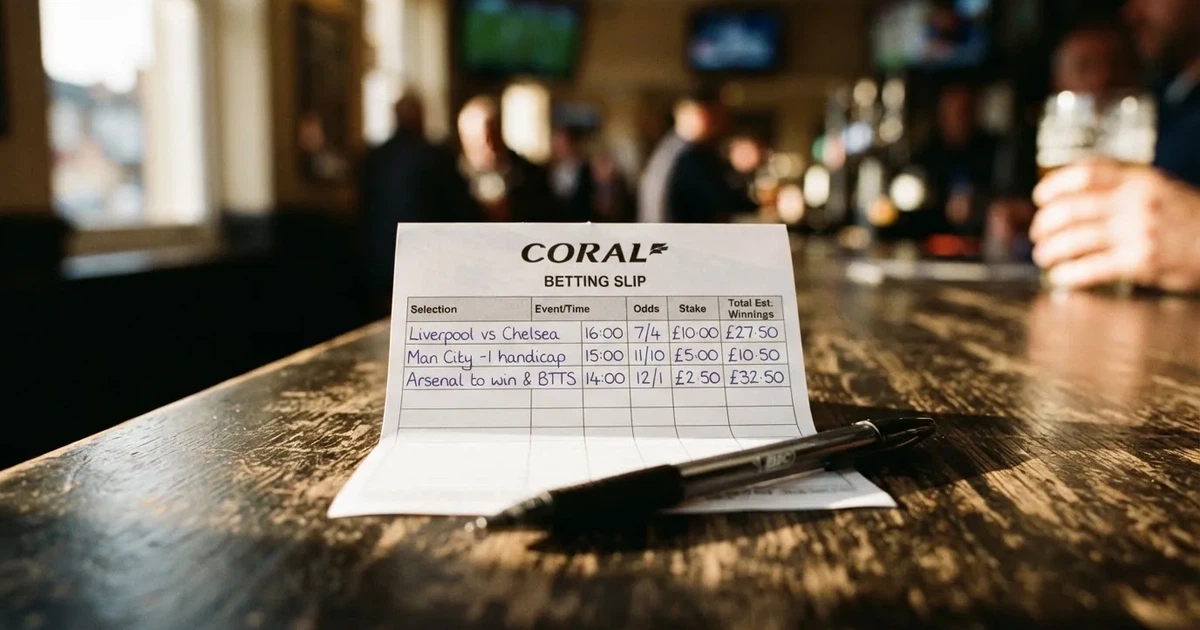
The job of this page is to lay that calculation out honestly, the way a costing works in practice, with the stake per line, the unit return and the settled return once the dust settles. For a UK punter, that also means checking that the bookmaker is on the Gambling Commission’s public register before the bet is placed, because the bet itself is only the start of the relationship with the operator.
What a Super Heinz is, and what it is not
A Super Heinz is a full-cover bet on seven selections. Full cover means every possible multiple bet that can be made from those seven picks, from the smallest (a double, two selections) up to the largest (a single seven-fold, all seven), with the singles deliberately left out. A standard Super Heinz contains no single bets: every one of the 120 bets is at least a double.

The breakdown is fixed by the combination count, not by the bookmaker. From seven selections, the number of ways to combine them into multiples of a given size is the binomial coefficient. That gives:
- 21 doubles
- 35 trebles
- 35 four-folds
- 21 five-folds
- 7 six-folds
- 1 seven-fold
Add them up and the total is 120 bets. Staking £1 per line costs £120; staking £2 per line costs £240. The total stake is always the unit stake multiplied by 120, which is the number that quietly turns a “small” bet into a serious one. A punter who is comfortable staking £2 on a single accumulator will flinch at £240 on a Super Heinz, and the bookmaker knows it.
The structure is a clean progression from a standard Heinz, which uses six selections for 57 bets, and a step short of a Goliath, which uses eight for 247 bets. The extra selection is what costs the punter most: adding a sixth pick to a Yankee (four selections, 11 bets) produces a Super Yankee or Canadian (26 bets); adding a seventh to a Canadian takes the count from 26 to 120. The seventh selection is the expensive one, because it multiplies into the count more than any prior addition did.
A full-cover bet like this is sometimes offered with a “flag” version, which adds the singles on top, but a true Super Heinz does not include the singles, and a punter should check the betting slip before confirming.
How a Super Heinz settles when a leg lets down
A Super Heinz is settled line by line, and the result on each line is independent of the others. A seven-fold that wins pays out across all 120 lines at whatever the combined odds are. A seven-fold with one losing leg means the seven-fold, all seven six-folds containing that leg, all 21 five-folds containing that leg, all 35 four-folds, and the trebles and doubles that include it, all lose. The lines that don’t include the losing leg still settle, if their own picks all won.

That is where the punter’s experience of a Super Heinz gets uncomfortable. A bet with 120 lines does not need all 120 to lose; it needs only one leg to let down badly enough that the lines carrying it drag the rest of the bet into a loss. The famous marketing image of a Super Heinz producing a return from “just two winners” is technically true in the sense that a double can win even when the other 119 lines lose, but the cost of staking 120 lines to chase a double-return is the joke the marketing copy doesn’t tell.
When a leg is void rather than lost (a non-runner in a horse race, a match abandoned before the bet was struck off as void), the bet drops to the next multiple: a seven-fold becomes a six-fold, a treble becomes a double. The stake on that line is not lost. Bookmakers publish their own rules for voids, and the punter who places a Super Heinz across sports with non-runner risk (horse racing, greyhounds) should read those rules before staking, because the difference between “void” and “losing” is the difference between a smaller accumulator and a dead line.
Stake, return and what the unit stake actually buys
A punter who has not placed a full-cover bet before is usually surprised by the total stake, because the punter is not staking against the seven selections but against the 120 combinations those selections produce. Two calculations govern the bet: the total cost, and the return on any one line that wins.
The total cost is the unit stake multiplied by 120. A unit stake of £1 means a total stake of £120. A unit stake of 50p means a total stake of £60. The punter is paying 120 times the unit price, and that is the price of admission to the structure.
The return on any single winning line is the unit stake multiplied by the odds of that line. For a treble, the odds are the product of the three selections’ decimal odds. For the seven-fold, the odds are the product of all seven decimal odds. The punter’s return on a winning Super Heinz is the sum of the returns on each winning line, with the unit stake (not the total stake) refunded on each winning line as part of the standard decimal-odds return.
A worked example makes the arithmetic clear. Take three illustrative selections at odds of 1/2 (1.50), evens (2.00) and 6/4 (2.50), the kind of short-priced combination a Super Heinz punter would recognise from a Saturday coupon. A straight accumulator on all three, with a stake of £10, settles at 1.50 × 2.00 × 2.50 = 7.50 in decimal odds, for a return of £75 from a £10 stake. The same three selections as part of a seven-selection Super Heinz would have to be combined with four further picks to produce a working bet; the example illustrates the return formula for a single accumulator line, and that formula is the same one used for every line inside a Super Heinz.
For a unit stake of £2 per line on a full Super Heinz, the total stake is £240. If the seven-fold wins at combined decimal odds of, say, 600, the seven-fold line alone pays £1,200, but that is one line out of 120, and the other 119 lines still need to settle. A Super Heinz is not a “place one bet and watch the seven-fold” structure; it is a place 120 bets and watch all of them structure, and the punter’s overall result depends on the total of the 120 returns minus the £240 total stake.
The return formula itself is: return = stake × decimal odds. The net profit is return minus stake, or stake × (decimal odds − 1) for a single bet. For a combination, the combined odds are the product of the legs, and the return on that line is the unit stake multiplied by the combined odds. The total return on a Super Heinz is the sum of those line-by-line returns, minus the £240 (or whatever the unit stake × 120 worked out to) total stake. The page gives the formula in a single sentence because the formula is what the punter needs; the multiplication between the inputs and the result is a calculator reading itself aloud, and a punter who can multiply can do the rest.
The bookmaker’s margin, and why it shows up everywhere
Every price on a Super Heinz carries the bookmaker’s overround, and the overround is the reason a “fair” combination of odds does not pay a fair return. A bookmaker builds a margin into every line of every multiple bet, including the 120 lines of a Super Heinz, and the margin compounds across the lines in a way the punter should understand.
The margin of a market is calculated from the prices on all outcomes of that market. For a simple 1X2 football match with home win at 2.10, draw at 3.40 and away win at 3.60, the implied probabilities are 1/2.10, 1/3.40 and 1/3.60, which sum to more than 1.00. The excess over 1.00 is the overround; the inverse of the sum is the payout share; the margin is 1.00 minus the payout share. A sum of 1.05 implies a 95.2% payout share and a 4.8% margin; a sum of 1.08 implies a 92.6% payout share and a 7.4% margin. UK bookmakers typically price football 1X2 markets somewhere in that band, with bigger margins on smaller leagues and outrights.
For a Super Heinz, the punter is not paying one margin: the punter is paying the margin of every line, and the lines compound the prices. If each leg is at decimal odds that already carry a 5% margin, the seven-fold carries that margin seven times over, in the sense that the overround compounds. The seven-fold is the most punter-friendly line for the bookmaker on a settled Super Heinz, because the bookmaker has the longest odds and the punter has to win all seven to collect; the doubles and trebles are the punter’s most frequent source of return, and they are the lines the bookmaker has already priced to a margin the punter will not see.
This is why a Super Heinz is not, as a class, a “good value” bet. It is a bet that gives the punter many ways to win, but every way the punter can win has been priced to a margin the bookmaker has already taken. The punter is paying 120 separate entries into that margin structure, and the only way the Super Heinz pays for itself is if the punter is, on average, finding selections whose true probability is higher than the bookmaker’s implied probability. That is hard, and the bookmaker is happy to take the bet.
The single-leg risk that a Super Heinz punter should price in
The marginal effect of one more selection is what makes a Super Heinz more dangerous than a Heinz. A Heinz is 57 lines; a Super Heinz is 120 lines; the additional 63 lines come from adding a single selection to the six. Each of those 63 lines is a separate bet, and each carries its own odds and its own margin. The punter who has been pricing a £2 Heinz and is comfortable with £114 of total stake is now staring at £240 of total stake for the Super Heinz, and the punter’s appetite for the bet has to stretch with it.
The honest framing is that a Super Heinz is intended for those with high confidence in seven selections, rather than those banking on six while hoping for a seventh. The final pick is the most costly, triggering the largest increase in the line count, and a punter unsure of the seventh is essentially paying for 120 lines to back a speculative inclusion.
A Super Heinz also has a single-line loss risk: a void on one leg moves seven lines down a step, a loss on one leg kills all 108 lines that include it, and a win on the seven-fold depends on all seven selections winning. A punter who places a Super Heinz across sports that are correlated (for example a Saturday coupon of seven short-priced football teams, several of whom are at home to weaker sides) carries an additional risk: if the favourites all win, the punter does well; if the league is upset-heavy that day, the punter is exposed on all 120 lines at once. Correlation is not a hedge, and a Super Heinz is not a portfolio.
Licensing in Great Britain: the only check that matters before the bet is struck
A Super Heinz can be placed only at a bookmaker licensed to take it. In Great Britain that means a bookmaker on the Gambling Commission’s public register holding a remote general betting standard (real events) licence, the category under which a multiple bet on real sporting events is offered. The Commission does not keep a list of permitted bet types; it licences operators to offer markets under their own rules. The test of whether a brand is licensed is the public register, which can be searched by business name, trading name, domain or account number, and that register is the only test.
The register is the whole of the test because, since the Gambling (Licensing and Advertising) Act 2014, an operator whose remote facilities are used in Great Britain needs a Commission licence wherever the operator is based. A Curaçao, Maltese or Gibraltar registration is not a substitute. A domain ending in .co.uk is not proof of anything: licensed UK bookmakers use .com as well as .co.uk, and a Curaçao-licensed brand can run a .co.uk domain. The only test is the register, and a punter who cannot find the brand on the register should not deposit at it.
The register also lists the trading names that fall under each licence, and several brands can run under one licensee. Ladbrokes and Coral, for example, fall under LC International Limited; Paddy Power and Betfair under Flutter Entertainment’s UK arm. The page treats each brand as a separate operator because each runs as a separate product, but the licence is the licence holder’s, and that distinction matters when the punter checks the register. A punter who searches for “Ladbrokes” finds the licence under LC International; a punter who searches for the licence holder’s name finds Ladbrokes and Coral on the same record.
For a Super Heinz specifically, the licence check is the same as for any other sports bet at the same bookmaker: the punter does not need a special licence category to place a multiple bet, and the multiple-bet offering is part of the standard remote general betting standard licence. The minimum age is 18. Identity verification (name, address, date of birth) is required before the first deposit, including with a free bet or bonus, and source-of-funds questions are normal at higher spend. There is no anonymous play at a licensed site.
The Commission also requires that every GB-licensed online operator take part in GAMSTOP, the national multi-operator self-exclusion scheme. A punter who has self-excluded cannot deposit, bet or claim a free bet at any GB-licensed bookmaker while the exclusion is in place. The exclusion periods are six months, one year, five years, or five years with auto-renewal, and after the minimum period the exclusion stays in place for a further seven years unless the punter asks GAMSTOP to remove it. A punter placing a Super Heinz at a licensed bookmaker is covered by GAMSTOP; a punter at an unlicensed site is not.
What a Super Heinz looks like at ten UK bookmakers
The page’s shortlist is ten operators on the Gambling Commission’s public register, each holding a remote general betting standard (real events) licence. The set is not a ranking and not a recommendation: every brand in the set is licensed, and the differences between them are in the markets they offer, the way they price them, and the features they put around the bet. A Super Heinz is offered by all of them as a standard multiple bet, but the surrounding product is what differentiates one from the next.
The full picture at a glance
| Brand | Gambling Commission remote licence | What the operator’s own terms state on the Super Heinz subject |
|---|---|---|
| Ladbrokes | 054743-R-330863-014 (LC International Limited) | A Super Heinz is built on the betting slip across 7 selections with 120 bets, settled line by line, with Best Odds Guaranteed on UK and Irish horse racing and Acca Boosts. |
| BetMGM | 039198-R-319450-029 (LeoVegas Gaming PLC) | A Super Heinz is built across 7 selections with 120 bets, with the sports welcome offer structured as four £10 free bets valid for 7 days on accumulators and multiples. |
| NetBet | 039170-R-319343-032 (Netbet Enterprises Limited) | A Super Heinz is built across 7 selections with 120 bets, with Daily Boosts, Profit Boosts and a Bet Builder feeding into the multiples. |
| Fitzwilliam Sports | 048760-R-335434-009 (SBKI Limited) | A Super Heinz is built across 7 selections with 120 bets, with prices anchored to Oddschecker’s average for each selection. |
| Fitzdares | 000400-R-103839-030 (Fitzdares Limited) | A Super Heinz is built across 7 selections with 120 bets, with in-play live odds and antepost markets on horse racing, football, tennis, rugby, cricket, golf and American football. |
| Kwiff | 044448-R-323408-017 (Eaton Gate Gaming Limited) | A Super Heinz is built across 7 selections with 120 bets, with Supercharge capable of instantly boosting the odds on a single or multi bet. |
| Octobet | 062545-R-337248-006 (Octopus Game Limited) | A Super Heinz is built across 7 selections with 120 bets, with Best Odds Guaranteed on UK and Irish horse racing capped at £150 per customer per race. |
| Matchbook | 039504-R-319407-024 (Triplebet Limited) | A Super Heinz is built across 7 selections with 120 bets, with the bet placed against other users on a betting exchange. |
| Betfred | 039544-R-319290-010 (Petfre (Gibraltar) Limited) | A Super Heinz is built across 7 selections with 120 bets, with Bet Builder, Sub Switch, Racing Post data and Extra Places. |
| QuinnBet | 061011-R-335683-004 (QuinnBet (Gibraltar) Limited) | A Super Heinz is built across 7 selections with 120 bets, with free bets usable on any market at minimum odds 1/2 (1.5) and maximum odds 50/1. |
The bet itself is the same in shape across all ten brands, because the combination count is fixed by the math. The differences sit around the bet: in the welcome structure, in the price-boost features, in the in-play offering, in the cash-out, in the antepost coverage. The page walks through each brand in turn.
Ladbrokes
Ladbrokes’ UK remote licence (054743-R-330863-014) sits with LC International Limited, the same licensee that runs Coral, and the Ladbrokes product is one of the longest-established in the UK. A Super Heinz at Ladbrokes is built on the standard slip across seven selections for 120 bets, settled line by line. Around the bet, the offering includes Best Odds Guaranteed on UK and Irish horse racing, Acca Boosts on accumulators, in-play betting and odds boosts on horse and greyhound markets. The Best Odds Guaranteed rule is the most important one for a Super Heinz punter who includes a horse or greyhound in the seven selections, because it means the price the punter took is paid out at the higher of the taken price or the starting price, on singles and multiples alike. The Acca Boost is the second-most-important, because it adds a percentage on top of the accumulator returns when a multiple wins. A Super Heinz has only one accumulator line, the seven-fold, so the Acca Boost applies once; the boost is more material on a Goliath or a Lucky 15.
Ladbrokes is a traditional high-street option for those valuing a wide sportsbook and established in-play markets.
BetMGM
BetMGM’s UK licence (039198-R-319450-029) is held by LeoVegas Gaming PLC, the same group that runs the LeoVegas brand, and BetMGM UK is published as an app by the same parent. A Super Heinz at BetMGM is the standard 7-selection, 120-bet structure. The sports welcome offer is built around free bets: a new UK customer who deposits £10 or more and places a sports bet within 7 days receives four £10 free bets, two of which are for football accumulators of 4+ selections and two of which are for sports multiples of 2+, valid for 7 days with minimum odds and opt-in required. The structure rewards accumulators and multiples, which is what a Super Heinz punter is building, and the minimum-odds requirement on the free bets is the detail a punter should read. The BetMGM UK app also lists in-play events, an acca builder, popular accas and price boosts with maximum-stake limits, and the price-boost caps are the kind of detail a Super Heinz punter should check before relying on a boost for a heavily staked leg.
BetMGM serves those looking for a structured welcome offer alongside a Bet Builder feature.
NetBet
NetBet’s UK licence (039170-R-319343-032) is held by Netbet Enterprises Limited, and the brand has been a UK-facing operator for years. A Super Heinz is built across the standard 7-selection, 120-bet structure. Around the bet, NetBet offers Daily Boosts, Profit Boosts and free bet offers, a Bet Builder with instant dynamic odds that updates the price as the punter adds selections, and sports stats for the major leagues. The instant dynamic odds on the Bet Builder is the most relevant feature for a Super Heinz punter, because the price the punter sees is the price the punter will get, and a price that drifts while the slip is being built is a price the punter is not stuck with. The Profit Boost is a percentage added to a winning multiple, capped at a level that varies by market, and the cap is the figure a punter should read.
NetBet appeals to punters who prefer a Bet Builder that updates prices dynamically as picks are added.
Fitzwilliam Sports
Fitzwilliam Sports’ UK licence (048760-R-335434-009) is held by SBKI Limited, and the brand positions itself as a price-tracking bookmaker. A Super Heinz is the standard 7-selection, 120-bet structure. The differentiator is the price: Fitzwilliam bases its prices on Oddschecker’s average price for each selection, which means the price the punter sees at Fitzwilliam is a market-average price, not a bookmaker’s own price. For a Super Heinz punter building a slip across seven legs, the average price is the price the punter would roughly have got at the average UK bookmaker, and that is the value proposition. The brand also provides Apple and Google mobile apps, and the mobile experience is the main way the price feed is consumed.
Fitzwilliam Sports provides an alternative for punters who prioritise price discipline over a vast feature set.
Fitzdares
Fitzdares’ UK licence (000400-R-103839-030) is held by Fitzdares Limited, and the brand positions itself as a premium UK bookmaker. A Super Heinz is the standard 7-selection, 120-bet structure. The offering is heavy on horse racing, with antepost markets on horse racing, football, tennis, rugby, cricket, golf and American football, plus in-play live odds. The app also offers cash out, accumulators, Lucky 15s and specials. Cash out is the relevant feature for a Super Heinz punter who wants to lock in a return partway through the seven selections, and the cash-out value is the bookmaker’s own estimate of what the unsettled lines are worth at that moment, which is always less than the true mathematical value. A Super Heinz punter who cashes out one leg early is giving the bookmaker the difference between the cash-out figure and the true value of the remaining lines.
Fitzdares remains a premium choice for horse-racing enthusiasts who want wide antepost coverage.
Kwiff
Kwiff’s UK licence (044448-R-323408-017) is held by Eaton Gate Gaming Limited, and the brand is best known for its Supercharge feature. A Super Heinz is the standard 7-selection, 120-bet structure, but Kwiff’s Supercharge can instantly boost the odds on a bet, for example from 2/1 to 20/1, and the boost can apply to single or multi bets on any sport. For a Super Heinz punter, the Supercharge applies to the whole slip rather than to a single line, and a Super Heinz whose seven-fold is Supercharged to 20/1 pays out very differently from the same Super Heinz at the base price. The boost is not a guaranteed offer; it is a randomised feature that the punter does not know is coming until it lands, and a Super Heinz punter placing a bet at Kwiff is paying the base price for the bet, with the Supercharge as a possible upside. The app has a 17+ App Store age rating.
Kwiff suits the punter who is happy to take the base price on a Super Heinz and wait to see whether a Supercharge lands.
Octobet
Octobet’s UK licence (062545-R-337248-006) is held by Octopus Game Limited, and the brand is a newer UK-facing bookmaker. The headline feature is Best Odds Guaranteed on UK and Irish horse racing, capped at £150 per customer per race. The cap is the figure a Super Heinz punter should pay attention to, because a Super Heinz with a heavily staked horse-racing leg is exposed to the cap on that race. The £150 cap is per race, not per bet, so a Super Heinz with two horse-racing legs on the same race is capped at £150 across both legs combined.
Octobet focuses on horse racing with Best Odds Guaranteed, though punters should note the per-race cap.
Matchbook
Matchbook’s UK licence (039504-R-319407-024) is held by Triplebet Limited, and the brand runs as a betting exchange. A Super Heinz at Matchbook is built on the standard 7-selection, 120-bet structure, but the bet is placed against other users rather than against the bookmaker. On a betting exchange, the punter backs a selection at the price offered by another user laying it, and the exchange takes a commission on winning bets. The commission is the exchange’s margin, and the punter’s effective price is the taken price minus the commission. The exchange model also offers Bet Builder, multiples, in-play betting and live streaming of horse racing and greyhounds. A Super Heinz punter on an exchange is paying commission on each winning line, and the total commission is the price of admission to the exchange model. The exchange model also offers lay bets (betting against a selection), which a traditional bookmaker does not, but a Super Heinz is a back bet structure and the lay side is not relevant to the standard 120-bet slip.
Matchbook suits the punter who wants the exchange model, the higher prices that can come with it, and is comfortable paying commission on each winning line.
Betfred
Betfred’s UK licence (039544-R-319290-010) is held by Petfre (Gibraltar) Limited, and Betfred is one of the longer-established UK bookmakers. The app features Bet Builder, Sub Switch (a feature that lets a punter substitute a selection in a pre-built accumulator), Racing Post data, Extra Places (extra each-way places on selected horse races), live casino and bingo. Sub Switch is the relevant feature for a Super Heinz punter who wants to change a leg after placing the bet, and the substitution is at the bookmaker’s discretion, with the price adjusted to the current market. Extra Places is relevant only for each-way Super Heinz slips, and an each-way Super Heinz doubles the total stake (each-way = two bets of equal stake per line), so a £2 each-way Super Heinz costs £480 rather than £240.
Betfred is well-regarded for its established brand presence, deep horse-racing data, and the Sub Switch feature.
QuinnBet
QuinnBet’s UK licence (061011-R-335683-004) is held by QuinnBet (Gibraltar) Limited. The free-bet terms are the most relevant detail for a Super Heinz punter who is using a free bet on the slip: QuinnBet free bets are valid for 7 days from credit, can be used on any market at odds of 1/2 (1.5) or greater, with maximum odds of 50/1, and straight accumulators are allowed but Trixies, Patents and Yankees are not. The 1/2 minimum is the floor on the free-bet stake, and the 50/1 maximum is the ceiling on the combined odds. A Super Heinz whose seven-fold is at combined odds of 50/1 or less is within the cap; a Super Heinz with longer combined odds falls foul of it. The exclusion of Trixies, Patents and Yankees is irrelevant to a Super Heinz, because those are different combination bets, but a punter using a QuinnBet free bet on a Trixie is breaking the terms.
QuinnBet suits the punter who wants clearly stated free-bet terms and a Super Heinz that stays within the 50/1 maximum-odds cap.
How a Super Heinz stacks against a Heinz and a Goliath
The natural comparisons for a Super Heinz are the two full-cover bets on either side of it: the Heinz (6 selections, 57 bets) and the Goliath (8 selections, 247 bets). The trade-off across the three is the trade-off between confidence in the selections and total stake.
A Heinz costs 57 × unit stake. A Super Heinz costs 120 × unit stake. A Goliath costs 247 × unit stake. The ratio of Super Heinz to Heinz is 120/57, about 2.1 to 1; the ratio of Goliath to Super Heinz is 247/120, about 2.06 to 1. Each step adds a selection, and the line count roughly doubles with each step. A punter who is comfortable with the stake of a Heinz is not automatically comfortable with the stake of a Super Heinz, and a punter who is comfortable with the stake of a Super Heinz is not automatically comfortable with the stake of a Goliath.
The return on the highest-multiple line is the line the marketing image of each bet emphasises. The Heinz has a single six-fold, the Super Heinz a single seven-fold, the Goliath a single eight-fold. The longer the highest-multiple line, the longer the odds, but the lower the chance of all legs winning. A six-fold at average odds of 2.0 per leg is at combined odds of 64.0; a seven-fold at the same average is at 128.0; an eight-fold is at 256.0. The combined odds roughly double with each step, and the implied probability of all legs winning roughly halves.
A Super Heinz punter is paying about double the Heinz to chase about double the longest-odds return, and accepting the lower probability of hitting the seven-fold. Whether the trade is worth it depends on the punter’s confidence in the seventh pick relative to the first six. If the seventh is at the same level of confidence, the Super Heinz is the natural bet. If the seventh is weaker, the punter is overpaying for the structure, and a Heinz is the cleaner choice.
Bonuses, free bets and the Super Heinz punter’s cost
A Super Heinz punter will meet two main kinds of promotion: the welcome offer and the ongoing free-bet or boost offer. Both carry a cost, and the cost is the figure the marketing does not put in the headline.
Wagering requirements on bonuses at GB-licensed bookmakers are capped at 10x as of the rules in force from 19 January 2026: a £10 bonus at 50x wagering (the kind of heavy requirement a punter would have seen a few years ago) needed £500 of qualifying bets; under the cap, the same bonus needs no more than £100. The cap is a hard ceiling, and a Super Heinz punter claiming a bonus at a GB-licensed bookmaker cannot be asked to clear more than 10x the bonus amount. Mixed-product promotions (a bet on football to get free spins, for example) are banned at GB-licensed bookmakers from the same date.
Free-bet terms vary by brand. QuinnBet’s 7-day validity, 1/2 minimum odds, 50/1 maximum combined odds, and the exclusion of certain combination bets are typical. A free bet is also a bet whose stake is not paid back with a win: a £10 free bet at 5.0 returns £50 (the winnings), not £60 (the winnings plus the £10 stake), and the punter’s net profit on a winning free bet is the winnings minus the original stake, with the stake being the free bet. A Super Heinz placed partly with cash and partly with free bets is a slip with mixed stake types, and the punter should check the betting slip before confirming, because some bookmakers treat free-bet lines differently in a multiple.
Boosted odds, acca insurance and cashback each come with their own conditions. A boosted-odds offer on a seven-fold pays the boosted price on the seven-fold only, not on the other 119 lines. Acca insurance refunds a stake if one leg lets down a multiple, but the refund is usually a free bet, not cash. Cashback offers return a percentage of net losses over a period, with the period and the qualifying bets defined in the terms. The punter who reads the terms is the punter who knows what the offer is worth.
Strategy, predictions and what a Super Heinz punter should know
There is no system that wins at a Super Heinz. The bet is structured to give the punter many ways to win, and each way the punter can win has been priced to a margin the bookmaker has already taken. The punter’s edge, if any, is in the price the punter gets relative to the true probability of the selection, not in the structure of the bet itself.
What a punter can do is reduce the cost of the bet. Shopping prices across bookmakers is the first move: a Super Heinz whose seven legs are 5% better priced at one bookmaker than another is a Super Heinz whose total return is materially higher for the same selections, and the punter who can place each leg at the best available price across multiple bookmakers (where the bookmaker allows it) is paying less margin. Few bookmakers allow a Super Heinz to be split across brands, but the punter who can lay the same selection on a betting exchange at a higher price is paying less margin on the line laid.
A second move is to drop the weakest leg. A Super Heinz with a confident sixth pick and a hunch seventh pick is a bet the punter is overpaying for. A Heinz with the confident six is a bet that costs 57 × unit stake rather than 120 × unit stake, and the punter’s expected return on the six-fold line is the same. The seventh leg is the one that costs the most, and a punter who is honest about the seventh leg is the punter who knows whether the Super Heinz is the right structure.
A third move is to accept that a Super Heinz is an entertainment bet. The bet’s cost is high, the chance of the seven-fold winning is low, and the chance of a meaningful return from the doubles and trebles is real but already priced. A punter who treats the £240 (or whatever the total stake is) as the price of a Saturday’s interest, rather than as an investment with a return, is the punter who will be least unhappy with the bet.
Predictions, tips and systems that claim to beat a Super Heinz are not predictions, tips or systems that the punter can rely on. The bet settles on real outcomes, and no one knows the outcomes in advance. A punter who follows a tipster’s selections is paying 120 lines of stake to fund selections the tipster has chosen, and the punter’s relationship with the tipster is a separate cost the punter should price in.
Responsible gambling: what a Super Heinz punter should know about the safety net
A GB-licensed bookmaker offers the punter a set of protections that an unlicensed one does not. GAMSTOP is the headline: a punter who has self-excluded cannot deposit, bet or claim a free bet at any GB-licensed bookmaker while the exclusion is in place, and the exclusion periods are six months, one year, five years, or five years with auto-renewal. A Super Heinz punter who has self-excluded is blocked at the deposit stage, before the bet is struck.
The financial vulnerability check is the second headline. Since 28 February 2025, when a customer’s deposits minus withdrawals exceed £150 in a rolling 30 days, the licensed remote bookmaker must run a public-record check (bankruptcy, county court judgments and the like), which is not an income check and not a credit reference check. The check is a public-record check, and the punter is asked to confirm or correct what the check turns up. Financial risk assessments, the “affordability checks” the press has covered, are announced in a staged plan with no start date as of the Commission’s article of 7 July 2026, and a punter should not be told that they are in force.
Deposit limits are a third protection. Operators must offer a gross deposit limit on a fixed time frame, and the first changes have applied since 31 October 2025. The second phase was postponed to 30 September 2026, and whether it is live is not established. There is no state-set deposit or loss ceiling; the limit is the punter’s choice, and a punter who sets a £100 weekly deposit limit is choosing not to deposit more than that, regardless of what the bookmaker’s offer is.
Help is available outside the bookmaker. GamCare runs the National Gambling Helpline. GambleAware funds treatment and support. The NHS runs gambling clinics across Great Britain. Gamblers Anonymous runs peer support. A Super Heinz punter who finds the bet is becoming more than entertainment should reach out to one of these before the bet is the next thing the punter places.
What a Super Heinz punter gives up at an unlicensed bookmaker
A punter who places a Super Heinz at an unlicensed bookmaker gives up the protections above. No GAMSTOP coverage means the self-exclusion the punter has set at a licensed brand does not block the bet. No Commission complaints route means a dispute over settlement has to go to the unlicensed brand’s own process, with no British consumer redress if the brand withholds funds. No approved dispute-resolution body means the punter is not covered by an independent ADR scheme. The 10x bonus cap and the £150 vulnerability check do not bind the unlicensed brand, and the punter is exposed to whatever wagering requirement the brand chooses to set. Spread betting losses can exceed deposits at brands that are FCA-regulated, and the same is true at unregulated brands, with the added risk that the brand is not FCA-regulated at all.
The framing is honest. A licensed brand offers checks, limits, GAMSTOP and the 10x bonus cap, alongside verification before the first bet. An unlicensed brand offers none of those protections and the possible loss of funds. Neither is “the safe choice” by default; the choice is between the protections and the absence of them.
Tax, the bettor’s position
The punter pays no tax on betting winnings in Great Britain. The General Betting Duty is the operator’s tax on gross profits, currently 15%, with a new remote rate of 25% from 1 April 2027 for remote bets not on UK horse racing; bets on UK horse racing, self-service betting terminals, pool betting and in-person betting stay at 15%. Spread betting has its own rates (3% financial, 10% other). The Commission’s statutory levy is a separate charge on operators, not a tax on the punter.
A punter who is a professional gambler for tax purposes should ask HMRC or an adviser, because the line between “punter” and “professional” is a tax question this page does not answer.
Final position on the bet
A Super Heinz is a clean structure: seven selections, 120 bets, no singles, settled line by line. The cost is the unit stake multiplied by 120, and the return is the sum of the line-by-line returns minus the total stake. The bookmaker’s margin is in every line, and the punter’s edge, if any, is in the price. The bet is licensed at every GB bookmaker in the shortlist, and the punter’s first check is the public register.
For the punter who is confident in all seven selections and comfortable with the total stake, the Super Heinz is a logical choice. Conversely, if there is uncertainty about the seventh leg, a Heinz is the more efficient structure. The seventh selection is the premium-priced addition, and a clear-headed assessment of that pick is essential for choosing the right bet.
The marketing image of a Super Heinz producing a return from “just two winners” is technically true and financially misleading, and the punter who reads this page to the end is the punter who knows why.
Frequently asked questions
What is a Super Heinz bet?
A Super Heinz is a full-cover bet on seven selections, with no singles. It contains 120 bets in total, comprising all multiples from doubles up to a seven-fold accumulator. It is the step up from a Heinz (six selections, 57 bets) and the step down from a Goliath (eight selections, 247 bets).
What is a Heinz bet?
A Heinz is a full-cover bet on six selections, with no singles. It contains 15 doubles, 20 trebles, 15 four-folds, 6 five-folds and 1 six-fold, for 57 bets in total. The total stake is the unit stake multiplied by 57, and the bet is settled line by line. The Heinz is the structure a Super Heinz is built from by adding a seventh selection.
How many bets in a Super Heinz?
120 bets in total, derived from all possible combinations of seven selections. Staking £1 per line costs £120; staking £2 per line costs £240; the total stake is always the unit stake multiplied by 120.
How can it be checked that a bookmaker holds a Gambling Commission licence?
By searching the Commission’s public register, which is the whole test of whether a brand holds a licence. The register can be searched by business name, trading name, domain or account number, and a punter who cannot find the brand on the register should not deposit at it. A domain ending in .co.uk is not proof; licensed UK bookmakers use .com as well as .co.uk. Several brands can run under one licence holder, and the search by licence holder turns up all of them.
How is the return on a bet worked out from the stake and the odds?
The return on a single bet is the stake multiplied by the decimal odds. The net profit is the stake multiplied by (decimal odds minus 1), because the stake is refunded as part of the return. For a combination bet, the combined odds are the product of the legs’ decimal odds, and the return on that line is the stake multiplied by the combined odds. A Super Heinz has 120 lines, and the total return is the sum of the line-by-line returns minus the total stake. Fractional odds are converted to decimal by a/b + 1; evens (1/1) is 2.00.
What is the bookmaker’s margin and how can it be seen in the odds?
The margin is the share of every unit staked that the bookmaker keeps on average, and it is built into every price. For a market with several outcomes, the implied probabilities (1 divided by each decimal odds) sum to more than 1.00, and the excess is the overround; the inverse of the sum is the payout share; the margin is 1.00 minus the payout share. A 1X2 football match priced at 2.10, 3.40 and 3.60 has a sum of 1.05, a payout share of 95.2% and a margin of 4.8%. For a Super Heinz, the margin compounds across the seven legs on the longest lines, and the punter pays the margin of every line on every combination.
Bet types & in-play – AI Betting
Content created by the «AI Betting» team
