
How Gaelic football betting actually works: odds, margins and the UK-licensed field
 Available in US
Last verified against the Gambling Commission’s public register and operator terms on 26 October 2026.

Gaelic football sits in an unusual position for a British bettor. The sport is not followed by millions here the way Premier League football is, but the All-Ireland Senior Football Championship still pulls attention every summer, and the licensed UK bookmakers carry it as a working market rather than a curiosity. That distinction, between a market a bookmaker prices seriously and one it merely lists, is the single thing that decides what a punter can expect from Gaelic football betting. The pages below work through what that distinction means in practice: how the odds are built, how the margin inside them eats into a stake, which bet types settle the way a punter expects, and which of the licensed operators actually invest in the sport’s coverage.
What a Gaelic football betting tip is worth — and what it isn’t
Any page on Gaelic football betting tips has to begin with an awkward admission: a tip is a forecast, and forecasts lose. The All-Ireland final produces one winner and one loser, and over a long enough sample of bets, the bookmaker’s margin is the only number that compounds predictably in one direction. A tip that promises a winner on every match is selling certainty that no one has. A tip that explains how a price was reached, why a market is structured the way it is, or which conditions make a team more or less likely to perform, is doing something different and more useful.
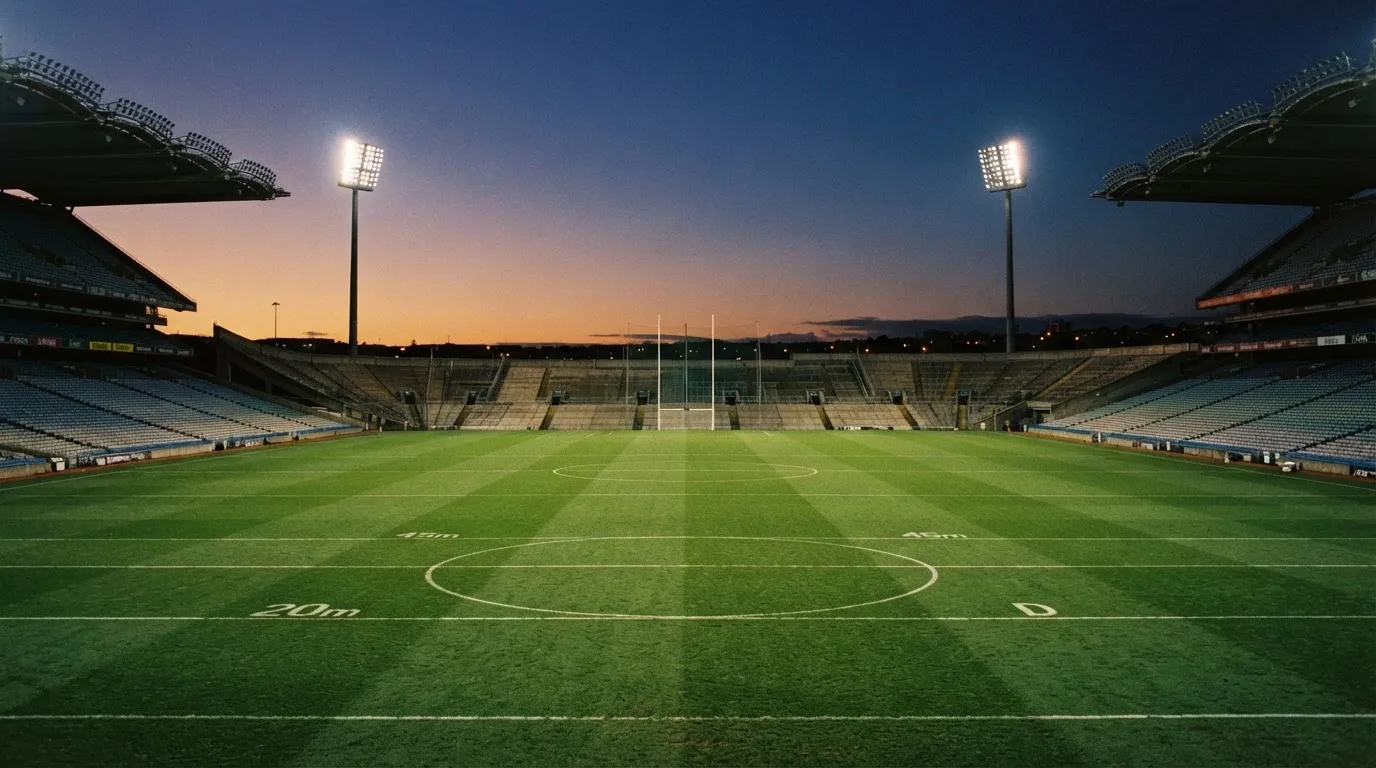
The shape of useful pre-match analysis on Gaelic football is narrower than on mainstream sports, and that is part of the cost a punter pays for following it. The Championship produces a small fixture list each summer, league football is fragmented across the divisions, and the clubs below inter-county level rarely attract any media coverage at all. A punter looking for form data, injury lists, head-to-head history and tactical previews is working from a much thinner pool of material than they would be for the Premier League. That thinness is not a reason to skip the work; it is a reason to do the work with extra care, and to size stakes as if the data behind each match were sparser than the data behind an English football match.
Forecasting and bankroll discipline are two halves of the same problem. A bankroll is the pot a punter sets aside for betting, and staking a small, fixed percentage of it on each selection — typically between one and three per cent — survives losing runs that a flat £10 stake does not. The mechanic is straightforward: a £500 bankroll with a two per cent stake puts £10 on each selection, and a six-match losing run costs roughly twelve per cent of the bankroll rather than the twelve per cent of a fixed stake that a smaller bankroll cannot absorb. In Gaelic football, where the sample of fixtures per weekend is small and the sample of bets per season is small, the long losing runs that strain a bankroll arrive by calendar rather than by week, and a fixed-percentage stake is the simple defence.
Forecasting value, where it exists in Gaelic football, tends to come from specialisation rather than from general sports knowledge. Punters who follow a county team through a full league campaign know things that the betting market, working from headline form, often does not: which forwards are carrying knocks, which defenders are coming back from club football injuries, whether a manager has rotated the panel after a heavy schedule. That kind of local knowledge is the closest thing to edge the sport offers, and it is fragile — a manager’s announcement the morning of a match can erase a week’s worth of preparation. No page can sell it; only following the sport week in, week out can buy it.
What tips cannot do is more important than what they can. No system, no tipster service, no model and no algorithm can convert a sport with a thin sample of fixtures and a heavy bookmaker margin into a reliable monthly profit. The bookmaker’s margin — the cut it takes from every market — is the single number a punter cannot beat in the long run, and on Gaelic football that margin is wider than on Premier League football because the market is less competitive. The honest framing is that the page below explains how the price a punter sees is constructed and how much it costs them; it does not pretend to make those prices pay out.
Bet types and odds on Gaelic football
A Gaelic football betting odds page is shorter than the equivalent page for English football, and the shortness is itself information. Licensed UK bookmakers carry the sport through the Championship season — the All-Ireland series from May to July, and the provincial championships that feed it from April onwards — but the menu of markets outside that window is thinner. Match result, total goals, handicap, first goalscorer and a small set of player props are what a punter can expect to find during the season. Out of season, the menu contracts further.

Match result, drawn two-way, is the spine of any Gaelic football betting odds market. The Championship does not produce draws in the regulation sixty or seventy minutes — every match goes to a winner through extra time if level — so the match-result market is a two-way line, home or away, with no draw column. Punters used to Premier League football, where the draw is a third of the 1X2 market, need to absorb the absence: there is no “draw no bet” to fall back on, because the bookmaker does not price a draw that does not happen in regulation. Some bookmakers offer a “draw after extra time” market for knockout fixtures, but that is a separate bet, not a hedge on the regulation result.
Total goals in Gaelic football is a market with its own scoring vocabulary. A goal, the ball below the crossbar and into the net, scores three points; a point, the ball over the crossbar but between the posts, scores one point. Total points markets therefore behave differently from total goals in football or total runs in cricket: a typical match score in the 1-10 to 1-15 range is normal, and totals in the 18-22 range for combined scores are routine handicap lines. Since 2025, a shot from outside the new 40-metre arc scores two points rather than one, and that rule change has shifted how totals are priced across the season — the dead-ball scoring rate from placed kicks is no longer the only source of long-range points.
Handicap markets work as in other sports: the favourite starts the match with a negative handicap, the underdog with a positive one, and the handicap is added to the final score to settle the bet. A -3 handicap on a strong favourite requires that team to win by more than three points for the bet to pay; a +3 handicap on the underdog pays out if they win or lose by fewer than three. Handicaps are where the bookmaker’s margin often looks thinnest, because the lines are tighter and the prices sit closer to evens, but the margin is the same fraction — the visible closeness of the prices is a feature of how handicap lines are constructed, not of how much the bookmaker is taking.
Bet builders and same-game multis let a punter combine several markets from one match into a single bet — match result plus total points, first goalscorer plus handicap, team to score first plus margin of victory. The combined price multiplies the prices of the legs together, which is what makes a builder attractive on the surface: several short-priced legs produce a longer combined price. The cost is the same as it is on any other sport: a builder ties the punter’s stake to several correlated outcomes in the same match, and the bookmaker’s margin, applied to each leg, compounds across the builder. A two-leg builder at 1.90 and 1.90 does not pay 3.61; it pays whatever the bookmaker lists, and that listing already includes margin on both legs. The arithmetic is straightforward; the cost is not.
Fractional odds are how the UK betting public reads a price. Five-to-one (5/1) means a £1 stake returns £5 in profit plus the £1 stake back; evens (1/1) means the stake is doubled; odds-on (shorter than evens, such as 4/6) means the profit is smaller than the stake. Decimal odds show the total return including the stake: 6.00 at 5/1 fractional, 2.00 at evens, 1.67 at 4/6. Every licensed UK bookmaker’s site lets the punter switch between the two; the price is the same either way, and the conversion is a ÷ b + 1. Five-to-one is 5 ÷ 1 + 1 = 6.00; eleven-to-four is 11 ÷ 4 + 1 = 3.75; four-to-six is 4 ÷ 6 + 1 = 1.67.
A return is the stake plus the winnings on a winning bet. At 6.00 decimal on a £10 stake, the return is £60 and the profit is £50. At 1.67 on a £10 stake, the return is £16.70 and the profit is £6.70. For an accumulator, the legs multiply into one price and the stake is multiplied by that single price. A four-leg acca at 2.00, 2.50, 1.80 and 3.00 prices out at 27.00, and a £10 stake returns £270 if all four legs win; the cost is that all four have to win, and the margin on each leg is folded into the combined price. Accumulator insurance, which refunds the stake as a free bet if one leg of a multi-leg acca loses, softens that cost but does not eliminate it — the insurance usually applies only to accas of five legs or more, only to single losers rather than double losers, and only as a free bet rather than as cash.
Sports and tournaments the licensed bookmakers cover
Gaelic games betting covers two sports run by the Gaelic Athletic Association — Gaelic football and hurling — and the licensed UK market treats them as a single category. A bookmaker that prices Gaelic football typically prices hurling at the same depth, because the inter-county championships for both sports run through the same summer calendar and draw on the same punter base. The Championship structure is the same for both: provincial championships in Leinster, Munster, Connacht and Ulster feed into the All-Ireland series, and the All-Ireland finals are played at Croke Park in Dublin.
The All-Ireland Senior Football Championship is the headline tournament. The provincial championships run through April and May, the All-Ireland series through June and July, and the final is traditionally played on the third or fourth weekend of July — in 2026 the final was played on 26 July 2026 at Croke Park, with Mayo beating Kerry by 1–20 to 1–17 for their fourth title. Kerry hold the record for most All-Ireland Senior Football Championship titles, with 39 to their name. That record makes Kerry the headline favourite in most seasons and the team that pulls the heaviest betting volume, but a favourite does not win every year and the Championship’s knockout format means a single loss ends the run.
The National League runs from February to April and is the secondary senior competition. It is a league rather than a knockout, with a final at the end of the regular season, and bookmakers carry it as a working market through the spring. The league tends to be used by managers to blood new players and to test squad depth, which makes its results less predictive of Championship form than the headline table suggests, and that gap between league form and championship form is a recurring source of mispricing on the league outright winner market.
Below the inter-county game, the club championship runs from August through to the following March, with county championships feeding into provincial championships, then the All-Ireland club final on St Patrick’s Day. Licensed UK bookmakers rarely price the club championship beyond its later stages, and a punter who wants to bet on club matches is mostly betting on a small menu. That is a market structure, not a comment on the sport’s importance: the club championship is the deepest competition in Gaelic football, but it is too fragmented and too localised for the UK betting market to follow at full depth.
The Allianz Leagues and the various U20 and minor competitions round out the calendar. Some licensed bookmakers carry U20 football at a working depth through the summer; minor football is rarely priced at all. Outside the Championship window — August through to January — the Gaelic games menu on a UK-licensed site contracts to almost nothing, and a punter with a serious interest in the sport is mostly waiting for the next Championship to begin.
The ten operators: what each one brings to Gaelic football
The ten operators below all hold a Gambling Commission remote licence for general betting standard (real events) and are members of GAMSTOP. Several are well-known names with broad sport coverage; some are smaller and more specialist. None of them is “the only” licensed UK operator — the Commission’s public register lists many more — and a place in this comparison is not a licence. The write-ups below say what each operator does with Gaelic football in particular, and what that does or does not mean for a punter following the Championship.
| Brand | Gambling Commission remote licence number and licence holder | What the operator’s own terms say on Gaelic football |
|---|---|---|
| Matchbook | Account 39504; Triplebet Limited | Betting exchange — punter prices against other users; depth of Gaelic football markets thinner than a traditional sportsbook’s |
| 888sport | Account 39028; 888 UK Limited | Carries Gaelic football as part of a broad sports menu; in-play, cash out and bet builder features apply across the sportsbook |
| Betfair | Account 39439; PPB Counterparty Services Limited | Sportsbook side carries Gaelic football alongside the exchange; in-play, bet builder and the 90 Minute Payout market are part of the offer |
| Sporting Index | Account 27343; Sporting Index Limited | Spread and fixed-odds on Gaelic football; spread markets limited to the most-followed fixtures |
| NetBet | Account 39170; Netbet Enterprises Limited | Gaelic football carried through the Championship; daily boosts and a bet builder with dynamic odds apply across the sportsbook |
| Coral | Account 54743; LC International Limited | Gaelic football available during the Championship window; sports welcome offer is the £40 in free bets for a £20 qualifying bet promotion |
| Betmaster | Account 65699; BM Solutions GB Ltd | App-published sportsbook with football as a headline sport; Gaelic football present but at a working rather than specialist depth |
| Tote | Account 54779; TDCO Limited | Pool-led operator with fixed-odds on Gaelic football; tote products and traditional sportsbook markets run side by side |
| Kalooki Sportsbook | Account 57730; Kalooki Sportsbook Limited | Smaller GB-licensed sportsbook with Gaelic football among the sports covered |
| BetMGM | Account 39198; LeoVegas Gaming PLC | Gaelic football carried through the Championship; sports welcome offer for new UK customers is four £10 free bets on accumulator and multiple markets |
Matchbook: the exchange angle
Matchbook runs as a betting exchange, which means a punter is not betting against the house but against other users. Back and lay prices sit on either side of each market, and the exchange takes a commission on net winnings rather than building a margin into every price. For Gaelic football, the trade-off is depth: a traditional sportsbook lays out a market on every Championship fixture regardless of how much money is likely to be bet; an exchange only lists markets where there is two-way interest. Matchbook’s Gaelic football markets during the Championship are workable on the bigger fixtures and thinner on the rest. The Commission licence sits with Triplebet Limited on account 39504, and the site lists bet builder, multiples, in-play and live streaming of horse racing and greyhounds. The exchange structure rewards a punter who wants to lay off positions and find prices closer to the true margin; it costs the punter the depth of a sportsbook on smaller fixtures.
The verdict on Matchbook comes down to whether a punter wants an exchange or a sportsbook. If the goal is to back and lay the All-Ireland final at the kind of price an exchange offers, Matchbook is in the running. If the goal is to put a same-game multi on a Connacht championship fixture, the menu will be thinner than a traditional sportsbook’s and the price on what is there may not justify the trade.
888sport: the broad sportsbook
888sport runs a traditional fixed-odds sportsbook and carries Gaelic football as part of a broad menu that runs from Premier League football to niche sports. The features that matter for Gaelic football are the same features that matter for any sport on the site: pre-match and in-play betting, cash out, a bet builder, racing streams for horse and greyhound racing, a bet finder form tool, a live bet feed and daily boosted odds. The Commission’s register lists the licence with 888 UK Limited on account 39028. For a punter who wants to bet on Gaelic football and the Premier League in the same place, 888sport offers the breadth; the cost is that no single sport gets the depth a specialist site offers.
The verdict on 888sport is that the breadth is the point. A punter who wants Gaelic football priced alongside every other sport they follow will find what they need; a punter who wants Gaelic football priced more deeply than the headline menu offers will need to look elsewhere.
Betfair: the sportsbook alongside the exchange
Betfair runs both a sportsbook and an exchange, and the sportsbook side carries Gaelic football during the Championship. The features are in-play betting, a bet builder, free live streaming of UK and Irish horse racing and football within the app, and the 90 Minute Payout market that refunds stakes if the team backed goes 2-0 up. The Commission licence sits with PPB Counterparty Services Limited on account 39439. The combination of sportsbook and exchange on one account is what makes Betfair distinctive: a punter can take a sportsbook price on a Gaelic football match, then move to the exchange to lay off part of the position if the price moves.
The verdict on Betfair is that the dual structure is the offer. For a punter who only wants to back Gaelic football outcomes, the sportsbook is comparable to any of the broad sportsbooks; for a punter who wants both a sportsbook and an exchange under one licence, Betfair is the most natural choice.
Sporting Index: spread and fixed-odds together
Sporting Index runs both fixed-odds sports betting and financial-style spread betting on sports, and a punter can switch between the two on the same account. The sportsbook carries Gaelic football at a working depth; the spread side is limited to the fixtures with enough two-way interest to make a spread book, which in practice means the All-Ireland final and a handful of other big matches. Features include in-play betting, a football bet builder, auto cash-out and Multi-Markets. The Commission licence is with Sporting Index Limited on account 27343. The spread-betting angle is what sets Sporting Index apart from the rest of the comparison: a spread bet can win or lose more than the stake, and the financial-style risk is not the same as fixed-odds betting.
The verdict on Sporting Index is that the spread side is the differentiator and not for everyone. A punter who wants fixed-odds on Gaelic football can find it elsewhere with deeper menus; a punter who wants to take a spread position on the All-Ireland final has a relatively narrow field of UK-licensed options.
NetBet: daily boosts and dynamic odds
NetBet runs a sportsbook with daily boosts, profit boosts and free bet offers across the menu, and the features apply to Gaelic football during the Championship as they do to any other sport. The bet builder offers instant dynamic odds as the punter adds legs. The Commission licence sits with Netbet Enterprises Limited on account 39170. NetBet’s position in the comparison is as a mid-sized sportsbook with a working Gaelic football menu and a builder that updates the combined price as the punter builds. That builder is the feature worth noting for a punter who likes same-game multis: the price updates as each leg is added, rather than only on completion.
The verdict on NetBet is that the builder is the practical draw. A punter who wants a same-game multi on a Gaelic football match with a live-updating combined price will find NetBet worth a look; for straight match-result betting the sportsbook is comparable to the broader market.
Coral: the £40 free bets welcome
Coral’s sports welcome offer for new GB customers is the £40 in free bets promotion that pays out after a £20 qualifying bet at minimum odds of 2.0 (1/1), with the free bets arriving within seven days and expiring seven days after issue. The promotion is a deposit-gated offer, requires opt-in, and the qualifying bet is on sports. The Commission licence sits with LC International Limited on account 54743 — the same licensee that runs Ladbrokes, and the two brands are not independent operators in the sense of separate licences. Coral carries Gaelic football during the Championship window.
The verdict on Coral is that the welcome offer is the marketing hook and the rest of the book is comparable to the broader market. A punter who wants to claim a £40-in-free-bets welcome and bet the free bets on the Championship will find a working menu; a punter looking for depth beyond the headline Championship fixtures should not expect specialist pricing.
Betmaster: app-published sportsbook
Betmaster’s app is published by BM Solutions GB Ltd under Commission account 65699, and the sports menu covers football, cricket, horse racing, NFL and eSports including League of Legends and Dota 2. Gaelic football is present as part of the football menu rather than as a dedicated category. The trade-off for a punter following Gaelic football specifically is that the menu is broad rather than deep: the All-Ireland final and the bigger Championship fixtures are priced, and the rest of the season is thinner.
The verdict on Betmaster is that the breadth is the offer and the Gaelic football coverage is working rather than specialist. A punter who wants an app-based sportsbook with a wide menu and Gaelic football as one of many sports will find what they need; a punter whose betting is mostly Gaelic football should expect a thinner menu than a sportsbook that follows the sport more closely.
Tote: pool betting alongside fixed-odds
Tote runs as a pool-led operator, meaning bets are pooled with other punters and dividends are declared after the race or match rather than fixed in advance. The site also runs fixed-odds sports betting alongside the pool products, and Gaelic football is available through the Championship on the fixed-odds side. The Commission licence is with TDCO Limited on account 54779. The pool structure is what sets Tote apart from a traditional sportsbook: a tote bet on a Gaelic football match pays a dividend declared after the match rather than a price fixed at the time of betting.
The verdict on Tote is that the pool structure is the offer and not for a punter who wants a fixed price. A punter who likes pool betting and wants the option of fixed-odds on Gaelic football will find both on one site; a punter who wants fixed-odds only and the deepest possible menu on Gaelic football will find the fixed-odds side workable but not specialist.
Kalooki Sportsbook: the smaller specialist
Kalooki Sportsbook is operated by Kalooki Sports Book Ltd (company number 12938274) under Commission account 57730 and is a GAMSTOP member. The brand is smaller than the rest of the comparison, and the sports menu runs to a working depth rather than the depth of the bigger sportsbooks. Gaelic football is among the sports covered. The trade-off for a punter is that a smaller sportsbook can sometimes offer prices closer to the true margin because the overhead is lower, and can sometimes offer thinner markets because the punter base is smaller. The verdict depends on which side of that trade a punter falls on.
The verdict on Kalooki Sportsbook is that the size is both the offer and the limit. A punter who likes betting with a smaller GB-licensed bookmaker will find the menu workable; a punter who wants the deepest menu on the All-Ireland final should expect a thinner offering than the bigger brands.
BetMGM: the four free bets welcome
BetMGM’s sports welcome offer for new UK customers who deposit £10 or more and place a sports bet within seven days is four £10 free bets: two football accumulator free bets on accas of four or more selections and two sports multiple free bets on multiples of two or more, each valid for seven days with minimum odds and opt-in required. The Commission licence sits with LeoVegas Gaming PLC on account 39198. The structure of the welcome — free bets split across two accumulator formats and two multiple formats — is more involved than a single £20 free bet, and the punter has to pick which format to use the free bets on.
The verdict on BetMGM is that the welcome is the marketing hook and the rest of the book is a working sportsbook. A punter who wants to claim the four free bets and use them on Gaelic football multiples during the Championship will find the menu workable; a punter who wants the deepest Gaelic football coverage in the comparison should not expect specialist pricing from BetMGM alone.
What online gaelic football betting looks like from the inside
Online Gaelic football betting, in practice, is the same act of placing a bet on a sportsbook that betting on any other sport involves. The punter opens an account with a UK-licensed operator, completes the identity check before the first deposit, deposits with a debit card or a bank-based payment method, picks a Gaelic football match from the sports menu, chooses a market, sets a stake, and confirms the bet. The bet settles when the match settles; winnings go back to the punter’s account; withdrawals go back through the same payment method used to deposit, in line with the operator’s anti-money-laundering rules. The mechanic is identical to betting on the Premier League, the difference is the sport.
The sport itself is what shapes the betting menu. Gaelic football is played by teams of fifteen players, with up to fifteen substitutes of whom six may be used. Senior inter-county matches last seventy minutes in two 35-minute halves; most other adult matches last sixty minutes in two 30-minute halves. The pitch is rectangular grass, 130–145 metres long and 80–90 metres wide, and the scoring — three points for a goal below the crossbar, one point for a point over the crossbar, two points for a shot from outside the 40-metre arc under the post-2025 rules — gives the sport a working total-points market that behaves differently from total goals in football.
Gaelic football is governed by the Gaelic Athletic Association, and the All-Ireland Senior Football Championship final is held each year at Croke Park, Dublin. The governing body, the calendar and the venue are stable from year to year, which is what makes the sport a workable betting market for licensed bookmakers: the fixtures are predictable, the rules are stable, and the same counties compete season after season. That stability is what a punter pays for when they take a price on a Championship match — the bookmaker has priced hundreds of similar matches before, and the price reflects that history.
How UK regulation shapes what a punter can do
The Gambling Commission licenses the commercial market in Great Britain under the Gambling Act 2005, which covers England, Scotland and Wales. Northern Ireland sits outside the Act and has its own older law, and a “GB-licensed” brand is licensed for Great Britain specifically, not for the United Kingdom as a whole. Since the Gambling (Licensing and Advertising) Act 2014, an operator whose remote facilities are used in Great Britain needs a Commission licence wherever it is based — a Curaçao, Maltese or Gibraltar licence alone is not enough. The Commission’s public register is the test of whether a brand holds a licence: it can be searched by business name, trading name, domain or account number.
The minimum age to bet is 18. Identity is verified before the first deposit or bet — name, address and date of birth — including when the first bet is a free bet or bonus. Credit cards are banned for gambling in Great Britain, including credit-card-funded payments through an e-wallet; debit cards and bank-based payments are not covered by the ban. The verification requirement means no licensed operator offers anonymous play, and that is the trade a punter accepts for the protections the licence brings.
GAMSTOP is the national multi-operator online self-exclusion scheme and a mandatory licence condition for online operators. Self-exclusion periods are six months, one year, five years, or five years with auto-renewal; after the minimum period, the exclusion stays in place for a further seven years unless the punter asks GAMSTOP to remove it. GAMSTOP covers online sites and apps; betting shops use a separate service. A punter who has self-excluded through GAMSTOP cannot open or use an account with any GB-licensed online operator during the exclusion period, and that is the most serious block the licensed market puts in place.
A financial vulnerability check, in force since 30 August 2024 and updated since 28 February 2025, applies to licensed remote betting when a punter’s deposits minus withdrawals exceed £150 in a rolling 30 days. The check is a public-record check (bankruptcy or county court judgments, for example), not an income check and not a credit reference check. Financial risk assessments — the affordability checks reported in the press — are announced in a staged plan, with no start date set. Deposit limits are the punter’s choice: licensed operators offer them, but the limit is set by the punter and not by the regulator.
The player pays no tax on betting winnings in Great Britain, and that is the headline tax position for the punter. General Betting Duty is the operator’s tax on gross profits and is not passed through to the punter in a visible form. The remote betting rate is currently 15 percent; from 1 April 2027 a new remote rate of 25 percent applies within the duty, while remote bets on UK horse racing, bets on self-service betting terminals in licensed premises, pool betting and in-person betting stay at 15 percent. Whether operators pass the rate change on through odds is not established, and a punter should not assume the duty rate appears in any visible line on the betting slip.
Offshore operators without a GB licence are not bound by the Commission’s rules. A punter using an unlicensed site has no GAMSTOP coverage, no Commission complaints route, no approved dispute-resolution body, no British consumer redress if funds are withheld, and is not bound by the bonus cap or the vulnerability check. The Commission does not record an offence aimed at the customer who bets on one; it records an offence aimed at the operator who offers facilities in Great Britain without a licence. The framing that matters for the punter is the loss of protection, not the legality of using the site.
Responsible gambling: the tools a licensed bookmaker has to offer
A licensed UK bookmaker has to offer a set of safer-gambling tools under the Commission’s Licence Conditions and Codes of Practice and the Remote Technical Standards. The tools are not optional, and the punter can use any of them without giving a reason. The set runs deeper than the marketing pages usually suggest, and a punter who has not looked at them is missing the most practical part of the licence they are betting under.
Deposit limits are the most visible tool. A licensed operator has to offer a punter the ability to set a gross deposit limit on a fixed time frame — daily, weekly or monthly — and to reduce the limit immediately or to increase it after a cooling-off period. The first changes under the Remote Technical Standards for deposit limits applied on 31 October 2025, with a second phase postponed to 30 September 2026, and whether the second phase is live is not established. The punter sets the limit; the operator has to honour it; the operator cannot raise the limit without the cooling-off period the rule sets.
Time-outs are a short break from betting, usually for 24 hours, 48 hours, seven days or 30 days. A time-out locks the account for the chosen period and the punter cannot reverse it once set. A time-out is shorter than a self-exclusion and is meant for a pause rather than a longer-term block.
Self-exclusion through GAMSTOP covers every GB-licensed online operator at once. The punter registers with GAMSTOP, chooses a period, and the exclusion applies across every GB-licensed online site and app. Self-exclusion through the operator’s own site is also available, and applies to that operator only. GAMSTOP is the wider block; the operator-level exclusion is the narrower one. A punter who wants the strongest block uses GAMSTOP.
Reality checks are pop-ups that appear during a betting session to tell the punter how long they have been on the site and how much they have won or lost. A punter can set the interval at which the checks appear, and a longer session can be set to require acknowledgement before continuing. Reality checks are a friction the regulator has put in place deliberately, and a punter who finds them annoying is the punter they are aimed at.
Activity statements give the punter a record of deposits, withdrawals, bets placed, wins and losses over a chosen period. A punter who wants to see what they have actually spent over the last quarter can download the statement and check the figure against what they remember spending. The gap, when there is one, is the data a punter needs.
Help is available beyond the operator. GamCare runs the National Gambling Helpline; GambleAware funds treatment and support; the NHS runs gambling clinics in several regions; Gamblers Anonymous runs peer-support meetings. A punter who feels their betting is no longer under control can reach any of these without going through the operator, and a licensed operator is required to link to them from its safer-gambling pages.
Crypto, anonymity and Gaelic football betting
The phrase “Gaelic football betting with crypto” describes an offer that the licensed UK market does not make. The Commission’s rules require identity verification before the first deposit or bet, including with a free bet or bonus, and a cryptocurrency deposit does not change that requirement: the punter still has to verify name, address and date of birth, and the operator still has to apply source-of-funds checks at higher spend. The licensed operator does not accept anonymous crypto deposits in the sense the phrase implies, because “anonymous” is the one thing the licence does not allow.
A licensed operator can accept a cryptocurrency deposit through a payment processor that handles the conversion to sterling and the anti-money-laundering checks the licence requires, but that is a payment-method choice, not an anonymity choice. The punter’s identity is verified regardless of how the deposit is funded; the blockchain record of the crypto transaction does not change the verification requirement; and the GAMSTOP self-exclusion applies regardless of which payment method the punter uses. None of this is a comment on cryptocurrency as a payment technology; it is the consequence of holding a GB licence.
An unlicensed site that accepts crypto directly, with no GB licence, is offering a different product. The punter has no GAMSTOP coverage, no Commission complaints route, no British consumer redress if funds are withheld, and no obligation on the operator to apply the safer-gambling tools the licensed market applies. The crypto angle is part of the marketing rather than part of the protection, and a punter who values the protections the licence brings does not find what they are looking for on an unlicensed crypto site.
Bonuses and free bets on Gaelic football betting
Bonuses and free bets are the marketing layer of the UK sportsbook, and the layer a punter reads most sceptically. The headline is “£40 in free bets” or “100 per cent bonus” or “bet £10 get £30”; the underneath is a set of conditions that determine what the offer is actually worth. Reading them is the difference between an offer and a marketing image of one.
A free bet is a stake the operator gives the punter rather than the punter’s own cash. The stake is usually not returned with the winnings: a £10 free bet at 5/1 returns £50 in profit, not £60 in profit plus stake. The free bet is a one-shot stake, and the comparison to a cash stake is misleading for that reason. A punter who treats a £10 free bet as a £10 cash bet is overstating its value by 20 per cent on a 5/1 shot and by larger amounts at shorter prices.
The promotion rules in force since 19 January 2026 cap wagering requirements on bonuses at 10x: a £10 bonus with a 50x wagering requirement needed £500 of qualifying bets before withdrawal, and under the cap no more than £100 of wagering can be required. The cap is a real change to the UK bonus market; it does not apply to free bets with no wagering condition, and the value of the bonus cap on a bonus the operator labels as a free bet is not established. Mixed-product promotions — an offer that requires gambling on two or more product types such as betting, casino, bingo and lottery — are banned under the same rules.
The conditions that matter on a Gaelic football betting offer are the ones the marketing page does not put first. The minimum odds for a qualifying bet determine whether the offer can be cleared with the bets a punter would normally place, or whether the punter has to take a price they would not otherwise take. The deadline for using free bets determines how long the punter has to find a selection at a price worth taking. The market restrictions — whether free bets can be used on any market or only on accas, on in-play or only pre-match — determine where the punter has to look. The cap on free-bet winnings, where one applies, determines what a winning free bet actually pays out.
The welcome offers on the comparison above are the headline figures a punter reads on each operator’s site. Coral’s £40 in free bets for a £20 qualifying bet at minimum odds of 2.0 (1/1), with the free bets issued within seven days and expiring seven days after issue, is the form the Coral offer takes; BetMGM’s four £10 free bets on accumulator and multiple markets is the form the BetMGM offer takes. The conditions on each are spelled out on the operator’s promotion terms, and those terms — not the headline — are what the offer is worth.
Live betting and cash out on Gaelic football
Live Gaelic football betting is a smaller market than live Premier League betting, and the difference is structural. Gaelic football matches produce fewer goals — in the points-per-game sense — than football matches produce goals, and the in-play market is therefore thinner. A licensed bookmaker carries in-play Gaelic football through the Championship; the menu contracts between fixtures.
Cash out is the feature that lets a punter close a bet before the match settles, at a figure the operator sets in real time. The figure reflects the current state of the match, the original price and the operator’s take; it is not the same as the fair value of the position at that point, because the cash-out price includes the operator’s margin. A punter who uses cash out to lock in profit on a winning position is paying the operator for the certainty; a punter who uses cash out to cut a loss on a losing position is also paying. The feature is useful, but the cost is built into the price the operator offers.
Bet Builder+ on bet365 and the equivalent features elsewhere combine markets from one event into a single bet, available pre-match and in-play. The combined price multiplies the prices of the legs together, and the cost is the margin on each leg folded into the combined price. The feature is a working feature on Gaelic football through the Championship, and the cost is the same as it is on any other sport.
The 90 Minute Payout market on Betfair refunds stakes if the team backed goes 2-0 up — a market that does not exist in Gaelic football in the same form, because Gaelic football scores in points and the threshold for “comfortable lead” is different. A 2-0 lead in football is a stronger signal than a six-point lead in Gaelic football, and the equivalent markets on Gaelic football are structured differently.
In-play betting is offered by GB bookmakers and the controls are the operator’s licence conditions and customer-protection duties, not a separate regulatory framework. A punter who wants to bet live on Gaelic football finds the menu through the Championship and finds the in-play feature on every licensed operator in the comparison above; the depth of the in-play offering depends on the operator and on the match.
The arithmetic of the margin: what a price actually costs
The bookmaker’s margin is the cut it takes from every market, and it is the single number a punter pays every time they place a bet. The margin is built into the odds: a market with no margin would price every outcome so that the implied probabilities added up to exactly 100 per cent. A market with margin prices every outcome so that the implied probabilities add up to more than 100 per cent, and the excess is the margin.
Consider a simple two-way market priced at 1.90 / 1.90 in decimal odds. The implied probability of the first outcome is 1 ÷ 1.90 = 0.5263, or 52.63 per cent; the implied probability of the second outcome is the same, 52.63 per cent. The two implied probabilities add up to 105.26 per cent, and the excess over 100 per cent is the bookmaker’s margin: 5.26 per cent on this example, give or take the rounding. The payout share — the fraction of every pound staked that the market returns to punters in the long run — is the reciprocal of the sum of the implied probabilities: 1 ÷ 1.0526 = 0.95, or 95 per cent. The margin is 1 minus the payout share: 1 − 0.95 = 0.05, or 5 per cent.
That 5 per cent is the cost of every pound bet on this market, on average, over a large number of bets. It is not the cost of any single bet — a single bet either wins at the price the punter took or loses the stake — but it is the cost across a sample of bets large enough for the law of large numbers to work. A punter betting £10 on this market at random across many selections loses, on average, 50p per £10 staked. The punter’s edge has to exceed 5 per cent on the selections they make for the long-run result to be positive, and very few punters have an edge of that size on any sport.
The margin widens on Gaelic football compared to mainstream football because the market is less competitive. A Premier League match result market might carry a 2-3 per cent margin across the major bookmakers; a Gaelic football match result market might carry 5-8 per cent, and a smaller fixture might carry more. The cost is what a punter pays for following a sport the market follows less closely.
The implication for staking is straightforward. A punter who bets £100 on a Gaelic football market at a 7 per cent margin loses, on average, £7 on the stake; a punter who bets £100 on a Premier League market at a 3 per cent margin loses, on average, £3. The difference is not in the bets the punter picks; it is in the markets the punter chooses to bet on. Staking more selectively on the tighter markets is one practical response; accepting the wider margin on Gaelic football as the cost of following the sport is the other.
The arithmetic above is for a market with two outcomes and equal prices. A three-way market (home, draw, away) carries three implied probabilities, and the margin is the sum of those three minus 100 per cent. A handicap market carries two implied probabilities for the line, and the margin is the same calculation as the two-way case. A bet builder carries the margin of each leg compounded across the builder, and the total margin is higher than any single leg’s margin. The arithmetic is the same each time; only the number of outcomes changes.
How the page is built and what it leaves out
The page above has worked through Gaelic football betting from the betting side of the relationship: how a tip works, how the odds are built, which bet types settle the way a punter expects, which tournaments the licensed bookmakers cover, what each operator brings, what the regulation looks like, what the safer-gambling tools are, where bonuses sit, where live betting sits, and what the margin inside every price costs. The page is built around the assumption that the punter is using a UK-licensed operator and is in Great Britain, and that the punter wants to understand what a bet costs rather than be told which bet to make. The page does not name a winner of any Championship match, because nobody knows who will win any Championship match, and a page that claimed otherwise would be selling certainty that does not exist.
The page leaves out the data that no operator in the comparison publishes: the exact margin on each Gaelic football market, the depth of each menu on a fixture-by-fixture basis, the speed of withdrawals in real time, and the exact terms of every promotion on the book. The punter checks those at the operator’s site before betting, and the check is part of the discipline the page recommends. The data the page does carry — the licence numbers, the welcome offer conditions, the safer-gambling framework, the margin arithmetic — is the data a punter can carry through to every bet.
The page also leaves out the punters who follow Gaelic football without betting. The sport is a working game in Ireland and a working game for the Irish diaspora in Britain, and the betting layer is one layer on top of it rather than the whole of it. A reader who follows Mayo through the Championship because they care about Mayo, and who bets on Mayo because they want a stake in the match, is doing something the page supports. A reader who bets on Mayo because a tipster told them to is doing something the page does not support, because the tipster does not know more than the market.
Frequently asked questions on Gaelic football betting
How do you bet on Gaelic football?
A punter opens an account with a UK-licensed bookmaker, completes the identity check before the first deposit, deposits with a debit card or a bank-based payment method, picks a Gaelic football match from the sports menu during the Championship window, chooses a market such as match result or total points, sets a stake, and confirms the bet. The bet settles when the match settles and winnings go back to the punter’s account.
How can a punter check that a bookmaker holds a Gambling Commission licence?
The Commission’s public register can be searched by business name, trading name, domain or account number, and it is the test of whether a brand holds a licence. A punter types the brand name into the register search and confirms the licence category, the licence number and the licence holder against the brand’s own marketing. Every operator in the comparison above is on the register.
How is the return on a bet worked out from the stake and the odds?
The return is the stake multiplied by the decimal odds, and the profit is the stake multiplied by the decimal odds minus one. A £10 stake at 6.00 decimal (5/1 fractional) returns £60 and gives a profit of £50. The stake is the punter’s own cash and is returned only on a winning bet, except where the bet is a free bet and the stake is not returned.
What is the bookmaker’s margin and how can it be seen in the odds?
The margin is the cut the bookmaker takes from a market, and it appears as the excess of the sum of 1 ÷ odds over 100 per cent across all outcomes. A two-way market at 1.90 / 1.90 implies 52.63 per cent on each outcome and a margin of 5.26 per cent; a payout share of 95 per cent; and a long-run cost to the punter of about 5p per £1 staked across a large sample of bets.
How do fractional odds such as 5/1 convert to decimal odds such as 6.00?
The conversion is the first number divided by the second plus one: 5 ÷ 1 + 1 = 6.00. Eleven-to-four is 11 ÷ 4 + 1 = 3.75; four-to-six (odds-on) is 4 ÷ 6 + 1 = 1.67. The two formats describe the same price, and every UK-licensed bookmaker’s site lets the punter switch between them without changing the odds.
Which safer-gambling tools does a licensed bookmaker have to offer?
A licensed bookmaker has to offer deposit limits, time-outs, self-exclusion (through the operator and through GAMSTOP), reality checks, activity statements, and links to GamCare, GambleAware, NHS gambling clinics and Gamblers Anonymous. The punter sets deposit limits; the operator has to honour them; GAMSTOP self-exclusion blocks every GB-licensed online operator at once for the chosen period.
Rugby, cricket & Gaelic – AI Betting
Content created by the «AI Betting» team
