
What's a Trixie bet? The cost the punter actually pays
 Available in US
Current as of 26 October 2026 · Verified against the Gambling Commission’s public register of remote operating licences.
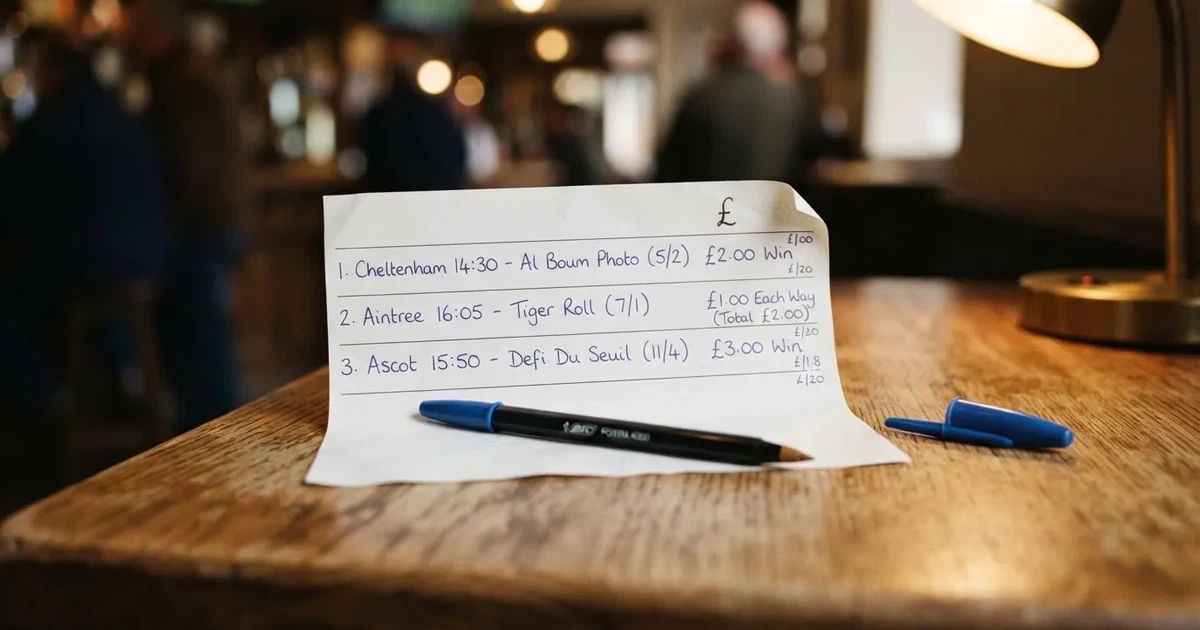
A Trixie looks, on first reading, like a cheaper way to back three picks than a straight accumulator. That is the comparison the bookmakers’ marketing pages lead with: more combinations, the same stake-per-line, and one extra leg of insurance against a single loser. It is also misleading. A Trixie contains four separate bets, not one, and each of them carries the bookmaker’s margin. The unit stake is small, but the total exposure is four times it, and a single losing selection wipes out three of the four lines in a single sweep. Anyone weighing a Trixie against a treble or against singles wants to know what the structure pays back at the common outcomes, where the margin sits, and what the offer is really worth when a “free bet” lands on it. That is the frame this page works through.
The Trixie is one of the older full-cover bets on the British high-street ledger. It is built from three selections, but it is settled as four bets: three doubles and one treble. The punter puts a unit stake on each line, and the total cost is four units regardless of how the races or matches go. The structure is older than the modern decimal-odds display, but it survives because a single losing leg does not flatten the whole card the way an accumulator does, and because the bookmaker can quote a single unit price that hides the multiplication underneath. It is the bet a trader hands a customer who has chosen three from the betting-shop counter and asked for a “cover”.
The cost angle cuts deeper than the headline. Every one of the four lines in a Trixie carries its own overround. A treble is the worst-priced line in a Trixie, because the bookmaker’s margin compounds across three legs, and a treble of three reasonably priced selections will often pay out at decimal odds that look respectable but reflect a hold in the high single digits. The doubles, by contrast, pay at the product of two prices, and the compound effect is gentler. The punter who treats a Trixie as a cheaper accumulator has not yet met the maths; the punter who treats it as four bets priced independently, and adds up what each one costs, has.
How a Trixie is built, line by line
A Trixie has three selections, named A, B and C. The four bets are:

- Double A·B — both must win.
- Double A·C — both must win.
- Double B·C — both must win.
- Treble A·B·C — all three must win.
The unit stake is the same on every line. With a £1 unit, the card costs £4. With a 50p unit, £2. The arithmetic on the betting slip is the same shape regardless of the unit; what changes is the absolute pounds. Returns scale linearly with the unit, so a punter who understands a Trixie at £1 has understood it at any unit.
At least two of the three selections must win for the bet to return anything at all. If only one selection wins, every line on the card — three doubles and the treble — loses, because each line requires two or three winners. The whole stake is lost. This is the single most important point about the structure, and the one the marketing never lands on: a Trixie is not a “safer” bet than a single, it is four bets where one loser takes the lot.
The pricing of a Trixie is not the simple sum of the four lines’ returns. Each line’s decimal odds are the product of the legs it contains. A double on A and B pays at the odds of A multiplied by the odds of B. The treble pays the three prices multiplied together. The total return, when all three selections win, is the sum of those four products multiplied by the unit stake. When only two of the three win — say A and B, but not C — the return is the product of A’s price and B’s price, multiplied by the unit stake, and the other three lines (the A·C double, the B·C double, and the treble) all lose.
The Trixie sits inside a wider family of full-cover bets that British bookmakers price on the same slip. Knowing where it sits matters, because the punter choosing between them is choosing between four-line, seven-line, eleven-line and fifteen-line structures at varying unit stakes. The differences are not cosmetic. A Patent adds the three singles to the Trixie’s four lines for seven bets in total, so a winning single pays back even when the rest of the card goes down. A Yankee covers four selections with eleven lines, adding singles and trebles around the doubles. A Lucky 15 covers four selections with fifteen lines — four singles, six doubles, four trebles and a fourfold — and it is the structure many bookmakers price as the entry-level “full cover” product.
Where the Trixie sits in the full-cover family
| Structure | Selections | Number of bets | Lines |
|---|---|---|---|
| Trixie | 3 | 4 | 3 doubles, 1 treble |
| Patent | 3 | 7 | 3 singles, 3 doubles, 1 treble |
| Yankee | 4 | 11 | 6 doubles, 4 trebles, 1 fourfold |
| Lucky 15 | 4 | 15 | 4 singles, 6 doubles, 4 trebles, 1 fourfold |
| Heinz | 6 | 57 | 15 doubles, 20 trebles, 15 fourfolds, 6 fivefolds, 1 sixfold |
| Goliath | 8 | 247 | 28 doubles, 56 trebles, 70 fourfolds, 56 fivefolds, 28 sixfolds, 8 sevenfolds, 1 eightfold |
The Trixie is the smallest full-cover bet on the standard list. A punter who wants a single bet to cover every combination of three picks, and who is happy to lose the singles, picks the Trixie. The same punter, asked to insure against a single losing leg by adding the singles, pays a Patent — three more units of stake, for the chance that one of the three wins outright.
Worked example: the 2.00, 3.00, 4.00 card
A clean worked example is the quickest way to make the four lines visible. Take three selections at decimal prices of 2.0, 3.0 and 4.0 — short enough to be plausible on a single Saturday card, long enough that a treble is worth doing the arithmetic on. With a £1 unit on each of the four lines, the total stake is £4.
The four lines pay as follows when all three win:
- Double on 2.0 and 3.0 pays 2.0 × 3.0 = 6.0, so £6.
- Double on 2.0 and 4.0 pays 2.0 × 4.0 = 8.0, so £8.
- Double on 3.0 and 4.0 pays 3.0 × 4.0 = 12.0, so £12.
- Treble on 2.0, 3.0 and 4.0 pays 2.0 × 3.0 × 4.0 = 24.0, so £24.
The four returns add to £50. Subtracting the £4 stake leaves a profit of £46 on a £4 card. The treble contributes nearly half of the total return; the three doubles share the rest roughly in proportion to the prices of the legs they share. A punter looking at this card sees a 12.5-times return on the total stake, which is what the marketing copy remembers, and the £4 of risk which is what the marketing copy forgets.
Now change one result. The 4.0 selection loses; the 2.0 and 3.0 selections both win. Only the first double — the 2.0 × 3.0 line — pays, at £6. The other two doubles and the treble all lose. The card returns £6 against a £4 stake, a small profit, and the punter has come within a single result of breaking even on the day. That is the Trixie’s characteristic shape: a near-miss that returns roughly one of the four lines, and a win that returns the lot.
The same card at a £10 unit stakes £40, returns £500 on a full house, and returns £60 on a two-winner outcome. The shape is the same; the absolute numbers scale.
What the odds format means for the Trixie
British bookmakers publish odds in two formats, and a Trixie can be read in either. Fractional odds (5/1, 11/4, evens) are the traditional form on the high street and they remain the default in shop windows; decimal odds (6.00, 3.75, 2.00) are the form most online bookmakers display first because the return is the multiplication of price and stake. The conversion is mechanical: a fractional price of a/b returns a stake of b at a profit of a, and the decimal equivalent is a divided by b, plus one. The 5/1 shot is a 6.00 decimal; the 11/4 shot is 3.75; the evens shot is 2.00.
The choice of format changes nothing about the Trixie’s structure, but it changes what the punter sees on the slip. A treble at fractional prices of 5/1, 11/4 and evens is harder to evaluate by eye than the same treble at 6.00, 3.75 and 2.00. The decimal form lays the four product lines out so the punter can add them up before clicking confirm. On fractional form the punter has to do the conversion in their head or on a calculator, which is the friction that makes “what does this Trixie actually return if all three win?” harder to answer than it should be.
Every price carries the bookmaker’s margin. The margin is the share of every pound staked that the bookmaker keeps across all outcomes of a market in the long run. A 1X2 football market at prices of 2.10, 3.40 and 3.60 — typical for a Premier League fixture — implies a payout share of about 93 per cent and a margin of about 7 per cent. The treble, the worst-priced line in a Trixie, compounds the three margins into something higher. The punter who reads a Trixie as a cheap way to back three picks is not paying the headline margin of any single leg; they are paying a margin that grows with each leg on the line.
The margin compounded across the four lines
The four lines in a Trixie do not all carry the same margin. The singles in a Patent, if a punter is comparing structures, carry the margin of their own market — the same as if the punter had backed that selection alone. The doubles carry the compounded margin of the two legs. The treble carries the compounded margin of three. The total cost of the four-line Trixie, expressed as a margin, is a weighted sum of those four line margins, weighted by the share of the total stake that each line takes. Because each line takes the same unit stake, the weight is equal, and the Trixie’s overall margin sits between the margin of an average double and the margin of the treble — closer to the treble than the doubles, because the treble is the highest-priced line and the margin compounds fastest at the long end.
The practical consequence is that a Trixie on three short-priced favourites is a worse proposition than it looks. Short prices carry the highest overround on the betting board, and compounding three of them into a treble builds a margin that swallows a meaningful slice of the headline return. A Trixie on three long-priced outsiders, by contrast, looks generous because the long shots’ prices are products of underround individual events and the long-shot margin is sometimes small, but the probability of all three winning is correspondingly poor, and the headline return is the product of three unlikely events. There is no version of the Trixie that escapes the trade between margin and probability; the structure only changes where the trade bites.
Calculation: the payout shape on a typical Saturday card
Take three selections at fractional prices of 1/2 (decimal 1.50), evens (2.00) and 6/4 (2.50). A punter building an accumulator on the same three selections would stake £10 on a single line. The accumulator pays £10 × 1.50 × 2.00 × 2.50 = £75 if all three win, a profit of £65.
The same three selections on a Trixie need a unit stake such that the four lines cost the same as the accumulator. A £2.50 unit costs 4 × £2.50 = £10, the same total stake. The four lines pay as follows if all three win:
- Double on 1.50 and 2.00 pays 1.50 × 2.00 = 3.00, so £7.50.
- Double on 1.50 and 2.50 pays 1.50 × 2.50 = 3.75, so £9.38.
- Double on 2.00 and 2.50 pays 2.00 × 2.50 = 5.00, so £12.50.
- Treble on 1.50, 2.00 and 2.50 pays 1.50 × 2.00 × 2.50 = 7.50, so £18.75.
The four returns add to £48.13, a profit of £38.13. That is the headline gap: the Trixie at the same total stake returns £48.13 against the accumulator’s £75. The accumulator pays more, on a single line, but a single losing leg takes the whole accumulator down, where the Trixie still pays two of the three doubles.
Now change one result. The 2.50 selection loses; the 1.50 and 2.00 selections win. Only the first double pays, at £7.50. The total return is £7.50 against a £10 stake, a loss of £2.50. The accumulator, with the same one loser, returns zero and loses the whole £10. The Trixie still loses on the day, but loses less, and the unit structure is what makes the difference.
The band is the point. At three winners the accumulator beats the Trixie by £26.87 in return; at two winners the Trixie loses £2.50 against the accumulator’s £10. The punter’s preference is a bet on whether the third leg wins more often than it loses. At implied probabilities of 1/1.50, 1/2.00 and 1/2.50 — roughly 67 per cent, 50 per cent and 40 per cent — the joint probability of all three is around 13 per cent, and the joint probability of any two specific winners is harder to generalise without knowing the correlation between events. The Trixie is the choice for a punter who thinks the third leg has a decent probability of winning; the accumulator is for a punter who thinks the third leg is somewhere it ought to win at a price they like. There is no other axis the choice turns on.
The bookmaker’s licence, and what it means in Great Britain
Every bookmaker taking bets from customers in Great Britain needs a remote operating licence from the Gambling Commission, and that licence is the one piece of paperwork that sets a British-licensed bookmaker apart from a brand that has simply chosen to take British customers. Since the Gambling (Licensing and Advertising) Act 2014, an operator whose remote facilities are used in Great Britain needs a Commission licence regardless of where the company is based. A Curaçao, Maltese or Gibraltar licence is not a substitute. The Commission’s public register is the test of who holds one: searchable by business name, trading name, domain or account number, and it is the only place a regulator publishes the result of its own check.
The licence comes in categories. For sports betting the relevant category is the remote general betting standard (real events) licence, and it is the category under which all ten of the brands below operate. A separate licence covers virtual events, a separate licence covers pool betting, and a separate intermediary licence covers betting exchanges. The categories determine what the licence holder may offer; they do not constrain the markets within a category, and the Commission does not publish a list of permitted bets. A bookmaker with a real-events licence can offer in-play football, ante-post horse racing, politics, TV shows and novelty markets, and most do.
The minimum age is 18, and since 7 May 2019 every licensed operator has to verify the customer’s name, address and date of birth before the first deposit or first bet, including on a free bet or bonus. The verification is a check against public records and a credit-reference check, and it is the reason a licensed bookmaker cannot offer anonymous play. The same check is the reason a British punter cannot hold more than one account at the same brand, and the reason the licensed market is harder to abuse with stolen card details.
A financial vulnerability check applies at higher spend: where a customer’s net deposits (deposits minus withdrawals) cross £150 over a rolling 30-day period, the operator runs a public-record check (bankruptcy, county court judgments) on the customer. It is not a credit check and it is not an income check, and it is the formal protection around a customer whose betting pattern has shifted. Wider financial risk assessments — the “affordability checks” the press describes — have been announced in a staged plan, with no start date, and they should not be written about as if they are in force.
GAMSTOP is the national multi-operator self-exclusion scheme, and a mandatory licence condition for every online bookmaker in Great Britain since 31 March 2020. A self-excluded customer cannot open an account, deposit, or use a free bet at any participating operator for the period they have chosen (six months, one year, five years, or five years with auto-renewal). After the minimum period the exclusion runs on for a further seven years unless the customer asks GAMSTOP to remove it. GAMSTOP is the single most effective protection the British licensed market offers, and the reason a self-excluded customer cannot simply move to a competitor.
Betting winnings are not taxed on the player in Great Britain. General Betting Duty is the operator’s tax on gross profits, currently 15 per cent for remote betting, with a new 25 per cent rate applying from 1 April 2027 within the existing structure. The duty is the operator’s liability, and the question of how much of it is passed through into the odds the customer sees is not one the public record settles. The punter keeps the whole return.
What the operator’s own terms do, and where the offer lives
Every bookmaker’s own terms are the second document the punter reads, after the licence line. The licence sets the floor; the terms set the ceiling. Five terms in particular shape what a Trixie bet actually costs at one operator compared to another.
The first is the free-bet validity period. A free bet is typically valid for seven days from the moment it is credited to the account, and a free bet used on a Trixie has to clear all four lines in that window, or the unused portion is forfeit. A punter who sits on a free bet over a weekend and then tries to use it on a Wednesday has used the wrong structure; the validity period and the four-line card do not comfortably co-exist at the end of a free-bet week.
The second is the minimum odds on a free bet. Most free bets require a minimum fractional price of 1/2 (decimal 1.50) on each selection, with a maximum cap of 50/1 (decimal 51.00). The minimum rules out the use of a free bet on heavy favourites whose prices are shorter than 1/2, and the cap rules out long-shot accumulators. The Trixie’s treble line is the most exposed of the four to the cap: a treble of three selections at 4/1 is a 125/1 shot, well above the cap, and the cap takes the treble line off the qualifying-bet calculation. A punter with a free bet who wants the full Trixie return needs to check the cap before staking, not after.
The third is whether the operator accepts a Trixie as a qualifying bet. Several operators’ free-bet terms exclude system bets, and Trixies, Patents and Yankees are sometimes called out by name. A free bet at such an operator can be used on a single, a double, a treble or an accumulator, but not on a Trixie, and the punter’s choice of structure is constrained by the operator’s own rules before the betting slip is opened.
The fourth is whether the free bet’s stake is returned with a win. The British norm is that the free bet is a “stake-not-returned” product: the punter keeps the profit, the unit stake comes out of the free-bet balance. A free bet at decimal odds of 4.0 that wins returns £4 of profit per £1 unit, not £5. The Trixie’s treble line, the highest-priced line on the card, is the line where this convention bites hardest, because the lost stake is the largest single lost unit on the slip.
The fifth is the unit of free-bet staking. A free bet is a single credit, not four unit credits; if the punter has a £10 free bet and tries to use it on a Trixie, the operator’s system either refuses the bet or splits the free bet across the four lines at a reduced unit stake. The punter has to read the operator’s help pages for the system behaviour, because the betting slip does not always make the split obvious.
The bonus cap, the marketing rule and what it does to a Trixie offer
The promotional offer on a Trixie sits inside a regulatory frame. Since 19 January 2026, wagering requirements on bonuses at British-licensed operators are capped at 10x, and a £10 bonus at 50x wagering needed £500 of qualifying bets; under the cap, the same £10 bonus needs at most £100 of qualifying bets before it is withdrawable. A Trixie at a £2.50 unit, the unit that matches a £10 accumulator in total stake, costs £10 of qualifying bets at a single line; the same Trixie costs the same £10 across four lines, but the qualifying turnover for a bonus is the cumulative stake across all four, not the cumulative stake across one. The punter clearing a bonus through a Trixie therefore burns through the wagering requirement four times as fast as a punter clearing it through a straight accumulator of the same total stake. That is the structure working in the punter’s favour, not the marketing.
Mixed-product promotions are banned in the same regulatory frame. An offer that requires the punter to bet on football to claim free spins, or to bet on horse racing to claim casino credit, is no longer permitted at a British-licensed operator. A Trixie offer that included a casino leg would not be a Trixie offer under the new rules; the structure is on the betting side only, and a bookmaker cannot dress a casino bonus as a Trixie.
A “free bet” with no wagering requirement — the kind of free bet the bookmaker credits and the punter can withdraw the winnings of without further betting — sits in a less clear regulatory position. Whether the 10x cap applies is not established in the public record, and the punter has to read the specific offer’s terms.
The ten UK-licensed operators offering a Trixie-style product
The ten operators below all hold a remote general betting standard (real events) licence from the Gambling Commission and are listed on the Commission’s public register. They are described in the order research gives, and the review of each one is the one place the page expresses a judgement; the specifications are the operator’s own, the verdict is the page’s. None of them is “the only” licensed operator — the British licensed market is much larger than any ten-brand list, and a position in a comparison is not a licence. Several of these brands can run under one parent company, and that fact is noted where research gives it.
NetBet — sportsbook with a Bet Builder, daily boosts and free-bet offers
The NetBet sportsbook lists Gambling Commission account 39170 under Netbet Enterprises Limited, with the licence category for real-events remote general betting. The sportsbook pages describe Daily Boosts and Profit Boosts on selected markets, free-bet offers around major football fixtures, and a Bet Builder whose odds update in the slip as the punter adds or removes selections. Sports statistics for the major leagues are surfaced next to the betting card.
A Trixie at NetBet takes a unit stake on each of the four lines and settles as a standard four-bet card. The Bet Builder is a separate product and is settled as a single accumulator, not a Trixie; the punter who wants the full-cover structure needs to add separate selections from the main card. The boost products apply to singles, doubles and accumulators, but not always to system bets, and a punter with a Trixie on boosted selections has to check the boost’s specific terms for the system-bet inclusion.
The NetBet review lands on a sportsbook that is broad on the major leagues, light on the niche markets, and decent on the everyday Trixie use case. A punter who builds Trixies on Premier League and Champions League fixtures will not be short of options; a punter who builds them on lower-tournament football or on non-football sports will find a thinner card. The boosts and Bet Builder are good reasons to use NetBet for the singles and accumulators on the same card, but the Trixie’s four lines all need to be selected from the standard market list.
QuinnBet — free bets at minimum odds 1/2, no system bets
QuinnBet operates under Gambling Commission account 61011 through QuinnBet (Gibraltar) Limited. The free-bet terms state that free bets are valid for seven days from credit, are usable on any market at fractional odds of 1/2 (decimal 1.50) or greater, with a maximum cap of 50/1, and that straight accumulators are allowed but Trixies, Patents and Yankees are not.
That last clause is the one that defines the QuinnBet review. A Trixie on the card is a settled bet, and a punter staking real money can place one. A free bet at QuinnBet cannot be used on a Trixie, and a punter who has a free bet in the account and wants a four-line cover bet is told to use a different structure. The reason given in the operator’s own help pages is that the qualifying-bet calculation does not extend to system bets. The punter is therefore looking at two choices: stake real money on the Trixie and use the free bet on a qualifying accumulator, or stake the Trixie as a real-money bet and forgo the free-bet credit on the Trixie’s four lines.
The QuinnBet verdict is that the operator offers a solid experience for the punter who bets accumulators and singles, though less so for the punter whose default structure is a Trixie or a Yankee, because the free bet is the most expensive welcome offer in the welcome cycle and not using it on the structure the punter actually uses is a real loss. QuinnBet’s exclusion of system bets is a hard cap.
BetTom — 50% back as a free bet, parallel casino offer
BetTom operates under Gambling Commission account 64959 through Bet Tom Limited, with the standard real-events remote general betting licence. The sports welcome offer is 50 per cent back as a free bet of up to £50, with a matching 50 per cent back as free slot funds for casino play. Full terms apply on both halves.
The Trixie on BetTom takes real money across the four lines, and the welcome free bet is a single credit usable on a qualifying bet. The parallel casino offer is the one a punter has to weigh: the operator is offering a matched pair, with the punter’s first sports stake and first casino deposit each refunded in product-specific credit. A Trixie punter who also plays casino is a natural fit for the matched pair. A Trixie-only punter is using only the sports half, and the casino half sits as an unused credit or a credit the punter activates on a product they do not normally use.
The mixed-product framing is the regulatory point. The British licensed market, since 19 January 2026, does not allow operators to require a sports bet to claim a casino bonus, and BetTom’s parallel offer is two independent halves, not a conditional one. A punter can take the sports half only and leave the casino half unclaimed, and the welcome value is the sports free bet alone. The BetTom verdict is that the operator is a fair-priced sportsbook for the Trixie punter, with a welcome offer whose structure respects the punter’s choice of product.
Dabble — £10 free bet for new customers, stake not returned
Dabble operates under Gambling Commission account 65677 through Dabble Sports UK Ltd. The welcome offer is “Bet £10, Get £10 in Free Bets” on a first deposit, with minimum odds applying, a 7-day free bet expiry and the stake not returned. The minimum odds on the qualifying bet is the figure a punter has to check on the offer page itself, and the qualifying bet has to be on a single line, not a Trixie, in the standard welcome structure.
The Trixie at Dabble is settled as four lines at the punter’s chosen unit stake, and the welcome free bet is a single £10 credit usable on a qualifying bet after the qualifying bet has settled. A punter staking £10 on a Trixie and winning the qualifying bet receives a £10 free bet, which can then be used on another qualifying bet, with the same minimum odds rule. The free bet’s stake is not returned on a win, so a free bet at 3.0 returns £20 of profit, not £30. The Trixie’s treble line is the most exposed to the stake-not-returned convention, and the punter’s effective free-bet value on a Trixie is lower than the headline £10 implies.
The Dabble verdict is that the operator is a straightforward choice for a Trixie punter who also bets accumulators and singles, with a welcome offer that is on the modest end of the licensed market and a free-bet expiry that the punter has to plan around. The 7-day window is the binding constraint: a punter who likes to bet midweek and use the free bet on the weekend needs to qualify the bet early in the week.
BetUK — free bets excluding virtuals, esports and non-UK/IE racing
BetUK operates under Gambling Commission account 39198, the same Commission account held by LeoVegas Gaming PLC, the parent that publishes the BetMGM UK app. The free-bet terms state that virtual sports, esports and non-UK/IE horse racing are excluded, and that minimum odds apply.
A Trixie on BetUK is settled as four lines, with the exclusion list applied to every leg. A treble line containing a virtual sports selection does not qualify, and a Trixie that includes one loses the treble line. The exclusion list is the binding constraint: a punter who likes to mix a virtual football match with two real matches into a Trixie has to pick either all real or all virtual, and the cross-product card is not a Trixie BetUK will count. The same applies to esports and to non-UK/IE racing, which is the bulk of international racing on the British card.
The BetUK verdict is that the operator is a suitable option for the punter whose default structure is on real-events football, tennis and UK/IE horse racing, and a less useful one for the punter who likes to mix product types. The free-bet exclusion list is the trade-off the punter has to take on the chin.
DAZN Bet — Cash Out, Bet Builder, daily boosts and a cash-out caveat
DAZN Bet operates under Gambling Commission account 48756 through DZBT Limited. The sportsbook offers Cash Out, Bet Builder, daily bet boosts and in-play betting. The help pages are explicit that cash-out availability is not guaranteed and that bets stand if cash out is unavailable.
The Trixie on DAZN Bet is settled as four lines, and cash out on a Trixie is offered as a single cash-out value across the whole card. The cash-out value is the bookmaker’s price for settling the bet at that moment, and the value is the bookmaker’s, not the punter’s. The cash-out value on a Trixie where two of three selections have already won is the value of the one remaining double, less the bookmaker’s margin on the cash-out, and the punter who cashes out takes that value. The value of carrying the bet to settlement is the value of the treble line if the third selection wins, and the value of losing the unit stake if it does not. The punter’s choice is a comparison between the cash-out figure and the expected value of holding.
The DAZN Bet verdict is that the operator is a competitive sportsbook for the Trixie punter who also values the in-play card and the Bet Builder, with the cash-out caveat written into the help pages rather than buried in the terms. The punter who relies on cash out as a routine tool has to live with the fact that DAZN Bet will not guarantee it.
10bet — football, tennis and horse racing with Cash Out, Bet Builder and Live Streaming
10bet operates under Gambling Commission account 43173 through Blue Star Planet Limited. The sportsbook covers football, tennis and horse racing, with Cash Out, Bet Builder and Live Streaming on selected events. The live-streaming product is the differentiator for the in-play Trixie punter, and the coverage is on tennis and the lower football leagues in particular.
A Trixie on 10bet at a £2 unit costs £8, the standard four-line stake, and the live-streaming product means the punter can watch the matches on which the four lines depend. The Bet Builder is a separate single-line product, and a punter who wants a same-game multi does not get the Trixie structure. A punter with three selections from three different matches, on the other hand, is a natural fit for the Trixie’s four lines, and the live streams are the supporting tool.
The 10bet verdict highlights a sportsbook with a strong in-play product on the sports it covers, and a thinner one on the sports it does not. The punter whose default structure is a Trixie on football, tennis and UK/IE horse racing will not be short of options; the punter who wants the structure on niche markets will be left wanting more.
Tote — pool betting heritage with a fixed-odds Trixie product
Tote operates under Gambling Commission account 54779 through TDCO Limited. The Tote is the British pool-betting heritage operator, and it sits on the Commission register with a remote general betting standard (real events) licence alongside its pool-betting product. A Trixie on Tote is a fixed-odds bet, distinct from the pool product, and it settles as a four-line card in the standard way.
The Tote verdict reflects an operator that serves the punter who values the pool product as well, with a fixed-odds sportsbook that is a useful supporting tool. The punter whose default structure is a Trixie will not find a Trixie-specialist product, but the four-line structure is there for standard play.
Betfred — Bet Builder, Sub Switch, Extra Places and the Best Odds Guaranteed on racing
Betfred operates under Gambling Commission account 39544 through Petfre (Gibraltar) Limited. The app features Bet Builder, Sub Switch, Racing Post data, Extra Places, live casino and bingo. Best Odds Guaranteed is a separate product on UK and Irish horse racing from 8 AM on the day of the race, on both single and multiple bets, and it does not apply to ante-post, tote or pari-mutuel bets.
A Trixie at Betfred settles as four lines, and the Best Odds Guaranteed product applies to each leg individually. A treble on three horses where the starting price is longer than the 8 AM price is paid at the starting price on each leg, and the treble’s product is the longer of the two prices on each leg. A punter backing three UK/IE runners in a Trixie at 8 AM and finding two of them drift on the off is paid at the higher price. The product is one of the more valuable concessions on the British licensed market, and it is the reason many racing-focused punters keep a Betfred account alongside the general sportsbooks.
The Betfred verdict is that the operator is a Trixie bookmaker with a strong racing product, a competent football and tennis product, and a Best Odds Guaranteed concession that pays the punter at the longer of the two prices. The punter who builds Trixies on UK/IE racing is using the operator at its strongest; the punter who builds them on football alone has more competitive options elsewhere.
Fitzdares — premium betting with a Lucky 15 specialism
Fitzdares operates under Gambling Commission account 400 through Fitzdares Limited. The app offers cash out, accumulators, Lucky 15s, specials and antepost markets on horse racing, football, tennis, rugby, cricket, golf and American football, with in-play live odds. The Lucky 15 specialism is the headline product, and the Lucky 15 is the four-selection, fifteen-line structure that sits one step above the Yankee and the Trixie in the full-cover family.
A Trixie at Fitzdares is settled as a four-line card, and the in-play live odds on the major sports are the supporting tool. The Fitzdares product is positioned as premium, and the price the punter pays for the premium positioning is the margin: the same market at Fitzdares often carries a slightly tighter margin than the same market at a discount sportsbook, but the headline odds are sometimes shorter. The punter comparing markets has to do the comparison line by line.
The Fitzdares verdict is that the operator is a distinct choice for the punter who values the Lucky 15 product and the premium positioning, and a less useful one for the punter whose default structure is a Trixie and whose default concern is the headline margin. The four-line card is there, the in-play product is competent, and the price is the price.
The full UK-licensed operator comparison
The table below lists the ten operators with the Gambling Commission licence number, the licence holder, and the operator’s own statement on the Trixie or system-bet side of the welcome offer or qualifying-bet rules. The licence number is the one the Commission’s public register carries; the licence holder is the company the register names. The “terms” column is the operator’s own published position.
| Brand | Licence (account) | Licence holder | Terms on Trixie / system bets |
|---|---|---|---|
| NetBet | 39170 | Netbet Enterprises Limited | Trixie settled as four lines; boosts may exclude system bets |
| QuinnBet | 61011 | QuinnBet (Gibraltar) Limited | Free bets exclude Trixies, Patents and Yankees |
| BetTom | 64959 | Bet Tom Limited | Welcome offer is a 50% sports free bet plus a parallel casino offer |
| Dabble | 65677 | Dabble Sports UK Ltd | Welcome is Bet £10 Get £10; free bets stake-not-returned, 7-day expiry |
| BetUK | 39198 | LeoVegas Gaming PLC | Free bets exclude virtuals, esports and non-UK/IE racing |
| DAZN Bet | 48756 | DZBT Limited | Cash Out on Trixies available subject to the operator’s discretion |
| 10bet | 43173 | Blue Star Planet Limited | Trixie settled as four lines; Bet Builder is a separate single-line product |
| Tote | 54779 | TDCO Limited | Trixie settled as four lines alongside the pool-betting product |
| Betfred | 39544 | Petfre (Gibraltar) Limited | Trixie settled as four lines; BOG applies per leg on UK/IE racing |
| Fitzdares | 400 | Fitzdares Limited | Trixie settled as four lines; Lucky 15 is the headline product |
The punter reading across the table is looking for two things. The first is whether the operator’s Trixie product is restricted in any way that matters for the punter’s default structure. QuinnBet is the clear outlier: the free-bet exclusion of Trixies is a real constraint. The second is whether the operator’s other product — the Bet Builder at NetBet and 10bet, the cash out at DAZN Bet, the Best Odds Guaranteed at Betfred, the Lucky 15 at Fitzdares — changes the value of the four-line card at that operator. A punter who only ever bets Trixies on UK/IE racing will rate Betfred higher than a punter who only ever bets Trixies on football. A punter who also uses Bet Builder will rate NetBet and 10bet higher. A punter who only uses cash out will rate DAZN Bet higher.
The licence number is the test the regulator applies. The terms are the test the punter applies. The two tests are different, and a Trixie bet that looks cheap on the licence page can be expensive on the operator’s own terms.
Strategy: what a punter does with a Trixie in practice
A Trixie is a structure, not a strategy. The structure is settled, and the strategy is the punter’s choice of which three selections to use. There is no “winning system” on a Trixie because the bookmaker’s margin sits in every line, and the margin compounds fastest on the treble. A punter who treats the Trixie as a cheaper accumulator is paying a margin that compounds; a punter who treats it as four bets priced independently, with each leg chosen for its own value, is paying the same margin on each leg, and the structure is the punter’s, not the bookmaker’s.
The first practical question is whether the third leg is more likely to win than the price implies. The Trixie’s value is in the doubles, and the doubles pay when two of three selections win. The treble pays only when all three win, and a punter whose confidence in the third leg is below the implied probability is paying for a line that is unlikely to land. Removing the treble and using a Patent at the same total stake gives three lines that pay when at least one selection wins, and the punter’s confidence in each leg individually is what drives the structure. The Trixie is the bet for the punter whose confidence in each leg is high and equal, and whose only doubt is whether one of the three might let the side down.
The second practical question is the correlation between selections. A Trixie on three horses in three different races is uncorrelated, and the doubles are independent. A Trixie on three selections from the same match — a home win, the total goals over 2.5, and the home team to score first — is correlated, and the doubles are not independent. The punter who puts three correlated legs on a Trixie is taking a position on the same event four times, and the structure is not adding anything. The structure adds value when the legs are independent, and the doubles pay on combinations the punter has not specifically backed.
The third practical question is the unit stake. A punter with a £100 bankroll on a Trixie at a £5 unit is staking 20 per cent of the bankroll across four lines, and a single losing card is a fifth of the bank. A punter with the same bankroll at a £1 unit is staking 4 per cent, and a single losing card is a twentieth. The Trixie amplifies the variance as well as the return, and the punter who has not sized the unit to the bankroll is overstating their risk tolerance.
The fourth practical question is the offer. A Trixie built on three selections at minimum odds 1/2 and capped at 50/1 is a card the operator’s free bet will accept on a Patent but not on a Trixie. The punter has to read the offer’s specific terms before assuming the welcome free bet is usable. The punter who has used the welcome free bet on a Trixie at an operator that excludes Trixies has used the offer on the wrong product.
The fifth practical question is the market. A Trixie on three Premier League fixtures is a mainstream card and the bookmaker’s margin is the published margin. A Trixie on three lower-tournament football fixtures is a smaller card, the margin is wider, and the punter is paying a tax on the lower liquidity. A Trixie on three niche markets is an even thinner card, and the price the bookmaker offers reflects the liquidity. The punter who picks the most heavily priced market is not always picking the best-priced market.
What the Trixie does not do
A Trixie does not insure against a single losing leg. A Trixie on three selections where one loses pays one double and loses three lines, and the punter’s return is a fraction of the stake. The structure improves on a treble, where the same one loser returns zero, but it does not return the stake.
A Trixie does not improve the odds of the underlying selections. The bookmaker’s margin sits in every line, and a Trixie on three short-priced favourites is a worse proposition than three singles on the same favourites, because the doubles and the treble compound the margin. The structure changes the cost shape, not the cost level.
A Trixie is not a “system” in the punter’s sense of the word. A system bet, in the British licensed market, is a bet on a defined set of selections with a defined structure, settled as a set of single bets, and the structure is fixed. A Trixie is a system bet in this sense, and the punter’s “system” is the punter’s own pattern of staking, not the structure of the bet.
A Trixie is not a hedging tool. A punter who backs a treble and a Trixie on the same three selections is doubling the stake on the doubles and trebling the stake on the treble, not hedging. The hedge is a lay bet on the betting exchange, and the Trixie does not change the hedge’s cost.
The licensed market and the alternatives
A British punter who bets with a Gambling Commission-licensed operator has the protections of the British regulatory frame: GAMSTOP, the £150 financial vulnerability check at higher spend, the 10x bonus cap, the identity verification before the first deposit, the marketing rules, the dispute resolution route through approved bodies, and the consumer protection under British law. A British punter who bets with an unlicensed operator has none of these: no GAMSTOP coverage, no Commission complaints route, no approved dispute resolution, and no British consumer redress if funds are withheld. The unlicensed operator is not bound by the 10x bonus cap or the £150 vulnerability check, and the offer on the page can be more generous.
The trade-off is the absence of every other protection. The punter at an unlicensed operator is gambling on the operator’s solvency and on the operator’s willingness to pay out, and the absence of British consumer redress means there is no British court to appeal to if the operator withholds funds. The Commission’s enforcement against unlicensed operators is disruption, not blocking: cease-and-desist notices, search-engine referrals, work with registrars, hosts and payment providers. The Commission has been given, or is about to receive, court-order DNS blocking powers, and the practical effect is that an unlicensed brand’s site can be harder to reach from a British internet connection, but a determined punter with a VPN can still place a bet.
The honest framing is the comparison. A licensed bookmaker offers checks, limits, GAMSTOP, the bonus cap, and the verification before the first bet; an unlicensed one offers none of those, and a possibly larger bonus. Neither is “the safe choice” by default. The licensed market’s protection is the regulatory floor; the unlicensed market’s offer is the regulatory ceiling’s absence.
What the punter checks before staking
The punter who has read this far is the punter who is about to place a Trixie. The list of things to check is short.
The first is the licence. The Gambling Commission’s public register is searchable by business name, trading name, domain or account number, and the punter who has not checked the register has not checked the operator. The list above is the punter’s starting point, not the punter’s ending point, and the register is the test.
The second is the offer. The welcome offer’s qualifying-bet terms state the minimum odds, the maximum cap, the validity period, the stake-returned rule and the list of excluded bet types. The punter who has not read the offer’s specific terms has not read the offer. The list of excluded bet types is the one that bites the Trixie, and several operators exclude system bets from the free-bet calculation.
The third is the unit stake. A Trixie is four bets, and the punter’s unit stake applies to each. A £1 unit costs £4; a £5 unit costs £20; a £10 unit costs £40. The punter who has not sized the unit to the bankroll is overstating their risk tolerance.
The fourth is the structure. The Trixie is not the only four-bet cover structure. A Patent adds the three singles for three more units of stake, and a Lucky 15 adds four singles, four more doubles and a fourfold for eleven more units. The punter who has not compared the structures is comparing the wrong products.
The fifth is the correlation. A Trixie on three independent selections is a structure; a Trixie on three correlated selections is the same event four times. The punter who has not checked the correlation has not checked the structure.
The sixth is the settlement. A Trixie settles as four separate bets, and the punter’s account shows four lines, four returns and a single total. The punter who has not checked the four lines has not checked the settlement.
The list is six items long. The licensed operator is the seventh, and the punter’s own discipline is the eighth.
Final word on the Trixie, on cost, and on the page
A Trixie is a four-bet structure on three selections. The four lines are three doubles and a treble, and the punter’s unit stake applies to each. The card costs four times the unit regardless of how the races or matches go, and a single losing selection wipes out three of the four lines in a single sweep. The structure improves on a treble when one of the three selections loses, because a double on the two winners still pays, and the punter’s return is a fraction of the stake rather than zero. The structure is worse than three singles when one of the three loses, because the singles on the other two selections have not been backed.
The cost angle is the trade between margin and probability, and the trade compounds fastest on the treble. A Trixie on three short-priced favourites is a worse proposition than it looks, because the treble’s compounded margin swallows a meaningful slice of the headline return. A Trixie on three long-priced outsiders looks generous on the surface but the probability of all three winning is correspondingly poor, and the headline return is the product of three unlikely events. There is no version of the Trixie that escapes the trade.
The licensed market is the British punter’s protection, and the offer on the page is a small part of the protection. GAMSTOP, the £150 financial vulnerability check, the 10x bonus cap, the identity verification and the dispute resolution route are the rest. A punter who has read the offer’s specific terms, sized the unit to the bankroll, checked the correlation of the three selections and confirmed the operator’s licence on the Commission’s register is the punter who has used the structure well. A punter who has not is the punter who paid the marketing’s price.
Frequently asked questions
What is a Trixie bet?
A Trixie is a four-bet structure on three selections, made up of three doubles and one treble. The punter stakes a unit on each of the four lines, so the total stake is four units, and at least two of the three selections must win for the bet to return anything. The card pays as four separate bets, not as one. The structure is a member of the full-cover family, sitting below the Patent (which adds the three singles for seven bets) and above a simple accumulator (which is one bet).
How does a Trixie bet work in practice?
The punter picks three selections and asks the bookmaker for a Trixie at the chosen unit stake. The betting slip prices the four lines automatically: three doubles and a treble. If all three selections win, the punter collects the sum of the four returns minus the four-unit stake. If two of the three win, the punter collects the return on the one double whose two selections won, and the other three lines lose. If only one selection wins, the whole card loses. The settlement is four separate bets, not a single combined bet.
What’s the difference between a Trixie and an accumulator?
A Trixie is four bets (three doubles, one treble) on three selections, settled independently. An accumulator is a single bet on three or more selections, settled as one, where every selection must win. The Trixie keeps paying when one of the three selections loses, because one of the three doubles still has both legs intact. The accumulator pays nothing in the same scenario. The Trixie’s total stake is four units; the accumulator’s is one. The Trixie’s headline return when all three selections win is lower than the accumulator’s at the same total stake, because the four-line card pays each line separately rather than multiplying the three prices.
How can a punter check that a bookmaker holds a Gambling Commission licence?
The Commission’s public register, at the Gambling Commission’s website, is searchable by business name, trading name, domain or account number. The punter enters the brand’s name or domain, opens the licence entry, and checks the account number, the licence holder’s name, and the licence category. The category for a Trixie-bearing sportsbook is “remote general betting standard (real events)”. A licence holder is one of the licensed companies, and the punter should expect to see the licence holder’s company name and the trading name (the brand) listed together. The punter should treat the absence of a register entry, or a register entry that names a different category, as the operator not being licensed for what the punter wants to do.
How is the return on a bet calculated from the stake and the odds?
On a single bet, the return is the stake multiplied by the decimal odds. A £10 stake at decimal odds of 3.00 returns £30, with a profit of £20. On a multiple bet, the decimal odds multiply: a double on 2.00 and 3.00 has combined odds of 6.00, so a £10 stake returns £60 with a profit of £50. A treble on 2.00, 3.00 and 4.00 has combined odds of 24.00, so a £10 stake returns £240 with a profit of £230. The Trixie’s four lines are four separate bets at the product of the relevant prices, and the punter’s total return is the sum of the four lines’ returns.
What is the bookmaker’s margin, and how does it show in the odds?
The margin is the share of every pound staked that the bookmaker keeps across all outcomes of a market, in the long run. It is calculated as one minus the payout share, where the payout share is the sum of one divided by each outcome’s decimal odds. For a 1X2 football market at decimal prices of 2.10, 3.40 and 3.60, the sum of one over each price is 0.476 + 0.294 + 0.278 = 1.048, so the payout share is about 95.4 per cent and the margin is about 4.6 per cent. The shorter the headline odds, the higher the overround on the favourite’s price, and the wider the margin. A Trixie’s treble line compounds the margins of its three legs, and the punter’s effective margin on the treble is higher than the margin on any single leg. The Trixie’s overall margin sits between the average double and the treble, weighted by the unit stake.
Bet types & in-play – AI Betting
Content created by the «AI Betting» team
