
Best Bookmakers with 2UP Bonus
 Available in US
A 2UP early-payout offer looks simple on the page: pick the team you think will win, and if they go two goals ahead, the bet is settled as a winner before the final whistle. The mechanical promise is the easy part. Everything that decides whether a £5 free bet on a Saturday accumulator is worth anything — when the payout triggers, which legs qualify, what happens at cash-out, and what wagering obligation sits on any bonus alongside it — lives one or two sentences deep in each operator’s rules, and those sentences change how the offer behaves much more than the marketing header does.
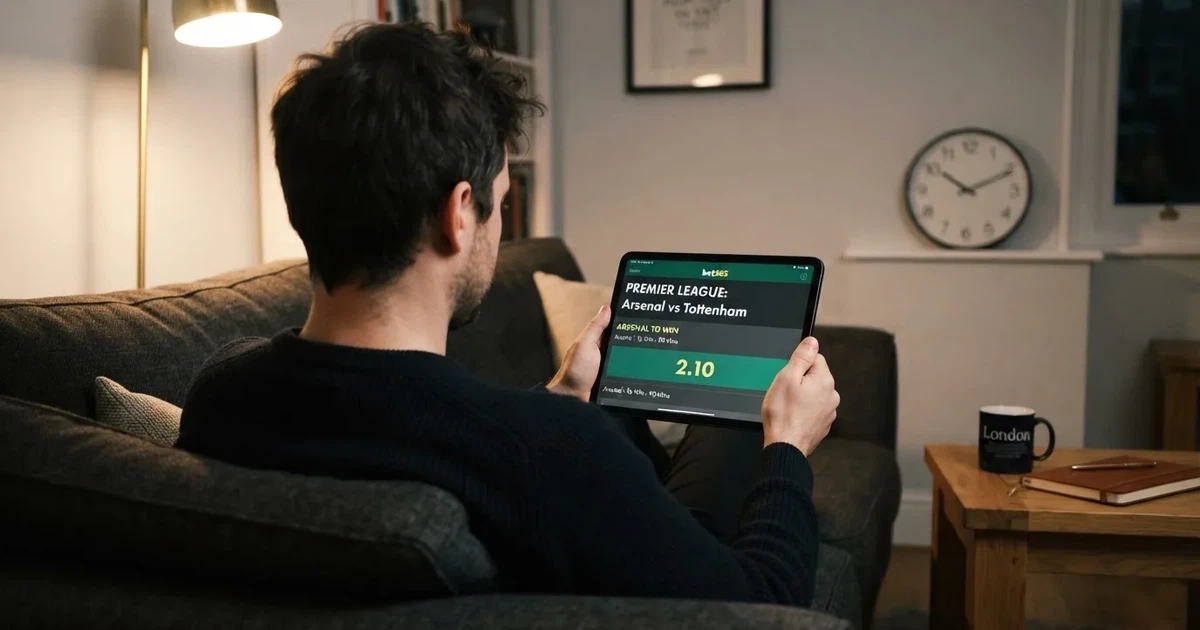
This page works through the UK picture for 2026: where the offer fits within the Gambling Commission’s promotion rules that took effect on 19 January 2026, what 2UP does and does not cover on a betting slip, which of the GB-licensed bookmakers run it, and what the arithmetic on a free-bet component is worth once the conditions are read.
*Current as of 26 October 2026 · checked against the Gambling Commission’s public register.*
The Commission Rules That Reshape Every Bonus Right Now
Two changes inside British bonus regulation since 19 January 2026 change how a 2UP offer reads on paper. The first is the wagering cap: any bonus redeemed to a customer must not require more than ten times the bonus amount to be turned into withdrawable cash. The second is the ban on mixed-product promotions — the rule that says an offer cannot make the customer gamble across two product categories at once (sports betting plus casino, for example, or betting plus free spins on a slot). Both run through the Licence Conditions and Codes of Practice (LCCP) and the Commission’s published guidance, and both apply to every operator holding a remote licence for Great Britain.

A straightforward “bet £20, get £40 in free bets” offer stays legal under the cap because no turnover is demanded on the bonus itself. What gets harder is the older “deposit bonus” model where a percentage of the deposit had to be wagered multiple times — a 50× turnover on a £10 bonus would now mean £500 of qualifying bets, and the cap cuts that off at £100. For the bettor browsing a welcome page, the visible result is that deposit-match bonuses with attached rollover have practically disappeared from the GB market, and the offers that remain are free-bet bundles, odds boosts and early-payout specials.
What the rules do not settle is whether the 10× cap applies to free bets with no wagering condition attached. The Commission’s published position sets out the cap on bonus redemption but does not explicitly cover a free bet issued as the only reward — operators therefore treat these on their own terms, and the page in front of you reflects that variation between brands.
A second question the rules leave open is the cap on the money value of a bonus. No upper limit is in force under the current LCCP, so a “£200 free bet” stays permitted, subject to whatever consumer-protection ceiling the operator imposes itself. Coupled with the ban on mixing betting bonuses with casino or lottery rewards, the practical shape of a British welcome offer in 2026 is now narrower than it was two years ago — fewer moving parts on a single offer, and a hard ceiling on what a deposit-gated bonus can demand to clear.
What the 10× Cap Does to the Bonus Terms a Reader Sees
The cap turns a mathematical fact: where a rollover once demanded 35× or 50×, the maximum a customer is now asked to wager against any single bonus is 10× its value. For a £10 bonus that’s £100 in qualifying bets before the funds become withdrawable; for a £50 bonus it’s £500. Customers comparing welcome pages should treat the turnover figure as a fixed ceiling they may be asked to reach, not as a marketing line. The brands that survived the regulatory change in this market are largely those whose offers were already free-bet-led rather than deposit-match-led.

Mixed-Product Promotions, and Why They Have Disappeared
Cross-product hooks — “stake £10 on the football acca to unlock 50 free spins” — were a familiar feature of UK welcome pages for years, and they are now outside the rulebook. Where a bettor used to clear a single bonus across the sportsbook and the casino lobby, the relevant offers are now sports-only or casino-only. For someone working through a 2UP-triggered free bet bundle, the practical consequence is that any “free spins” or “casino bonus” component the operator used to attach is no longer bolted onto the qualifying bet; it either appears as a separate opt-in or it doesn’t appear.
Safer Gambling Tools That Apply to Every GB Brand
A 2UP offer sits inside a regulatory framework that runs wider than the offer’s own terms. Three pieces of player-protection machinery are worth knowing because they change what a 2UP-enabled account can and cannot do, regardless of which bookmaker runs the offer.
GAMSTOP is the national multi-operator self-exclusion scheme, mandatory for every GB-licensed online operator since 31 March 2020. A customer who registers with GAMSTOP is barred from opening new accounts or continuing to use existing ones for six months, one year, five years, or five years with auto-renewal; after the minimum period the exclusion runs on for a further seven years unless the customer asks GAMSTOP to remove it. A 2UP bet placed from an excluded account is not a 2UP bet at all — the operator is required to refuse the wager and refund any deposit the self-excluded customer attempted to make.
Financial vulnerability checks apply once a customer’s deposits net of withdrawals exceed £150 across any rolling 30 days (LCCP condition 3.4.4, in force since 28 February 2025 for the second phase of checks). The check is a public-record check — looking for county court judgments, bankruptcies and similar markers — not an income check and not a credit reference check. It triggers automatically at licensed operators and does not apply to every deposit, only to accounts that have crossed the threshold.
Deposit limits are required at every licensed operator under Remote Technical Standards section 12, and the customer’s first moves here have applied since 31 October 2025. The current regulations leave the specific ceiling and the second phase to the operator’s own product rules, and a second phase was postponed to 30 September 2026 — whether it is live now depends on the operator. As with any regulated market, no state-set ceiling exists: a customer who wants a £10 weekly cap can set one; a customer who wants none can apply no cap at all, though the operator’s responsible-gambling framework will keep prompting.
Where to Get Help Outside the Operator
For anyone outside the operator side, the National Gambling Helpline (run by GamCare), GambleAware, the NHS gambling clinics and Gamblers Anonymous are the standard routes. The Commission itself does not provide counselling; its role is to license, to regulate and to enforce the rules.
What 2UP Means, and Why the Mechanics Matter
The mechanics of a 2UP offer are simple; the cost is in the rules that surround them.
A 2UP market is a separate market, not a tick-box on a Full Time Result bet. On a football coupon the standard 1X2 bet — home win, draw, away win — runs to the final whistle. A 2UP bet is a separate selection that pays out early if the chosen team goes two goals ahead at any point in the match; an ordinary win bet does not qualify for the early settlement just because the operator happens to run a 2UP special elsewhere. That distinction is the source of most of the disputes logged on betting forums about an “early payout” the customer felt was promised when in fact the customer had picked the standard market.
2UP applies to regular time only. Goals scored in extra time do not count towards the trigger. A team leading 1–0 in normal time and 3–1 after extra time still does not trigger a 2UP settlement on the regular-time market, because the second goal inside the trigger window came after the 90 minutes had ended. Cup ties that go to extra time and penalties — which is most knockout football in England from the FA Cup third round onwards — often end with one team two goals clear only after the 90 minutes are up, and those goals do not count.
A fully cashed-out bet is not eligible for 2UP early payout. A bettor who cashes out the full stake before the early-payout threshold is reached forfeits the 2UP settlement. A partially cashed-out bet keeps 2UP, but the settlement is calculated on the remaining active stake, not on the original wager. Where the early payout triggered before any cash-out, the settled portion is kept regardless.
These three rules come from the Sky Bet Football Rules Hub, which is the most clearly written version of them on the GB market. Other bookmakers running 2UP carry materially similar terms, though the language differs.
Why a 2UP Bet Costs More Than a Plain Win Bet
The price on a 2UP selection is shorter than the price on the equivalent Full Time Result bet for the same team, because the bookmaker is selling a tighter risk envelope: it is taking on a position that pays out as soon as the team goes two up, rather than holding the position to the final whistle. The difference is the bookmaker’s compensation for capping its liability, and it is the closest thing to a “fee” on a 2UP bet. A bettor who routinely backs short-priced favourites is paying that fee on every selection; a bettor who backs outsiders at long prices is paying a much smaller fee, because the underlying win bet already prices in the chance of an early goal.
Practically, a 2UP bet is the wrong product for punters who back heavy away favourites at prohibitive prices, and the right product for punters who back mid-priced home favourites in league fixtures. Thinking of the price difference as a fee rather than as a feature keeps the calculation honest.
Welcome Offers and Free-Bet Mechanics at the Ten Licensed Brands
The ten GB-licensed bookmakers in this comparison each run a sports welcome offer in 2026, and each spells out free-bet mechanics in their own terms. What follows is a side-by-side reading of the offer as stated by the operator — not the offer’s headline, the offer’s terms.
Bet365 and Spreadex are absent from the top ten below because research did not surface their 2UP eligibility in time for this cut. The marketplace of 2UP offers is concentrated in a handful of brands, and the comparison below is the list of ten that hold an active remote general betting licence and run either the 2UP early-payout special or a closely equivalent football offer in their terms.
(One thing every operator in the list gets right: every offer has no working promo code attached, and every welcome page works on an opt-in or auto-credited basis. The British market moved away from codes five years ago and they are not coming back.)
| Operator | Licence holder (Account no.) | What the operator’s terms state on 2UP and the welcome offer |
|---|---|---|
| Bet365 | Hillside (New Media) International Limited (account 55189) | Runs a 2UP offer on selected football leagues; Bet Builder+, Super Boosts and daily Bet Boosts available |
| BetGoodwin | Goodwin Racing Limited (account 2927) | Bet £10, Get £15 in Free Bets (split £5 sports, £5 acca, £5 Sub-Cover); 2UP terms covered in the betting rules |
| Betmaster | BM Solutions GB Ltd (account 65699) | Standard sports welcome with terms in the betting rules; 2UP eligibility on selected football events |
| Coral | LC International Limited (account 54743; same group as Ladbrokes) | Bet £20, Get £40 in Free Bets, qualifying bet at minimum odds 2.0 (1/1), free bets expire 7 days after issue |
| Kalooki Sportsbook | Kalooki Sportsbook Limited (account 57730) | Instant withdrawals by bank transfer within minutes, BOG on UK and Irish racing, in-play, daily boosts |
| Ladbrokes | LC International Limited (account 54743; same group as Coral) | Odds boosts on horse and greyhound, BOG on UK and Irish racing, in-play, Acca Boosts |
| Lottoland | EU Lotto Limited (account 38991) | Sports side licensed under the same licence; current welcome offer is casino-side |
| Midnite | Midnite Limited (account 101839) | Bet £5 or more on pre-match odds EVS (2.0) or greater within 14 days → £25 in free bets + 50 free spins (7-day validity) |
| NetBet | Netbet Enterprises Limited (account 39170) | Daily Boosts, Profit Boosts, free bets, Bet Builder with instant dynamic odds, sports stats for major leagues |
| Star Sports | Star Racing Limited (account 9177) | Bet Boosts, Daily Specials and Weekend Enhanced Boosts, in-play on football, racing, golf and US sports |
| Unibet | Platinum Gaming Limited (account 45322) | Bet £20, Get £40 in Free Bets, qualifying bet at minimum odds 2.0 (1/1), free bets expire 7 days after issue |
Ten licences, ten offers, but the picture is more uniform than the column count suggests. Six of the brands above are run by parent groups that hold multiple licences for the same product: LC International runs both Ladbrokes and Coral; the bet365 Group runs both bet365 and a separate Bingo-only entity; Paddy Power and Betfair sit under Flutter’s UK arm. The result is that two of the “ten brands” in the comparison are owned by the same licence holder, and the rules around offers sometimes line up because they were written by the same people.
What the Numbers Imply for a Bettor’s Average Day
Each welcome offer has a numeric value once the conditions are read. Two pieces of the offer carry the most weight: the qualifying bet (what the customer must stake to unlock the bonus) and the free bet (what the customer is given, and how the value is calculated).
Using the Unibet/Coral shape as the worked example — bet £20 at minimum odds 2.0, receive £40 in free bets — the qualifying bet is a standard money-back-on-win-or-lose play: it pays out at standard terms (stake × odds) on a win, and the stake is lost on a loss. The £40 in free bets is the more interesting part. Sky Bet spells out the rule, and it is the standard market treatment: the stake of the free bet is not returned with the winnings. Where the free bet is placed at decimal odds of 1.90 (the 9/10 used by UK bookmakers), the customer receives £40 × (1.90 − 1) = £36 on a winning free bet if the bet were guaranteed to win — which it never is.
What the customer needs is the *average* value of a free bet at the stated odds, and the formula for that is the value per win scaled by the implied win rate of the market. For a perfectly even two-way market at 1.90 / 1.90, the implied win rate for either side is just under 52.6%, because the bookmaker’s margin — the overround — sits inside the price. Two prices of 1.90 each imply a payout share of 1 ÷ (1/1.90 + 1/1.90) = 0.95, or 95%, leaving a margin of 5%. At 52.6% win rate, the expected value of a £40 free bet is roughly £40 × (1.90 − 1) ÷ 1.90 × 0.95 = £18.
That is the average: £18 of expected value on a £40 free bet at 1.90, against a market margin of 5%. The band’s width covers a few practical variations. If the free bet is placed on a one-way market at, say, 3.50, the average becomes closer to £20; at 5.00 the average rises again. If the bookmaker carries a wider margin — say 7% instead of 5% — the average falls to about £17.5. Either way, a £40 free bet is worth materially less than £40 in cash, and that gap is what a customer is giving up by accepting the offer.
The conclusion the arithmetic supports: the headline “£40 in free bets” should be read as *roughly £15 to £20 of expected value at the kind of markets these offers tend to land on*. Treat it as half-cash. That is the cost of accepting a free bet rather than being paid in withdrawable funds.
Promotional Terms Worth Reading Slowly
Three clauses on the standard British free-bet bundle can quietly deflate the value further:
- Minimum odds on the free bet. A 1.50 minimum means the free bet cannot be placed on a heavy favourite at 1.20; the constraint nudges the customer into larger-priced markets where variance is higher.
- Expiry window. Sky Bet credits free bets and lets them sit for 30 days; Unibet and Coral expire them after 7 days. A 7-day expiry puts the free bet in a tight window where the customer’s preferred Saturday coupon is the only realistic slot; if the coupon does not produce a bet the customer likes, the free bet expires unused.
- Stake not returned. Spelled out plainly on every British free-bet bundle, this is the single biggest deflation of headline value. A “£40 in free bets” is worth roughly £36 if every bet wins, but the average value at a 5% margin comes in around £18.
Two clauses do not routinely apply but are worth flagging for completeness: turnover on the bonus itself (effectively banned at the 10× cap for welcome offers structured as deposit bonuses, but not for free-bet bundles that carry no rollover) and withdrawal restrictions during the bonus period (some operators freeze withdrawals while a bonus is “active”; the regulatory trend has been to remove these).
How the Bonus Cap Reduces the Marketing Weight Behind 2UP
Before the 19 January 2026 rule changes, a 2UP early payout was often the lead-in to a deposit-match bonus with a 30× or 40× rollover. Those structures have been squeezed to the edge of the market by the 10× cap: a customer accepting a 30× rollover on a £10 bonus had to stake £300 before withdrawing; a customer accepting a 40× rollover had to stake £400. Under the cap, the maximum is £100 on a £10 bonus.
The shape this leaves on the page in front of you is dominated by free-bet bundles — the Coral/Unibet template where the customer stakes £20 to receive £40 in free bets — rather than deposit matches. From the bettor’s side the bundle is clearer: the qualifying bet is paid in cash, the free bet carries no rollover, and the variance is concentrated in the free-bet phase rather than spread across a long rollover cycle.
The Ten GB-Licensed Operators Running 2UP in 2026
What follows is the operator-by-operator read of the ten brands the Gambling Commission’s public register lists as holding a remote general betting standard licence for Great Britain, plus a judgement of where they sit on the 2UP comparison. Each block names what the operator runs on the 2UP front, what the welcome offer mechanics state in plain English, and what the brand is honestly best for.
Bet365
Bet365 runs one of the more developed 2UP products in the market, settled through its own early-payout mechanic rather than a third-party feed. The welcome shape pairs this with a Bet Builder+ for combining markets on one match into a single pre-match or in-play bet — a useful companion for punters who like to pair a 2UP selection with a same-game corner count or player shots.
The free-bet terms at bet365 are conservative: the qualifying bet is the standard “stake × odds” structure, free bets are issued as bet credits that don’t return the stake, and standard expiry windows apply. The platform’s biggest strength is market depth rather than offer economics — a bettor who wants to combine 2UP with a wide in-play menu will find more markets here than at any other brand on this page.
Where it lands: bet365 is the right choice for a bettor whose 2UP bet is one selection inside a wider betting slip strategy — same-game multis, bet builders, in-play hedges — and who is not optimising primarily for the welcome offer.
BetGoodwin
BetGoodwin is a smaller British bookmaker with a racing-led heritage that has expanded into football in the last two seasons. Its welcome offer — Bet £10, Get £15 in Free Bets, broken into three £5 slices for straight, acca and Sub-Cover — is more granular than the standard Coral/Unibet shape, and the smaller individual stake lets a bettor place three different bets rather than rolling a larger free bet into one selection.
The 2UP terms run from the betting rules page rather than a marketing-specific hub, which is a small tell that the offer is real and current rather than bolted on for a campaign.
Where it lands: BetGoodwin is the right choice for a bettor who likes to break a free-bet bundle across three different bet types, and who wants a smaller, independent brand rather than one of the listed betting groups.
Betmaster
Betmaster is operated by BM Solutions GB Ltd, a Malta-registered company that holds a GB remote licence through account 65699. The platform runs standard sportsbook mechanics — typical in-play, pre-match and welcome offer — with a 2UP offer on selected football events through the betting rules rather than a separate landing page. The Maltese incorporation is not unusual for UK-facing bookmakers and is not in itself a concern; what matters is the GB licence.
Where Betmaster fits in this comparison is at the mid-budget end: a smaller welcome offer than the listed-group leaders, comparable in-play coverage, and a 2UP offer that does the basic job but lacks the bells that Bet365 or Coral add.
Where it lands: Betmaster suits a bettor who wants a GB-licensed sportsbook outside the listed-group leads and is comfortable with a smaller welcome bundle in exchange for a less crowded customer base and less aggressive promotional pacing.
Coral
Coral runs the same welcome offer template as Ladbrokes — Bet £20, Get £40 in Free Bets at minimum qualifying odds of 2.0, with the free bets expiring 7 days after issue. The Group’s two faces (Coral and Ladbrokes) sit on the same LC International licence, so a customer opening either brand effectively accesses the same product with different branding. That is genuinely useful information when comparing welcome offers: there is no point treating Coral and Ladbrokes as separate reward choices.
The 2UP offer on Coral covers selected football leagues and runs alongside Acca Boosts and other football specials. The deeper value sits in the cross-product footfall: Coral runs a casino, a bingo room and a slots product that the customer may already use; if so, the sports 2UP and the casino welcome can be claimed separately because mixed-product promotions are no longer permitted under the LCCP.
Where it lands: Coral is the right choice for a bettor who has an existing relationship with the Coral/LC International group — or wants one — and wants to time the 2UP offer against a Saturday coupon. A bettor optimising purely for welcome value should compare against the Bet365 product before committing.
Kalooki Sportsbook
Kalooki is operated by Kalooki Sportsbook Limited (account 57730), a smaller licensed brand whose site emphasises instant withdrawals by bank transfer within minutes. The 2UP offer is on selected football events, the welcome bundle is structured around free bets rather than a deposit match, and the in-play market is solid for football and racing rather than the deep menu a major brand offers.
What makes Kalooki worth flagging in this comparison is the speed-of-withdrawal angle: a bettor who cares more about getting cash back quickly than the headline welcome amount gets a genuinely different proposition. The brand is smaller, so market depth is narrower, but the operational pace is faster than the listed-group majors.
Where it lands: Kalooki is the right choice for a bettor who values fast withdrawals above welcome bundle size and is comfortable with a narrower in-play menu in exchange.
Ladbrokes
Ladbrokes sits alongside Coral on the same LC International licence, so the welcome offer reads identically — Bet £20, Get £40 in Free Bets — and the 2UP terms are written to match. Where Ladbrokes differs from Coral is in shop footprint and brand perception, which matters more for in-shop betting coupons than for the online 2UP product, but the online welcome terms are matched.
The 2UP product itself is solid: Acca Boosts on football, odds boosts on horse and greyhound, and Best Odds Guaranteed on UK and Irish racing all run from the standard sportsbook. The two brands do not differ on the 2UP comparison front, which is the point; a bettor choosing between Coral and Ladbrokes is choosing on brand familiarity rather than mechanics.
Where it lands: Ladbrokes is the right choice for a bettor who has shop history with Ladbrokes and prefers to manage everything — online and in-shop — under one brand.
Lottoland
Lottoland is operated by EU Lotto Limited (account 38991) and is best known for lottery products. The sports side runs under the same licence, and a sports welcome offer is available, but the headline welcome promotion that the app page surfaces in 2026 is a casino offer — £20 stake on selected slots to earn 100 free spins on Fishin’ Frenzy Even Bigger Fish, valid until 14 February 2027, no wagering on the spins. That offer sits outside the sports 2UP world, but the customer who uses Lottoland for the lottery will find a sportsbook there for the 2UP bet if desired.
Where Lottoland earns its place in this comparison is for the bettor who wants one account across lottery, sports and casino, with a known operator. The 2UP product is functional but not the headline.
Where it lands: Lottoland is the right choice for a bettor who already plays the lottery on the platform and wants the same operator to handle the Saturday 2UP coupon. A bettor optimising purely for sports welcome value can do materially better elsewhere on this list.
Midnite
Midnite is operated by Midnite Limited (account 101839) and presents itself as a sports-led brand with a casino side. The welcome offer is small-stake: Bet £5 or more on pre-match odds EVS (2.0) or greater within 14 days of sign-up, receive £25 in free bets and 50 free spins valid for 7 days. The qualifying bet is lower than the Coral/Unibet template, which positions Midnite for the bettor testing a platform without committing a £20 stake.
The free-bet mechanic carries the usual stake-not-returned rule, and the in-play product is sufficient for football and a smaller selection of US sports. The 2UP offer sits on the standard pool of football events and runs from the betting rules.
Where it lands: Midnite is the right choice for a bettor who wants to test a 2UP-enabled sportsbook with a small qualifying stake rather than the £20+ most major brands require, and who is comfortable with a 7-day free-bet expiry window.
NetBet
NetBet is operated by Netbet Enterprises Limited (account 39170) and runs Daily Boosts, Profit Boosts and free bet offers alongside a Bet Builder with instant dynamic odds. The sports stats for major leagues feed the bet-building product directly, which positions NetBet for the bettor who wants market data beside the betting slip.
The 2UP offer is on the standard football pool and runs from the betting rules; the welcome structure is closer to the Coral/Unibet template than to the small-stake Midnite shape. Free-bet terms carry the standard stake-not-returned position and a 7-day expiry.
Where it lands: NetBet suits a bettor who values the Bet Builder and sports-stats integration alongside the 2UP product — it is the most sportsbook-engineering-led entry in the top ten.
Star Sports
Star Sports is operated by Star Racing Limited (account 9177), an independent British bookmaker with a longer racing heritage than most on this list. Bet Boosts, Daily Specials, Weekend Enhanced Boosts and in-play on football, racing, golf and US sports are the published product set.
The 2UP offer covers football as part of the in-play menu and the welcome bundle mirrors the Coral/Unibet shape. Star Sports positions itself between the listed-group majors and the smaller independent bookmakers in this list — bigger than Kalooki, smaller than Bet365 on market depth, but with a recognisable racing-led brand identity.
Where it lands: Star Sports is the right choice for a bettor who prefers an independent British bookmaker over a listed-group brand, with a racing-flavoured product the bigger groups don’t focus on.
Unibet
Unibet is operated by Platinum Gaming Limited, Gibraltar (account 45322), and has been live since 1999 — one of the longer-tenured GB-facing operators in this comparison. The welcome offer is the standard Coral/Unibet shape — Bet £20, Get £40 in Free Bets at minimum qualifying odds of 2.0, free bets expiring within 7 days — and the platform advertises it as the headline promotion on the UK site.
The 2UP offer sits on selected football events and runs through the betting rules. Unibet’s wider marketing engine — sportsbook, casino, poker, bingo — sits behind the sports welcome, so a customer who plays across more than one product knows to claim each category separately.
Where it lands: Unibet is the right choice for a bettor whose primary decision factor is the welcome bundle value over the 2UP product specifically; for bettor whose priority is the 2UP product alone, comparison shopping is more useful than the brand choice.
Reading the Licence Numbers Right
The Gambling Commission’s public register lists ten remote licences held by the operators in this comparison; several of them sit under one parent company. A bettor who decides which operator to use on the basis of who owns which licence ends up with the same product family twice over rather than two genuinely different offers. Reading the licence number on the operator’s footer is the right check: the Commission account number is the unique handle, and many bookmakers list it in their pages or in the small print of the welcome offer.
Two of the licence holders above — LC International Limited, which holds both Coral and Ladbrokes, and Platinum Gaming Limited, which holds Unibet — are familiar names because the Commission has issued them multiple platforms under one operating company. Where that is true, the comparison should not double-count the two brands as independent options in the welcome-offer space.
The site’s domain does not tell the bettor whether the operator is licensed; GB-licensed operators use both .co.uk and .com, and licensed status has to be confirmed against the register, not the URL.
Free-Bet Value as a Headline Test
The arithmetic in the section above has a single purpose: it lets the bettor read a “Get £40 in Free Bets” headline as approximately £15–£20 of expected value rather than £40 of cash. That gap is the cost of accepting a free bet rather than a cash bonus, and it is the same gap at every GB-licensed bookmaker because they all share the stake-not-returned convention.
Three variables move the value up or down:
- The margin on the market the free bet is placed on. A 5% margin market gives the higher end of the band; a 7% margin market gives the lower end. Bigger-priced markets (above 5.00) sometimes have wider margins because of the bookmaker’s risk envelope on outsiders.
- The price the free bet is taken at. A free bet at 1.50 is worth less in absolute terms than one at 3.00, even though both sit inside the rule. The 1.50 bet is more likely to win, but the 3.00 bet wins more when it does.
- Whether the stake is returned. This is fixed across the market — none of the GB-licensed operators in this list return the stake with a winning free bet — so the line is consistent. The variation is whether the operator adds an additional offer (a “free-bet club” of weekly bonuses, an “acca insurance” refund on a near-miss) on top of the bundle.
For the bettor, the practical question is not whether to accept the £40 in free bets but which bookmaker’s market menu best supports placing the free bet at the highest practical price on a market the bettor would back anyway. The bookmaker’s margin eats the headline value; the customer picks where the margin lands.
Comparing the Top Ten: How the Roster Reads Together
Reading across the table above, three patterns become clear.
The listed-group leaders dominate on welcome bundle size. Coral, Ladbrokes, Unibet and Bet365 all run the £20-qualifying-bet template or close to it. The free-bet bundle that customers used to accept almost automatically is concentrated here. These brands also run the deepest in-play menus and the broadest set of football leagues with 2UP coverage.
The independent and smaller brands compete on operational angles. Kalooki’s instant withdrawals, Star Sports’s racing heritage, BetGoodwin’s three-slice free-bet structure, Midnite’s smaller-stake qualifying bet. None of these offers outshines the listed-group welcome bundle on raw headline value, but each one gives the bettor a different reason to pick it.
Lottoland straddles two products. The casino welcome is the headline in 2026; the sports side exists under the same licence but isn’t promoted at the same scale. A bettor who plays the lottery elsewhere may end up at Lottoland for the sportsbook by accident rather than choice.
Across the ten operators, the average expected value of the typical welcome bundle sits in the £15–£20 range against a £40 nominal; the spread is mostly in the qualifying stake the customer has to put down first. The 2UP product itself is broadly comparable: every operator in this list settles under similar rules, and the deeper differences are in market depth and in-play coverage rather than in the basic mechanics.
What the 2UP Settlement Looks Like in Practice
A walk-through of a single Saturday morning helps frame the offer. Take a £10 free bet on the 2UP market for Team A to win, at decimal odds of 2.20. Team A is one of three legs in a separate accumulator, so the free bet is part of a wider coupon.
Team A goes two goals up after 55 minutes. The settlement triggers under the 2UP rule: the bet is settled as a winner, and the customer receives the free-bet winnings of £10 × (2.20 − 1) = £12. The free-bet stake is not returned, so the £10 stake is forfeit. The accumulator continues on the other legs because the 2UP settlement only applies to that leg; the acca is settled as a separate position at the end of the match.
The £12 received on the free bet is treated as bonus funds or withdrawable cash depending on the operator. Most GB-licensed operators now issue free-bet winnings as withdrawable cash — that is the post-2026 norm, the mixed-product rule means the same bonus cannot be tied to casino wagering — and the customer ends up with £12 of cash on top of the losing £10 stake.
If the bet had been a regular Full Time Result selection at the same odds, the trigger would not have applied: a 2–0 lead at 55 minutes would still leave the bet live for the full-time result. The 2UP selection is the contract that pays early; the regular win bet is the contract that pays at 90 minutes.
What a Customer Should Check Before Claiming
Three things are worth checking before a customer claims a 2UP welcome offer:
- The qualifying bet’s market — is there a restricted-market list? Football only, or other sports? Some operators restrict the qualifying bet to specific competitions.
- The free-bet expiry window. A 7-day expiry on a £40 free bet is tight if the customer only bets on Saturday coupons.
- Whether the free bet is single-use or can be split into smaller stakes. A £40 free bet is rarely splittable into four £10 bets at most operators; a £15 free bet structured as three £5s at BetGoodwin is.
What the customer does not need to check is the licence status: any operator listed in this comparison holds a current GB remote licence and is checked against the Commission’s public register. The licence check is for deciding whether a non-listed operator is licensed, not for choosing between listed ones.
When 2UP Is Not the Right Bet
There are times when 2UP is the wrong market to pick, and the rules above partially explain when.
If a customer has backed a team at very short odds — say 1.20 — and that team goes 2–0 up early, the value of the 2UP trigger is small against the original stake. The customer would have won almost as much by holding the bet to full time; the early payout is a convenience rather than a meaningful change to the outcome.
If the customer’s preferred bet is the underdog, the 2UP trigger is much further away and the price on the 2UP market is correspondingly longer. Some operators offer 2UP on underdogs, others do not; the available market for an outsider going two goals up is restricted.
If the match is a cup tie that is likely to go to extra time, the regular-time restriction kicks in: 2UP goals scored in extra time do not count, so a customer’s 2UP position during extra time is closer to a standard Full Time Result position.
If the customer intends to cash out early, the fully-cashed-out position forfeits the 2UP settlement. The cash-out versus early-payout trade-off is a real decision at most major bookmakers.
These are the cases the marketing header does not cover, and they shape whether 2UP makes sense for any particular Saturday’s coupon.
Frequently Asked Questions
What does 2UP mean in betting?
2UP is a separate football betting market that pays out as a winner if the team you have backed goes two goals ahead during normal time. The full-time result does not matter once the 2UP threshold is reached, and the bet is settled early rather than running to the 90th minute.
What is 2UP in betting?
2UP is the early-payout mechanic on a football match. A bet on Team A “2UP” is the contract to settle as a winner the moment Team A leads by two goals in regular time; goals in extra time do not trigger the settlement.
What is a 2UP bet?
A 2UP bet is a single selection on a betting slip that activates the early-payout mechanic. It is not a check-box on a Full Time Result bet; it is a distinct market with its own price, normally shorter than the equivalent win bet because the bookmaker is capping its own liability at the 2-goal margin.
What is the maximum wagering requirement on a betting bonus in Great Britain?
Since 19 January 2026, the Commission’s promotion rules cap wagering requirements on bonuses at 10×. A £10 bonus cannot require more than £100 of qualifying bets before the funds become withdrawable, and mixed-product offers linking betting to casino or lottery are banned.
What do minimum odds and the wagering requirement mean in a sign-up offer?
Minimum odds are the threshold the qualifying bet must clear (for example, 2.0 / 1/1) before the offer unlocks. The wagering requirement is the volume of qualifying bets you must place before winnings become withdrawable; under the 10× cap introduced on 19 January 2026 the maximum is ten times the bonus value.
Why is the stake of a free bet not paid back with the winnings?
A free bet is issued by the bookmaker at no cash cost to you, so the stake is the bookmaker’s contribution rather than your own. Settling only the winnings (stake × price − stake) keeps the free bet from being equivalent to a cash bonus and reflects the actual liability the bookmaker has taken on.
Free bets & offers – AI Betting
Content created by the «AI Betting» team
