
Darts Betting Tips for 2026: What a Prediction Is Made Of
 Available in US
Data current as of 26 October 2026 and verified against the UK Gambling Commission’s public register.
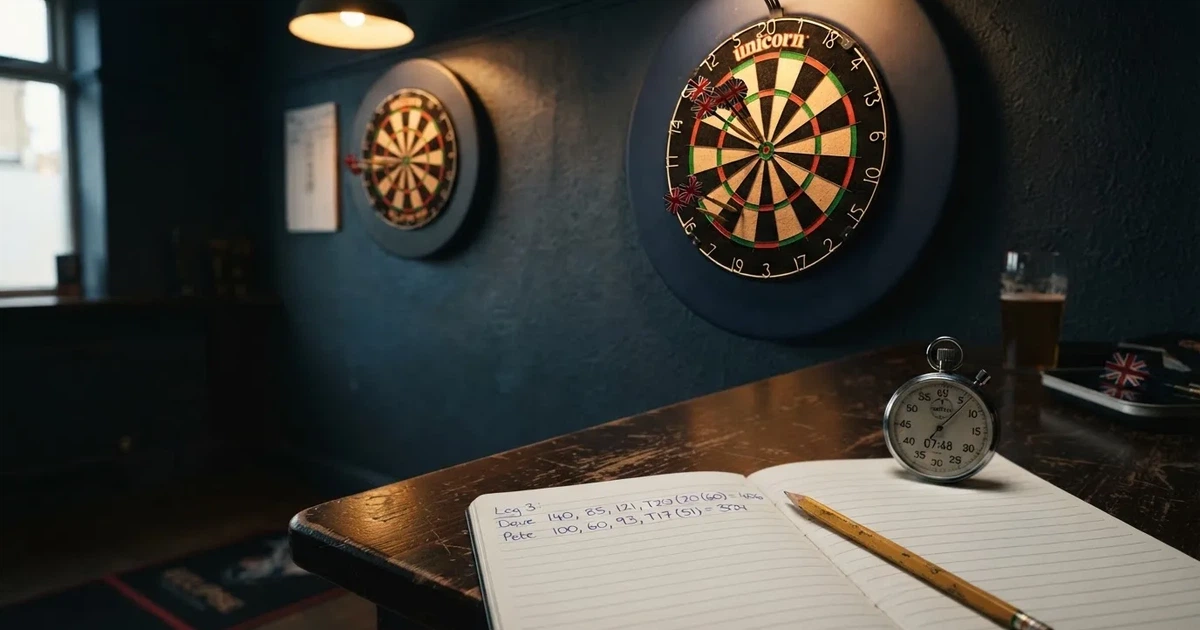
Anyone searching for darts betting tips is really asking two questions at once. The first is what is going to happen: who beats who, whether the favourite covers the handicap, whether the total goes over. The second is what the price is worth once the bookmaker has taken its cut. A serious answer to the first question cannot dodge the second one, and a page that pretends it can is selling noise. What follows is built on that premise. It walks through how a prediction is put together from form, statistics and the market’s own prices; how UK-licensed bookmakers handle bonuses, live betting and the cash-out button; how the main tournament calendar shapes what gets priced; and what each of the ten featured brands actually offers in this market. Nothing on the page is a tip — no picks, no predicted scorelines, no “back this man today” instruction. The job here is to show a reader how the work is done, so they can do it themselves.
How These Ten Bookmakers Compare on Darts
A darts tip is only worth as much as the bookmaker it sits inside. A £10 bet at 3.50 returns £35; it returns nothing if the operator holds the funds or voids the leg on a technicality. Choosing where the bet lands is therefore the first layer of analysis, not an afterthought. The table below lays out the four pieces of information that matter most for a UK punter comparing two platforms: whether a Gambling Commission licence is in place against the brand, what the licence number looks like on the public register, which company the licence runs through, and what the operator’s own terms say about the darts market — its in-play coverage, the bet-builder availability, the size of its outrights board.
Every brand here sits on the Commission’s public register against a remote general betting standard (real events) licence. That makes all of them legal at the point of consumption. It does not make them identical: brand licences run through separate operating companies, several of them based in Gibraltar or Malta, and the terms each platform attaches to darts markets differ materially. A reader looking for a price on the Premier League final, for a handicap line on a Premier League Darts night, or for an outright on the next World Championship should match the column on the right of this table against the kind of bet they actually want to place.
| Brand | Gambling Commission account (licence holder) | What the operator’s own terms say on darts |
|---|---|---|
| Paddy Power | 39439 — PPB Counterparty Services Limited | App offers Bet Builder+, Popular Bet Builders, Super Sub, expanded Win More markets and player and acca stats |
| Betmaster | 65699 — BM Solutions GB Ltd | Markets covered include darts, with prices driven by its in-house trading desk |
| BetGoodwin | 2927 — Goodwin Racing Limited | Best Odds Guaranteed applies to UK and Irish horse and greyhound racing up to £1,000; darts terms run on its sportsbook |
| Sporting Index | 27343 — Sporting Index Limited | Spread betting product sits alongside fixed-odds betting; losses on the spread book can exceed the original deposit |
| LiveScore Bet | 56859 — LiveScore Betting and Gaming (Gibraltar) Limited | Accepts debit cards (Visa, Mastercard), Apple Pay, PayPal, Pay by Bank and Revolut Pay on its sportsbook |
| Midnite | 101839 — Midnite Limited | Site cites licence 101839 and lists in-play events, acca builder, popular accas and price boosts with maximum-stake limits |
| DAZN Bet | 48756 — DZBT Limited | Deposits start at £5 by debit card, Apple Pay, Paysafecard, Trustly and Skrill, £20 by PayPal; no processing fees |
| Lottoland | 38991 — EU Lotto Limited | App combines casino, lottery betting, sports betting and scratchcards under one gambling account |
| Fitzwilliam Sports | 48760 — SBKI Limited | Phone and live chat available, office open 09:00 to 21:00 Monday to Sunday, messenger replies inside 90 seconds |
| William Hill | 39225 — WHG (International) Limited | Best Odds Guaranteed on UK and Irish horse racing from 8 AM on the day of the race; darts follows its standard sportsbook |
A licence on the public register is the floor, not the ceiling. All ten names here clear it. What separates them at the level a punter cares about is downstream of the licence: how broad the outrights are, how early price-boost tokens go up, whether in-play darts pricing works on a Thursday evening Premier League night, and how the cash-out button behaves mid-leg.
The Shape of Darts Betting in Great Britain
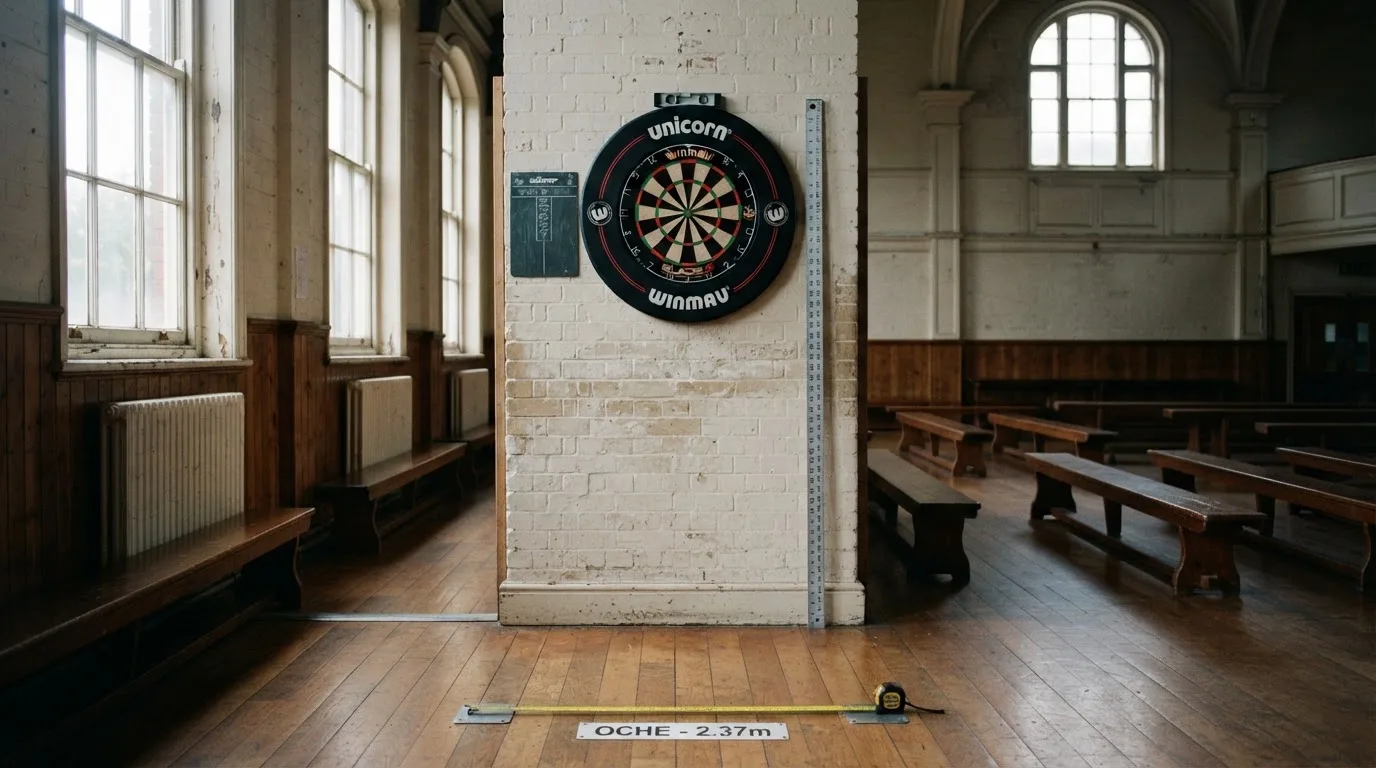
Darts is an unusually friendly sport to model. The scoring is mechanical — 501 points down to zero, finishing on a double or a bull, every leg played under the same conditions. The sample is large because tournaments run back-to-back from September through to January, and match-ups recur. That structural cleanliness is why darts tips circulate on the internet in greater volume than tennis or snooker tips do. It also makes the market tighter: when every punter and their trading model can read the same head-to-head and the same three-month form, the bookmaker’s margin has less room to hide.
Two practical consequences follow. First, an outright on the next major is rarely a misprice. The favourites’ odds reflect how the rest of the market has priced them. Second, the value a tip carries is mostly in the smaller markets — handicaps, total 180s lines, set totals in a best-of-N match — where the bookmaker’s pricing team has fewer comparable matches to anchor against. Knowing this changes what a sensible reading of “darts betting tips today” looks like. The job is not to find a winner in a market the bookmaker has mispriced; it is to find a price that is fractionally better than the true probability, repeated across enough legs that the edge survives the variance.
The bookmaker’s margin is what makes even that a hard job. On a coin-toss market priced at 1.90 / 1.90, the payout share is 1 ÷ (1/1.90 + 1/1.90), which works out to 0.95. The bookmaker keeps the other 0.05, or 5%, on every unit staked across the two outcomes regardless of which side wins. That kind of margin lands somewhere between roughly 4% and 8% on most pre-match darts markets at major UK brands; it moves higher — often into a band of roughly 8% to 12% — on outrights, in-play lines and exotic markets such as highest checkout. A reader who treats a “5% margin” figure as gospel across all markets is reading a number from the wrong line.
Where the Legality Sits
Gambling is licensed, not legalised by default. The framework for England, Scotland and Wales is the Gambling Act 2005, with the Gambling Commission (UKGC) acting as the regulator under powers amended by the Gambling (Licensing and Advertising) Act 2014. Since 2014, an operator whose remote facilities are used in Great Britain needs a Commission licence wherever it is based. A Curaçao, Maltese or Gibraltar operating licence is necessary for the operator’s own purposes but is not a substitute for the UK one. Northern Ireland is outside the 2005 Act, so a GB licence does not regulate it; betting from a Northern Irish customer at a GB-licensed site is a separate question the operator’s terms deal with.
The Commission’s public register is the whole test of whether a brand holds a licence. It can be searched by business name, trading name, registered domain or account number, and it records the licence categories a brand sits under: remote general betting standard for real events, the same category for virtual events, remote general betting limited, remote pool betting and remote betting intermediary for exchanges. None of these is a generic “sportsbook licence”; each is a permission with its own conditions. A punter looking at an unfamiliar brand should look the account number up on the register and confirm the category covers the kind of bet they want to place.
Two consequences matter for a darts tipster. First, every online bookmaker licensed in GB takes part in GAMSTOP — the national self-exclusion scheme is mandatory, not optional. A brand not listed on GAMSTOP at the point of sign-up is not GB-licensed for remote betting. Second, identity checks happen before the first deposit, not after the first loss. A licence holder verifies name, address and date of birth; where the customer’s deposits minus withdrawals exceed £150 in a rolling 30 days, a financial vulnerability check runs against public records (bankruptcy and county court judgments), not against a credit file. That step is not a tax on small bettors — it is the regulator’s response to a real harm, and it is the price of being able to bet in pounds at a UK site.
There is no statutory cap on stakes and no state-set loss ceiling for sports betting. The closest the regulator comes is the customer’s choice: deposit limits, time-outs, product restrictions, full self-exclusion. A bookmaker does, however, retain the right to limit or close the account of a customer whose pattern of play is unprofitable. That is a contractual right, not a regulatory one. A reader who treats an account limitation as a sign the operator is crooked is reading the wrong pages: the operator is usually reading the punter’s edge and pricing it out.
Responsible Gambling and the Real Punters
Safer gambling is not a footnote on a darts betting page. The Commission treats it as part of the licence, not a sticker applied at the end. Every brand in this comparison offers some combination of deposit limits, time-outs, reality checks, product restrictions and self-exclusion. Unibet’s own safer-gambling page names the package directly: deposit limits, a Player Profile test, product restrictions, self-exclusion, and a set of help-line pointers — BeGambleAware, GamCare, GAMSTOP, Gambling Therapy and the BGC. That kind of layout is now standard.
What this means in practice: a punter who bets on the Premier League Darts on a Thursday night, lays an acca on the World Championship over Christmas and tops up with a Bundesliga football book at the weekend is someone who will hit the £500-a-month gross deposit that the regulator uses as a benchmark faster than they expect. The deposit-limit tool is set in the account settings; it is rarely set by default in a way that bites. Setting it before the first deposit is cheaper than resetting it after a bad weekend.
GAMSTOP itself is a one-way door for its period — six months, one year, five years, or five years with auto-renewal. After the minimum period the exclusion continues for a further seven years unless the customer asks GAMSTOP to remove it. It covers online bookmakers and their apps. The betting-shop self-exclusion is a separate system. The punter who wants out of everything should set the GAMSTOP exclusion first and confirm the offline side second.
For readers in trouble, GamCare runs the National Gambling Helpline; the NHS runs gambling clinics; Gamblers Anonymous runs peer meetings; BeGambleAware runs information. None of these numbers replaces the deposit limit. None of them is on call at the moment a £500 impulse deposit goes through at 11 pm on a Thursday.
Bonuses and Free Bets on Darts Markets
The promotion section of a UK bookmaker’s site is where the marketing language drifts furthest from how the offer actually pays. A “darts free bet” or a “£50 welcome offer” sounds like free money. The terms say something narrower. Three things have to be read carefully: the minimum odds any qualifying bet has to be placed at; the wagering requirement (now capped at 10x under the Commission’s promotion rules in force since 19 January 2026, meaning a £10 bonus requires no more than £100 of qualifying bets); and the form the bonus takes — a cash bonus credited to the withdrawable balance, a free bet whose stake is not paid back on a win, or free spins on a casino product. The CAP Code advertising rules and the LCCP marketing controls police the surrounding language: marketing must not appeal strongly to under-18s, must not feature anyone who is or seems to be under 25 in a significant role, and must be socially responsible. The mechanics of the offer itself are a contract.
A worked illustration using one welcome offer from this set: Midnite’s sports welcome gives new customers £25 in free bets and 50 free spins after a £5 qualifying bet at minimum odds of EVS (2.0), settled within 14 days of sign-up, and the free bets expire seven days after credit. Three numbers deserve a re-read. The first is “minimum odds of 2.0”, which rules out any short-priced favourite — and on darts, the favourite in a Premier League match is often shorter than 1.50, so a reader who tries to qualify on a one-leg darts accumulator has to push the price up through combinations. The second is the seven-day expiry: the free bet is not a bankable asset; it is a coupon that voids if it sits in the account through a quiet tournament week. The third is the 50 free spins, which are a casino product sitting inside a sports offer: the regulatory cap on wagering and the cross-product rules apply.
Reading across the rest of the comparison, the welcome mechanics elsewhere are similar in shape but different in number. Paddy Power’s app promotes Bet Builder+ and Popular Bet Builders; Super Sub rolls a bet onto a replacement player if the selection is substituted mid-event (relevant for football more than for darts, where no substitutions happen, but present in the same wallet). Sporting Index’s new-customer book — a £10 fixed-odds bet at minimum odds of 1/2 unlocking three £10 fixed-odds free bets, three £5 Total Goals spread bets, three £5 Winning Favourites spread bets and a £1 Race Index spread bet — pays no value on a darts selection at all; it is a horse-racing-shaped offer that does not transfer. The free-bet stake not being returned on a win is the industry default and the regulator allows it.
The promotion rules introduced in January 2026 closed a small set of old tricks. Wagering requirements are now capped at 10x of the bonus, so a £10 bonus at 50x turnover — the old figure — is past. Mixed-product promotions are also out: an offer that requires betting on football to unlock casino free spins is not allowed. The Commission did not impose a cap on the money value of a bonus, so a £100 welcome offer is still legal; the regulator has chosen the wagering cap as the lever rather than the headline number.
The stale-but-true test on any of these offers is to read the small print once, in order, and to ask which of three categories the bonus falls into. A cash bonus credited to the withdrawable balance is the cleanest form. A free bet whose stake is not paid back has to clear at a price high enough to cover the haircut; the formula for what it is worth on average is the free-bet amount multiplied by (odds − 1) divided by odds, then discounted by the market’s payout share — so a £10 free bet at 4.00 on a market with a 95% payout share is worth roughly £7.13 in expected value, not £40. A price boost is a one-shot pricing decision: the operator raises the price, pays out at the new price, and that’s the offer.
A reader chasing darts-specific promotions should expect the World Championship window — late December through to the Alexandra Palace final — to be the busiest, with Premier League Darts nights running a quieter second. The market’s shape explains it: bookmakers pay for visibility during the one tournament a casual punter can name.
Live Betting, In-Play Pricing and the Cash-Out Button
In-play darts is one of the cleaner in-play markets in British bookmaking. The match is staged, the breaks are scripted, and the score update is real-time. A leg rarely takes longer than six or seven minutes, so a market that runs for the duration of a match can be repriced a dozen times. Midnite lists in-play events on its sports home page with maximum-stake limits alongside; the same layout is the standard at Paddy Power, Betmaster and William Hill.
The cash-out button takes a price off the live market and pays it out early. Mechanically, it is a settlement at the live price, not a guaranteed profit. The trade-off is simple: a punter with a five-leg acca that is one leg from landing can lock in the live price of that five-fold and walk away; a punter who is confident the last leg wins will let the bet ride. The cash-out figure offered is the live price minus the bookmaker’s margin, which is wider than the pre-match margin — there is no free lunch in the in-play book. Where the price has moved against a punter, the cash-out button is a small mercy, not a fair deal.
Live darts betting also covers markets that the pre-match book did not offer — most-leg 180s in the match, method of checkout on the deciding leg, race to N legs at the start of a set. These are priced off historical frequencies of the players involved, with the bookmaker’s margin running higher than on the headline markets. A reader who bets them with no statistical anchor is paying for the novelty.
Where the in-play product gets thin is on the smaller tours. The PDC’s televised Premier League Darts and the World Championship are well-covered across every brand in this comparison. The Challenge Tour and the Development Tour are not — the depth of coverage depends on the trading desk’s appetite for less-watched events.
Predictions, Statistics and What a Tip Is Actually Worth
The shape of a darts betting tip, after the headline is stripped off, runs through four steps in sequence. First, the head-to-head: how the two players have done against each other, ideally across multiple matches and on stages of similar size. Second, recent form: the last three months of tournament results, with the smaller events carrying weight because bigger-name players compete hard in them. Third, statistical profile: the three-dart average, the doubling percentage, the percentage of legs won on throw, the first-nine average. Fourth, the market price: where the bookmaker has the favourite, where the bookmaker has the outsider, and whether the gap matches the profile.
A tip that skips one of those four steps is half a tip. A tip that skips the fourth — the price check — is the kind of tip that wins at low frequency and loses overall, because backing the right outcome at the wrong price is losing strategy dressed up as winning luck.
The handicap market in darts runs on the number of legs or sets a stronger player is expected to win by. A -3.5 legs handicap on a Premier League favourite means the favourite has to win by four legs or more for the bet to land. The price of that handicap is set against historical leg-difference distributions between the two players. The trap on the trap: a punter who reads the prices as a tipster’s recommendation rather than a probability statement is anchoring on someone else’s estimate of probability rather than their own.
The statistical profile of a player takes more work than a casual reader expects. Three-dart average shifts by stage, by opponent and by crowd size; it shifts through a tournament as matches accumulate. A 105 average in the group stage and a 99 average in the knockout stage is a real pattern. A 105 average from the floor of a Champions League qualifier and a 105 average at the World Championship semis are the same number that means two different things. Doubling percentage is the most stable of the headline stats. The percentage of legs won on throw varies with opponent more than any other figure.
The hard truth about tips: no tip is ever certain. A price of 1.50 means the market thinks the outcome is twice as likely as not, and the market is roughly right more often than a tipster working alone is. A price of 5.00 means the market thinks the outcome is one in five, and the market has read that price off thousands of bets by people with the same head-to-head in front of them. The punter who tips against the market needs a specific reason the market is wrong, and the reason needs to be testable.
What “Value” Means Once the Margin Is Out
A value bet is a price that is higher than the true probability once the bookmaker’s margin has been removed. To see this for a concrete coin-toss style market priced at 1.90 / 1.90, the bookmaker’s margin is 5%: payout share = 1 ÷ (1/1.90 + 1/1.90) = 0.95, margin = 1 − 0.95 = 0.05. A punter who believes the true probability of each side is 50% — even money, no edge — sees a price of 1.90 against a true probability of 0.50. The expected return per unit staked is 0.50 × 0.90 (the decimal odds minus one) = 0.45. The expected loss per unit is 0.55. There is no edge.
For value to exist, the punter’s estimate of the true probability has to beat the market’s estimate by enough to clear the margin. On a 1.90 / 1.90 market that means believing one side is, say, 53% rather than 50%, which is an estimate that requires substance behind it — a head-to-head reading, a stage-effect adjustment, a recent form weighing — and which the market may already have priced in. The value bet lives in the gap between the punter’s probability and the market’s. On most days, on most markets, the gap is too small to clear after fees.
Why the Margin Quietly Erodes a Tipster’s Edge
A tipster who posts darts betting tips today with a stated 55% strike rate at average odds of 1.80 looks, on the surface, like a winning system. In numbers: expected return per unit = 0.55 × 0.80 = 0.44, expected loss per unit = 0.56. That is a losing tipster. To break even at the same average odds, the strike rate has to clear (1 ÷ 1.80) = 55.6%. To make a profit the strike rate has to clear that by enough to cover the tipster’s subscription and the punter’s time. Most publicly circulated tipster records do not survive this arithmetic. Where this matters for the reader is in the rule of thumb: a tipster’s strike rate at a given average odds is meaningless on its own; the two numbers have to be looked at together.
Bet Types, Odds Formats and How a Bet Settles
The British bookmaker writes in fractions by convention. Five-to-one (5/1) means a £1 stake returns £5 profit plus the £1 stake, for a total return of £6. Evens (1/1, written “EVS”) means a £1 stake returns £1 profit plus the £1 stake. Eleven-to-four (11/4) is an in-between. Decimal odds are the same information in a different notation: 5/1 is 6.00, 11/4 is 3.75, EVS is 2.00. The conversion is decimal = (a ÷ b) + 1. Both notations are on the same betting slip at most UK brands; a reader who sets the account to one format can switch to the other at any time.
For a winning single bet, the return is stake × decimal odds; the profit is stake × (decimal odds − 1). For a combination bet (an accumulator, or “acca”, in British usage) the odds of each leg multiply into one price, and the stake rides on every leg winning. A four-fold at 2.00, 3.00, 1.50, 4.00 has a combined price of 2.00 × 3.00 × 1.50 × 4.00 = 36.00. A £5 stake returns £180. One losing leg voids the whole bet to zero.
Handicap and Total Markets
The handicap market moves the line on a stronger player by a number of legs or sets. The total market moves the line on the combined scoring — most commonly, total 180s in a match. A line of 7.5 180s on a best-of-13 legs match is settled on the count of 180s scored by both players combined: over 7.5 lands on 8 or more, under lands on 7 or fewer. Each side has its own price; both sides carry the bookmaker’s margin.
Outright Winner Markets
The outright winner market on a major runs from the moment the field is announced through to the start of the tournament and on into the early rounds. As the field narrows — from 128 to 64 to 32 to the final — the prices shorten on the survivors and the book closes on eliminated players. Laying an outright early is cheaper per unit but riskier per bet; laying it late is more expensive per unit but cheaper to clear.
Each-Way Betting
Each-way betting is two equal-stake bets: a win bet on the selection at the headline odds, and a place bet on the same selection at a fraction of the odds, typically a quarter or a fifth. The stake is doubled. Each-way is shaped for horse racing, where place terms are set; for darts, where there is no analogue to place terms in the same sense, each-way is sometimes available on outright markets with the bookmaker setting their own place terms. A reader who uses each-way on darts needs to read the place terms, since they are operator-specific.
Combination and System Bets
A combination bet multiplies the odds of the legs into one price. A system bet lays multiple combinations of a larger pool of selections. The Trixie is four bets across three selections; the Patent is seven; the Yankee is eleven; the Lucky 15 is fifteen; the Super Yankee (or Canadian) is twenty-six; the Heinz is fifty-seven; the Goliath is two hundred and forty-seven. The total stake is unit stake × number of bets — so a £1 Lucky 15 costs £15 in stake across 15 bets. These are higher-variance products, designed to keep an interest alive when one or two legs look uncertain. The trade-off is that the bookmaker’s margin compounds across every leg.
Cash Out, Each-Way Specials and Exotics
Bookmakers also run darts-specific markets: highest checkout in the match, most 180s in a leg, first to N 180s, method of checkout on the deciding leg. These are operator-specific, sometimes only available in-play, and usually carry a higher margin than the headline markets. They are worth keeping in the betting rotation as a small allocation rather than the main bet.
The Tournament Calendar That Drives Darts Betting
The PDC’s main tour runs from January through to the World Darts Championship in late December and early January. The 2026 edition ran from 11 December 2025 to 3 January 2026 at Alexandra Palace with 128 players, expanded from 96. Luke Littler beat Gian van Veen 7–1 in the final; the prize fund was £5,000,000, with £1,000,000 to the winner. Format: rounds 1 and 2 first to 3 sets, rounds 3 and 4 first to 4, quarter-finals first to 5, semi-finals first to 6, final first to 7.
The televised Premier League Darts runs weekly on Thursday nights from February to May, with eight players and a finals night at the end. The format is shorter than the World Championship — best-of-N legs, single-game nights — which is why it dominates in-play pricing. A Premier League night is the cleanest in-play bet on the calendar: settled in real time, with cash-out options available throughout.
The World Series events run during the autumn — World Series of Darts Finals, the Grand Slam of Darts in Wolverhampton, the Players Championship Finals. The European Championship sits between the Premier League and the World Championship. Each has a smaller field, a tighter format, and a habit of producing a non-tour winner at longer odds.
The BDO/World Darts Federation (WDF) calendar runs in parallel. The Lakeside World Championship is the BDO’s flagship; the WDF runs a separate tour. GB bookmakers cover the televised PDC events most heavily; the WDF calendar is thinner in the betting product. A reader who follows the WDF should expect the market to be smaller and the bookmaker’s margin wider.
Ten Bookmakers in Detail
What follows is a per-brand read of the ten operators in this comparison. Each block opens with what the brand specifically brings to a darts punter, runs through the headline terms that affect how a bet is placed and settled, and closes on where the brand is strong and where it is not.
Paddy Power
Paddy Power’s sportsbook carries every televised PDC event, with in-play pricing and a Bet Builder+ product that allows combination betting within a single darts match. The app stacks Super Sub (a football feature that does not transfer to darts because there are no substitutions), Popular Bet Builders, expanded Win More markets, player-level and accumulator stats. The licence runs through PPB Counterparty Services Limited under Gambling Commission account 39439.
What a darts punter gets here is the largest outrights board, the deepest bet-builder coverage and a frequent rotation of price boosts on Premier League Darts nights. Where Paddy Power loses to specialists is on the long tail of less-televised events: a Challenge Tour card is a thinner product than at a brand that trades it explicitly.
Betmaster
Betmaster, run through BM Solutions GB Ltd under Gambling Commission account 65699, is a more focused product. The site lists darts under its sportsbook and runs in-play pricing on the televised PDC calendar. The mobile experience is the same product as the website.
The brand suits a punter who wants a quieter account with a more straightforward welcome structure than the high-profile brands run. A reader hunting a price boost or an enhanced odds token for the next World Championship semi-final might find the outright depth and promotional volume less extensive than at the larger platforms.
BetGoodwin
BetGoodwin, run through Goodwin Racing Limited under Gambling Commission account 2927, is best known for its Best Odds Guaranteed offer on UK and Irish horse racing and greyhound racing, paying up to £1,000 when a starting price is bigger than the price taken. The same product does not apply to darts. The sportsbook covers the televised PDC events with standard pre-match and in-play pricing.
The brand suits a punter who splits time between horse racing and darts and wants the BOG safety net on the racing side without an account at a second bookmaker. The darts product is competent but not the reason to open the account.
Sporting Index
Sporting Index, run through Sporting Index Limited under Gambling Commission account 27343, runs a fixed-odds book alongside a spread betting book. Spread betting on sports — including darts — uses a different settlement: a stake is set, the outcome determines a “make-up” number, and the win or loss is the difference between the make-up and the index times the stake. Losses on a spread bet can exceed the original deposit.
The fixed-odds book is shaped like the rest of the industry. The spread book is the differentiator. The new-customer bundle — a £10 fixed-odds bet at minimum odds of 1/2 unlocking three £10 fixed-odds free bets, three £5 Total Goals spread bets and three £5 Winning Favourites spread bets, plus a £1 Race Index spread bet — pays no darts value directly. A reader who wants spread betting on top of a sportsbook has a short list of UK brands; Sporting Index is on it. A reader who wants only darts is paying for a product they do not use.
LiveScore Bet
LiveScore Bet, run through LiveScore Betting and Gaming (Gibraltar) Limited under Gambling Commission account 56859, has its user base from the LiveScore scores app. The sportsbook carries the televised PDC calendar with in-play pricing. The payment stack accepts Visa and Mastercard debit cards, Apple Pay, PayPal, Pay by Bank (Open Banking) and Revolut Pay, with no deposit fees advertised on the standard methods.
The brand suits a reader who already has the LiveScore scores app and wants a betting account tied to the same feed. Where the brand loses is on price-boost volume and on outright depth: this is a clean, narrow product, not a high-volume one.
Midnite
Midnite, run through Midnite Limited under Gambling Commission account 101839, has positioned itself as a sports-and-casino brand with an explicit esports and in-play tilt. The sports home page lists in-play events, an acca builder, popular accas and price boosts with maximum-stake limits. The welcome offer — £25 in free bets and 50 free spins after a £5 qualifying bet at minimum odds of EVS (2.0), settled within 14 days of sign-up, free bets valid for 7 days — has the standard shape: minimum odds rule, time-limited free bets, casino free spins attached.
The brand suits a punter who splits darts and esports, because Midnite’s pricing on both is consistently tighter than the legacy bookmakers. It is less suited to a reader looking for the long tail of less-televised events; live streaming of televised darts is not always available through the sportsbook itself, with the product relying on a tracker.
DAZN Bet
DAZN Bet, run through DZBT Limited under Gambling Commission account 48756, has the DAZN media brand behind it but operates the sportsbook as a separate product. Deposits start at £5 by debit card, Apple Pay, Paysafecard, Trustly and Skrill, and at £20 by PayPal. No processing fees are advertised.
The brand suits a reader tied to the DAZN subscription and looking for a sportsbook that does not require a separate verification dance. The darts product is competent and offers pre-match and in-play on the televised PDC calendar; the brand is not where a reader opens an account for price-boost reasons.
Lottoland
Lottoland, run through EU Lotto Limited under Gambling Commission account 38991, is a multi-product brand combining casino, lottery betting, sports betting and scratchcards behind one account. The sportsbook inside it covers the televised PDC calendar; lottery betting (on the outcome of a draw, with fixed odds) is the original product and the reason a customer comes to the site.
A reader whose betting is mostly on the lottery or the football and who wants darts coverage as a small part of the same wallet has a fit here. A reader whose primary market is darts will find a thinner product than a dedicated sportsbook offers.
Fitzwilliam Sports
Fitzwilliam Sports, run through SBKI Limited under Gambling Commission account 48760, is a phone-led bookmaker with a smaller digital footprint than the high-street names. Phone and live chat run from 09:00 to 21:00 Monday to Sunday, with messenger replies generally within 90 seconds. The sportsbook covers darts on the televised calendar.
The brand suits a punter who wants phone-based service and is comfortable with a smaller product range. The platform’s limitations show up in its in-play product and price-boost volume: as a smaller bookmaker, it prioritises a careful book over a high-rotation trading desk.
William Hill
William Hill, run through WHG (International) Limited under Gambling Commission account 39225, is the largest of the legacy high-street names and runs the most televised darts markets of the brands here. Best Odds Guaranteed applies to UK and Irish horse racing from 8 AM on the day of the race, on single and multiple bets; the same offer does not extend to darts. The sportsbook covers the televised PDC calendar with standard pre-match and in-play pricing.
The brand suits a reader who wants a full product and is not chasing price boosts. The odds may not lead the market on any given night, but the price is consistent and the book holds up. Where William Hill loses is on a specific kind of high-volume customer: a sharp bettor on Premier League Darts who expects price-boost tokens and aggressive limits is better served at a brand that targets that customer.
How a Calculation Reads on a Darts Market
The calculation most useful to a darts punter is the margin of a two-way market, because it is the metric the bookmaker does not publish. The formula: take the decimal odds on each outcome, invert each one, sum the inverses, and divide one by the sum. That gives the payout share — the proportion of every unit staked across all outcomes that comes back to punters in total. The margin is one minus that figure.
Worked example, on a market priced at 1.90 / 1.90: payout share = 1 ÷ (1/1.90 + 1/1.90) = 1 ÷ (0.5263 + 0.5263) = 1 ÷ 1.0526 = 0.9500. Margin = 1 − 0.9500 = 0.0500, or roughly 5%. A £20 stake matched equally on both sides at those odds returns £19 in winning-stake payouts and yields the bookmaker a £1 gross margin — before operating costs, before any promotion, before tax.
The expected cost to the punter, on a market with a 5% margin, of placing a bet with no edge is the stake multiplied by the margin. A £10 single on a coin-toss outcome at 1.90 costs, on average, £0.50 over many such bets. Add the same bet on the other side to lock in the round trip and the cost is double that, against no payout: the bookmaker’s margin is exactly the cost of getting the round trip on.
A useful comparison is between markets: a pre-match 1.90 / 1.90 line with a 5% margin is markedly cheaper than an outright at 10.00 / 1.05 — where the longshot’s inverse is 0.10 and the favourite’s inverse is 0.9524, summing to 1.0524 and giving a 5% margin too, but the variance per bet is wildly different. The same marginal drag on a bet at 10.00 swings wider in pound terms because the stake is the same size but the upside is much further away. That is why outrights are best treated as a small allocation per tournament rather than the bulk of a betting wallet.
For a free bet, the calculation is different. A £10 free bet at 4.00 on a market with a 95% payout share has a value of £10 × (4.00 − 1) ÷ 4.00 × 0.95 = £7.13. That is the average expected value across many such bets at that price and that margin. It is not the payout on a single bet: a single £10 free bet at 4.00 either returns £30 in profit (with no stake returned, because that is how a free bet’s stake is treated) or returns zero. The expected value of 7.13 is what the free bet is worth across many repetitions. A reader who imagines a £10 free bet at 4.00 as a £40 asset is reading the marketing, not the contract.
Reading the Numbers Behind a Single Match
For a Premier League Darts night, a typical best-of-N legs match between two ranked players offers a pre-match moneyline, a handicap market (most commonly ±1.5 legs), a total 180s market (most commonly over/under 5.5 or 7.5), and a small set of prop markets (most 180s in the match, highest checkout in the match). The margin on the moneyline for a televised match at the larger brands typically lands somewhere between 4% and 6%. The handicap market runs a touch wider, into the 5% to 7% band, because the pricing team has fewer data points for the leg-difference distribution than for the outright outcome. The total 180s market can run wider still, into 6% to 9%, because the distribution of 180s in a short match has more variance. Exotic markets run 8% to 12% as a band.
A punter treating the bookmaker’s margin as the cost of the bet sees the moneyline as the cheapest market and the exotics as the most expensive. The trade-off is that the exotics offer more chances to find an edge where the punter’s statistical reading diverges from the bookmaker’s. The reader who treats the margin as a hard cost picks the cheapest market; the reader who treats the edge as the goal picks the market with the widest mispricing potential and accepts a higher margin as the cost of that hunt.
For an outright on the World Championship, the margin is wider per outcome but the long odds mean a stake is committed for longer — across weeks of the tournament. A £10 each-way on a 25/1 outsider (decimal 26.00) costs, on average, £0.50 of edge per unit of stake on a 5% margin market, but the variance is much higher and the duration of the bet much longer. A reader managing a bankroll treats outrights as a small allocation per tournament and shifts the bulk of the wallet to short-form markets.
How a Darts Tip Stacks Up Against the Marketing
The single most useful thing a punter can do with a tip — any tip — is to convert it into a price comparison. “Back Luke Littler at 2.50 for the World Championship” is the same information as “Luke Littler has a 40% chance of winning”. Compare that to the bookmaker’s price: 2.50 implies 1/2.50 = 40%, exactly the tipster’s stated probability. The tip is neutral. A tip of “back at 3.50” implies a 28.6% true probability, lower than the 40% the tipster is forecasting. That is a tip with a stated edge. A tip of “back at 2.20” implies a 45.5% probability, higher than the tipster’s stated probability — that is a tip with negative edge, even though it reads as positive in the headline.
This is the calculation that turns a tip from a recommendation into a bet. The punter’s edge is the gap between their probability and the implied probability at the price. A tip from a tipster only matters if the price the punter gets is better than the probability the tipster is forecasting. Most marketed tipster products fail this test because the tipster’s stated probability is calibrated to win on average, the tipster charges a subscription, and the punter pays the subscription. The remaining edge after fees is often negative.
The Wider Frame: What the Reader Should Carry Away
Three things sum up the page. First, a darts tip is only as good as the price it sits in, and the price is only fair when the punter’s edge clears the bookmaker’s margin. The margin on the major televised darts lines at major UK brands runs in a 4% to 7% band; the margin on outrights and exotics runs higher. Second, the UK-licensed bookmakers in this comparison all clear the regulatory floor; the differentiation is downstream of the licence, in product depth and in payout behaviour. A reader comparing two of these brands is not comparing licence status — both have it — but is comparing bet-builder coverage, in-play density, payment stack and price-boost volume. Third, the responsible-gambling controls are not optional. Setting a deposit limit before the first tournament of the season, knowing GAMSTOP’s exclusion periods, knowing the help-line numbers by heart — these are part of the work, not an afterthought.
The next time a reader sees a “darts betting tips today” headline on a free page, the question worth asking is not whether to follow the tip but whether the tip carries a price, a probability and an edge. If all three are absent, the tip is a recommendation without an argument. If all three are present, the tip is a piece of analysis the reader can run themselves.
Frequently Asked Questions
How do I bet on darts?
Open an account with a Gambling Commission-licensed bookmaker, verify your identity before depositing, deposit by debit card or another non-credit method, then choose a darts market from the sportsbook — moneyline, handicap or total 180s on the next televised match, or outright winner on the next major tournament. Place the bet at the displayed decimal or fractional odds; the bet settles when the match finishes and is graded on the official result, with the return credited to your withdrawable balance for winning bets.
What is darts betting exactly?
Darts betting is placing a stake on the outcome of a darts match or a market inside one. The most common markets are match winner, handicap on legs, total 180s in a match, and outright winner of a tournament such as the PDC World Championship or Premier League Darts. Bets settle against the official result and odds determine the payout — a stake at 3.00 returns three times the stake on a winning bet, with profit of twice the stake beyond the return of the stake itself.
How does handicap betting work in darts?
A handicap bet gives one player a head start or a deficit in legs or sets before the match begins. A favourite at -2.5 legs has to win by three legs or more for the bet to land; a +2.5 handicap on the outsider pays out if the outsider either wins outright or loses by two legs or fewer. The handicap line is set against historical leg-difference distributions between the two players and the price on each side reflects the bookmaker’s margin.
What is a value bet, and why is no tip ever certain?
A value bet is a price whose implied probability (the inverse of the decimal odds) is lower than the bettor’s own estimate of the true probability, after the bookmaker’s margin has been removed. A tip is never certain because every price carries a margin, every estimate of probability carries an uncertainty, and even at a 90% probability outcome there is still one chance in ten of losing. Finding a value bet is finding a price that beats the true probability enough to clear the margin; an edge of 2% to 4% per bet is realistic for a working punter and rare to sustain over a long sample.
What is a bookmaker’s margin and where can I see it?
The margin is the share of every unit staked that the bookmaker keeps across all outcomes of a market. On a coin-toss-style market priced at 1.90 / 1.90, the payout share is 95% and the margin is 5% — for every £1 staked across both outcomes, the bookmaker keeps 5p as gross margin. The margin is not printed on the betting slip, but it can be read off by inverting each decimal price, summing the inverses and dividing one by the sum; on most televised darts pre-match lines it runs in a 4% to 7% band, and on outrights and exotics it runs higher.
Tennis, darts & cue sports – AI Betting
Content created by the «AI Betting» team
