
Hurling betting tips: how a price is built, what a value bet looks like, and why no tip is certain
 Available in US
Hurling betting tips are sold with a confidence the sport does not deserve. A 15-a-side game of stick and ball, played in two 35-minute halves under Gaelic Athletic Association rules, can swing on a wind, a red card or a sideline cut that lands on the goal net. This guide does not pick winners. It explains how a moneyline price on an All-Ireland Senior Hurling Championship match is built in the first place, what a value bet is once the bookmaker’s margin is taken out, and what staking discipline looks like for someone whose budget is small. It also covers the practical apparatus — the Gambling Commission licence on the operator’s own register, the bonus cap that came into force on 19 January 2026, the GAMSTOP self-exclusion scheme, the credit-card ban that has applied since 14 April 2020, and the £150 financial-vulnerability check that has run since 28 February 2025 — because in Great Britain the betting licence and the gambling act determine what a bettor can actually do.

Data current as of 26 October 2026; licensing claims verified against the Gambling Commission’s public register.
Betting on hurling without losing more than the budget: a safety frame
Responsible gambling is the part of the guide that reads least exciting and matters longest. The body hosts most of the damage that any gambling software can do, and the safety frame is built around money first, time second, and the operator’s own controls third. Two passages belong here, not in the conclusion: how a bettor keeps a stake within reach, and how a licensed bookmaker in Great Britain is required to look after the same person.
The first thing a budget does is shrink the bettor’s edge. There is no mathematical system that turns a small staking plan into a steady income, and any tipster who promises one is selling certainty the sport does not have. The framework that does something is plain: a fixed unit as a percentage of the bank — one to three percent is the band the staking literature treats as ordinary — a written record of every bet placed, and a stop-loss that closes the book when the bank falls by a set amount. A betting diary is not discipline theatre; it is the only way to see, after a month, whether a method has earned anything at all or merely ridden variance. A punter who bets with money earmarked for bills, or borrows to keep staking, has already lost the match before the sliotar is pucked.
The second thing the safety frame does is hand the bettor the operator’s own tools. A bookmaker licensed by the Gambling Commission has to offer deposit limits (a customer-set ceiling on deposits over a fixed window), time-outs (a short break, twenty-four hours to several weeks), reality checks (on-screen reminders of how long a session has been running) and a route into GAMSTOP, the national multi-operator self-exclusion scheme that has been a mandatory licence condition for every online operator since 31 March 2020. Exclusions run for six months, one year or five years, and a five-year exclusion with auto-renewal stays in place for a further seven years after that minimum period unless the customer asks GAMSTOP to remove it. A bettor who feels the session is sliding can register on GAMSTOP and be excluded across every licensed online operator in one move; it covers sites and apps, not high-street betting shops, which use a separate self-exclusion service.
A few controls deserve a second look because they look like marketing. Best Odds Guaranteed, free bets, acca boosts and price boosts are offers that lift the price on a winning bet, and the terms attached to them — minimum odds, wagering requirements, deadlines, caps on winnings — are where the offer’s real cost lives. From 19 January 2026, wagering requirements on bonuses at GB-licensed operators are capped at 10×: a £10 bonus with a 50× turnover requirement could ask for £500 of qualifying bets; under the cap, no more than £100. Mixed-product promotions — an offer that requires gambling on two or more product types such as betting and casino in the same hand — are banned. The bonus cap is a hard ceiling on the rollover, not on the stake a bettor decides for themselves, and it does not apply to a deposit limit the customer sets.
The financial-vulnerability check is a different thing. Since 28 February 2025, a licensed remote bookmaker runs a public-record check — court judgments, bankruptcy notices — once a customer’s net deposits cross £150 in a rolling 30 days. It is not an income check, not a credit reference check, and not a limit on stakes: it is a flag that triggers a conversation about play, and a bookmaker that ignores it is in breach of social responsibility code 3.4.4. Announced in a Commission paper on 7 July 2026, a broader set of financial risk assessments is staged to follow; nothing is in force yet and any page that writes that it is has read the wrong press release. A bettor who sees a deposit ceiling set lower than £150 has set it themselves, not been capped by the regulator.
The body that helps when the frame is failing is GamCare, which runs the National Gambling Helpline, alongside GambleAware, the NHS gambling clinics network and Gamblers Anonymous. The phone number and the webchat are at the back of every licensed operator’s safer-gambling page. A bettor who is asking for the number has usually left it late to ask, and that is the right moment to register on GAMSTOP.
Bonuses and free bets on hurling: what the offer really costs
A “free bet” on hurling is usually a token that buys a stake the operator does not return on a win. A £10 free bet at evens returns £10 in profit and the £10 stake is gone; a £10 cash-stake bet at evens returns £20. That gap is the cost of the offer, and the wider the gap between the headline value and the actual return, the more the small print has to do the work. The offer’s price tag is not the token amount; it is the combination of minimum odds, wagering requirement, qualifying bet conditions, expiry and any cap on winnings.
The wagering requirement sits at the centre of almost every hurling welcome offer. Research puts it this way: a £20 in free bets when a £10 bet is placed is one way a sportsbook frames its welcome, and the welcome is deposit-gated, stake-gated, or both. A 5× turnover on the bonus means £100 of qualifying bets before any withdrawal; a 10× turnover on the same bonus means £200. The 10× cap that has applied since 19 January 2026 is the ceiling, not the floor, and most welcome packages sit at the ceiling because the cap leaves room for it. A punter reading a “100% bonus” line should see the multiplier before seeing the percentage.
The minimum-odds clause is the second place the offer quietly drains. A free bet whose qualifying odds are 1/2 (decimal 1.50) cannot be placed on the handicap line a bettor would have chosen for value; the bet is forced onto a short-priced favourite or a heavy handicap, and the price the operator pays for the bet is poor by the bettor’s own measure. The minimum-odds line is also where the welcome and the live offer diverge: a free bet on the All-Ireland Senior Hurling Championship final might be set at 4/6 (1.67), and the same bookmaker’s Best Odds Guaranteed token on horse racing could sit at 1/2 (1.50). A bettor who has only one welcome to use is well advised to spend it on a market whose terms fit the bet, not the headline.
A cap on winnings changes the offer shape in full. A £10 free bet whose winnings are capped at £100 cannot return more than £100 no matter the odds: a price of 50/1 returns £10 in profit, not £500, and the gap is not negotiable. The cap matters most on long-priced outsiders, which is the kind of bet hurling’s draw and outright markets produce in volume. A “free bet” with a £100 ceiling is not a free bet on a 33/1 shot; it is a token with a £3 ceiling. Reading the cap first turns the welcome into the offer it actually is.
Best Odds Guaranteed is the cleanest offer on the British book, because it has a single rule: if the starting price is bigger than the price taken, the bet is paid at the bigger price. William Hill’s terms run from 8 AM on the day of the race and apply to UK and Irish horse racing on single and multiple bets, with no coverage of ante-post, tote or pari-mutuel pools. Fafabet runs the same promise from 9 AM on race days for win and each-way bets. Bet600 pays at the SP if the starting price tops the early or show price. QuinnBet applies BOG from 10:00 daily to UK and Irish racing on singles, multiples and system bets, with a maximum benefit of £150 per customer per race. BOG covers horse racing, not hurling, because hurling does not have a starting price; the offer does the same job on a GAA match only when the bookmaker chooses to mirror it under a different name.
Football Acca Boost, William Hill’s acca, the same bet365 and Bet Builder combination bet insurances, and price boosts are offers in the same family, and they share one property: each leg of the bet must be priced at or above a minimum, and the boost scales with the number of legs. William Hill’s Football Acca Boost covers accas of 2 or more legs at a minimum of 1/5 (1.20) each, with a 3% boost on a double rising to 200% on 20 or more legs and a maximum boost of £10,000 per online bet, running until 30 May 2027. On hurling, where pre-match accumulators and Bet Builder legs are a thin market, the boost applies to whatever combination the operator has priced — most often a match-result line combined with a handicap or total.
Live hurling betting and the cash-out question
Live hurling betting is the in-play market: prices move while the sliotar is in play, the bookmaker re-prices after every score, and the punter is laying bets in the same window as the match. The live market is where most of an All-Ireland Championship book sits in volume — research puts the in-play book on GAA matches alongside the pre-match book at every major UK operator — and the question a live punter answers is not which team wins but at what price.
Cash-out is the feature that closes the book before the final whistle. A bookmaker offers a real-time settlement figure — a fraction of the original return on a winning bet, a discount on the stake on a losing one — and the punter either takes it or lets the bet ride. Cash-out is useful when a bet has gone well and the in-play price is offering to lock in most of the profit; it is also useful when a bet has gone badly and the cash-out figure is a smaller loss than the full stake would be. The bookmaker’s edge on cash-out is wider than on the original bet, because the cash-out figure is a derived price with its own margin layered on top. A punter who cashes out at 60% of the original return is taking 60p in the pound when the bet’s true expectation is closer to 92-94p.
The in-play hurling market is constrained on the spot by the sport’s scoring rate. A goal is worth 3 points and a point over the crossbar is worth 1; a hurling match in full flow sees scores every minute or two, and the price can move from 4/5 to 6/4 and back inside a quarter of an hour. The market that handles this cleanly is the next-score market, where the bookmaker offers a price on which team scores next, by what method (goal or point), and from what range. The next-score market is also the market where the bookmaker’s edge is widest, because the price has to absorb both the outcome and the time-to-event in one figure. A punter who has done the work on a team’s expected points-per-minute from play and from placed balls has a clearer picture than the price does, and the edge, if any, sits there.
The in-play bookmaker also carries the data feed that drives the price. A bookmaker that streams the match has a faster feed than a bookmaker that does not; the price moves with the feed, and a price lagged by two seconds is two seconds of value on the table. Stream quality varies by operator: bet365 streams events worldwide and offers in-play betting alongside the stream, with Bet Track, Match Live and a Live Golf Tracker in its app. Swifty Sports lists in-play betting, live streaming and daily price boosts. 888sport lists a live bet feed alongside Cash Out and Bet Builder. Paddy Power’s app covers football, horse racing, boxing, rugby, tennis, golf, darts, snooker and F1 — GAA is on the books but the live feed is the same across all of them.
A live bettor’s discipline is the same as a pre-match bettor’s, and the cash-out temptation is the discipline’s main enemy. A punter who has set a stop-loss for the session should treat the cash-out figure as part of the same stop: a price on the original fall that would have triggered the stop should also trigger a cash-out. A punter who lets the stop ride because the in-play price “might still come back” is gambling on a bankroll decision rather than a hurling match.
Hurling betting odds and the bet types they price
Hurling betting odds are the prices a bookmaker offers on a GAA match, and the bet types are the markets a bookmaker opens. The match result — home win, draw, away win — is the moneyline and the bread-and-butter market, with three outcomes because hurling draws are common in the round-robin group stage. A handicap line on the same match evens the price by adding or subtracting a points spread to the final score. A total, over or under a set score threshold, prices the combined points of the two teams. Outright markets price the All-Ireland Senior Hurling Championship winner, the provincial winner, the top scorer and the man of the match.
Combination bets are the second family. A double is two selections whose odds multiply into one price; a treble is three; an accumulator, or acca, is four or more. A Trixie is four bets on three selections (three doubles and a treble); a Patent is seven (three singles, three doubles and a treble); a Yankee is eleven (six doubles, four trebles and a four-fold accumulator); a Lucky 15 is fifteen (four singles, six doubles, four trebles and a four-fold); a Super Yankee, also called a Canadian, is twenty-six; a Heinz is fifty-seven; a Goliath is two hundred and forty-seven. The total stake on a multiple is the unit stake times the number of bets: a £1 Lucky 15 costs £10 to place and pays out on any leg that lands. The maths of a combination bet is straight: the odds of the legs multiply into one price, the stake is multiplied by that price for the return, and the profit is the return minus the stake.
Each-way betting is a different shape. An each-way bet is two bets of equal stake — one on the win, one on the place — and the place terms depend on the field and the operator. On a handicap or a match result, an each-way bet is rarely offered; on outright winner markets, it is offered on events with a place threshold of one-quarter, one-half or one-fifth the win odds. A £10 each-way bet at 1/4 the odds for a place costs £20 in stake and pays a quarter of the win odds on a place. The two bets settle independently: a place-only finish returns the place fraction; a win returns the full win odds.
Bet Builder is the same-game multi: a single bet that combines several markets from one event into one price. bet365 lists Bet Builder+ alongside pre-match and in-play betting, with Winnings Boosts on selected Bet Builders and singles. 888sport lists Bet Builder alongside Cash Out and racing streams. Swifty Sports lists Bet Builder as coming soon. A Bet Builder leg is constrained by the operator’s own correlation rules: a same-game multi on a team to win and the same team to be leading at half-time is rarely priced at the multiplied odds, because the outcomes are heavily correlated and the bookmaker will discount the price to reflect it. A punter who builds a same-game multi on weakly correlated legs — a team to win and total points over a set line, or a player to score a goal and total goals over a set line — sees a closer-to-fair price.
The odds themselves are presented in two formats in Great Britain. Fractional odds (5/1, 11/4, evens) show the profit on a unit stake; decimal odds (6.00, 3.75, 2.00) show the return on a unit stake, profit included. A 5/1 fractional price is a 6.00 decimal price; an 11/4 fractional is a 3.75 decimal; evens is 2.00. The conversion is a + b → a ÷ b + 1. Odds-on is shorter than evens — 4/6, 1/2, 1/3 — and the decimal price is below 2.00; the shorter the price, the more the bet is expected to win. A 4/11 shot is decimal 1.36 and a 1/3 shot is 1.33: the difference of 0.03 is meaningful at the point of return because the punter is laying a heavier stake for a smaller profit.
The bookmaker’s margin sits inside every price. The margin is the slice of every pound staked that the bookmaker keeps, on average, across all outcomes of a market. On a two-way market priced 1.90 / 1.90, the implied probabilities are 1 ÷ 1.90 = 52.63% on each side, and they sum to 105.26%; the extra 5.26% is the bookmaker’s margin, also called the overround. A 5% margin is the band the major British bookmakers run on a hurling match-result market; a tighter market like total points can run at 3-4%, and a wider market like first scorer can run at 8-12%. The margin is the reason no tip is ever certain: every price already discounts the most likely outcome by the slice the bookmaker keeps.
A worked example. Take an illustrative two-way hurling market at decimal odds 1.90 / 1.90, an example used to size the overround, not a quoted price. The implied probability of each outcome is 1 ÷ 1.90 = 52.63%; the two probabilities sum to 105.26%; the bookmaker’s margin is 105.26% − 100% = 5.26%, or about 5% to a round number. On a tighter line at 1.95 / 1.95 the implied probabilities are 1 ÷ 1.95 = 51.28% each, the sum is 102.56%, and the margin is 2.56%, or about 2.5%. On a wider line at 1.85 / 1.85 the implied probabilities are 1 ÷ 1.85 = 54.05% each, the sum is 108.11%, and the margin is 8.11%, or about 8%. The margin is not the same as the house edge on a casino game, where it is fixed; on a betting market, the margin varies by bookmaker, by sport, by market and by event, and it is the first number a sharp bettor checks. A bookmaker offering 1.95 / 1.95 on a hurling match is offering a better price than one offering 1.90 / 1.90, and the gap is the margin.
A value bet is a price whose implied probability, after the margin is taken out, is below the bettor’s own estimate of the true probability. If the bettor puts Limerick at 60% to win the All-Ireland Senior Hurling Championship final and the bookmaker offers 2.10 (47.6% implied, 52.4% after a 5% margin), the bet is a value bet at 60% against an implied 52.4%. The bet does not have to win to be value; it has to win often enough to clear the margin over many bets. A punter who keeps a betting diary and grades the bets as value or non-value at the time of placing the bet is doing the only arithmetic that the discipline rewards over a season. A punter who reads the tipster sheet and bets the picks is doing the tipster’s job for them.
Hurling fixtures, competitions and the bookmakers are moving
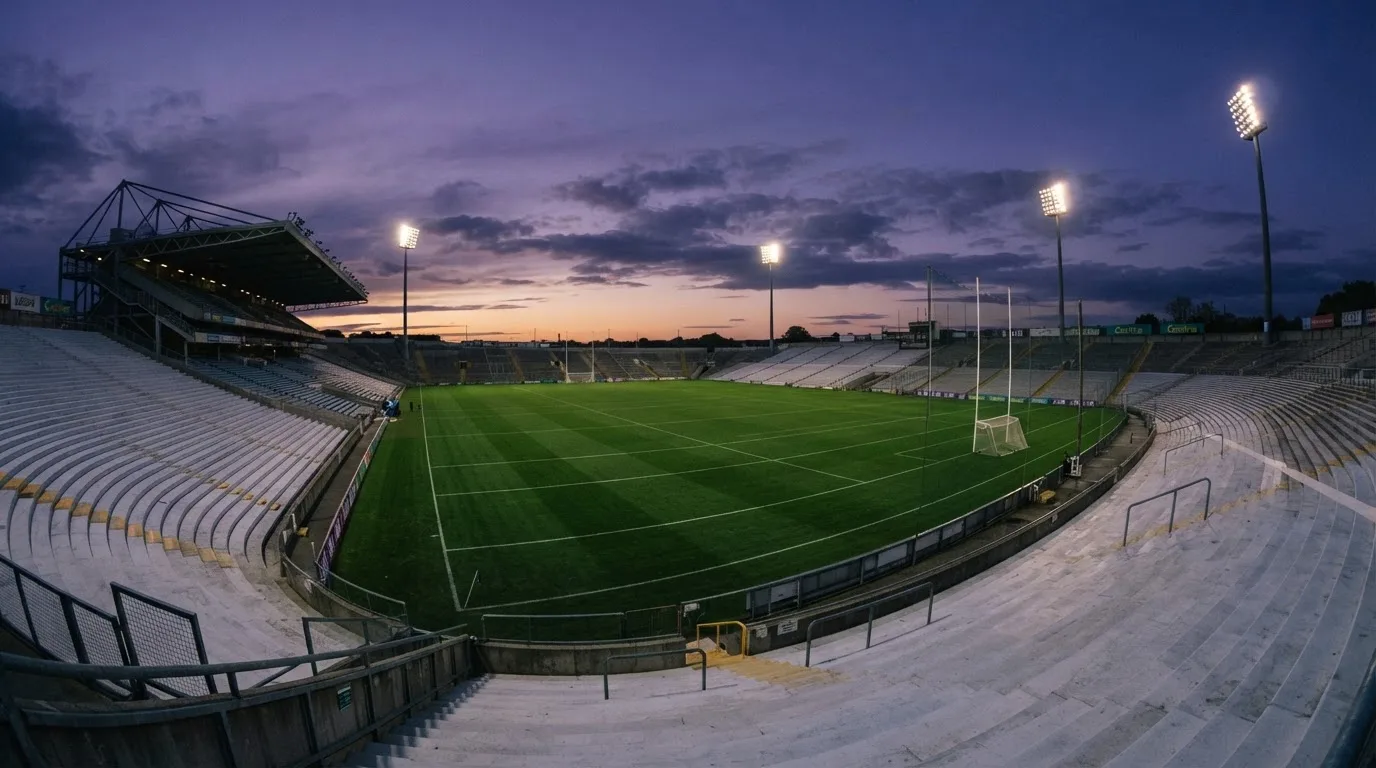
Hurling is the older of the two Gaelic games. Senior inter-county games last 70 minutes, in two halves of 35 minutes, with stoppage time added by the referee; the Gaelic Athletic Association (GAA) is the governing body, and the inter-county championship sits at the top of the GAA calendar. The All-Ireland Senior Hurling Championship is the premier competition, with provincial championships in Leinster and Munster, an All-Ireland quarter-final round, the semi-finals and the final at Croke Park, Dublin. Tipperary won the 2025 All-Ireland Senior Hurling Championship; Limerick beat Galway in the 2026 final on 19 July 2026.
The provincial structure is what shapes the calendar. In the 2026 All-Ireland Senior Hurling Championship, Leinster has six teams in a round-robin group and Munster has five; the top two in each province meet in the provincial final, and the third-placed team in each goes to the All-Ireland quarter-finals. The Joe McDonagh Cup, the Christy Ring Cup and the Nicky Rackard Cup sit beneath the Liam MacCarthy Cup, with promotion and relegation across the tiers. The All-Ireland Senior Hurling League runs in the spring, finishing with a final in the early weeks of the calendar; the pre-season competitions — the Walsh Cup, the Waterford Crystal Cup, the Canon Hamilton Cup — bookend the winter.
The club season runs in parallel and books its own markets. The All-Ireland Senior Club Hurling Championship is the club game’s premier event, with county champions competing in provincial rounds before the All-Ireland semi-finals and final in January. The club game’s markets are thinner than the inter-county game’s markets, but they are priced across all of the major British bookmakers. A bettor who follows club hurling sees longer prices on the favourites because the field is deeper, and tighter margins on the outright market because the operators run the book on a smaller volume.
The bookmaker’s coverage of hurling varies by brand and by season. Research puts in-play betting, live streaming and price boosts on GAA alongside the same features on football, horse racing and tennis at the major UK operators; a smaller bookmaker runs the pre-match moneyline, the handicap and the outright, and skips the in-play. The bookmakers a British bettor sees in the comparison below all hold a Gambling Commission remote licence for real-event betting; a bookmaker holding a real-event licence is licensed to take bets on GAA matches, and the licence category is remote general betting standard (real events). The licence is the licence, not a recommendation.
The fixtures a bettor checks are on the GAA’s own site and on the bookmaker’s match-fixing page. The bookmaker’s match-fixing page is the first place a price appears and the first place a price changes; the GAA’s site is the first place the line-ups appear. A punter who reads both, in that order, sees the price before the team sheet is announced and again after it, and the second reading is the one that matters. A price that moves sharply after the team-sheet announcement is the market reacting to information the public has just received; a price that has not moved is the market’s view that the information was already in the price.
The settlement rule is operator-specific and worth checking before a bet is placed. Research cites one major GB bookmaker’s Gaelic games rules: bets settle on the official result at the end of normal time including injury time, with extra time not counting unless the market specifically states otherwise. The rule is not uniform: another operator may settle on the result including extra time, and the difference matters on a final that goes to extra time. Limerick-Galway in the 2026 final ended in normal time; a final that goes to extra time after a drawn 70 minutes is the rule’s test, and a bettor who has not checked has lost the test before the match is over.
Top 10 UK betting sites for hurling: comparison and ranking
The ten operators below all hold a Gambling Commission remote licence for real-event betting. The comparison is a snapshot of the published licence and the operator’s own terms, not a ranking by quality. A licence proves the operator is licensed; it does not prove the operator pays out fastest, offers the best price on hurling, or runs the deepest in-play book. The reader who reads the table as a ranking will misread it; the reader who reads it as a list of licensed operators with the same ten claims on the operator’s own register will treat it as what it is.
1. Kalooki Sportsbook — small-field book with a GAMSTOP route
Kalooki Sportsbook runs under Kalooki Sports Book Ltd, company number 12938274, and holds Gambling Commission account 57730 against licence 057730-R-333396-005, with the licence category listed as remote general betting standard (real events). The site names itself as a GAMSTOP member, which is the minimum a GB-licensed online operator must do and is the route into multi-operator self-exclusion.
The book runs a focused schedule rather than a deep one: GAA, football and racing, with a smaller secondary book on tennis and golf. The GAA in-play market is thin by the major operator’s standard, and the outright All-Ireland Senior Hurling Championship market closes earlier than at the larger books. The welcome offer is modest by the wider market’s measure, and the bonus terms sit at the floor of the 10× cap, not the ceiling. The shape suits a bettor who wants a smaller book and a clean licence trail rather than the major operator’s in-play depth.
A bettor who runs a smaller staking plan, follows club hurling and county hurling at the same time, and wants a Gambling Commission licence they can read on the public register in one minute will find the licence trail the cleanest part of the offer.
2. William Hill — BOG and the Football Acca Boost
William Hill runs under WHG (International) Limited against Gambling Commission account 39225, licence 039225-R-319373-015, remote general betting standard (real events). It is one of the two deepest GAA books on in-play and outright markets, with offer sets running on the standard major-operator lines.
The two offers that matter most are Best Odds Guaranteed and the Football Acca Boost. BOG runs from 8 AM on race days on UK and Irish horse racing, on single and multiple bets, with no coverage of ante-post, tote or pari-mutuel. The Football Acca Boost covers accas of 2 or more legs at minimum odds of 1/5 (decimal 1.20) each, with a 3% boost on a double rising to 200% on 20 or more legs and a maximum boost of £10,000 per online bet; the boost runs until 30 May 2027. On GAA, where the in-play book is deeper than at most operators, the same acca-insurance lines apply to the same combination-bet families.
A bettor who backs combination bets on GAA match weekends and the same horses on a Saturday will hit both offers on the same week, and the BOG ceiling on horse racing matters more to a racing-focused wallet than the acca boost on a GAA match.
3. Fafabet — BOG from 9 AM, race-day focused
Fafabet runs under Taichi Tech Limited against Gambling Commission account 57385, licence 057385-R-333191-006, remote general betting standard (real events). It is a mid-sized operator with a deep racing book, a competitive football book, and a GAA book that sits between the smallest and the majors.
The headline offer is Best Odds Guaranteed on UK and Irish horse racing from 9 AM on race days for win and each-way bets: if the starting price tops the price taken, the bigger price is paid. The GAA in-play book is present and run in the standard format. The bonus terms run at the standard 10× ceiling under the January 2026 cap.
A bettor whose interest is the All-Ireland Senior Hurling Championship match-result line and the Saturday racing card will find the same BOG promise at a slightly later time than William Hill’s; the difference is fifteen minutes, and the difference matters only if a price moves between 8 AM and 9 AM, which it does on bigger race days.
4. Bet600 — SP-paid BOG and a focused book
Bet600 runs under Tyche Tech Limited against Gambling Commission account 44731, licence 044731-R-323941-016, remote general betting standard (real events). This is a smaller operator that maintains a tighter welcome offer and focuses heavily on UK racing and football.
The Best Odds Guaranteed promise is simple: if the starting price is bigger than the early or show price taken, the bet is paid at the SP. The promise applies to horse racing and is the same shape as the major operators’, with a slightly later cut-off and a slightly thinner in-play book. The GAA book is the smallest of the four so far in the comparison.
A bettor with a small staking plan who wants the BOG promise on UK racing and a clean GAA match-result line for the weekend’s championship games will see the offer; a bettor who prefers a deeper in-play GAA market might find this book insufficient for their needs.
5. Swifty Sports — in-play, streaming and Bet Builder coming soon
Swifty Sports runs under Swifty Global (UK) Ltd against Gambling Commission account 58957, licence 058957-R-334734-006, remote general betting standard (real events). It is a mid-sized, growing platform, with offers primarily presented through the App Store listing rather than a dedicated terms page.
The listed features are in-play betting, live streaming, daily price boosts, Cash Out on markets including horse racing and football, and Best Odds Guaranteed. Bet Builder is listed as coming soon, which puts the same-game multi on the operator’s roadmap but not yet on the slip. The GAA book is the same shape as the mid-sized operators, with a pre-match moneyline and a thinner in-play book than the majors.
A bettor who wants a growing book with a clean licence trail and a BOG promise that runs alongside the live-streaming offer will read the cost; a bettor who needs Bet Builder today rather than on the roadmap will look elsewhere.
6. bet365 — Bet Builder+, Super Boosts, in-play and live streaming
bet365 runs under Hillside (UK Sports) ENC against Gambling Commission account 55148, licence 055148-R-331498-002, remote general betting standard (real events). It provides the deepest comparison on outright and in-play markets, with the widest array of offers.
The headline features are Bet Builder+ (combining markets from one event into a single bet, available pre-match and in-play), Super Boosts, Winnings Boosts on Bet Builders and selected singles, daily Bet Boosts, in-play betting, live streaming of events worldwide, Bet Track, Match Live and a Live Golf Tracker. The GAA book is wide: pre-match moneyline, handicap, total, half-time markets, player markets, outright All-Ireland Senior Hurling Championship and in-play on the major matches. The site is the official global betting partner of the UEFA Champions League and the most-downloaded sports betting app in the UK.
A bettor who builds same-game multis on the All-Ireland Senior Hurling Championship final, follows the in-play on the provincial rounds, and wants the deepest GAA book the comparison offers will see the offer; a bettor who wants a smaller book with a simpler bonus structure will not.
7. Paddy Power — wide sport coverage and price boosts
Paddy Power runs under PPB Counterparty Services Limited against Gambling Commission account 39439, licence 039439-R-319330-013, remote general betting standard (real events). Its GAA outright and in-play markets are the second-deepest available, with offers following the standard major-operator structure.
The published app coverage runs to football, horse racing, boxing, rugby, tennis, golf, darts, snooker and F1; GAA is on the book in the same shape as at the major operators, with the same in-play and outright markets. The bonus structure runs at the standard 10× ceiling, and the welcome offer sits in the major-operator band. The price-boost lines run daily and are sharper on football than on GAA.
A bettor who follows GAA on the same weekend as a Premier League card and the same Saturday races will see the same operator’s offer set on all three, and the offer on the Premier League card will be deeper than the offer on the GAA card.
8. BoyleSports — £20 in free bets on a £10 bet
BoyleSports runs under Boylesports Enterprise against Gambling Commission account 39469, licence 039469-R-319383-025, remote general betting standard (real events). The book is a major UK and Irish operator with a deep GAA book on both sides of the border.
The published welcome offer is £20 in free bets when a £10 bet is placed for UK players; the same welcome runs at €30 in free bets on a €10 bet for Irish players, which is the operator’s own jurisdiction split. The free-bet token is stake-not-returned: a winning free bet returns the profit only, and the £10 stake is gone. The minimum odds on the qualifying £10 bet and the wagering requirements sit at the standard major-operator terms.
A bettor who places a £10 qualifying bet on a GAA match and reads the welcome as a £20 token rather than a £20 return will see the actual offer, and a £20 stake-not-returned token on a 4/1 shot is worth £80 in profit, not £100.
9. 888sport — Cash Out, Bet Builder, racing streams
888sport runs under 888 UK Limited against Gambling Commission account 39028, licence 039028-R-319297-014, remote general betting standard (real events). The book is mid-sized to wide, with a stronger racing and football book than a GAA book, and the offer set runs on the standard mid-sized operator lines.
The published features are pre-match and in-play betting, Cash Out, Bet Builder, racing streams, BetFinder form tools, a live bet feed and daily boosted odds. The GAA book is present in the standard shape and narrower than the major operators’ GAA book. The bonus structure runs at the 10× ceiling.
A bettor who follows the same Saturday’s racing and football card and the weekend’s GAA match-result line will see the same Cash Out and Bet Builder across all three; the GAA book will be the thinnest of the three.
10. QuinnBet — BOG with a £150 ceiling and a system-bet line
QuinnBet runs under QuinnBet (Gibraltar) Limited against Gambling Commission account 61011, licence 061011-R-335683-004, remote general betting standard (real events). The book is mid-sized with a deep racing book and a competitive football book.
The published Best Odds Guaranteed applies to UK and Irish horse racing from 10:00am daily on singles, multiples and system bets, with a maximum benefit of £150 per customer per race. The ceiling is the operator’s own: a winning BOG bet that would pay more than £150 above the original stake pays £150 above it. The GAA book is the same shape as the mid-sized operators, with a pre-match moneyline and a thinner in-play book.
A bettor who places combination bets on the same Saturday’s racing card and the same weekend’s GAA match will hit the £150 ceiling on a bigger-priced winner only; the ceiling is invisible on the everyday winner at a short price.
| Operator | Gambling Commission licence | What the operator’s own terms state on the key’s subject |
|---|---|---|
| Kalooki Sportsbook | 057730-R-333396-005 (acct 57730), Kalooki Sportsbook Limited | GAMSTOP member; modest identity; modest stake |
| William Hill | 039225-R-319373-015 (acct 39225), WHG (International) Limited | BOG on UK/Irish racing from 8 AM; Football Acca Boost to 200% on 20+ legs, max £10,000 per bet, to 30 May 2027 |
| Fafabet | 057385-R-333191-006 (acct 57385), Taichi Tech Limited | BOG on UK/Irish racing from 9 AM on race days |
| Bet600 | 044731-R-323941-016 (acct 44731), Tyche Tech Limited | BOG on horse racing paid at SP if SP tops taken price |
| Swifty Sports | 058957-R-334734-006 (acct 58957), Swifty Global (UK) Ltd | BOG, Cash Out on racing and football, daily price boosts, in-play, streaming; Bet Builder listed as coming soon |
| bet365 | 055148-R-331498-002 (acct 55148), Hillside (UK Sports) ENC | Bet Builder+, Super Boosts, Winnings Boosts, daily Bet Boosts, in-play, live streaming, Bet Track, Match Live |
| Paddy Power | 039439-R-319330-013 (acct 39439), PPB Counterparty Services Limited | Wide sport coverage incl. football, racing, boxing, rugby, tennis, golf, darts, snooker, F1 |
| BoyleSports | 039469-R-319383-025 (acct 39469), Boylesports Enterprise | Welcome: £20 in free bets on a £10 qualifying bet (UK players) |
| 888sport | 039028-R-319297-014 (acct 39028), 888 UK Limited | Cash Out, Bet Builder, racing streams, BetFinder, live bet feed, daily boosted odds |
| QuinnBet | 061011-R-335683-004 (acct 61011), QuinnBet (Gibraltar) Limited | BOG from 10:00 daily on UK/Irish racing, singles/multiples/system, max £150 benefit per customer per race |
Hurling betting: the overview that sets the page up
Hurling betting in Great Britain sits inside the same regulatory frame as every other sport the licensed bookmakers price. A punter placing a bet on the All-Ireland Senior Hurling Championship, the Joe McDonagh Cup or the All-Ireland Senior Club Hurling Championship is placing a bet through a remote betting operator who holds a Gambling Commission licence for real-event betting. The bet is in pounds, settled at the price taken at the time of placement, and settled on the operator’s own rules for Gaelic games: one major operator settles on the official result at the end of normal time including injury time, with extra time not counting unless the market specifically states otherwise. The settlement rule is operator-specific and worth checking before a bet is placed.
The market’s two products are pre-match and in-play. Pre-match is the moneyline (home, draw, away), the handicap, the total, the outright winner and the player markets; in-play is the same markets re-priced after every score. The bookmaker’s margin sits inside every price, and on a hurling moneyline at 1.90 / 1.90 the implied probabilities sum to 105.26% and the overround is 5.26%, making the margin approximately 5.0%. On a tighter line at 1.95 / 1.95 the margin is 2.56%. The margin is the slice the bookmaker takes on every pound staked across all outcomes of the market, and the first number a sharp punter checks on a new market.
A value bet is a price whose implied probability, after the margin is taken out, is below the bettor’s own estimate. A bet on Limerick at 2.10 with the bettor’s true probability at 60% is a value bet at 60% against an implied 52.4% (after a 5% margin); the bet does not have to win to be value, it has to win often enough over many bets to clear the margin. A tipster sheet that does not show its own probability estimate is selling certainty the sport does not have, and a punter who bets the picks without the work is doing the tipster’s job for them.
The deposit is the only line a punter controls in full. A £10 deposit on a £10 stake at 5/1 (decimal 6.00) returns £60 (the £10 stake plus £50 profit) on a win and zero on a loss; a £100 deposit on a £10 stake at 5/1 returns the same £60 and leaves £90 in the account. A punter who bets the deposit rather than the stake is over-staking; a punter who bets a percentage of the bank as a unit is staking within a plan. The plan is the only thing that survives a bad week.
The credit-card ban that has applied since 14 April 2020 closes off the credit-funded bet at every GB-licensed operator; the £150 financial-vulnerability check that has run since 28 February 2025 closes off the high-stakes punter who is not what they seem. Both rules sit inside a frame that is wider than the rule itself: the licence category, the social responsibility code, the marketing conditions, the LCCP, and the ASA advertising rules. A GB-licensed operator is bound by all of them; an offshore operator is bound by none of them, and the offshore punter loses every one of them.
Hurling betting law in Great Britain: who can take the bet and what that means
The Gambling Commission licenses the British commercial market under the Gambling Act 2005, which covers England, Scotland and Wales; Northern Ireland is outside the Act and runs under its own older law. A bookmaker whose remote facilities are used in Great Britain has needed a Commission licence wherever it is based since the Gambling (Licensing and Advertising) Act 2014, and a Curaçao, Maltese or Gibraltar licence is not a substitute. A bookmaker’s licence is the licence for the whole British operation, not for a single brand under it; Ladbrokes and Coral run under the same licensee, and Paddy Power and Betfair run under the same licensee, and presenting them as independent operators is wrong.
The Commission’s public register is the whole test of who holds a licence. A punter checks the register by business name, trading name, domain or account number, and the register is the answer to the question “is this brand licensed?”. A punter who bets at a brand not on the register is betting at an unlicensed site, and an unlicensed site is not covered by GAMSTOP, the Commission’s complaints route, an approved dispute-resolution body, the 10× bonus cap, the £150 vulnerability check, the credit-card ban or the British consumer-protection regime. A punter who loses funds at an unlicensed site has no British route to recover them, and a punter who needs help has no British body to call. The honest comparison is not “safe” versus “unsafe” but “checks, limits and protections” versus “none of those”. Neither is the default.
The financial spread-betting market is a different regulator. Spreadex is regulated by the FCA for spread betting and by the Gambling Commission for fixed-odds betting, and its terms state that spread-betting losses can exceed deposits. A punter reading “spread betting” on the operator’s page should read the regulator’s name in the same line; FCA-regulated spread betting is not a Gambling-Commission-regulated sports bet.
Identity verification is the first practical consequence of a GB licence. Since 7 May 2019, every customer has been verified by name, address and date of birth before a deposit or a gamble, including with a free bet or a bonus. Anonymous play is closed off at every licensed site, and a punter who wants anonymous play is at an unlicensed site.
The bonus cap is the second consequence. From 19 January 2026, wagering requirements on bonuses at GB-licensed operators are capped at 10×; a £10 bonus at 50× turnover could ask for £500 of qualifying bets, and under the cap no more than £100. Mixed-product promotions are banned. The cap is a ceiling on the rollover, not on a customer-set deposit limit.
The advertising frame is the fourth. Marketing is not licensed by the Commission; it runs through the CAP Code (non-broadcast) and the BCAP Code (broadcast), enforced by the ASA, alongside the LCCP. CAP Code section 16: marketing must be socially responsible, must not be of strong appeal to under-18s, and no one who is or seems to be under 25 may appear gambling or play a significant role (with an exception for marketing placed where a bet can be made directly). The rule concerns who may appear in the advertisement, not who may bet. “Whistle-to-whistle” is an industry code: since 1 August 2019, betting ads are not shown on TV from five minutes before a live sporting event to five minutes after it, before the 9pm watershed, with horse and greyhound racing excluded. The Premier League clubs’ withdrawal of gambling sponsorship from the front of matchday shirts (from 2026/27; sleeves and hoardings remain) is voluntary, not law.
The tax frame is the fifth. The player pays no tax on betting winnings in Great Britain (general information, not tax advice); General Betting Duty is the operator’s tax on gross profits, currently 15%, and from 1 April 2027 a new remote betting rate of 25% applies within it, while remote bets on UK horse racing, bets on self-service betting terminals in licensed premises, pool betting and in-person betting stay at 15% (HM Government policy paper of 26 November 2025). Until 1 April 2027 the remote rate stays at 15%, and whether operators pass duty on through odds is not established. A punter reading “tax-free winnings” should read it as “the operator pays the duty, the punter does not”, not “the punter pays no fee”.
The enforcement frame is the sixth. Providing gambling facilities in Great Britain without the licence the Act requires is an offence under section 33 of the Gambling Act 2005 (on summary conviction up to 51 weeks’ imprisonment, a fine up to level 5, or both; six months in Scotland), aimed at the operator. No offence aimed at a customer who merely bets on an unlicensed site was found in the Commission’s published guidance, and a punter who bets at an unlicensed site is not personally at risk of prosecution under section 33. Enforcement is disruption: cease-and-desist notices, search-engine referrals, work with registrars, hosts and payment providers, and the Commission has been given, or is about to receive, court-order DNS blocking powers. A page that writes that ISP blocking is in operation has read the wrong press release.
Frequently asked questions about hurling betting
What is a value bet and why is no tip ever certain?
A value bet is a price whose implied probability, after the bookmaker’s margin is taken out, is below the bettor’s own estimate of the true probability. No tip is ever certain because every price already discounts the most likely outcome by the slice the bookmaker keeps, and the actual outcome has to clear that slice over many bets to show a profit.
What is the bookmaker’s margin and how can it be seen in the odds?
The margin is the slice of every pound staked that the bookmaker keeps on average across all outcomes of a market. On a two-way market priced 1.90 / 1.90, the implied probabilities are 1 ÷ 1.90 = 52.63% on each side, summing to 105.26%; the extra 5.26% is the margin. The margin is the first number a sharp punter checks.
How is the return on a bet worked out from the stake and the odds?
The return is the stake multiplied by the decimal odds; the profit is the stake multiplied by (odds − 1). A £10 stake at decimal 6.00 returns £60 in total and £50 in profit on a win, and zero on a loss. On a combination bet the odds of the legs multiply into one price and the same formula gives the return.
How can it be checked that a bookmaker holds a Gambling Commission licence?
The Commission’s public register can be searched by business name, trading name, domain or account number. The register is the whole test of who holds a licence, and a brand not on the register is unlicensed. The account number and the licence number are listed on every brand’s own register entry, and the licence category is remote general betting standard (real events) for a sports book.
Which tools for controlling play does a licensed bookmaker have to offer?
A licensed bookmaker has to offer deposit limits, time-outs, reality checks and a route into GAMSTOP. GAMSTOP is the national multi-operator self-exclusion scheme that has been a mandatory licence condition for online operators since 31 March 2020; exclusions run for six months, one year, five years or five years with auto-renewal. The £150 financial-vulnerability check has applied since 28 February 2025 and is a public-record check, not an income check.
How do fractional odds such as 5/1 convert to decimal odds such as 6.00?
The conversion is a/b → a ÷ b + 1. A 5/1 fractional price is 5 ÷ 1 + 1 = 6.00; an 11/4 fractional is 11 ÷ 4 + 1 = 3.75; evens is 1 ÷ 1 + 1 = 2.00. The decimal form shows the return on a unit stake, profit included; the fractional form shows the profit on a unit stake.
Rugby, cricket & Gaelic – AI Betting
Content created by the «AI Betting» team
