
New betting websites in 2026: what "new" means once the licence is checked
 Available in US
Data current as of 26 October 2026 and checked against the Gambling Commission’s public register.
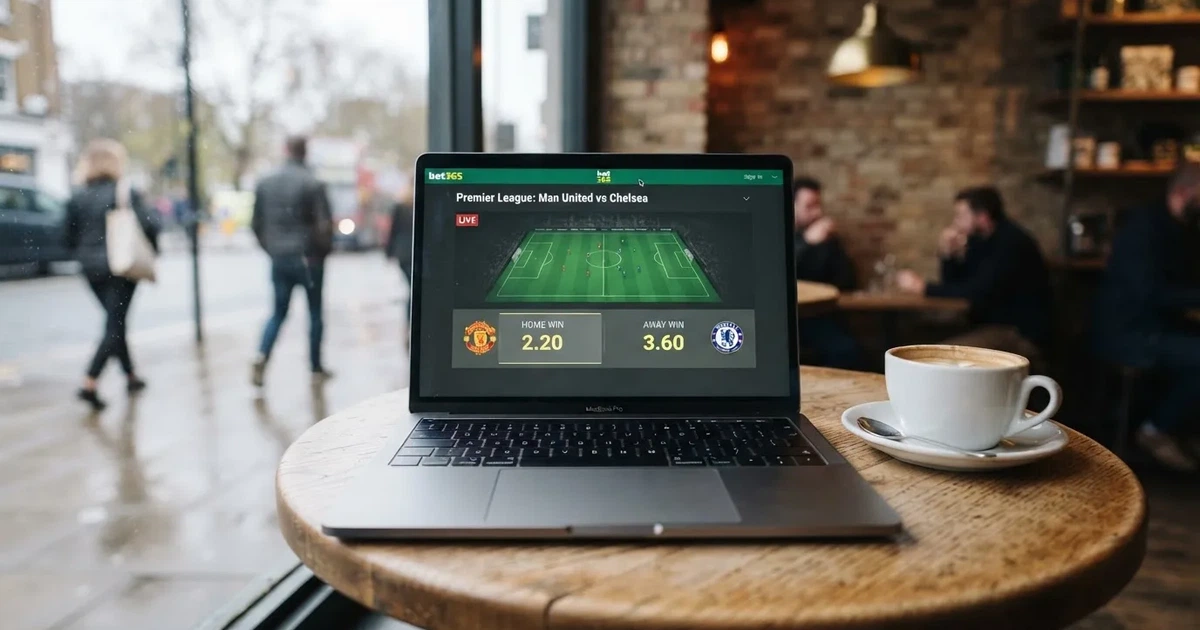
A new betting website is, in this market, an unambiguous thing: a brand newly written into the Gambling Commission’s public register as a remote general betting licensee. Anything else — a glossy new look, a fresh domain, a parent company’s latest rebrand — is marketing copy. A site whose licence number is the kind that appears on a regulator’s site, with a real licence holder behind it, is one thing. A site whose licence is a paragraph at the bottom of an About page is something else again. Most search results for “new betting sites” mix both; readers who cannot tell which is which end up depositing at places that do not carry the consumer protections that have defined British online betting since the Gambling (Licensing and Advertising) Act 2014 made a Commission licence compulsory at the point of consumption. This page is built to make that distinction visible. Ten operators sit in the ranking, and each one’s review carries the licence account number and licence holder from the Commission’s own record. The wider sections cover how the licensing framework works, what GAMSTOP membership and the new bonus cap cost a reader in everyday terms, where in-play and cash-out features actually differ across the set, and which sportsbook the high-stakes football punter picks and which one the exchange user picks. No bookmaker on the page is new in the colloquial sense of “just opened”: the youngest licensed brand here — Silkbet — has held a Commission licence only since 7 May 2026, and Greenlight Bet’s site is still a Launching Soon placeholder. The rest are simply operators whose entry to the British market, or whose product rebuilt under a Commission licence, sits inside the last few years.
The ten bookmakers and what each one is licensed to offer
The table that follows is the comparison the page is built around. Every row carries the brand, the Gambling Commission account number, the company name that holds the licence (which is the legal counterparty, not the trading brand), and one line on what the operator’s own terms state on the key the table was built around — payment method, in-play depth, exchange status, age of the licence. The licence numbers below are the live account numbers from the public register; cross-check them against the Commission’s own site, because the register is the test, not any individual operator’s footer.

| Brand | Gambling Commission account | Licence holder | What the operator’s own terms state |
|---|---|---|---|
| NetBet | 39170 | Netbet Enterprises Limited | Daily Boosts, Profit Boosts, free bet offers, a Bet Builder with instant dynamic odds, and sports stats for major leagues |
| BetUK | 39198 | LeoVegas Gaming PLC | A £10+ deposit and a qualifying sports bet within 7 days releases four £10 free bets — two football accas of 4+ selections and two multiples of 2+ — valid 7 days, opt-in required |
| Midnite | 101839 | Midnite Limited | Visa, Mastercard, Apple Pay, Google Pay and Trustly accepted; in-play events, an acca builder, popular accas, price boosts with maximum-stake limits; safer-gambling links to GambleAware, GamCare, GAMSTOP and BetBlocker |
| BoyleSports | 39469 | Boylesports Enterprise | A £10 sports bet for new UK customers releases £20 in free bets (€10/€30 for Irish players) |
| 888sport | 39028 | 888 UK Limited | Pre-match and in-play betting, Cash Out, Bet Builder, racing streams, BetFinder form tools, a live bet feed and daily boosted odds |
| Matchbook | 39504 | Triplebet Limited | A Commission-licensed betting intermediary (exchange); the Betdaq brand sits under the same operator, with Betdaq markets closing after 21 October 2026 and account access to 4 November 2026 for withdrawals |
| Spreadex | 8835 | Spreadex Limited | Spread betting regulated by the FCA, fixed-odds betting regulated by the Gambling Commission; spread betting losses can exceed the deposit |
| Unibet | 45322 | Platinum Gaming Limited (Gibraltar) | Operating since 1999; safer-gambling tools include deposit limits, a Player Profile test, product restrictions and self-exclusion, with live chat and links to BeGambleAware, GamCare, GAMSTOP, Gambling Therapy and the BGC |
| bet365 | 55148 | Hillside (UK Sports) ENC | Official global betting partner of the UEFA Champions League; the app is described as the most-downloaded sports betting app in the UK |
| Tote | 54779 | TDCO Limited | Best Odds Guaranteed on UK and Irish horse racing from 8 AM on the day of the race, on singles and multiples; does not apply to ante-post, tote or pari-mutuel bets |
Two things follow from the table at a glance. First, the licence holders are not always the brand: BetUK is a LeoVegas PLC brand, 888sport sits under 888 UK Limited, Unibet’s UK site is run out of Gibraltar by Platinum Gaming Limited. A dispute about withheld winnings goes to the licence holder, not to the trading name on the website’s front page. Second, the operator’s own terms vary far more than the licence alone suggests — Midnite accepts five payment methods and shows price-boost stake limits; Spreadex’s spread-betting product is regulated by the FCA rather than the Commission and carries the warning that losses can exceed deposits. None of that is visible from the licence number; all of it follows from reading the brand’s own terms.
The ranking is not a quality order: brand recognition varies wildly across the ten (bet365 and Unibet are household names, Midnite and Matchbook are specialist platforms), with household familiarity and licence length moving in opposite directions. The operators below walk through each brand in the same order, with what each one actually offers, the conditions that matter, and a verdict that answers the question the block was built around.
How a new betting site is recognised in the British market
The “new” in new betting websites is the page’s whole subject, and the term has at least three meanings worth separating. The first is a brand that has just entered the market: a brand whose first Commission licence dates from inside the last few years, with no earlier operating history in Great Britain. The second is an established brand that has just relaunched under a new domain or product — bet365 was founded in 2000 and is not new in any colloquial sense, but a bet365 feature such as its acca builder or its Edit Bet function is new relative to the operator’s own prior offering. The third is the colloquial sense: a website that has just become visible to British readers, regardless of how long the licence behind it has existed. The three overlap, and search results mix them up. A reader who searches “new betting sites” is usually asking for the first meaning — a site they have not bet with before — and is most often handed the third.

The Commission’s public register is the test for the first meaning, because every operator that takes a real-money bet from a customer in Great Britain needs a remote licence under sections 33 and 36 of the Gambling Act 2005 as amended by the 2014 Act. A brand that cannot be found on the register is either not licensed to take British customers or is operating under a parent company’s existing licence — which is legitimate but should be visible to the customer. A reader who cannot find the brand on the register in two minutes should assume the search engine ranking is the only thing that found it. Some legitimate operators run under a parent company’s licence and are listed under the parent’s account: 888sport is held by 888 UK Limited, BetUK by LeoVegas Gaming PLC, Unibet’s UK site by Platinum Gaming Limited. The brand is on the register, but under the parent’s account number, which is why the table above carries the licence holder as well as the trading name.
The native terms in this market matter, and they are not always interchangeable. “Licensed” means a Commission licence and the LCCP conditions that come with it; “regulated” can mean either the Commission or, for spread betting, the FCA; “authorised” is the older language the Commission itself still uses in some places but is being replaced by “licensed”. A reader who treats those three as synonyms will sometimes end up at the wrong product. The register distinguishes licence categories: a “remote general betting standard (real events)” licence covers normal sports betting; a “remote general betting standard (virtual events)” licence covers computer-generated events; a “betting intermediary” licence covers betting exchanges; and a “pool betting” licence covers Tote-style wagering on horse and dog racing. Midnite and NetBet and BetUK hold the standard real-events licence; Matchbook holds both the real-events and the intermediary licence, which is what makes it an exchange. Spreadex holds the real-events licence for its fixed-odds product and FCA authorisation for its spread-betting product. The licence category is what determines what the operator is allowed to offer, not what its website says it offers.
The British punter who has been around long enough to remember a bookmaker that arrived without a Commission licence will recognise the register test as the line that ended the offshore era in this market. That history is worth a paragraph, because the older bookmakers among the ten — Unibet, founded 1999; bet365, founded 2000 — were already established names when the 2014 Act forced them into the licensing system. “New” on this page, in the strict sense, is a function of the licence date and the register entry, not of any reader’s memory of when the brand appeared.
What a Gambling Commission licence actually buys
The licence is the floor, not the ceiling. It guarantees a defined set of consumer protections, and a defined set of obligations the operator has to fulfil, but it does not guarantee that the operator’s product is good, that the odds are sharp, or that withdrawals will be quick. A reader who treats a Commission licence as a quality mark is using the right tool for the wrong job.
The protections are real. Identity verification is mandatory before the first deposit (in force since 7 May 2019), so a licensed site does not allow anonymous play; this also applies to free bets and bonuses. Credit cards have been banned for gambling in Great Britain since 14 April 2020 — that ban covers credit-card-funded e-wallet payments too. GAMSTOP membership is a licence condition for online operators, in force since 31 March 2020: a customer who has self-excluded through GAMSTOP cannot deposit at any licensed site for six months, one year, five years, or five years with auto-renewal, and after the minimum period the exclusion stays in place for a further seven years unless the customer asks GAMSTOP to remove it. A financial vulnerability check has applied since 28 February 2025 (LCCP condition 3.4.4, in force since 30 August 2024): when a customer’s deposits minus withdrawals cross £150 in a rolling 30 days, the operator runs a public-record check — bankruptcy or county court judgments, for example — not an income check, not a credit-reference check. Financial risk assessments — the press’s “affordability checks” — are announced in a staged Commission plan of 7 July 2026 with no start date; they are not in force. Deposit limits are required under RTS 12, with the first changes live since 31 October 2025 and a second phase postponed to 30 September 2026; whether the second phase has actually gone live is not established in the public record, so readers should check the operator’s own deposit-limit page before assuming a state-set ceiling is in operation. There is no state-set deposit or loss ceiling for betting: limits are the customer’s choice.
The bonus rules are the newest and the most concrete. Since 19 January 2026, wagering requirements on bonuses have been capped at 10x — a £10 bonus at 50x wagering, which would require £500 of qualifying bets, is now capped at £100 of qualifying bets. Mixed-product promotions — an offer that requires gambling on two or more product types such as betting and casino together, the classic “bet on football to get free spins” — are banned. The cap applies to bonuses with a wagering condition; whether it applies to free bets with no wagering condition is not established, and any cap on the money value of a bonus is also not established. Operators are responsible for the marketing carried out by their affiliates. None of this is enforced by the Commission directly on customers: a reader who has accepted a bonus and then complained about a wagering requirement is in the position of arguing with the operator under the LCCP, not of asking the Commission to adjudicate.
The obligations on the operator are also real. The LCCP social responsibility code requires customer interaction when indicators of harm are present, the prevention of marketing aimed at under-18s, and the operation of safer-gambling tools. CAP Code section 16 (non-broadcast advertising, enforced by the ASA) requires marketing to be socially responsible, not of strong appeal to under-18s, and not to feature anyone who is or seems to be under 25 in a significant gambling role, with an exception for marketing placed where a bet can be made directly. “Whistle-to-whistle” — betting advertising not shown on TV from five minutes before a live sporting event to five minutes after it, before the 9pm watershed — is an industry code in force since 1 August 2019, not a law. The Premier League’s withdrawal of gambling sponsorship from the front of matchday shirts from 2026/27 is voluntary, not law. None of those marketing rules changes who may bet — the minimum age is 18 — but they are the practical reason a British punter has not seen a betting ad during a Champions League match in years.
What the licence does not buy is the harder part to write and the harder part to remember. A Commission licence does not guarantee that odds are competitive, that the in-play offering is deep, that the bet builder is sophisticated, that withdrawals will be in the customer’s account within four hours rather than four days, or that the operator will not restrict a winning customer. Spreadex’s licence is real, and its warning that spread-betting losses can exceed the deposit is also real, and both are true at the same time. A reader who treats the licence as the answer to every question about an operator will find out the opposite the first time they try to withdraw a winning in-play bet at 3 AM. The licence is the starting line, and the operator’s own terms are the rest of the race.
What changes for a reader who is already self-excluded
The single sharpest answer on a British licensed site is the one about self-exclusion. A customer who has signed up to GAMSTOP cannot deposit or bet at any licensed online operator for the chosen period. The scheme covers online sites and apps; the betting-shop self-exclusion scheme is separate. The minimum period is six months, and the longest is five years with auto-renewal; after the minimum period the exclusion stays in place for a further seven years unless the customer asks GAMSTOP to remove it. The scheme is the main practical reason the licensed market looks the way it does: a self-excluded customer who goes looking for “new betting sites not on gamstop” is looking for a site that does not participate in GAMSTOP, which means a site that is not licensed by the Commission.
The new betting sites on this page are all GAMSTOP participants, because all of them are licensed. There is no licensed British operator that does not take part: GAMSTOP membership is a licence condition for online operators since 31 March 2020. A reader who has self-excluded and who finds an attractive new welcome offer at one of the ten brands on this page will be blocked at the deposit stage. The block is the point of the scheme. Trying to register with a different name, a different address, or a different email does not work, because the operator’s verification checks — name, address, date of birth — run against the GAMSTOP database before the first deposit. That check applies whether the bet is a £5 accumulator or a £500 free-bet play, because the rule is about the customer, not the bet.
The help available before and during a self-exclusion is real and runs through several organisations. GamCare runs the National Gambling Helpline and offers counselling. GambleAware funds treatment and research. The NHS runs gambling clinics in several cities. Gamblers Anonymous runs peer-support meetings. None of those is the Commission, and none of them adjudicates complaints about operators — that is what the Commission’s own dispute-resolution route is for, and it applies only to licensed operators, which is the whole reason the route exists. A self-excluded customer who chooses to lift their exclusion early, within the minimum six-month period, cannot do so directly with GAMSTOP: the cooling-off is the point.
Welcome offers and what the new cap on wagering actually changes
The headline number is 10x. From 19 January 2026, no licensed operator can attach a wagering requirement higher than 10x to a bonus. A £10 bonus at 50x wagering, which would have required £500 of qualifying bets, is now capped at £100 of qualifying bets. The cap is the LCCP change that most directly affected the welcome-offer market in 2026, and it is the reason the brands on this page do not advertise 50x or 100x bonus rollover any more. The new betting sites whose offers sit on this page are all operating under the new cap, which means a reader comparing two welcome offers is no longer comparing rollover requirements that can differ by an order of magnitude. The comparison is now over the size of the bonus, the minimum qualifying odds, the qualifying bet, the deadline, and whether the offer is a free bet or a cash bonus.
The type of each welcome offer matters because free bets and cash bonuses are not the same thing. A free bet usually does not pay the stake back on a win — a £10 free bet at 3.00 returns £20, not £30 — and a cash bonus that has been won is paid back as cash once any wagering condition has been met. A “risk-free” bet is usually refunded as a free bet, not as cash, and the refund is on the stake only. An accumulator insurance returns a stake as a free bet when one leg of an acca lets the punter down. A cashback is paid back as cash or as a free bet depending on the terms. A price boost is a one-off enhanced price on a specific market. A “best odds guaranteed” promotion is a horse-racing offer that pays the bigger of the price taken and the starting price. Each of those types stays itself on this page, because restyling one into another is the commonest error in a welcome-offer description.
The qualifying bet is where most readers lose the thread. The welcome offer at BetUK is four £10 free bets, released by a £10+ deposit and a sports bet placed within 7 days of registering, with two of the free bets tied to football accas of 4+ selections and two to multiples of 2+ selections, valid for 7 days from issue and requiring opt-in. BoyleSports’ offer is £20 in free bets when a £10 bet is placed for UK players (€30 in free bets for a €10 bet for Irish players). Both of those are qualifying-bet offers, and the size of the qualifying bet relative to the free-bet bundle is what determines whether the offer is generous. A £10 qualifying bet for £40 of free bets at BetUK is one ratio; a £10 qualifying bet for £20 of free bets at BoyleSports is another. The terms will say whether the qualifying bet needs to be at minimum odds (a common condition), and whether the free bets expire, and whether the winnings carry their own wagering requirement. None of those terms is in the headline; all of them are in the small print.
The minimum qualifying odds are the easiest single clause to miss. A free bet at BetUK tied to a football acca of 4+ selections means each leg of the acca needs to be at or above a stated minimum odds; a multiple of 2+ selections means the same for a smaller combination. A reader who puts on a 4-leg acca at odds of 1.05 per leg will not qualify for the free bet even if the bet wins. The minimum is set per leg, not for the combined price, and the difference between “minimum odds per leg of 1.50” and “minimum odds per leg of 1.20” is the difference between a routine acca and an aggressive one. The free bets themselves usually have minimum odds for use, and they usually have a deadline. None of this is in the headline; all of it is in the small print.
The mixed-product ban is the newest restriction and the easiest to fall foul of. An offer that requires gambling on two or more product types — betting and casino, betting and bingo, betting and lottery — is now banned at licensed operators. A reader who sees an offer that says “bet on football to get free spins” should expect to see the offer pulled or restructured at any time, because that structure is exactly what the ban addresses. The mixed-product ban does not ban free spins on their own, or a free bet on its own; it bans the cross-product bundle.
Payments, withdrawal speed and what the offer page does not say
Payment method and withdrawal speed are the two parts of an operator’s offering that age fastest and that most often sit behind a misleading headline. A reader who has chosen between two operators on welcome-offer size alone is choosing on the wrong thing, because the free bet is a one-off and the withdrawal is the lifetime relationship.
The credit-card ban is the starting point. Since 14 April 2020, no licensed operator has been allowed to accept a credit card for gambling, and that ban covers credit-card-funded e-wallet payments too. A reader who tries to deposit with a credit card will be blocked at the operator level, and an e-wallet funded by a credit card is also blocked. Debit cards, bank transfers, and e-wallets that have been funded from a non-credit source are not covered by the ban. Apple Pay and Google Pay are treated by the operator’s own payment processor: whether they fall under the credit-card ban depends on the funding source behind the wallet, not on the wallet’s name. Midnite accepts Visa, Mastercard, Apple Pay, Google Pay and Trustly — the only operator on this page to publish the full payment-method list — and the list is five methods, not a marketing “all major methods” line.
The withdrawal speed is what changes the customer’s actual experience. E-wallets are typically the fastest method at licensed operators, and bank transfers are typically the slowest. The Commission’s rules do not set a withdrawal deadline, so the published speed is the operator’s own target — which is why it is worth comparing it across operators at deposit stage, not at withdrawal stage. A reader who has just made a £10 deposit and accepted the free bet does not yet care about withdrawal speed; the same reader a year later, withdrawing a £500 acca win, cares about it very much. Withdrawal speed is the place where a smaller operator can outpace a bigger one, because the bigger operator’s anti-fraud checks run more often on larger customers. Spreadex’s spread-betting product has its own withdrawal structure and its own regulatory regime.
The minimum deposit is a different question from the withdrawal speed, and it is also where new betting sites in the British market have moved. £5 minimum deposits are now a competitive baseline, and the operators on this page set their qualifying sports bet at £10 — the level above which a free-bet bundle becomes economic. A reader with a £5 budget is below the qualifying-bet threshold at BetUK and BoyleSports; a reader with a £10 budget is at the qualifying-bet threshold for both. The free-bet bundle is structured for the £10 customer, which is the median customer in the British online betting market. The reader below that threshold is not the customer the welcome offers are written for.
PayPal, Neteller and other e-wallets are the most searched-for payment methods at new betting sites. Whether a specific operator accepts PayPal is not covered for most brands on this page; what is covered is the licence and the welcome-offer structure. A reader who needs PayPal specifically should check the operator’s banking page before depositing, because PayPal’s availability is determined by the operator’s payment-processor agreement with PayPal, not by the licence. PayPal’s own policies on gambling transactions apply on top: PayPal will not process a gambling payment to an unlicensed operator, and an operator’s acceptance of PayPal is a soft signal of regulatory standing, although not a hard one.
Source-of-funds checks are the part of payments that arrives later. The £150 rolling-30-days financial vulnerability check is the trigger; the operator then runs a public-record check, which can lead to a request for source-of-funds documentation — a bank statement, a payslip, evidence of the source of a deposit. This is not an affordability check (the financial risk assessments of the press), and the trigger is the £150 threshold, not a suspicion of money-laundering. A reader who has been depositing £50 a week for a month will hit the threshold at the start of month two, and the public-record check will run. Most readers will pass the public-record check without further questions; a small number will be asked for documentation; an even smaller number will be asked to provide a source-of-funds statement. None of that is the operator being awkward — it is the LCCP condition 3.4.4 being applied.
Live betting, cash out and bet builder
The in-play product is where the ten operators differ most, and the place where the licence matters the least. Live betting, cash out, and bet builder are features, not licences, and the depth of each feature is the operator’s own decision. A reader who is choosing between two brands on in-play depth is choosing on product, not on regulation.
In-play betting at a British licensed operator is offered under the operator’s own licence conditions and customer-protection duties; there is no statutory restriction on which events may be bet on in-play, and the controls are the operator’s. The LCCP condition 3.4.4 financial vulnerability check applies regardless of whether the bet is pre-match or in-play. Eight of the ten operators on this page advertise in-play betting; Midnite shows in-play events alongside its acca builder, popular accas and price boosts; 888sport shows a live bet feed alongside its Cash Out offering. bet365’s in-play product is the deepest of the ten — the operator’s football in-play offering is the reference for the British market, and the acca builder and Edit Bet features sit on top of it. Spreadex’s in-play product is its fixed-odds offering; the spread-betting product is a different thing, and the financial-spread product sits inside FCA regulation, not the Commission’s.
Cash out is the second-order in-play feature: the option to settle a bet before the event has finished, at a price the operator sets. The price is the operator’s estimate of the current value of the bet, and the operator’s margin sits inside that estimate. 888sport’s Cash Out offering is one of the more visible on the British market; bet365’s partial cash out, which lets the punter cash out part of a stake and leave the rest running, is the more sophisticated version. Some operators do not offer cash out at all; some offer it only on selected markets. None of this is visible from the licence number.
Bet builder is the feature that lets a punter combine multiple selections from the same event into one price — a same-game multi. The price is built by the operator, and the operator’s margin sits inside every leg. Midnite, 888sport, NetBet and bet365 all offer a bet builder; NetBet’s offering includes “instant dynamic odds”, which is the industry name for the price updating as the customer adds or removes legs. The bet builder is the area where new betting sites have a real product advantage over older brands, because the feature has been added or rebuilt inside the last few years; older brands whose bet builders pre-date the current generation have had to rebuild them to stay competitive.
Price boosts and enhanced odds are the marketing front of the in-play product. A price boost is a one-off enhanced price on a specific market, advertised by the operator; an enhanced odds offer is a welcome-offer enhancement on a specific event. The LCCP marketing conditions apply, and the 10x bonus cap applies to any wagering condition attached to a price-boost token. Midnite shows price boosts with maximum-stake limits, which is the operator’s own way of capping its liability on a boosted market; 888sport shows daily boosted odds. The marketing terms of each boost are in the small print, and the maximum stake is the part most often missed.
Which sports, which tournaments and which kind of punter each operator suits
The sports offering is the most stable part of a British sportsbook. Football is the main sport by handle at every operator on this page, with horse racing close behind, and a long tail of tennis, basketball, American football, cricket, golf, rugby, darts, snooker, boxing, MMA and Formula 1 underneath. The differences between the operators are in the depth of the offering and in the markets around each event.
bet365 is the official global betting partner of the UEFA Champions League, and the operator’s app is described as the most-downloaded sports betting app in the UK. That combination — a deep tournament partnership and a heavily downloaded app — is the practical reason bet365 has the broadest football offering among the ten. William Hill’s Best Odds Guaranteed promotion on UK and Irish horse racing from 8 AM on the day of the race, on singles and multiples, does not apply to ante-post, tote or pari-mutuel bets; Tote offers pool betting on horse racing, which is a separate licence category and a different kind of wager. BoyleSports’ strength is Irish horse racing and Irish sport, with a UK-facing product sitting on top.
The kind of punter each operator suits depends on which sport and which market. The high-stakes football punter — the reader who bets on the Premier League, the Champions League and the European Championships at full stakes with singles and accas — picks bet365 for depth, Unibet for the safer-gambling toolset and live chat, and NetBet for the bet builder. The horse-racing punter picks Tote for pool betting, bet365 for BOG on UK and Irish racing, and BoyleSports for Irish racing. The exchange user picks Matchbook, which is a Commission-licensed betting intermediary; Matchbook’s offering is back and lay prices set by other customers, with the operator taking a commission on winning bets. The spread-betting customer — a different kind of bettor with a financial product background — picks Spreadex, with the caveat that losses can exceed the deposit and that the financial-spread product is FCA-regulated rather than Commission-regulated.
New betting sites in the strict sense — brands newly written into the Commission’s register — are not heavily represented on this page. Silkbet Limited holds three Gambling Commission remote licences under account number 101183, active since 7 May 2026, with its head office at 4 Grosvenor Square, Southampton and Ed Kelly as CEO, and the site had not yet gone live as of 24 August 2026. That is a “new” site in the strict register sense. Greenlight Bet’s site at greenlightbet.co.uk shows a Launching Soon placeholder with a contact form and an email sign-up, and no offers, payment methods or licence text. A reader who is choosing on licence date alone would pick Silkbet over bet365; a reader who is choosing on product would pick bet365 over a brand whose site has not yet gone live.
Betfair itself has moved UK online poker players to PokerStars on Betfair as of 7 October 2026, with Betfair account balances held in pounds sterling — a structural change rather than a new licence, and a sign that the operator is consolidating its product. Betdaq, acquired by Triplebet Limited — the same operator that runs Matchbook — has announced that there will be no markets on the Betdaq site after 21 October 2026, and account access will continue until 4 November 2026 for viewing statements and withdrawing balances. Betdaq accounts will not transfer to Matchbook. Both of those changes are operator-side; the licence is unaffected.
The Geoff Banks app, first released on 20 July 2014 and updated to version 16.93 on 13 October 2026, is “new” only in the colloquial sense — the brand has been around for over a decade, and the latest release notes mention a deposit limits update. Rollerbet’s app, released on 4 August 2026, states that users must be 18 or older and that the service is available only where online betting is legally permitted. Copybet UK Limited states it is licensed and regulated in Great Britain by the Gambling Commission under account number 53774. BetWright states it is licensed in the UK and provides responsible gaming tools, with customers aged 18 or over. London.bet, published by Thistle Bet Limited, states it is licensed and regulated in the UK, with a 17+ App Store age rating. Kwiff, a trademark operated by Spryme Ltd, is licensed by the UK Gambling Commission and has a 17+ App Store age rating. The 10bet app, published by 10bet Limited, states that 10bet.co.uk is licensed by the Great Britain Gambling Commission under licence 43173. The BetMGM UK app is published by LeoVegas Gaming p.l.c. and lists Gambling Commission account number 39198. None of those smaller brands is on the comparison table above; they are examples of the wider licensed market, and a reader who is choosing among them should run the same licence check.
The ten operators reviewed
The reviews below are the operator write-ups. Each one carries the licence number, the licence holder, what the operator’s own terms state on the key the table above set, and a verdict that answers the question the block was built around.
NetBet — Netbet Enterprises Limited, account 39170
NetBet’s offering is built around the small-stake daily punter. The welcome offer is matched to the £10 qualifying-bet level typical of the British market, and the daily offering — Daily Boosts, Profit Boosts, free bet offers — sits on top of a Bet Builder with instant dynamic odds and a stats panel for major leagues. The licence holder is Netbet Enterprises Limited, which is the legal counterparty for any dispute about withheld winnings. The product is what makes NetBet a stay on the rest of the comparison.
The Bet Builder with instant dynamic odds is the single feature that defines NetBet’s offering: the price updates as the customer adds or removes legs of the same-game multi. The feature is the standard bet-builder offering at most new British sportsbooks, and NetBet has it. The stats panel for major leagues is the second differentiator: a customer building an acca on the Premier League or the Champions League has league-level data inside the operator’s site rather than on a third-party stats page.
The verdict for NetBet is the reader who likes to build accas from the same event — a bet-builder user who wants dynamic odds and stats in the same tab. The licence length is mid-range for the British market, and because the trading brand itself holds the licence, the structure is unusually transparent for a British-facing operator.
BetUK — LeoVegas Gaming PLC, account 39198
BetUK is a LeoVegas Gaming PLC brand, and the welcome offer is the most prescriptive on the page: a £10+ deposit and a sports bet within 7 days of registering releases four £10 free bets — two football accas of 4+ selections and two multiples of 2+ selections — valid for 7 days from issue, with opt-in required. The structure is more constrained than a generic “free bets” headline, because the type of bet each free bet can be used on is fixed at the point of issue. A customer who has no interest in football accas of 4+ selections has 50% of the free-bet bundle they cannot easily use.
The licence holder being LeoVegas Gaming PLC is the part of BetUK that matters at withdrawal stage: any dispute about withheld winnings is with LeoVegas, not with BetUK as a trading brand, and LeoVegas is one of the larger gambling groups on the British market. The operator’s product offering is built around football, with the welcome offer structurally biased toward football punters. The 7-day deadline on the free bets is short for a customer who bets on weekends only.
The verdict for BetUK is the football punter who wants the free-bet bundle tied to football accas specifically. The LeoVegas parent is a strength at dispute stage, but the welcome-offer structure is constraining for a customer whose accas are not 4+ selections. A customer who takes the offer and uses only the multiples is using two of the four free bets at face value, which is a 50% utilisation rate at best.
Midnite — Midnite Limited, account 101839
Midnite is one of the newer brands on the page: the licence number 101839 sits in the higher Commission account range, and the operator’s site is built around a modern sportsbook with in-play, an acca builder, popular accas, and price boosts with maximum-stake limits. The accepted payment methods are recorded: Visa, Mastercard, Apple Pay, Google Pay and Trustly. The safer-gambling footer links to GambleAware, GamCare, GAMSTOP and BetBlocker — a fuller set than most operators.
The price-boost maximum-stake limit is the feature most often missed. A price boost is a one-off enhanced price on a specific market; the operator caps the stake that can be placed at the boosted price, which caps the operator’s liability on the boost. A customer who has found a price boost they want to take for £100 may find that the maximum stake is £20, and the headline price is not available above that. The cap is per boost, not per customer.
The verdict for Midnite is the reader who wants the modern sportsbook product — in-play, acca builder, price boosts — and who reads the maximum-stake limits. The licence holder is Midnite Limited, the cleanest legal structure on the page. The payment-method list is the only one explicitly recorded for a brand on this page, which makes Midnite the easier bookmaker to recommend on banking.
BoyleSports — Boylesports Enterprise, account 39469
BoyleSports is an Irish bookmaker with a UK-facing product. The welcome offer for UK players is £20 in free bets when a £10 bet is placed, and the Irish equivalent is €30 in free bets for a €10 bet. The UK offer is among the simpler on the page, with no specified qualifying odds and no specified type of bet beyond “sports bet”.
The Irish heritage is the practical reason BoyleSports is on the British market: the operator has a long history of Irish horse racing, GAA, and Irish sport, and the UK-facing product is built on top of that. A customer looking for the depth of British football at BoyleSports is not buying what BoyleSports is structured to sell. The opposite is true for Irish racing and GAA, where BoyleSports’ product is stronger than most British-only operators.
The verdict for BoyleSports is the punter with an interest in Irish sport, particularly Irish horse racing and GAA. The £10 qualifying bet for £20 of free bets is a clean ratio; the terms of the free bet itself are in the small print. The operator’s UK product is honest and the welcome offer is honest, and the depth beyond Irish sport is the constraint.
888sport — 888 UK Limited, account 39028
888sport’s offering is the broadest on the page in feature terms: pre-match and in-play betting, Cash Out, Bet Builder, racing streams, BetFinder form tools, a live bet feed and daily boosted odds. The licence holder is 888 UK Limited. The combination of Cash Out, racing streams and form tools is the horse-racing punter’s bundle: the customer can watch the race, see the form, place a bet, and cash out in-running.
The 888 group is one of the larger gambling groups on the British market, with a casino product sitting alongside the sportsbook. The mixed-product ban does not affect the standalone 888sport offer, but a customer who has signed up to 888sport and accepted an 888 casino promotion is in a different regulatory environment on the casino side. The two products sit under the same licence holder, but they are different products with different LCCP requirements.
The verdict for 888sport is the horse-racing and in-play punter who wants the feature bundle. Cash Out, racing streams and form tools are the strongest combination for that customer on the page. 888 UK Limited, the parent group, acts as the licensee, providing a clear point of escalation if a dispute over winnings arises, though mixed-product promotions may be subject to wider group constraints.
Matchbook — Triplebet Limited, account 39504
Matchbook is the only betting exchange on the page. The licence categories on the register are remote general betting standard (real events) and remote betting intermediary — the intermediary licence is the one that allows an exchange to operate. The licence holder is Triplebet Limited, which has also acquired the Betdaq brand. Betdaq markets will close after 21 October 2026 and Betdaq account access will continue until 4 November 2026 for viewing statements and withdrawing balances, and Betdaq accounts will not transfer to Matchbook. The two brands sit under the same licence holder but are not the same product.
A betting exchange is structurally different from a traditional sportsbook. Back and lay prices are set by other customers, and the operator takes a commission on winning bets rather than a margin on the market. The price available at an exchange is typically sharper than the price at a traditional bookmaker, because the operator’s margin is much lower. The customer pays the commission on winnings rather than the overround on every bet.
The verdict for Matchbook is the exchange user. The customer who already understands back and lay and who wants a Commission-licensed exchange picks Matchbook. The customer who has never used an exchange and is not ready for the commission structure should not start with Matchbook; the Betdaq closure is a side note for that customer, because Betdaq accounts do not transfer. The two brands’ product roadmaps are independent at the brand level, even though the licence holder is the same.
Spreadex — Spreadex Limited, account 8835
Spreadex is the only operator on the page whose licence number sits in the older Commission account range (8835), and the only operator whose product sits partly outside the Commission’s regulatory perimeter. Spread betting is regulated by the Financial Conduct Authority, not the Commission; fixed-odds betting is regulated by the Commission. The operator’s own terms state that spread-betting losses can exceed the deposit, which is the warning every spread-betting customer sees.
A customer looking at Spreadex for the first time should know which product they are looking at. The fixed-odds sportsbook is a Commission-regulated product with the same consumer protections as the rest of the page. The financial-spread product is an FCA-regulated product with a different margin structure, a different tax treatment (spread betting has its own rates — 3% financial, 10% other — under General Betting Duty), and a different loss profile. The two products sit on the same site but under different regulators.
The verdict for Spreadex is the customer who specifically wants spread betting and is choosing between financial-spread and sports-spread products. The fixed-odds sportsbook is a credible second option for the customer who wants one account for both; the FCA-regulated spread product is the reason the brand is on the page. A reader who wants only fixed-odds betting has eight other options on the comparison.
Unibet — Platinum Gaming Limited, account 45322
Unibet is the oldest brand on the page in operating terms — operating since 1999 — and the licence holder is Platinum Gaming Limited, Gibraltar, with the UK site running under Commission account 45322. The safer-gambling toolset is the most fully recorded on the page: deposit limits, a Player Profile test, product restrictions, self-exclusion, live chat support, and links to BeGambleAware, GamCare, GAMSTOP, Gambling Therapy and the BGC.
The safer-gambling toolset is the practical reason Unibet is the recommended brand for a customer who wants the full set of consumer-protection features visible in one place. The Player Profile test is a self-assessment questionnaire; product restrictions allow a customer to block themselves from specific products; the live chat support is a route into the safer-gambling team. The licence holder is Gibraltar-based, which is the regulatory reality of Unibet’s UK operation, and the Commission licence is what brings the UK-facing product under British regulation.
The verdict for Unibet is the customer who wants the full safer-gambling toolset. The operator’s history means the product is mature, and the licence-holder structure (Platinum Gaming Limited, Gibraltar) is the standard for a European-facing brand running a UK-licensed site. The Commission’s protection applies regardless of where the licence holder is incorporated.
bet365 — Hillside (UK Sports) ENC, account 55148
bet365 is the official global betting partner of the UEFA Champions League, and the app is described as the most-downloaded sports betting app in the UK. The licence holder is Hillside (UK Sports) ENC, and the licence account is 55148. The combination of tournament partnership and app install base is the reason bet365 is the British football punter’s default brand.
The in-play product at bet365 is the deepest of the ten, with the acca builder, Edit Bet, partial cash out and a stats panel sitting on top of the football offering. The Edit Bet feature — the option to add, remove or swap selections on an open bet — is the kind of feature that older brands have had to add under competitive pressure, and that newer entrants sometimes lack. The breadth of the offering is matched by the depth of the football in-play markets, which is the benchmark for the British market.
The verdict for bet365 is the high-stakes football punter. The licence holder is the trading brand itself (Hillside is the bet365 group’s UK-licensed entity), and the licence account is mid-range. The combination of in-play depth, Edit Bet, acca builder and Champions League partnership is the strongest single bundle on the page for the football-only punter. A customer who does not bet on football is not buying what bet365 is structured to sell.
Tote — TDCO Limited, account 54779
Tote is the only pool-betting operator on the page. The licence categories are remote general betting standard (real events) and pool betting, and the licence holder is TDCO Limited. Tote offers Best Odds Guaranteed on UK and Irish horse racing from 8 AM on the day of the race, on singles and multiples, with the exclusion of ante-post, tote and pari-mutuel bets. The BOG is the most relevant feature for the single-race punter; the pool-betting product is the most relevant feature for the horse-racing purist.
Pool betting is a structurally different product from fixed-odds betting: the customer bets into a pool, the pool is divided among winning tickets after a deduction, and the dividend depends on the size of the pool and the number of winning tickets. Tote’s licence category covers the pool product; the fixed-odds product sits under the standard remote general betting licence. The two products are on the same site but are not the same kind of bet, and the customer should know which one they are placing.
The verdict for Tote is the horse-racing punter who wants the pool product alongside the fixed-odds product. The BOG from 8 AM is the most concrete single feature, and the exclusion of ante-post, tote and pari-mutuel bets is the constraint. A reader who bets on UK and Irish racing and wants the pool dividend should pick Tote; a reader who bets only on singles has nine other options.
What the ten operators leave out
Three things the table above does not say, that a reader needs to know. First, none of the ten operators is new in the strict register sense of the word — the strictest reading is Silkbet Limited, account 101183, active since 7 May 2026, which has not yet gone live. Greenlight Bet’s site is still a Launching Soon placeholder. The rest of the operators are brands with established products and established licence histories; the “new” in new betting websites is a marketing term more often than a register entry. Third, no single brand on this page is “the only” licensed one — the Commission’s public register lists many more brands than any article can feature, and the comparison is a shortlist, not the full market.
The second omission is the bonus terms in detail. The table records the type of each welcome offer and the qualifying-bet threshold where stated, but does not record the minimum qualifying odds per leg, the maximum stake on a price boost, the wagering condition on a free bet, the deadline, or the maximum conversion from a free bet. Every one of those is in the operator’s own terms, and the terms are the place the customer should check before accepting the offer. The 10x bonus cap applies across all licensed operators, but it does not standardise the rest of the offer — minimum odds, deadlines, conversion caps, and free-bet stake-refund rules are still set by each operator. The page’s job is to point at the offer; the terms are the offer.
The third omission is the offline protections. GAMSTOP, the £150 rolling-30-days vulnerability check, the safer-gambling footer links — none of those is visible to a reader who has not looked for them. A reader who wants the safer-gambling toolset visible in one place picks Unibet, which records the full set. A reader who wants the financial vulnerability check explained picks any operator that has published the threshold. None of those protections is optional at a licensed operator; all of them are part of the licence, and a reader who chooses an unlicensed operator because the bonus is bigger is choosing to opt out of every one of them.
Where to check the licence yourself
The Gambling Commission’s public register is the test, and it is the only test. It can be searched by business name, trading name, domain, or account number. The brand-name search will return the licence holder (which may be the parent company), the licence categories, the account number, and the address of the registered office. The account-number search is faster when the customer has the number from the operator’s footer or from a comparison page. The domain search is the most reliable single check, because a brand that has one domain and a different licence holder is a brand whose domain may have changed — a known signal of a relaunch or a sale.
The register distinguishes active licences from lapsed licences and from licences under review. An account number that resolves to an active “remote general betting standard (real events)” entry is the cleanest single signal. An account number that resolves to a casino-only licence is a different product and a different test. A brand whose account number is on the register but whose licence category does not cover sports betting is a brand that cannot legally offer sports betting under that licence.
A reader who has spent ten minutes on the register has done more verification than most readers do, and the ten minutes are worth it for any operator at which the customer is planning to deposit more than the welcome-offer qualifying bet. The Commission’s own dispute-resolution route applies only to licensed operators, which is the practical reason the register check is the first thing a customer should do.
The calculations that decide whether an offer is worth taking
This page does not carry a single prescribed calculation. The numbers that decide whether a welcome offer is worth taking are worked out by the reader, on the operator’s own terms, with the comparison tables as the starting point. The three calculations worth knowing are return, margin, and free-bet value, and each one is a single line of arithmetic in plain prose.
Return is what a winning bet pays back. For a single bet at decimal odds O and stake S, the return is S × O and the net profit is S × (O − 1). For a combination bet — a double, a treble, an accumulator — the odds of the legs multiply into one price, and the same formula applies. A £10 bet at 3.00 returns £30 with a £20 profit. A £10 acca with four legs at 2.00 each has combined odds of 16.00 and returns £160 with a £150 profit if all four legs win.
Margin is what the bookmaker keeps of every unit bet on a market. For a market with N outcomes at decimal odds O₁, O₂, …, Oₙ, the payout share is 1 ÷ (1/O₁ + 1/O₂ + … + 1/Oₙ) and the margin is 1 minus the payout share. A two-outcome market at odds 1.91 and 1.91 has a payout share of 0.955 and a margin of 4.5%; the same market at 1.80 and 1.80 has a payout share of 0.90 and a margin of 10%. The margin is the bookmaker’s edge on every bet on that market, and the comparison between two bookmakers on the same market is the comparison between their margins.
Free-bet value is what a free bet is worth on average. For a free bet whose stake is not paid back — the standard structure — the value is the free-bet amount × (O − 1) ÷ O × payout share of the market. A £10 free bet at 3.00 on a market with payout share 0.95 has an average value of £10 × 2 ÷ 3 × 0.95 = £6.33, before any consideration of the probability of the bet winning. The value is the average over many bets, not the guaranteed outcome of any single bet.
The calculations are statistical estimates. They promise no win, no payout and no return for any single bet. They are the inputs to the comparison between two operators or two offers; they are not predictions of any individual outcome. A reader who treats a calculation as a prediction is the reader who loses money on the page’s word.
Frequently asked questions
Which sites give free bets for new users?
The licensed British sportsbooks on this page all run a new-customer offer of some form, and the comparison table records the structure of each one. BetUK’s welcome offer is four £10 free bets released by a £10+ deposit and a sports bet within 7 days. BoyleSports’ UK welcome offer is £20 in free bets for a £10 bet. Other licensed operators run different structures, and the details — minimum odds, deadlines, qualifying bet — are in the operator’s own terms, which are the place to check before claiming.
How can a reader check that a bookmaker holds a Gambling Commission licence?
The Gambling Commission’s public register can be searched by business name, trading name, domain, or account number. A brand that resolves to an active “remote general betting standard (real events)” entry is licensed for sports betting in Great Britain. The register distinguishes active licences from lapsed ones and from licences under review, and the account-number search is the fastest single check.
How is the return on a bet worked out from the stake and the odds?
For a single bet at decimal odds O and stake S, the return is S × O and the net profit is S × (O − 1). For a combination bet, the odds of the legs multiply into one price and the same formula applies. A £10 single at 3.00 returns £30; a £10 acca with four legs at 2.00 each has combined odds of 16.00 and returns £160 if all four legs win.
What is the bookmaker’s margin and how is it visible in the odds?
For a market with N outcomes at decimal odds O₁ through Oₙ, the payout share is 1 ÷ (1/O₁ + … + 1/Oₙ) and the margin is 1 minus the payout share. A two-outcome market at 1.91 and 1.91 has a payout share of about 0.955 and a margin of about 4.5%. The margin is the bookmaker’s edge on every bet on the market and the comparison between two bookmakers on the same market is the comparison between their margins.
How do fractional odds such as 5/1 convert to decimal odds such as 6.00?
A fractional odds a/b converts to decimal odds a ÷ b + 1. Fractional 5/1 becomes 5 ÷ 1 + 1 = 6.00; fractional 11/4 becomes 11 ÷ 4 + 1 = 3.75; evens (1/1) becomes 2.00. The British market writes fractional odds by default; this page uses decimal odds throughout because the formulas are simpler in decimal form and the conversion is mechanical.
Betting sites & exchanges – AI Betting
Content created by the «AI Betting» team
